

The United Nations Office at Geneva
Multimedia Newsroom
Edited News | OHCHR , UNOG
UN Human Rights briefing with Liz Throssell and James Rodehaver on Myanmar
The UN Human Rights Office on Tuesday published its latest report on the human rights situation in Myanmar, detailing a range of serious violations that continue to underscore the deepening crisis and lack of rule of law throughout the country.
“Since the coup on 1 February 2021, at least 5,350 civilians have been killed, more than 3.3 million displaced, and over half the population are living below the poverty line, primarily due to military violence, according to the report,” UN Human Rights spokesperson Liz Throssell said.
“The report looks at the devastating impact of the violence, destruction and deprivation on people’s mental health, as well as the regression in economic and social rights, which is precipitating further economic decline. At the same time young people, who provide the key to Myanmar’s future, are fleeing abroad to escape being forced to serve in or fight for the military,” Throssell said.
“The report also documents shocking details about detentions by the military. Nearly 27,400 individuals have been arrested since the coup, with arrests on the rise since the military’s implementation of mandatory conscription in February 2024. Credible sources say at least 1,853 have died in custody, including 88 children and 125 women,” she said.
“In the light of the above findings, High Commissioner Volker Türk calls on the UN Security Council refer the full scope of the current situation in Myanmar to the International Criminal Court. He reiterates his calls for an end to the violence and for the immediate and unconditional release of all those arbitrarily detained,” she stated.
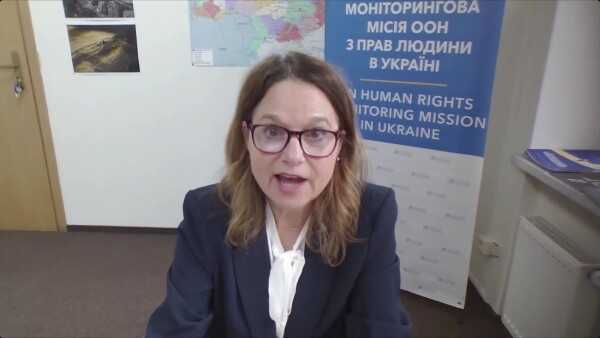
James Rodehaver, the head of UN Human Rights Myanmar team, made the following comments on the findings of the report:
“There is a real deterioration due to violence and armed conflict in the country. The other side of that coin, however, is that there are massive regressions in human rights that have been provoked by a vacuum of rule of law. And that is something that the report tries to highlight, in great detail. It is how the Myanmar military has created the crisis by instrumentalizing the legal system criminalizing nearly all forms of dissent against its attempts to rule the country,” he said.
“But then, of course, you have what happens to those people once they are arrested? It is lengthy periods of pretrial detention in detention facilities that have horrific conditions. And then, of course, you have the pervasive use of torture and ill treatment. Detainees interviewed by our office described methods such as being suspended from the ceiling without food or water, being forced to kneel or crawl on hard or sharp objects,” Rodehaver stated.
“The introduction of animals such as snakes or insects or other. Wild animals in order to provoke fear and terror in individuals. Beating people with iron poles, bamboo sticks, batons, rifle butts, leather strips, electric wires, motorcycle chains, asphyxiation, mock executions, electrocution and burning with tasers, lighters, cigarettes and boiling water. Truly, some of the most depraved behavior utilized as methods of torture in these detention centres,” he said.
ENDS
For more information and media requests, please contact:
In Geneva
Ravina Shamdasani - + 41 22 917 9169 / ravina.shamdasani@un.org or
Liz Throssell - + 41 22 917 9296 / elizabeth.throssell@un.org or
Seif Magango: +41 79 752 0488 / seif.magango@un.org
Tag and share
Twitter @UNHumanRights
Facebook unitednationshumanrights
Instagram @unitednationshumanrights
STORY: UN Human Rights Spokesperson Liz Throssell and James Rodehaver on latest report onMyanmar
TRT: 03:46
SOURCE: UNOG /OHCHR
RESTRICTIONS: NONE
LANGUAGE: English/NATS
ASPECT RATIO: 16:9
DATELINE: 17 September 2024 GENEVA, SWITZERLAND
SHOTLIST
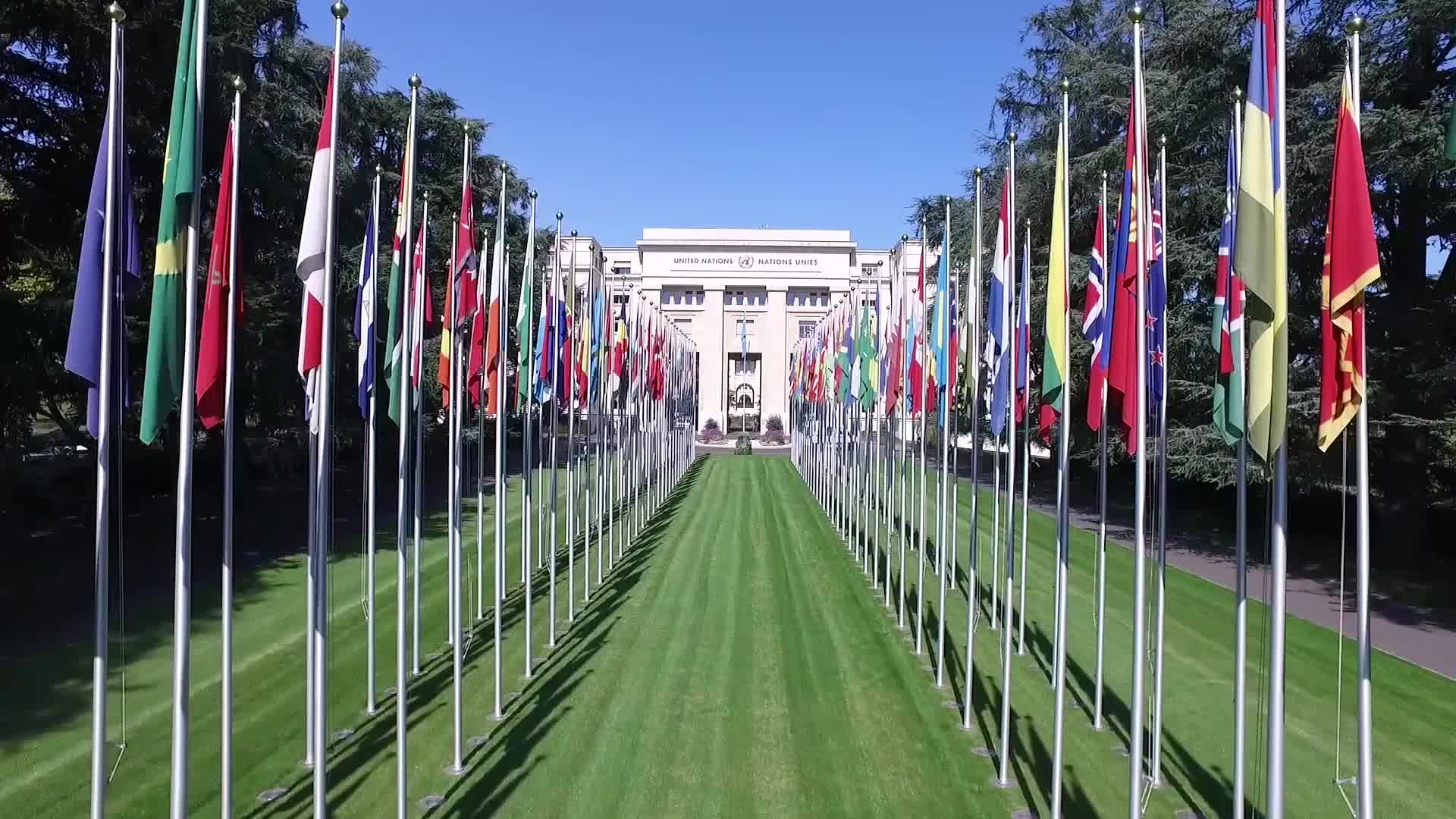
- Exterior shots : Palais des Nations
- Cut away : Briefing room
- SOUNDBITE (English)— Liz Throssell, Spokesperson for the Office of the UN High Commissioner for Human Rights (OHCHR): “Since the coup on 1 February 2021, at least 5,350 civilians have been killed, more than 3.3 million displaced, and over half the population are living below the poverty line, primarily due to military violence, according to the report.”
- Cut away : Briefing room
- SOUNDBITE (English)— Liz Throssell, Spokesperson for the Office of the UN High Commissioner for Human Rights (OHCHR): “The report looks at the devastating impact of the violence, destruction and deprivation on people’s mental health, as well as the regression in economic and social rights, which is precipitating further economic decline. At the same time young people, who provide the key to Myanmar’s future, are fleeing abroad to escape being forced to serve in or fight for the military.”
- Cut away : Briefing room
- SOUNDBITE (English)— Liz Throssell, Spokesperson for the Office of the UN High Commissioner for Human Rights (OHCHR): “The report also documents shocking details about detentions by the military. Nearly 27,400 individuals have been arrested since the coup, with arrests on the rise since the military’s implementation of mandatory conscription in February 2024. Credible sources say at least 1,853 have died in custody, including 88 children and 125 women.”
- Cut away: Briefing room
- SOUNDBITE (English)— Liz Throssell, Spokesperson for the Office of the UN High Commissioner for Human Rights (OHCHR): “In the light of the above findings, High Commissioner Volker Türk calls on the UN Security Council refer the full scope of the current situation in Myanmar to the International Criminal Court. He reiterates his calls for an end to the violence and for the immediate and unconditional release of all those arbitrarily detained.”
- Cut away: Briefing room
- SOUNDBITE (English)— James Rodehaver, Head of Myanmar team (OHCHR): “There is a real deterioration due to violence and armed conflict in the country. The other side of that coin, however, is that there are massive regressions in human rights that have been provoked by a vacuum of rule of law. And that is something that the report tries to highlight, in great detail. It is how the Myanmar military has created the crisis by instrumentalizing the legal system criminalizing nearly all forms of dissent against its attempts to rule the country.”
- Cut away: Briefing room
- SOUNDBITE (English)— James Rodehaver, Head of Myanmar team (OHCHR): “But then, of course, you have what happens to those people once they are arrested? It is lengthy periods of pretrial detention in detention facilities that have horrific conditions. And then, of course, you have the pervasive use of torture and ill treatment. Detainees interviewed by our office described methods such as being suspended from the ceiling without food or water, being forced to kneel or crawl on hard or sharp objects.”
- Cut away: Briefing room
- SOUNDBITE (English)— James Rodehaver, Head of Myanmar team (OHCHR): “The introduction of animals such as snakes or insects or other, wild animals in order to provoke fear and terror in individuals. Beating people with iron poles, bamboo sticks, batons, rifle butts, leather strips, electric wires, motorcycle chains, asphyxiation, mock executions, electrocution and burning with tasers, lighters, cigarettes and boiling water. Truly some of the most depraved behavior utilized as methods of torture in these detention centres.”
Similar Stories

1
1
1
Edited News | UNICEF
A little over one year since a ceasefire agreement was announced between Hamas fighters and Israel, more than 340 children have been reported killed and hundreds more injured, the UN Children’s Fund, UNICEF, said on Friday.

1
1
1
Edited News | UNICEF , IFRC
Six weeks after Nepal’s deadly flooding disaster, communities are still struggling to rebuild their lives, but they will need sustained help as global warming increases the risk of another Himalayan catastrophe, the UN Children’s Fund (UNICEF) said on Friday.

1
1
1
Edited News | WHO
In suspected Russia plague death, testing and monitoring underway – WHO
The death of a lab worker in Russia’s Siberia region has sparked concerns about plague being the cause, the UN World Health Organization (WHO) said on Tuesday, adding that it was following the situation closely.

1
1
Edited News | OHCHR , UNOG
UN Human Rights Chief Volker Türk on Friday provided and oral update to the 63rd session of the Human rights Council on Ukraine.

1
1
1
Edited News | OHCHR , UNOG
UN Human Rights Chief Volker Türk on Friday provided and oral update to the 63rd session of the Human rights Council on the human rights situation in Haiti.

1
1
1
Edited News | WHO
Repeated delays in bringing lifesaving medicines, prosthetics and more from Israel into Gaza risk having devastating consequences on Palestinians who urgently need them in the wartorn enclave, the UN World Health Organization (WHO) said on Friday. “A truck full of non-priority supplies or the right supplies arriving too late, doesn't save lives. That's the question that actually matters," said Dr Reinhilde Van De Weerdt, WHO Representative in the OPT.

1
1
1
Edited News | WHO
DRC: Early access to care and oxygen decisive for Ebola patients’ survival – WHO
In the Democratic Republic of the Congo (DRC), health workers fighting the country’s largest-ever Ebola outbreak are struggling to overcome critical challenges to patient care, the UN World Health Organization (WHO) warned on Tuesday.

1
1
1
Edited News | OCHA , UN
Civilians in Iran are continuing to feel the consequences of months of conflict and military escalation, the UN’s top official in the country has said, as loss of life, damage to civilian infrastructure and mounting economic pressures leave many facing continued uncertainty.
1
1
1
Edited News | WHO , UNICEF
Aid agencies in Yemen highlighted the growing hunger emergency sparked by renewed fighting between Houthi opposition forces and Government troops, after mobile health clinics reported that hundreds of children displaced by the violence are suffering from the most deadly form of malnutrition.
1
1
1
Edited News | UNHCR
Displacement on the rise in Yemen as fighting continues - UNHCR
As hostilities worsen in Yemen, more people have been fleeing their homes, further intensifying the humanitarian crisis within the region, the UN Refugee Agency (UNHCR) warned on Tuesday.
1
1
1
Edited News | IOM , OHCHR , UNFPA , UNOG , UNHCR , WHO
Yemen’s humanitarian crisis growing by the hour amid spike in displacement
Yemenis displaced by renewed fighting have described fleeing for their lives amid shelling and gunfire, aid agencies reported on Friday, while highlighting the dramatic increase in humanitarian needs in the country and in Djibouti, where thousands have sought shelter.
1
1
1
Edited News | OHCHR , UNOG
The UN Human Rights Office issued on Friday a report documenting a shocking pattern of sexual violence amid Russia’s full-scale armed attack on Ukraine.