

The United Nations Office at Geneva
Multimedia Newsroom
Le conflit a un coût humain et économique sur les civils en Iran, déclare un haut responsable de l'ONU
Les civils en Iran continuent de ressentir les conséquences de mois de conflit et d'escalade militaire, a déclaré le haut responsable de l'ONU dans le pays, alors que la perte de vies humaines, les dommages aux infrastructures civiles et les pressions économiques croissantes laissent beaucoup dans l'incertitude.
En dehors de l'Iran, sept mois jour pour jour après le début des bombardements américano-israéliens sur l'Iran, le prix du pétrole brut a dépassé 108 dollars le baril lundi, dans un contexte de quasi-gel des expéditions dans le détroit d'Ormuz et de perturbation du trafic maritime passant par le détroit de Bab el-Mandeb, lié aux combats au Yémen entre les combattants d'opposition houthis et les forces gouvernementales.
Dans un entretien exclusif avec ONU Info, la Coordinatrice résidente de l'ONU en Iran, Christine Weigand, a déclaré que 30 des 31 provinces du pays ont été touchées par le conflit, avec plus de 3 400 décès de civils et plus de 33 000 personnes blessées.
« Nous avons constaté un impact sur les infrastructures critiques à travers le pays, de la frappe déchirante sur l'école de Minab, qui a laissé tant d'enfants, d'enseignants et de parents morts, aux établissements de santé qui ont été affectés, aux usines de dessalement, aux infrastructures électriques, et ainsi de suite », a-t-elle déclaré.
Depuis sa base à Téhéran, Mme Weigand a vu de ses propres yeux la destruction mortelle causée par les bombardements répétés. « Il y a des gens qui ont perdu des êtres chers, il y a des gens qui ont perdu leurs moyens de subsistance, soit à la suite de frappes militaires directes, soit également à cause de l'impact économique de ce conflit », a-t-elle souligné. « En marchant à travers les décombres et ce qui restait de l'immeuble... J'ai essentiellement vu la vie quotidienne des gens s'arrêter et s'interrompre. J'ai clairement pu identifier ce qui était autrefois une chambre d'enfant avec des jouets éparpillés, des livres pour enfants et certainement en tant que parent, c'est quelque chose qui reste évidemment avec vous. »
En collaboration avec les autorités, les agences, fonds et programmes de l'ONU en Iran ont soutenu les communautés touchées à travers une gamme d'efforts humanitaires et de relèvement, y compris le maintien des services de santé essentiels, la fourniture de soutien en santé mentale et psychosocial, et l'assistance aux groupes vulnérables par le biais de la protection et du soutien en espèces. L'ONU a également aidé à renforcer la continuité des services médicaux grâce à une alimentation électrique de secours et au soutien de la chaîne du froid pour les vaccins, tout en fournissant des équipements spécialisés pour l'enlèvement des débris et le relèvement précoce.
Le haut responsable de l'ONU a souligné la perturbation du conflit sur la vie quotidienne des gens. « Beaucoup de gens disent aussi simplement que, 'Eh bien, nous reportons simplement des décisions que nous voudrions autrement prendre pour nos vies. Nous reportons des projets tant sur le plan professionnel que dans nos vies personnelles parce que nous ne savons pas ce qui va se passer.' »
Dans cette incertitude, la Coordinatrice résidente a souligné la résilience qu'elle a observée chez les gens en Iran, se rappelant comment, même pendant les bombardements actifs autour du Nouvel An persan, les gens continuaient d'aller sur les marchés et se préparaient à célébrer Nowruz. « Ce qui m'a certainement le plus frappée, c'est la résilience des gens à travers tout cela », a-t-elle ajouté.
La hausse des prix alimentaires fait partie des pressions économiques quotidiennes auxquelles les gens sont confrontés, a-t-elle déclaré, aux côtés de l'inflation et de la dépréciation de la monnaie, qui contribuent désormais à l'inquiétude et à l'anxiété concernant le coût de la vie. « L'Iran est évidemment soumis à divers régimes de sanctions depuis de nombreuses années maintenant », a poursuivi Mme Weigand, une Autrichienne arrivée à Téhéran juste deux semaines avant le déclenchement de la guerre. « Mais nous avons également vu maintenant de nouvelles séries de sanctions être imposées. Et les sanctions ont de vraies conséquences. Elles ont de vraies conséquences sur les gens. Elles ont de vraies conséquences pour nos partenaires nationaux. Et elles ont aussi des conséquences sur nos opérations. »
fin
Histoire : Mise à jour sur l'Iran – Coordonnateur résident de l'ONU
SOURCE : UNTV CH
RESTRICTIONS : AUCUNE
LANGUE : ANGLAIS / NATS
FORMAT D'IMAGE : 16:9
Durée : 3’47”
DATE : 29 septembre 2026 - GENÈVE, SUISSE & DIVERS BROLL, IRAN & PHOTOS, VEUILLEZ CRÉDITER LES AGENCES DE L'ONU LISTÉES DANS LA LISTE DE PLANS
Orateur :
- Christine Weigand, Coordonnatrice résidente de l'ONU, Iran
LISTE DE PLANS
- Plan moyen extérieur, allée des drapeaux de l'ONU, ONU Genève.
- EXTRAIT SONORE (Anglais) – Christine Weigand, Coordonnatrice résidente de l'ONU, Iran : “L'ampleur et l'intensité des opérations militaires que nous avons observées ont certainement eu un impact significatif. Nous avons vu 30 des 31 provinces de l'Iran être affectées. Selon les autorités nationales, plus de 3 400 personnes ou civils ont perdu la vie à cause du conflit et plus de 33 000 personnes ont été blessées.”
- Plan moyen des immeubles d'habitation à proximité de la place Resalat à l'est de Téhéran, frappés en mars, avril 2026. Crédit ONU Iran.
- EXTRAIT SONORE (Anglais) – Christine Weigand, Coordonnatrice résidente de l'ONU, Iran : “En marchant à travers les décombres et ce qui restait de l'immeuble, vous voyez essentiellement comment - j'ai vu essentiellement - la vie quotidienne des gens s'est arrêtée et ce que cela signifie. Vous savez, j'ai clairement pu identifier ce qui était une chambre d'enfant avec des jouets éparpillés, des livres pour enfants et certainement en tant que parent, c'est quelque chose qui reste avec vous.”
- Plans moyens des immeubles d'habitation à proximité de la place Resalat à l'est de Téhéran, frappés en mars, avril 2026. Crédit ONU Iran.
- EXTRAIT SONORE (Anglais) – Christine Weigand, Coordonnatrice résidente de l'ONU, Iran : “Je veux dire, il y a des gens qui ont perdu des êtres chers. Il y a des gens qui ont perdu leurs moyens de subsistance, soit à cause des frappes militaires directement, soit à cause de l'impact économique de ce conflit.”
- Plan moyen des immeubles d'habitation à proximité de la place Resalat à l'est de Téhéran, frappés en mars, avril 2026. Crédit ONU Iran.
- EXTRAIT SONORE (Anglais) – Christine Weigand, Coordonnatrice résidente de l'ONU, Iran : “Malheureusement, nous avons constaté un impact sur les infrastructures critiques à travers le pays, depuis la frappe dévastatrice sur l'école de Minab, qui a laissé tant d'enfants, d'enseignants et de parents morts, jusqu'aux installations de santé qui ont été affectées, aux usines de dessalement, aux infrastructures électriques, etc.”
- Plan moyen des immeubles d'habitation à proximité de la place Resalat à l'est de Téhéran, frappés en mars, avril 2026. Crédit ONU Iran.
- EXTRAIT SONORE (Anglais) – Christine Weigand, Coordonnatrice résidente de l'ONU, Iran : “Beaucoup du soutien que l'ONU a fourni à la réponse a, par exemple, été dans le domaine de la santé, où nous avons travaillé avec des partenaires pour aider à maintenir les services de santé essentiels, en fournissant également, par exemple, des générateurs de secours aux installations de santé pour garantir que la capacité de la chaîne du froid soit maintenue pour permettre une livraison rapide des vaccins. Il y a eu, par exemple, un soutien en termes de fourniture d'équipements très spécialisés pour l'enlèvement des débris, en particulier dans les zones urbaines, pour soutenir les efforts de récupération.”
- Plan large montrant 290 000 doses de vaccin Pentavalent arrivant en Iran pour soutenir la vaccination de routine, juillet 2026. Crédit UNICEF Iran.
- Plan large montrant 290 000 doses de vaccin Pentavalent arrivant en Iran pour soutenir la vaccination de routine, juillet 2026. Crédit UNICEF Iran.
- EXTRAIT SONORE (Anglais) – Christine Weigand, Coordonnatrice résidente de l'ONU, Iran : “Nous avons vu en particulier les prix des denrées alimentaires augmenter de manière assez substantielle. Et c'est évidemment une source majeure de préoccupation et d'anxiété pour les gens et certainement pour les groupes les plus vulnérables.”
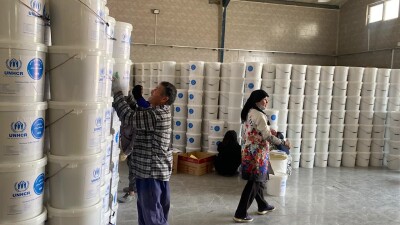
- Plans larges (photos) du personnel du HCR avec des kits de lavage avant distribution, septembre 2026. Veuillez créditer le HCR.
- Plan moyen (photo) d'une femme portant une aide alimentaire. Veuillez créditer le HCR.
- EXTRAIT SONORE (Anglais) – Christine Weigand, Coordonnatrice résidente de l'ONU, Iran : “D'après les conversations que j'ai également, c'est vraiment quelque chose qui impacte la vie quotidienne dans le sens où beaucoup de gens disent simplement que, ‘Eh bien, nous reportons des décisions que nous voudrions autrement prendre pour nos vies. Nous reportons des plans tant sur le plan professionnel que dans nos vies personnelles parce que nous ne savons pas ce qui va se passer ensuite.’”
- Plan large, panoramique, de voitures détruites près d'un immeuble d'habitation à proximité de la place Resalat à l'est de Téhéran, frappé en mars. Avril 2026. Veuillez créditer ONU Iran.
- EXTRAIT SONORE (Anglais) – Christine Weigand, Coordonnatrice résidente de l'ONU, Iran : “L'Iran a évidemment été sous divers régimes de sanctions depuis de nombreuses années maintenant. Mais nous avons également vu maintenant de nouvelles séries de sanctions être imposées. Et les sanctions ont de vraies conséquences, elles ont de vraies conséquences sur les gens, elles ont de vraies conséquences pour nos partenaires nationaux et elles ont également des conséquences sur nos opérations.”
- Différents plans (en mouvement et photos) des agences de l'ONU fournissant une assistance en Iran.
- Allée des drapeaux de l'ONU Genève.
Similar Stories
1
1
1
Edited News | UNICEF
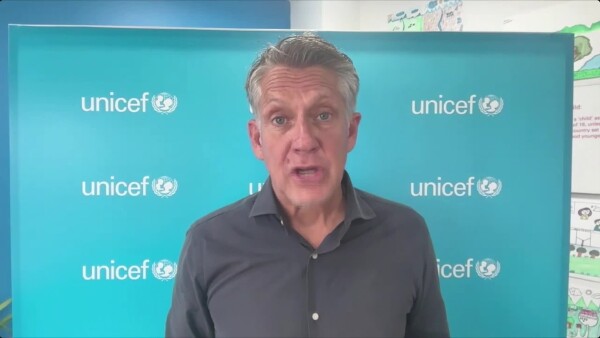
A little over one year since a ceasefire agreement was announced between Hamas fighters and Israel, more than 340 children have been reported killed and hundreds more injured, the UN Children’s Fund, UNICEF, said on Friday.
1
1
1
Edited News | UNICEF , IFRC
Six weeks after Nepal’s deadly flooding disaster, communities are still struggling to rebuild their lives, but they will need sustained help as global warming increases the risk of another Himalayan catastrophe, the UN Children’s Fund (UNICEF) said on Friday.

1
1
1
Edited News | WHO
In suspected Russia plague death, testing and monitoring underway – WHO
The death of a lab worker in Russia’s Siberia region has sparked concerns about plague being the cause, the UN World Health Organization (WHO) said on Tuesday, adding that it was following the situation closely.
1
1
Edited News | OHCHR , UNOG
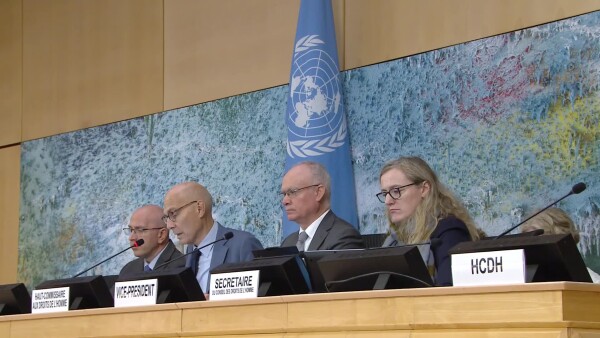
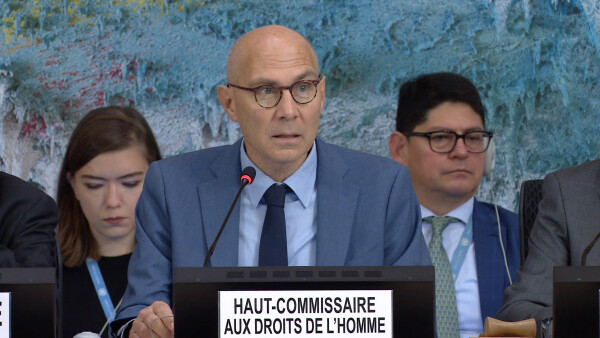
UN Human Rights Chief Volker Türk on Friday provided and oral update to the 63rd session of the Human rights Council on Ukraine.
1
1
1
Edited News | OHCHR , UNOG
UN Human Rights Chief Volker Türk on Friday provided and oral update to the 63rd session of the Human rights Council on the human rights situation in Haiti.
1
1
1
Edited News | WHO
Repeated delays in bringing lifesaving medicines, prosthetics and more from Israel into Gaza risk having devastating consequences on Palestinians who urgently need them in the wartorn enclave, the UN World Health Organization (WHO) said on Friday. “A truck full of non-priority supplies or the right supplies arriving too late, doesn't save lives. That's the question that actually matters," said Dr Reinhilde Van De Weerdt, WHO Representative in the OPT.
1
1
1
Edited News | WHO
DRC: Early access to care and oxygen decisive for Ebola patients’ survival – WHO
In the Democratic Republic of the Congo (DRC), health workers fighting the country’s largest-ever Ebola outbreak are struggling to overcome critical challenges to patient care, the UN World Health Organization (WHO) warned on Tuesday.
1
1
1
Edited News | WHO , UNICEF
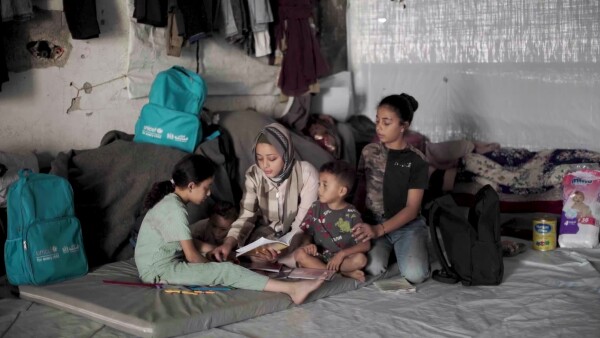
Aid agencies in Yemen highlighted the growing hunger emergency sparked by renewed fighting between Houthi opposition forces and Government troops, after mobile health clinics reported that hundreds of children displaced by the violence are suffering from the most deadly form of malnutrition.
1
1
1
Edited News | UNHCR
Displacement on the rise in Yemen as fighting continues - UNHCR
As hostilities worsen in Yemen, more people have been fleeing their homes, further intensifying the humanitarian crisis within the region, the UN Refugee Agency (UNHCR) warned on Tuesday.
1
1
1
Edited News | IOM , OHCHR , UNFPA , UNOG , UNHCR , WHO
Yemen’s humanitarian crisis growing by the hour amid spike in displacement
Yemenis displaced by renewed fighting have described fleeing for their lives amid shelling and gunfire, aid agencies reported on Friday, while highlighting the dramatic increase in humanitarian needs in the country and in Djibouti, where thousands have sought shelter.
1
1
1
Edited News | OHCHR , UNOG
The UN Human Rights Office issued on Friday a report documenting a shocking pattern of sexual violence amid Russia’s full-scale armed attack on Ukraine.
2
1
2
Edited News , Press Conferences | WMO
As world’s water reserves change, countries must prepare for a new reality: WMO
New data showing that rivers were at their lowest level for decades last year provides further evidence that the climate crisis is real and countries must act immediately to protect themselves from the increasing threat to communities and livelihoods, the UN World Meteorological Organization (WMO) said on Thursday.
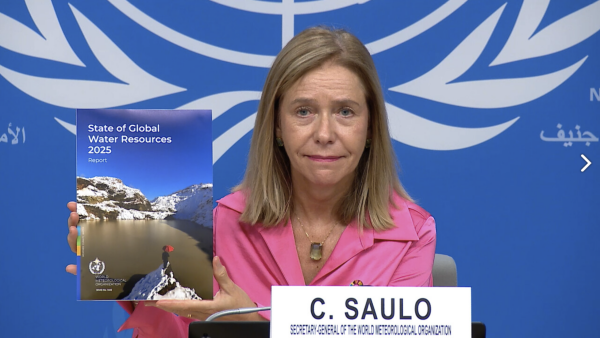
The key findings from WMO’s State of Global Water Resources 2025 report covering the hydrological cycle and extreme events in the five-year period to last year:
- 2025 was one of driest years for river discharge in 35 years
- Past seven years have seen abnorfmal river flows
- Water storage on Earth’s land surface has decreased in past decade
- Widespread glacier loss across all regions for fourth consecutive year
- Asia and Africa are regions most affected by water-related disasters
- Water data availability has improved, but gaps remain in hard-hit areas
Highlighting the long-term decline in the Earth’s freshwater storage and glacier melt, WMO Secretary-General Celeste Saulo explained that the planet’s water reserves used to act as a planetary “savings account” that absorbed the occasional dry season, avoiding a water crisis. “One of the central stories of the 2025 report is what is happening to that savings account? And the simple answer is that we are depleting it,” she told journalists in Geneva.
Groundwater reserves are equally stretched and have been in decline since 2014, WMO’s report states, with nearly two-thirds of monitored wells worldwide showing levels lower than the historical norm and indicating a shift “further toward deficit…not recovery”.
“At the same time, we are seeing more water-related disasters,” Ms. Saulo said, while also stressing that the currently strengthening El Niño “will increase the risk of drought in some areas, and flooding in others”.
Glaciers disappearing
In 2025, for the fourth consecutive year, every major glaciated region on Earth lost ice mass, leading to short-term hazards including floods and long-term water insecurity, according to WMO.
Responding to a question about whether the changing global water cycle might have contributed to the deadly Nepal-China flooding disaster, Ms. Saulo explained that melting ice and rock was just one factor in the chain of events that ultimately sent a massive and deadly wall of water and debris downstream on 26 August, killing at least 1,367 people.
“You asked if it could happen again? Absolutely; the problem in this region is that there’s 63,700 glaciers at the last count,” she told a Press Conference in Geneva. “Even if you’re looking with remote sensing with satellites at these glaciers, you might see some faults, you might see some slight shifting, that does not mean necessarily catastrophic collapse. So, in order to plan for this, it’s very, very difficult. But the international community is looking very hard at ways in which we can bring people together to solve some of these monitoring issues.”
Data indicates that glaciers shrank between 2023 and 2025 with cumulative losses of 1,400 gigatonnes of water – or about one third of annual fresh water needs.
Every major glacier region on Earth lost ice for the fourth consecutive year.
“All 19 glacier regions around the globe lost ice; in Central Asia, Iceland, the Russian Arctic and western Canada and the United States, it was among the three worst years on record,” said Wayne Jenkinson, WMO’s Director of Hydrology and Cryosphere.
Some regions with smaller glaciers such as Central Europe, the Caucasus, the western Canada and the United States may already have reached “peak water”, Mr. Jenkinson warned.
“After this point, the glacier gives less meltwater each year simply because there is less ice left to melt. That matters for every community downstream that relies on water during hot, dry summers,” he explained.
Narelle van der Wel, WMO’s Head of Cryosphere Monitoring, Predictions and Services, stressed that while some further glacier loss is unavoidable, the eventual scale of the decline is not predetermined.
“Some glacier loss is inevitable, but total loss of glaciers is not yet inevitable,” she said, pointing to emissions reductions as central to limiting future losses.
Preparing for moving baselines
The report does not attribute every observed change to climate change alone. WMO says pressure on water resources and natural variability also contribute.
Mr. Jenkinson said governments need to prepare for “moving baselines” as historical patterns become less reliable.
“The situation 30 years ago is not where we are today,” he said. Countries, he added, need to prepare “for those changes that have really already arrived”.
ends