

The United Nations Office at Geneva
Multimedia Newsroom
Gaza : La campagne contre la polio atteint son objectif, des corridors médicaux supplémentaires nécessaires, selon l'OMS
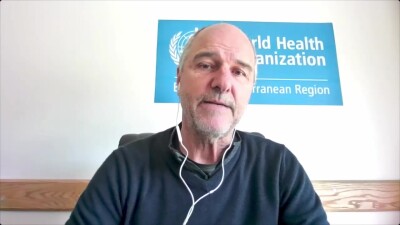
La deuxième campagne de vaccination de masse contre la polio à Gaza a atteint près de 548 000 enfants de moins de 10 ans, selon l'agence de santé de l'ONU (OMS). Cela représente 92 pour cent des 591 000 enfants devant être vaccinés, a déclaré le Dr Rik Peeperkorn, Représentant de l'Organisation mondiale de la santé dans les territoires palestiniens occupés (TPO) aux journalistes à Genève via vidéoconférence depuis Gaza.
Le premier tour de cette campagne, qui a débuté le 22 février et se terminera demain, a été planifié après que des échantillons environnementaux collectés en décembre et janvier à Deir al Balah et Khan Younis ont confirmé que le poliovirus circulait toujours. Une première campagne a été menée en septembre et octobre 2024 dans des conditions extrêmement difficiles lors de pauses humanitaires. Malgré l'atteinte de 95 pour cent des enfants, environ 7 000 ont manqué le deuxième tour en 2024, laissant des poches de jeunes avec une immunité insuffisante. Le cessez-le-feu fragile actuel a permis aux travailleurs de la santé d'avoir un meilleur accès à la population et d'évaluer les besoins médicaux.
Avec la destruction totale ou partielle des infrastructures de santé dans la bande de Gaza depuis le début de la guerre le 7 octobre 2023, le secteur a subi des pertes estimées à 6,3 milliards de dollars, impactant significativement sa fonctionnalité et la vie de milliers de personnes. L'OMS estime que «entre 10 000 et 14 000 patients gravement critiques doivent être évacués, dont 4 000 enfants». Depuis le 1er février, 889 patients, dont 335 enfants, ont été évacués via le passage de Rafah. C'est plus que les 459 évacuations médicales en sept mois via le passage de Karam Abu Salem après la fermeture de la frontière de Rafah le 6 mai 2024. Mais cela reste insuffisant par rapport aux niveaux d'avant-guerre où 50 à 100 patients par jour étaient référés de Gaza à Jérusalem-Est et en Cisjordanie pour un traitement médical. «Il est absolument nécessaire d'élargir les corridors médicaux, y compris le corridor vers les hôpitaux de Jérusalem-Est et de la Cisjordanie», a insisté le Dr Peeperkorn.
L'OMS est également profondément préoccupée par les opérations israéliennes en cours dans les camps palestiniens en Cisjordanie et leurs conséquences sur les soins de santé. Le Dr Peeperkorn a déclaré que 44 attaques cette année ont affecté la prestation de soins de santé en Cisjordanie, avec quatre établissements de santé touchés. Du 7 octobre 2023, lorsque l'attaque menée par le Hamas a tué environ 1 200 Israéliens, au 14 février de cette année, 25 travailleurs de la santé et patients ont été tués et 121 blessés en Cisjordanie, selon l'agence de santé de l'ONU.
«Il y a presque 40 000 personnes déplacées» en raison des raids israéliens en Cisjordanie. «Les restrictions sévères de mouvement» dans toute la région, «affectent tous les services, mais très fortement la santé,» a expliqué le Dr Peeperkorn, citant des obstacles au mouvement des ambulances et à l'accès des travailleurs de la santé.
«Ce que nous essayons de faire, c'est de soutenir le pré-positionnement des fournitures autant que possible dans les principaux hôpitaux de Cisjordanie. Ensuite, il y a toujours [un] programme de soins aux traumatismes en cours, qui est également en cours actuellement, avec une formation du niveau communautaire jusqu'aux hôpitaux de troisième niveau», a-t-il ajouté. Les hôpitaux de troisième niveau ont du personnel hautement spécialisé et des équipements techniques, pour des domaines tels que la cardiologie, l'unité de soins intensifs et les unités d'imagerie spécialisées.
Dans un effort pour transformer le cessez-le-feu à Gaza en un processus de paix solide, l'Égypte a annoncé qu'elle accueillera un sommet arabe d'urgence le 27 février pour discuter des développements pour les Palestiniens.
Le plan de réponse opérationnelle de l'OMS pour Gaza pour 2025 a un budget de près de 640 millions de dollars.
Les besoins totaux pour la vaste récupération et reconstruction du secteur de la santé à Gaza sont estimés à plus de 7 milliards de dollars pour la prochaine décennie. Le gel de l'aide américaine aura des conséquences sur différents programmes de l'OMS, a déclaré le porte-parole Tarik Jašarević. Le financement nécessitera une large coalition de donateurs, divers instruments de financement, des ressources du secteur privé. «Ce que nous devons faire, c'est vraiment essayer de diversifier le financement, essayer de mobiliser plus de ressources à travers les plateformes qui ont été créées ces dernières années,» a-t-il expliqué, en pointant les tours d'investissement, la Fondation OMS et le fait que les États membres ont convenu d'augmenter leur contribution évaluée de 20 pour cent lors du dernier conseil exécutif.
L'OMS introduira également des mesures d'économie de coûts sur la logistique, les opérations, les voyages et le personnel et engagera un dialogue constructif avec les États-Unis, a ajouté M. Jašarević.
Fin
Histoire : “Mise à jour de la santé en OPT – OMS” – Mardi 25 février 2025
Orateurs :
- Dr Rik Peeperkorn, Représentant de l'OMS en OPT (parlant depuis Gaza)
- Tarik Jašarević, Porte-parole de l'OMS
TRT : 02’39”
SOURCE : UNTV CH
LANGUE : ANGLAIS / SONS
RAPPORT D'ASPECT : 16:9
DATELINE : 25 février 2025 - GENÈVE, SUISSE
Conférence de presse à Genève
LISTE DE PLANS
- Plan moyen extérieur : allée des drapeaux de l'ONU.
- Plan large du podium avec les orateurs dans la salle de conférence de presse.
- EXTRAIT SONORE (Anglais) Dr Rik Peeperkorn, Représentant de l'OMS dans le territoire palestinien occupé (OPT) : “Le nombre total d'enfants de moins de dix ans, la cible était de 591 000. Après trois jours de campagne, presque 548 000 enfants ont été vaccinés. Cela représente une couverture de plus de 92 pour cent.”
- Plan moyen de la salle de conférence de presse montrant l'écran et les journalistes.
- EXTRAIT SONORE (Anglais) Dr Rik Peeperkorn, Représentant de l'OMS dans le territoire palestinien occupé (OPT) : “Nous devons élargir les corridors médicaux. Parce que nous estimons qu'entre 10 000 et 14 000 patients, des patients sévèrement critiques, ont besoin d'évacuation médicale, dont environ plus de 4 000 enfants. Il est donc absolument nécessaire que nous élargissions les corridors médicaux, y compris les corridors vers les hôpitaux de Jérusalem-Est et de la Cisjordanie.”
- Plan large : journalistes dans la salle de conférence de presse.
- EXTRAIT SONORE (Anglais) Dr Rik Peeperkorn, Représentant de l'OMS en OPT : “Il y a presque 40 000 personnes déplacées. Je veux dire, les restrictions sévères de mouvement affectent bien sûr tous les services, mais très fortement la santé.”
- Plan moyen : journalistes dans la salle de conférence de presse.
- EXTRAIT SONORE (Anglais) Dr Rik Peeperkorn, Représentant de l'OMS en OPT : “En tant qu'OMS, ce que nous essayons de faire, c'est de soutenir le pré-positionnement des fournitures autant que possible dans, disons, les hôpitaux clés de la Cisjordanie. Ensuite, il y a toujours un programme de soins de traumatologie en cours, qui est également actuellement en cours : formation du niveau communautaire jusqu'aux hôpitaux de troisième niveau.”
- Plan de coupe des journalistes dans la salle de conférence de presse.
- EXTRAIT SONORE (Anglais) Tarik Jašarević, Porte-parole de l'OMS : “Toute réduction de financement aura des conséquences sur différents programmes de l'OMS. Ce que nous devons faire de notre côté, c'est vraiment essayer de diversifier le financement, essayer de mobiliser plus de ressources à travers les plateformes qui ont été créées ces dernières années au cours de ce processus de transformation, telles que, les tours d'investissements, la Fondation de l'OMC et les États membres, vous vous souviendrez, ont convenu d'augmenter la contribution évaluée de 20 pour cent lors du dernier conseil exécutif.”
- Plan rapproché des journalistes prenant des notes.
- Plans variés de la salle de conférence de presse.
Similar Stories

1
1
1
Edited News | OCHA , UNICEF , WFP
Aid agencies warned on Friday of the fast-developing humanitarian emergency inside Taiz City in Yemen, which has been encircled by de facto Houthi forces fighting government troops along the country’s west coast.

2
17
1
2
Edited News , Press Conferences , Images | OCHA , WMO
Two UN agencies teamed up on Wednesday to issue an appeal for immediate assistance to help communities already being impacted by the strongest El Niño on record.

3
16
2
2
Edited News , B-roll , Conferences , Images | UNITED NATIONS , UNOG
Sixth Consultative Meeting on Enhancing Coordination of Peace Initiatives and Efforts for Sudan

1
1
1
Edited News | UNICEF , WHO , UNHCR
Yemen war continues to force families from homes amid hunger and disease
More than 250,000 people have now fled renewed fighting in Yemen, the UN said on Tuesday, citing particular concern for those sheltering in the southwestern city of Taiz and the wider governorate, where access is “essentially blocked”.

1
1
1
Edited News | UNICEF
A little over one year since a ceasefire agreement was announced between Hamas fighters and Israel, more than 340 children have been reported killed and hundreds more injured, the UN Children’s Fund, UNICEF, said on Friday.

1
1
1
Edited News | UNICEF , IFRC
Six weeks after Nepal’s deadly flooding disaster, communities are still struggling to rebuild their lives, but they will need sustained help as global warming increases the risk of another Himalayan catastrophe, the UN Children’s Fund (UNICEF) said on Friday.

1
1
1
Edited News | WHO
In suspected Russia plague death, testing and monitoring underway – WHO
The death of a lab worker in Russia’s Siberia region has sparked concerns about plague being the cause, the UN World Health Organization (WHO) said on Tuesday, adding that it was following the situation closely.

1
1
Edited News | OHCHR , UNOG
UN Human Rights Chief Volker Türk on Friday provided and oral update to the 63rd session of the Human rights Council on Ukraine.

1
1
1
Edited News | OHCHR , UNOG
UN Human Rights Chief Volker Türk on Friday provided and oral update to the 63rd session of the Human rights Council on the human rights situation in Haiti.

1
1
1
Edited News | WHO
Repeated delays in bringing lifesaving medicines, prosthetics and more from Israel into Gaza risk having devastating consequences on Palestinians who urgently need them in the wartorn enclave, the UN World Health Organization (WHO) said on Friday. “A truck full of non-priority supplies or the right supplies arriving too late, doesn't save lives. That's the question that actually matters," said Dr Reinhilde Van De Weerdt, WHO Representative in the OPT.

1
1
1
Edited News | WHO
DRC: Early access to care and oxygen decisive for Ebola patients’ survival – WHO
In the Democratic Republic of the Congo (DRC), health workers fighting the country’s largest-ever Ebola outbreak are struggling to overcome critical challenges to patient care, the UN World Health Organization (WHO) warned on Tuesday.

1
1
1
Edited News | OCHA , UN
Civilians in Iran are continuing to feel the consequences of months of conflict and military escalation, the UN’s top official in the country has said, as loss of life, damage to civilian infrastructure and mounting economic pressures leave many facing continued uncertainty.