

The United Nations Office at Geneva
Multimedia Newsroom
STORY: Funding Sustainable Development - DSG Mohammed
TRT: 4’49”
SOURCE: UNTV CH
RESTRICTIONS: NONE
LANGUAGE: ENGLISH
ASPECT RATIO: 16:9
DATELINE: 29 November 2021, GENEVA, SWITZERLAND
SHOTLIST
- Exterior wide shot, United Nations flags flying.
- SOUNDBITE (English): Amina Mohammed, Deputy Secretary-General of the United Nations: “We need more ambition, more action, more scale, greater urgency in delivering the 2030 Agenda and the Paris Agreement – and we certainly need more fuel, more financial resources and more investments.”
- Close shot, inside the Auditorium Pictet (Maison de la Paix), participants, masked, attending the Summit.
- SOUNDBITE (English): Amina Mohammed, Deputy Secretary-General of the United Nations: “We need the private sector and its leadership to unlock resources for key transitions in sustainable energy and connectivity, food systems, health, education, social protection, digitalization. Innovative instruments including blended finance can all play an important role but we need to massively scale-up that delivery.”
- Medium shot, participants listening to the conference.
- SOUNDBITE (English): Amina Mohammed, Deputy Secretary-General of the United Nations: “The good news is that we already have a shared narrative or a linguistic bridge in the 2030 Agenda. But we still face a mismatch of metrics and languages between diplomacy and business; public and private actors.”
- Medium shot, Press Conference (Maison de la Paix), speakers and journalists.
- SOUNDBITE (English): Ueli Maurer, Federal Finance Minister, Swiss Confederation: “I think Building Bridges, we have to do it between the population and the Government, we have to explain what we have to do. Then we need bridges between the private sector and the Government and then I think we need bridges from Switzerland to the world.”
- Close shot Patrick Odier and Ueli Maurer on podium listening to journalists’ questions.
- SOUNDBITE (English): Patrick Odier, President of Building Bridges initiative and chair, Lombard Odier: “We are trying actually to bring capital closer to the whole array of the Sustainable Development Goals, i.e. to try to find not only bridges - but to be concrete - instruments, metrics, methodologies that allow capital not only to set targets in certain areas that are covered by the SDGs, but also to be measurable in terms of reaching all those targets that I have said. And this is where finance is at this very moment.”
- Wide shot, speakers and journalists at the Press Conference.
- SOUNDBITE (English): Patrick Odier, President of Building Bridges initiative and chair, Lombard Odier: “We all know that we have to deal with these issues of subsidies but finance itself is not at the helm of addressing this issue; what finance can do is basically ask the Government to play its role when it comes to trying to address the fossil industry and of course the emission problematic.”
- Medium shot, podium speakers.
- SOUNDBITE (English): Patrick Odier, President of Building Bridges initiative: “That’s what we want to do here, discuss what can we do directly or indirectly as a financial sector if you take this industry for example, this fossil industry, to make sure we accelerate the transition towards renewable, and perhaps we pick the low-hanging fruits of stopping perhaps financing certain types of damaging industries, that we can allow ourselves to stop without creating too big collateral damages in the short-term.”
- Wide shot, inside the Auditorium Pictet, audience following the conference.
- SOUNDBITE (English): Amina Mohammed, Deputy Secretary-General of the United Nations: “We do have the leadership, we have the expertise, and we have the tools. Never before have we been able to do so much. Yet, the truth is that the trust deficit is widening in our world. We have not been able to rise to the ask of solidarity in our global response for the pandemic.”
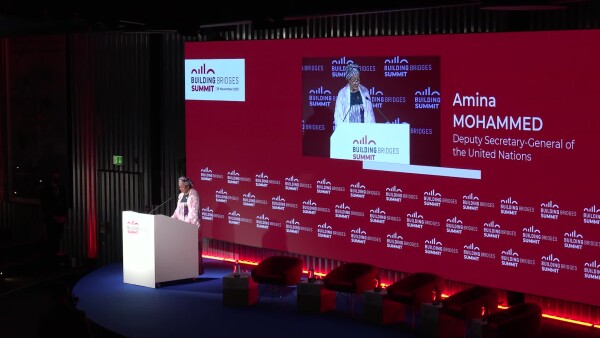
- Medium shot, Amina Mohammed delivering her speech at the Building Bridges Summit.
- SOUNDBITE (English): Amina Mohammed, Deputy Secretary-General of the United Nations: “Until everyone gets the vaccine, we will all be at risk, and we will not be able to take the SDGs to where they ought to be by 2030.”
- Close shot, the audience, masked, attending the Summit.
- SOUNDBITE (English): Amina Mohammed, Deputy Secretary-General of the United Nations: “For many, the health pandemic has been a tragedy, particularly in developed countries, but for developing countries it has a socio-economic impact that will take so much longer to recover from. And so, we need the urgency of the investments in climate action, which will have multiplier effects on the SDGs.”
- Medium shot, Mr. Maurer and Mr. Odier meeting Mrs. Tatiana Valovaya, United Nations Geneva Director-General.
- Medium-wide shot, Mrs. Mohammed arriving at the Maison de la Paix and meeting Mr. Odier and Mr. Maurer.
- Medium-wide shot, Mrs. Mohammed walking with Mr. Maurer at the Maison de la Paix, with Mr. Odier and Mrs. Valovaya behind.
- Medium-wide shot, Mrs. Mohammed, Mr. Maurer and Mr. Odier walking together outside at the Maison de la Paix.
Financing sustainable development needed more than ever, says UN deputy chief Mohammed
Securing the funding needed for sustainable development by involving as many actors from different sectors is more urgent than ever, amid a widening “trust deficit” between the haves and the have-nots, the UN Deputy Secretary-General said on Monday.
Speaking at the Building Bridges Summit for sustainable finance in Geneva, Amina Mohammed urged all those present from Government, the private sector, international organisations and civil society to do more to push ahead with a common investment framework to improve people’s lives everywhere.
“We need more ambition, more action, more scale, greater urgency in delivering the 2030 Agenda and the Paris Agreement – and we certainly need more fuel, more financial resources and more investments,” she said. “The good news is that we already have a shared narrative or a linguistic bridge in the 2030 Agenda. But we still face a mismatch of metrics and languages between diplomacy and business; public and private actors.”
Representing the Swiss federal government at the summit’s second iteration, Finance Minister Ueli Maurer highlighted its potential for concrete action, along with the need to be inclusive and transparent in the way that sustainable financing is handled.
“I think Building Bridges, we have to do it between the population and the Government, we have to explain what we have to do,” he said. “Then we need bridges between the private sector and the Government and then I think we need bridges from Switzerland to the world.”
According to the summit’s organisers, between 2019 and 2020, sustainable investment rose by 31 per cent in Switzerland, to over 1,500 billion francs.
In addition to highlighting opportunities for investors and fund managers, it is hoped that the summit will contribute to creating an ordered and common approach to “net zero” financing, said Patrick Odier, President of Building Bridges initiative and chair of Lombard Odier bank:
“We are trying actually to bring capital closer to the whole array of the Sustainable Development Goals, i.e. to try to find not only bridges - but to be concrete - instruments, metrics, methodologies that allow capital not only to set targets in certain areas that are covered by the SDGs, but also to be measurable in terms of reaching all those targets that I have said. And this is where finance is at this very moment.”
Mr. Odier also responded to the call to end subsidies for fossil fuel industries to create a level playing field for renewable energy investment: “We all know that we have to deal with these issues of subsidies, but finance itself is not at the helm of addressing this issue,” he said. “What finance can do is basically ask the Government to play its role when it comes to trying to address the fossil industry and of course the emission problematic.”
He added: “That’s what we want to do here, discuss what can we do directly or indirectly as a financial sector if you take this industry for example, this fossil industry, to make sure we accelerate the transition towards renewable, and perhaps we pick the low-hanging fruits of stopping perhaps financing certain types of damaging industries, that we can allow ourselves to stop without creating too big collateral damages in the short-term.”
Highlighting the convening ambition of the summit at Geneva’s Maison de la Paix, Deputy Secretary-General Mohammed listed the issues that she hoped the week-long summit might address: “We need the private sector and its leadership to unlock resources for key transitions in sustainable energy and connectivity, food systems, health, education, social protection, digitalization. Innovative instruments including blended finance can all play an important role, but we need to massively scale-up that delivery.”
Despite the fact that there was the “leadership”, “expertise” and “tools” to achieve so much, Ms. Mohammed warned that “the truth is that the trust deficit is widening in our world”.
And amid World Health Organization data showing that more than 80 per cent of COVID-19 vaccines have gone to G20 countries and low-income countries have received just 0.6 per cent, the UN deputy chief maintained in particular that “we have not been able to rise” to the global solidarity call.
“Until everyone gets the vaccine, we will all be at risk, and we will not be able to take the SDGs to where they ought to be by 2030, she said. “For many, the health pandemic has been a tragedy, particularly in developed countries, but for developing countries it has a socio-economic impact that will take so much longer to recover from. And so, we need the urgency of the investments in climate action, which will have multiplier effects on the SDGs.”
ends
Similar Stories
1
1
1
Edited News | IOM , OHCHR , UNFPA , UNOG , UNHCR , WHO
Yemen’s humanitarian crisis growing by the hour amid spike in displacement
Yemenis displaced by renewed fighting have described fleeing for their lives amid shelling and gunfire, aid agencies reported on Friday, while highlighting the dramatic increase in humanitarian needs in the country and in Djibouti, where thousands have sought shelter.
1
1
1
Edited News | OHCHR , UNOG
The UN Human Rights Office issued on Friday a report documenting a shocking pattern of sexual violence amid Russia’s full-scale armed attack on Ukraine.
2
1
2
Edited News , Press Conferences | WMO
As world’s water reserves change, countries must prepare for a new reality: WMO
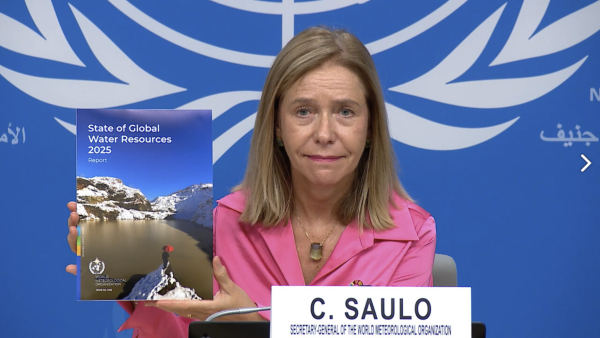
New data showing that rivers were at their lowest level for decades last year provides further evidence that the climate crisis is real and countries must act immediately to protect themselves from the increasing threat to communities and livelihoods, the UN World Meteorological Organization (WMO) said on Thursday.
The key findings from WMO’s State of Global Water Resources 2025 report covering the hydrological cycle and extreme events in the five-year period to last year:
- 2025 was one of driest years for river discharge in 35 years
- Past seven years have seen abnorfmal river flows
- Water storage on Earth’s land surface has decreased in past decade
- Widespread glacier loss across all regions for fourth consecutive year
- Asia and Africa are regions most affected by water-related disasters
- Water data availability has improved, but gaps remain in hard-hit areas
Highlighting the long-term decline in the Earth’s freshwater storage and glacier melt, WMO Secretary-General Celeste Saulo explained that the planet’s water reserves used to act as a planetary “savings account” that absorbed the occasional dry season, avoiding a water crisis. “One of the central stories of the 2025 report is what is happening to that savings account? And the simple answer is that we are depleting it,” she told journalists in Geneva.
Groundwater reserves are equally stretched and have been in decline since 2014, WMO’s report states, with nearly two-thirds of monitored wells worldwide showing levels lower than the historical norm and indicating a shift “further toward deficit…not recovery”.
“At the same time, we are seeing more water-related disasters,” Ms. Saulo said, while also stressing that the currently strengthening El Niño “will increase the risk of drought in some areas, and flooding in others”.
Glaciers disappearing
In 2025, for the fourth consecutive year, every major glaciated region on Earth lost ice mass, leading to short-term hazards including floods and long-term water insecurity, according to WMO.
Responding to a question about whether the changing global water cycle might have contributed to the deadly Nepal-China flooding disaster, Ms. Saulo explained that melting ice and rock was just one factor in the chain of events that ultimately sent a massive and deadly wall of water and debris downstream on 26 August, killing at least 1,367 people.
“You asked if it could happen again? Absolutely; the problem in this region is that there’s 63,700 glaciers at the last count,” she told a Press Conference in Geneva. “Even if you’re looking with remote sensing with satellites at these glaciers, you might see some faults, you might see some slight shifting, that does not mean necessarily catastrophic collapse. So, in order to plan for this, it’s very, very difficult. But the international community is looking very hard at ways in which we can bring people together to solve some of these monitoring issues.”
Data indicates that glaciers shrank between 2023 and 2025 with cumulative losses of 1,400 gigatonnes of water – or about one third of annual fresh water needs.
Every major glacier region on Earth lost ice for the fourth consecutive year.
“All 19 glacier regions around the globe lost ice; in Central Asia, Iceland, the Russian Arctic and western Canada and the United States, it was among the three worst years on record,” said Wayne Jenkinson, WMO’s Director of Hydrology and Cryosphere.
Some regions with smaller glaciers such as Central Europe, the Caucasus, the western Canada and the United States may already have reached “peak water”, Mr. Jenkinson warned.
“After this point, the glacier gives less meltwater each year simply because there is less ice left to melt. That matters for every community downstream that relies on water during hot, dry summers,” he explained.
Narelle van der Wel, WMO’s Head of Cryosphere Monitoring, Predictions and Services, stressed that while some further glacier loss is unavoidable, the eventual scale of the decline is not predetermined.
“Some glacier loss is inevitable, but total loss of glaciers is not yet inevitable,” she said, pointing to emissions reductions as central to limiting future losses.
Preparing for moving baselines
The report does not attribute every observed change to climate change alone. WMO says pressure on water resources and natural variability also contribute.
Mr. Jenkinson said governments need to prepare for “moving baselines” as historical patterns become less reliable.
“The situation 30 years ago is not where we are today,” he said. Countries, he added, need to prepare “for those changes that have really already arrived”.
ends
1
1
1
Edited News | OCHA , WHO
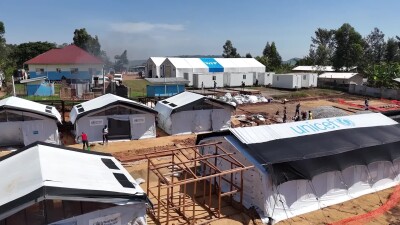
The deadly Ebola virus outbreak in DR Congo continues to spread across the vast country despite some success in containing it, aid officials said on Tuesday, in a renewed call for international support to help responders on the ground.
2
1
2
Press Conferences , Edited News | WFP
‘Super El Niño’ and converging crises worsen hunger in South Sudan and across the region - WFP
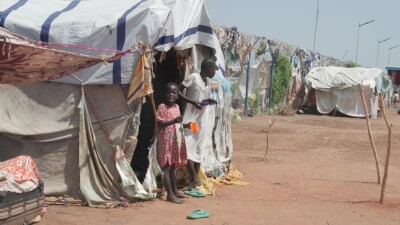
South Sudan’s hunger crisis is becoming increasingly catastrophic as violence, extreme weather and dwindling aid leave millions without enough food, the UN World Food Programme (WFP) warned on Tuesday.
1
1
1
Edited News | UN WOMEN
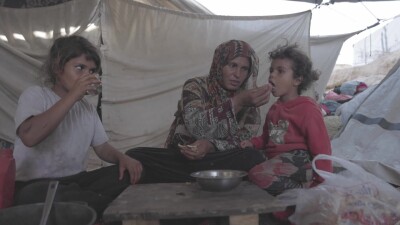
In war-torn Gaza, a growing number of women-headed households face “impossible decisions” every day, amid ongoing Israeli airstrikes and still-scarce resources, UN humanitarians said on Tuesday.
1
1
1
Edited News | OHCHR , UNOG
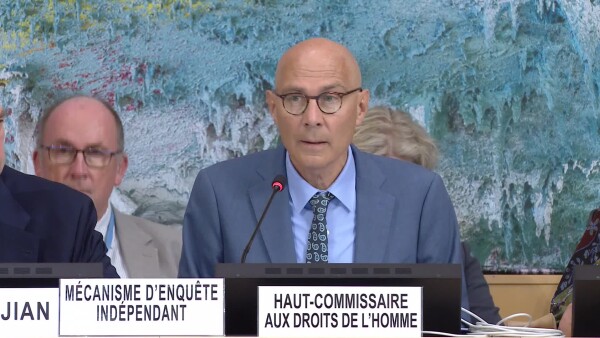
UN Human Rights Chief Volker Türk made the following remarks to the Enhanced Interactive Dialogue on the Independent Investigative Mechanism for Myanmar at the 63rd Human Rights Council.
1
Edited News | OHCHR , UNOG
UN Human Rights Chief Volker Türk today delivered an update on the global human rights situation to the 63rdsession of the Human Rights Council in Geneva.
1
1
1
Edited News | WHO
Repeated attacks on humanitarian warehouses put vital medical aid at risk in Ukraine - WHO
A new airstrike overnight damaged one of the main warehouses used by the UN health agency to store humanitarian medical supplies in the Kyiv region, the World Health Organization (WHO) said on Friday. This is the third attack to affect a WHO-used storage in the last three months.
2
2
2
Press Conferences , Edited News | WMO
Powerful El Niño heightens extreme-weather risks through 2027, as countries brace for impact - WMO
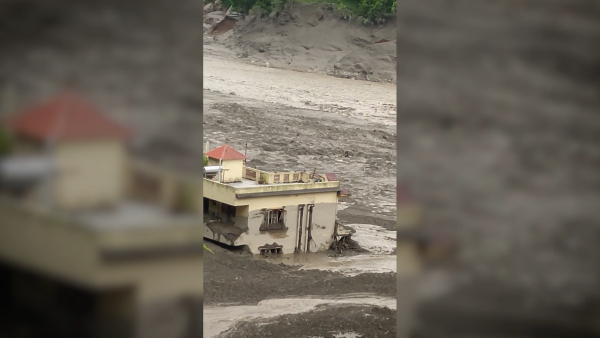
Fuelled by extraordinarily warm waters across the tropical Pacific Ocean, the El Niño climate pattern is expected to intensify in the coming months. Forecasters are almost certain that it will persist through February next year, with unusually warm conditions expected across the globe.
1
1
1
Edited News | OCHA , IFRC , UN WOMEN , WHO
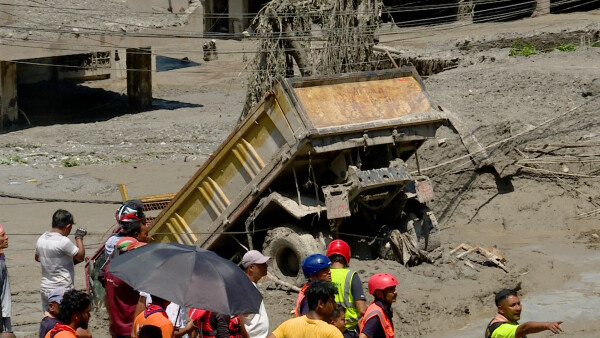
Nepal flood deaths near 1,000 as those spared struggle to survive – UN humanitarians
With the death toll in Nepal’s catastrophic flash floods inching towards 1,000, rescue workers are facing harsh conditions while survivors lack access to food, safe water and health care, humanitarians said on Tuesday.
1
1
1
Edited News | OCHA , UNDRR , IFRC , WHO
Nepal: Flooding disaster “not over” as humanitarians work around the clock
While search and rescue efforts continued Friday following flash floods and mudslides in northern Nepal, UN humanitarians are taking stock of the devastation amid concerns over more flooding to come.