

The United Nations Office at Geneva
Multimedia Newsroom
Edited News , Press Conferences | OCHA , UNOG , UNITED NATIONS , WEF
UN Press Conference: High-level Ministerial Meeting on Humanitarian Situation in Afghanistan
STORYLINE
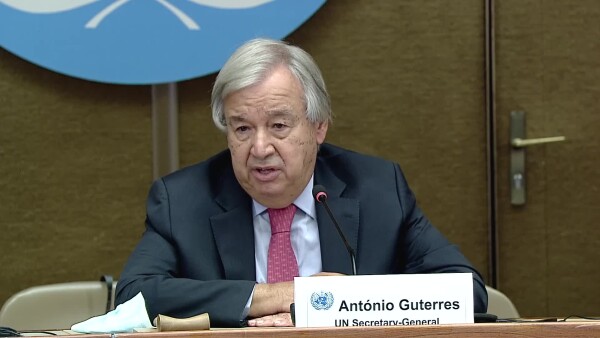
UN Secretary-General António Guterres on Monday hailed significant international financial support and solidarity with the people of Afghanistan at a flash appeal in Geneva, in which he appealed for a “lifeline” for the country’s most vulnerable people.
“Today, we have already heard clearly more than $1 billion in pledges…It represents a quantum leap in relation to the financial commitment of the international community towards the Afghan people,” said Mr. Guterres.
In an encounter with journalists on the sidelines of the high-level ministerial meeting in Geneva, Mr. Guterres noted that the fact that nearly 100 Member States had taken part - in addition to more than 30 regional and international organisations – underscored that the crisis in Afghanistan remained a crucial issue for the global community.
The UN top official also reiterated the importance of ensuring that assistance did not come at the expense of hard-won gains for women and minorities in Afghanistan in the last 20 years.
“We are of course very much concerned in making sure that humanitarian assistance is an entry point for effective engagement with the Taliban in all other aspects of concern of the international community,” he said, after appealing for $606 million to get urgent assistance to 11 million people for the next four months.
While immediate concerns have focused on the provision of emergency aid to avert a major humanitarian crisis in the country, Mr. Guterres warned that such assistance “will not solve the problem if the economy of Afghanistan collapses. And we know that the risk is enormous, and that there is a dramatic lack of cash.”
Pressed on the nature of the written assurances that the Taliban delivered in a letter to the UN over the weekend concerning aid assistance, the UN Secretary-General explained that there were in fact “two documents; one was guaranteeing full humanitarian work of the UN and the respect by the Taliban to that full humanitarian work; and the second, that they are able to provide security and even escorts when there are situations of insecurity that would justify it. So not only there is an attitude of acceptance but there is an attitude of support.”
It was also important to underline that the Taliban communiqué also appealed for international support for development, to combat the drug trade and security.
“There is a clear interest of the Taliban also to engage with the international community and I think this is what gives also the international community some leverage.”
Ends
STORY: Humanitarian Situation in Afghanistan – Secretary-General’s Press Conference
TRT: 2’09”
SOURCE: UNTV CH
RESTRICTIONS: NONE
LANGUAGE: ENGLISH
ASPECT RATIO: 16:9
DATELINE: 13 Sept 2021, GENEVA, SWITZERLAND
SHOTLIST
- Exterior wide shot, United Nations flag flying.
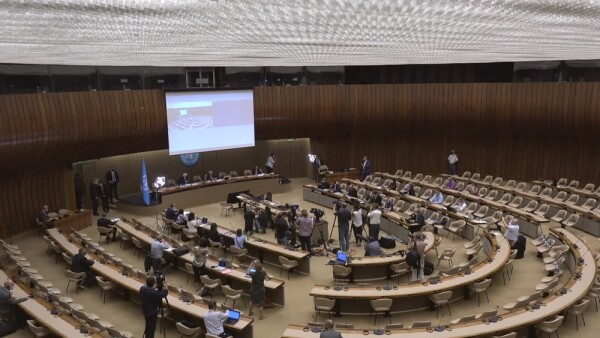
- Wide shot, conference room, journalists and TV cameras, UN Geneva.
- SOUNDBITE (English): UN Secretary-General António Guterres: “Today, we have already heard clearly more than $1 billion in pledges. It is impossible as I have said to say how much of this will be for the flash appeal, but in any case it represents a quantum leap in relation to the financial commitment of the international community towards the Afghan people.”
- Medium shot, journalists taking notes, masked.
- SOUNDBITE (English): UN Secretary-General António Guterres: “We are of course very much concerned in making sure that humanitarian assistance is an entry point for effective engagement with the Taliban in all other aspects of concern of the international community.”
- Medium shot, photographer and journalists with video cameras.
- SOUNDBITE (English): UN Secretary-General António Guterres: “Humanitarian aid will not solve the problem if the economy of Afghanistan collapses. And we know that the risk is enormous, and that there is a dramatic lack of cash.”
- Medium shot, journalist taking notes, masked and wearing headphones.
- SOUNDBITE (English): UN Secretary-General António Guterres: “The letter that we received: two documents; one was guaranteeing full humanitarian work of the UN and the respect by the Taliban to that full humanitarian work; and the second, that they are able to provide security and even escorts when there are situations of insecurity that would justify it. So not only there is an attitude of acceptance but there is an attitude of support.”
- Wide shot, journalists, podium to rear.
- Wide shot, photographer resting on knees, podium to rear.
- Medium shot, journalists conferring.
- Medium shot, journalists sitting one behind the other.
- Medium shot, flag alley.
- Wide shot, flag alley.
- Close, flag alley.
Similar Stories
1
1
1
Press Conferences | WMO , UNHCR , WHO , ILO
WMO: Greenhouse Gas Bulletin; UNHCR: As attacks intensify UNHCR urges support for war ravaged Ukrainians; WHO: Clinical trials in DRC: vaccines and beyond; ILO: New global and regional estimates on domestic work, informality and working conditions

1
1
1
Edited News | OCHA , UNICEF , WFP
Aid agencies warned on Friday of the fast-developing humanitarian emergency inside Taiz City in Yemen, which has been encircled by de facto Houthi forces fighting government troops along the country’s west coast.
1
1
1
Press Conferences | UN WOMEN , WFP , WHO
UN WOMEN: Sudan Women and girls one year after the fall of El Fasher; increasing drone attacks across the country; WFP: DRC - Ebola spreads to eighth DRC province as WFP delivers food, builds treatment centres and keeps supplies moving; WHO - Update on Ebola (Bundibugyo Virus Disease)
1
12
1
1
Press Conferences , Images | UNOG
Closing Press Conference following the Sixth Consultative Meeting on Enhancing Coordination of Peace Initiatives and Efforts in Sudan

2
17
1
2
Edited News , Press Conferences , Images | OCHA , WMO
Two UN agencies teamed up on Wednesday to issue an appeal for immediate assistance to help communities already being impacted by the strongest El Niño on record.

3
16
2
2
Edited News , B-roll , Conferences , Images | UNITED NATIONS , UNOG
Sixth Consultative Meeting on Enhancing Coordination of Peace Initiatives and Efforts for Sudan
1
1
1
Press Conferences | CITES
Wildlife trade and conservation policy discussions at the 81st meeting of the CITES Standing Committee (SC81)

1
1
1
Edited News | UNICEF , WHO , UNHCR
Yemen war continues to force families from homes amid hunger and disease
More than 250,000 people have now fled renewed fighting in Yemen, the UN said on Tuesday, citing particular concern for those sheltering in the southwestern city of Taiz and the wider governorate, where access is “essentially blocked”.
1
1
1
Press Conferences | UNHCR , UNCTAD , WMO , OCHA , UNICEF , WHO
UNHCR Hungary’s 1956 Refugee Crisis: 70 Years On, UNCTAD World Investment Forum 2026, Doha, WMO Greenhouse Gas Bulletin and Climate Update for COP31, OCHA Afghanistan: Malnutrition, Girls’ Education and Recovery, UNICEF Yemen: Child Malnutrition and Unsafe Water in Taiz, WHO Inequalities in Noncommunicable Diseases and Risk Factors

1
1
1
Press Conferences | UNHCR
End of UNHCR's 77th Annual Executive Committee (ExCom) meeting week

1
1
1
Edited News | UNICEF
A little over one year since a ceasefire agreement was announced between Hamas fighters and Israel, more than 340 children have been reported killed and hundreds more injured, the UN Children’s Fund, UNICEF, said on Friday.

1
1
1
Press Conferences | UNICEF , IOM , UNHCR
UN Special Assistant to the Personal Envoy Office (SUDAN): Peace Initiatives and Efforts in Sudan; UNICEF: Dire situation of children in Gaza; IOM: Damaged Homes and Energy Attacks Risk Displacing Ukrainians for this winter; UNHCR: update on EXCOM week