

The United Nations Office at Geneva
Multimedia Newsroom
Edited News | UNHCR , WHO
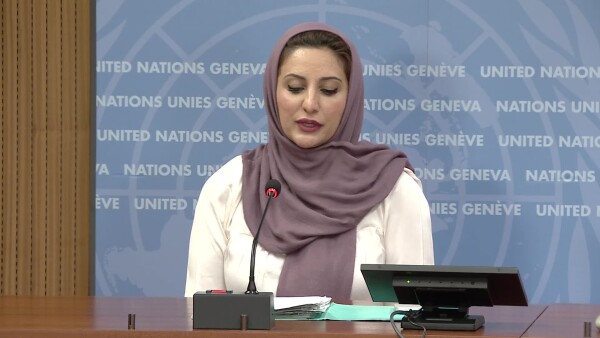
UNOG Bi-weekly press briefing Afghanistan Update UNHCR - WHO 20 August 2021
Aid access to Afghanistan holding amid uncertainty and fear: UN agencies
UN humanitarian agencies and their partners still have access to people in need across Afghanistan, they indicated on Friday, despite the prevailing “sense of fear” felt by many.
Speaking in Geneva, spokesperson for the UN refugee agency (UNHCR) Shabia Mantoo, said that widespread fighting had diminished since the takeover of the Taliban last Sunday, but that concerns remained for the safety of women and girls.
Highlighting video footage taken earlier this week showing crowds outside Kabul airport and men clinging in desperation to departing airplanes on the runway, Ms. Shaboo warned that the people of Afghanistan who could not get away should not be forgotten.
“UNHCR remains concerned about the risk of human rights violations against civilians in this evolving context, including for women and girls,” she said. “As of today, those who may be in danger have no way out. UNHCR is calling on countries neighbouring Afghanistan to keep their borders open in light of the evolving crisis in Afghanistan.”
Addressing questions about humanitarian aid access constraints, the UNHCR official explained that around 200 national and international staff “remain on the ground” in Afghanistan. They have continued to work with 18 local non-government partners and have around 900 staff throughout the country.
“At present, we are able to access all provinces, and are working in some two-thirds of all districts,” Ms. Mantoo said.
“Together with the wider UN country team, we are committed to staying and delivering aid to the Afghan people for as long as we have access to populations in need and can ensure safety for our staff.”
The UN agency was not involved in State-led evacuation operations which although welcome, did not address the plight of many millions of Afghans.
“These evacuations are lifesaving, they’re critical, they’re needed,” she said. “But they are bilateral programmes organised with the States so we encourage those, they should continue. But the main message is that a broader international response is needed.”
Since the beginning of this year, UNHCR has provided emergency assistance to 230,000 people in the country.
This includes cash assistance, shelter kits, hygiene support and other relief items. In addition, needs assessments are ongoing for some half a million displaced Afghans, 80 per cent of whom are women and children.
Echoing the message of solidarity with the people of Afghanistan, UN health agency spokesperson Tarik Jasarevic insisted that the World Health Organization (WHO) was “committed to staying in Afghanistan and delivering critical health services. We’re calling all parties to respect and protect civilians, health workers, patients and health facilities.”
The WHO official added that most major health facilities were functioning and that health workers “have been called to return to, or to remain in their posts, including female health staff”.
With 550,000 people displaced inside Afghanistan this year and millions more prior to the chaos linked to the Taliban takeover, UNHCR issued an urgent appeal for $62.8 million to deal with immediate needs. Overall requirements for the Afghanistan situation are $351 million, with funding levels currently at 43 per cent.
ends
STORY: AFGHANISTAN UPDATE –UNHCR - WHO
TRT: 02:03”
SOURCE: UNTV CH
RESTRICTIONS: NONE
LANGUAGE: ENGLISH
ASPECT RATIO: 16:9
DATELINE: 20 August 2021, GENEVA, SWITZERLAND
SHOTLIST
- Exterior wide shot, United Nations flag flying, a bright day.
- Wide shot, press briefing, journalists, masked, podium and big-screen TV for external speakers.
- SOUNDBITE: (ENGLISH) Shabia Mantoo, UNHCR spokesperson: “UNHCR remains concerned about the risk of human rights violations against civilians in this evolving context, including for women and girls. As of today, those who may be in danger have no way out. UNHCR is calling on countries neighbouring Afghanistan to keep their borders open in light of the evolving crisis in Afghanistan.”
- Mid of participants taking notes, masked.
- SOUNDBITE: (ENGLISH) Shabia Mantoo UNHCR spokesperson: “These evacuations are lifesaving, they’re critical, they’re needed. But they are bilateral programmes organised with the States so we encourage those, they should continue. But the main message is that a broader international response is needed.”
- Mid, journalist, masked, checking phone.
- SOUNDBITE: (ENGLISH) Shabia Mantoo UNHCR spokesperson: “At present, we are able to access all provinces, and are working in some two-thirds of all districts. Together with the wider UN country team, we are committed to staying and delivering aid to the Afghan people for as long as we have access to populations in need and can ensure safety for our staff.”
- Mid of participants, masked.
- SOUNDBITE: (ENGLISH) Tarik Jasarevic, WHO spokesperson: “WHO is committed to staying in Afghanistan and delivering critical health services. We’re calling all parties to respect and protect civilians, health workers, patients and health facilities.”
- Wide shot, participant writing notes, translators’ booths to rear.
- SOUNDBITE: (ENGLISH) Tarik Jasarevic, WHO spokesperson: “Most of the major health facilities are functioning. And this is based on a provincial level field monitoring. Health workers have been called to return to, or to remain in their posts, including female health staff.”
- Mid, participants, masked, taking notes.
- Wide shot, participants, masked, preparing to take notes.
- Wide shot, participant, masked, writing notes, translators’ booths to rear.
- Wide shot, participants, masked and seated wide apart.
- Close-up, showing hands and pens taking notes on notepads in profile.
Similar Stories

1
1
1
Edited News | OCHA , UNICEF , WFP
Aid agencies warned on Friday of the fast-developing humanitarian emergency inside Taiz City in Yemen, which has been encircled by de facto Houthi forces fighting government troops along the country’s west coast.

2
17
1
2
Edited News , Press Conferences , Images | OCHA , WMO
Two UN agencies teamed up on Wednesday to issue an appeal for immediate assistance to help communities already being impacted by the strongest El Niño on record.

3
16
2
2
Edited News , B-roll , Conferences , Images | UNITED NATIONS , UNOG
Sixth Consultative Meeting on Enhancing Coordination of Peace Initiatives and Efforts for Sudan

1
1
1
Edited News | UNICEF , WHO , UNHCR
Yemen war continues to force families from homes amid hunger and disease
More than 250,000 people have now fled renewed fighting in Yemen, the UN said on Tuesday, citing particular concern for those sheltering in the southwestern city of Taiz and the wider governorate, where access is “essentially blocked”.

1
1
1
Edited News | UNICEF
A little over one year since a ceasefire agreement was announced between Hamas fighters and Israel, more than 340 children have been reported killed and hundreds more injured, the UN Children’s Fund, UNICEF, said on Friday.

1
1
1
Edited News | UNICEF , IFRC
Six weeks after Nepal’s deadly flooding disaster, communities are still struggling to rebuild their lives, but they will need sustained help as global warming increases the risk of another Himalayan catastrophe, the UN Children’s Fund (UNICEF) said on Friday.

1
1
1
Edited News | WHO
In suspected Russia plague death, testing and monitoring underway – WHO
The death of a lab worker in Russia’s Siberia region has sparked concerns about plague being the cause, the UN World Health Organization (WHO) said on Tuesday, adding that it was following the situation closely.

1
1
Edited News | OHCHR , UNOG
UN Human Rights Chief Volker Türk on Friday provided and oral update to the 63rd session of the Human rights Council on Ukraine.

1
1
1
Edited News | OHCHR , UNOG
UN Human Rights Chief Volker Türk on Friday provided and oral update to the 63rd session of the Human rights Council on the human rights situation in Haiti.

1
1
1
Edited News | WHO
Repeated delays in bringing lifesaving medicines, prosthetics and more from Israel into Gaza risk having devastating consequences on Palestinians who urgently need them in the wartorn enclave, the UN World Health Organization (WHO) said on Friday. “A truck full of non-priority supplies or the right supplies arriving too late, doesn't save lives. That's the question that actually matters," said Dr Reinhilde Van De Weerdt, WHO Representative in the OPT.

1
1
1
Edited News | WHO
DRC: Early access to care and oxygen decisive for Ebola patients’ survival – WHO
In the Democratic Republic of the Congo (DRC), health workers fighting the country’s largest-ever Ebola outbreak are struggling to overcome critical challenges to patient care, the UN World Health Organization (WHO) warned on Tuesday.

1
1
1
Edited News | OCHA , UN
Civilians in Iran are continuing to feel the consequences of months of conflict and military escalation, the UN’s top official in the country has said, as loss of life, damage to civilian infrastructure and mounting economic pressures leave many facing continued uncertainty.