

The United Nations Office at Geneva
Multimedia Newsroom
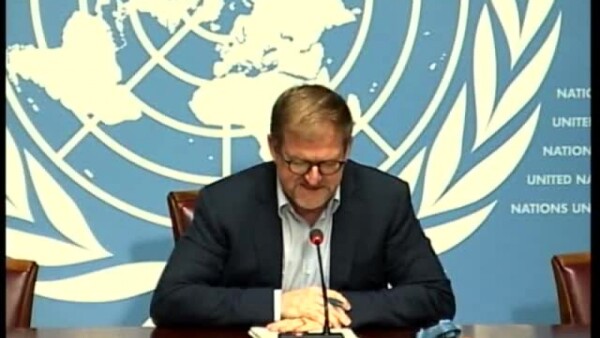
Rhéal LeBlanc, Chief of the Press and External Relations Section, United Nations Information Service in Geneva, chaired the briefing, which was attended by the spokespersons for the United Nations Refugee Agency and the Office of the High Commissioner for Human Rights.
The topics addressed were the new law on displacement in El Salvador; inter-ethnic violence in Ituri province in the Democratic Republic of the Congo, which might constitute crimes against humanity; United Nations Secretary-General’s statement on the crash of the Ukrainian plane; the future of the Syrian Constitutional Committee; and the call for nominations for the United Nations Nelson Mandela Prize 2020.
New law on displacement in El Salvador
Elizabeth Throssell, for the United Nations Refugee Agency (UNHCR), welcomed El Salvador’s passage of legislation to protect, aid and offer durable solutions to people internally displaced due to violence from organized crime and criminal gangs and those at risk of displacement. Passed by a resounding majority in El Salvador’s National Assembly on 9 January, the law opened the door for tens of thousands of victims of forced displacement to gain access to life-saving humanitarian assistance, and to have their basic rights restored, including effective access to justice. It also provided for the establishment of a comprehensive national system that brought together a wide variety of State institutions to collaborate in responding to and preventing forced displacement.
Ms. Throssell stressed that the law reflected the growing momentum in Central America and beyond to recognize and respond to the phenomenon of internal displacement and reiterated UNHCR’s readiness to continue to assist the governments of Central America and Mexico, in line with their commitments to the regional alliance, the Comprehensive Regional Protection and Solutions Framework (MIRPS).
Responding to questions, Ms. Throssell said that the recent change of leadership in El Salvador had enabled the advancing of the legislation on displacement, which had been deliberated for a long time. Its adoption was a very positive first step, and the next one was the implementation. Ms. Throssell also emphasized the importance of the MIRPS, a regional intergovernmental mechanism to share responsibility and solutions to internal and external displacement.
Human rights situation in Ituri province, Democratic Republic of the Congo
Rupert Colville, for the Office of the High Commissioner for Human Rights (OHCHR), said that the United Nations Joint Human Rights Office in the Democratic Republic of the Congo had released a report that detailed killings, rapes and other forms of violence in Ituri province in the eastern part of the country. At least 701 people had been killed and 168 injured during inter-ethnic tensions between the Hema and Lendu communities, in the territories of Djugu and Mahagi, from December 2017 to September 2019. In addition, at least 142 people had been subjected to acts of sexual violence.
The violence, which targeted mainly Hema ethnic groups, could amount to crimes against humanity, he said. The barbarity that characterized the acts of violence, including beheading of women and children with machetes, the dismemberment and removal of body parts of the victims as trophies of war, reflected the desire of the attackers to inflict lasting trauma to the Hema communities and to force them to flee and not return to their villages. According to the report, army and police forces deployed since February 2018 had failed to stop the violence, while the security forces themselves had committed abuses such as extrajudicial executions, sexual violence, arbitrary arrests and detention.
In the report, the United Nations Joint Human Rights Office had called upon the authorities to address the root causes of the conflict and maintain ongoing reconciliation efforts between the two communities. It had also called for a strengthened presence of state institutions and armed forces in the area to ensure the security of all communities and their peaceful cohabitation, concluded Mr. Colville.
Answering journalists’ questions, Mr. Colville explained that the Joint Human Rights Office had been operating in the Democratic Republic of the Congo for a long time and had an established relationship with the authorities in Kinshasa and in Ituri. The situation was complex, he said, highlighting the long history of violence between the Hema and Lendu ethnic groups. The report described the three phases of violence that had broken out in February 2017, including a more organized, systematic and vicious attacks by the Lendu since June 2019. This last phase saw increased violence and greater killings of children. The latest attack had occurred on 3 January 2020, during which one women and two children had been killed.
The Armed Forces of the Democratic Republic of the Congo (FARDC) had brought in reinforcements after the outbreak of the violence, but because they were targeted too, they could not dedicate full attention to the protection of civilians. This notwithstanding, the army could have done more to protect the civilians, Mr. Colville said.
Concerning the capacity of the national authorities to conduct an impartial investigation, Mr. Colville noted that the Office of the High Commissioner for Human Rights encouraged all countries, including the Democratic Republic of the Congo, to investigate the horrific crimes and stressed that support and assistance was available to the Government for this purpose.
Crash of Ukrainian Passenger Plane in Iran
In response to questions, Rhéal LeBlanc, Chief of the Press and External Relations Section, United Nations Information Service in Geneva, said that the United Nations Secretary-General António Guterres had issued a statement on 8 January in which he had expressed deep sadness by the crash of a Ukrainian airliner near Tehran.
Syrian Constitutional Committee
Concerning the future of the Syrian Constitutional Committee, Mr. LeBlanc recalled that in December 2019, the members of the Committee members had tried to meet in Geneva. However, no formal meeting had been held and they had returned home with an agreement to work on the agenda for the future meetings. Mr. LeBlanc reiterated the intention of the Special Envoy of the Secretary-General for Syria to continue the meetings of the Committee.
Announcements
The United Nations was calling for nominations for the United Nations Nelson Mandela Prize 2020, with a deadline 28 February, Mr. LeBlanc announced.
The prize recognized the achievements of those who dedicated their lives to the service of humanity as guided by the purposes and principles of the United Nations, while honoring and paying homage to Mandela's extraordinary life and legacy of reconciliation, political transition and social transformation. It was given out every five years to one woman and one man.
Similar Stories
1
1
1
Press Conferences | WMO , UNHCR , WHO , ILO
WMO: Greenhouse Gas Bulletin; UNHCR: As attacks intensify UNHCR urges support for war ravaged Ukrainians; WHO: Clinical trials in DRC: vaccines and beyond; ILO: New global and regional estimates on domestic work, informality and working conditions
1
1
1
Press Conferences | UN WOMEN , WFP , WHO
UN WOMEN: Sudan Women and girls one year after the fall of El Fasher; increasing drone attacks across the country; WFP: DRC - Ebola spreads to eighth DRC province as WFP delivers food, builds treatment centres and keeps supplies moving; WHO - Update on Ebola (Bundibugyo Virus Disease)
1
12
1
1
Press Conferences , Images | UNOG
Closing Press Conference following the Sixth Consultative Meeting on Enhancing Coordination of Peace Initiatives and Efforts in Sudan

2
17
1
2
Edited News , Press Conferences , Images | OCHA , WMO
Two UN agencies teamed up on Wednesday to issue an appeal for immediate assistance to help communities already being impacted by the strongest El Niño on record.
1
1
1
Press Conferences | CITES
Wildlife trade and conservation policy discussions at the 81st meeting of the CITES Standing Committee (SC81)
1
1
1
Press Conferences | UNHCR , UNCTAD , WMO , OCHA , UNICEF , WHO
UNHCR Hungary’s 1956 Refugee Crisis: 70 Years On, UNCTAD World Investment Forum 2026, Doha, WMO Greenhouse Gas Bulletin and Climate Update for COP31, OCHA Afghanistan: Malnutrition, Girls’ Education and Recovery, UNICEF Yemen: Child Malnutrition and Unsafe Water in Taiz, WHO Inequalities in Noncommunicable Diseases and Risk Factors
1
1
1
Press Conferences | UNHCR
End of UNHCR's 77th Annual Executive Committee (ExCom) meeting week
1
1
1
Press Conferences | UNICEF , IOM , UNHCR
UN Special Assistant to the Personal Envoy Office (SUDAN): Peace Initiatives and Efforts in Sudan; UNICEF: Dire situation of children in Gaza; IOM: Damaged Homes and Energy Attacks Risk Displacing Ukrainians for this winter; UNHCR: update on EXCOM week

1
1
1
Press Conferences | IOM , UNDRR
UN stresses importance of household preparedness for disaster risk reduction.
1
1
1
Statements , Press Conferences | OHCHR
1
1
1
Press Conferences | UNHCR , UNICEF , IFRC , OHCHR , UN WOMEN , IOM , OCHA , WHO
UNHCR – ExCom Meeting, UNICEF – Nepal Recovery, IFRC – Flash Floods, WHO – Mental Health, IOM – South Sudan Floods, OCHA – DRC Humanitarian aid, UNHCR – Sahel Displacement, UNICEF – Yemen Update, IOM – Gaza Shelter, UN Women – Gaza Women, OHCHR – Arrests and detentions of Syrians by Israeli force
2
1
2
Press Conferences | UNCTAD
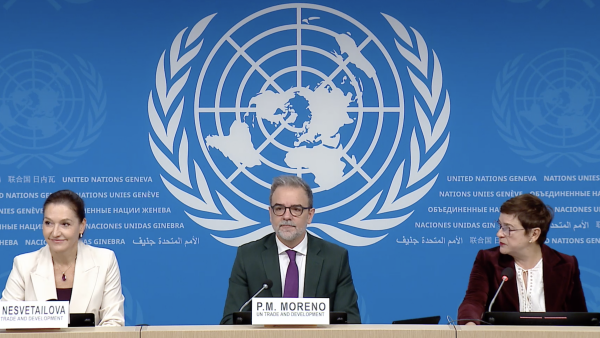
Presentation of the Trade and Developement Report 2026
Embargoed until 9 October 2026 at 11 a.m. (Geneva Time)
UNCTAD: UNCTAD’s flagship report finds that governments increasingly use industrial, trade, financial and technology policies to pursue economic and national security objectives. Market access and the ability to move into higher-value activities now depend more heavily on technology, finance and geopolitics.