

The United Nations Office at Geneva
Multimedia Newsroom
Edited News , Press Conferences | UNOG
ITC Presser - Launch of the Competiveness Outlook 2021 23 June 2021
Small businesses unprepared for pandemic-sized climate shock ‘every decade’: ITC
Small businesses which make up more than half of the global workforce were 2.5 times more likely to go under than larger firms in the first months of COVID-19, the International Trade Centre (ITC) said on Wednesday, warning that the impact of climate change is likely to cause pandemic-scale disruption “every decade”.
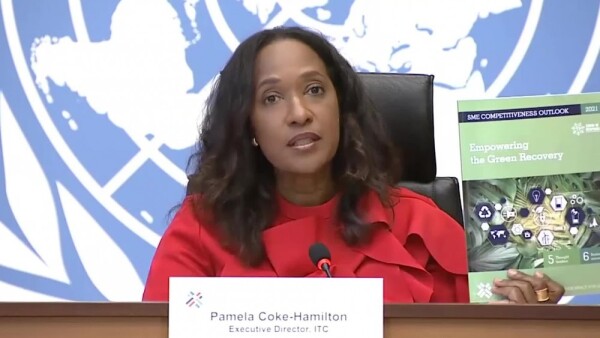
Highlighting the lack of investment in environmental adaptation among micro and small businesses in less-developed economies, ITC Executive Director Pamela Coke-Hamilton noted that only 38 per cent of small businesses had taken action, compared to 60 per cent of large firms.
“The pandemic has shown that the resilience of businesses matter,” she told journalists at UN Geneva, noting also that small businesses accounted for 50 per cent of global emissions.
“It has also laid bare a resilience divide between small and large firms. Developed countries have the financial means to sustain their economies and protect the most vulnerable. But most developed and least developed countries are unable to do the same.”
Ms Coke-Hamilton added that if such resilience among micro and small businesses was necessary during the pandemic, “it will be even more crucial in addressing climate change. The economic disruption of climate change is expected to be like that of a COVID-19-size pandemic happening every decade. Going green is a survival imperative; the longer firms take to act, the higher the costs become.”
Presenting the agency’s latest report, SME Competitiveness Outlook 2021: Empowering The Green Recovery, ITC Chief Economist Barbara Ramos insisted that governments needed to understand the level of vulnerability of small firms in the first year of the pandemic.
“We need to learn from COVID in order to increase the resilience of small firms….Our SME report last year showed that two out of three micro and small firms were strongly affected by the pandemic, and that’s compared to half of large firms; we know that. We also know that one in four micro firms were at risk of shutting down within three months and this is compared to one in 10 large firms.”
This matters, Ms. Ramos insisted, because companies that managed to withstand the economic downturn caused by COVID-19 “were five times less likely to fire employees during the crisis. And if you add to that the fact that SMEs employ a large share of the world’s population, their resilience really does matter.”
To help small businesses rebuild from the pandemic and prepare for the climate crisis while becoming more competitive, Ms. Coke-Hamilton maintained that urged they will need the support of a network of private and public partners to boost their means to withstand future shocks.
To guide this process, ITC’s report provides a 20-point Green Recovery Plan to help small businesses become more competitive, resilient and green.
“During the pandemic, the liquidity of banks especially in the Caribbean was upwards of $9 billion, but somehow they lacked the ability to attribute value to the green transition process and what this will mean,” she said, urging governments to advocate with financial institutions “to help them understand the long-term strategy and the need to invest.”
According to ITC, nearly 60 per cent of African companies that invested in greening their enterprise said that this led to new, higher-quality and more products. Access to new markets was also a byproduct of this investment along with lower costs.
ends
STORY: Empowering The Green Economy - ITC
TRT: 02 min 34s
SOURCE: UNTV CH
RESTRICTIONS: NONE
LANGUAGE: ENGLISH / NATS
ASPECT RATIO: 16:9
DATELINE: 23 JUNE 2021 GENEVA, SWITZERLAND
SHOTLIST
Exterior wide shot, Palais des Nations flag alley, nations’ flags flying, a sunny day.
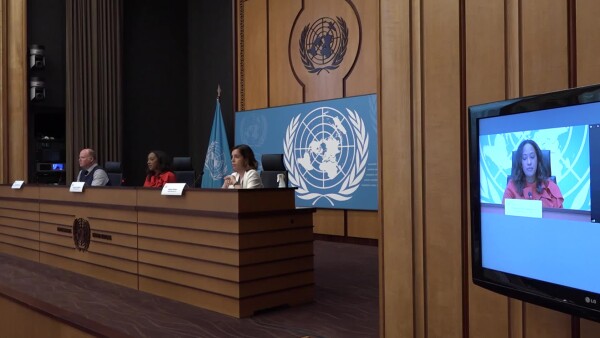
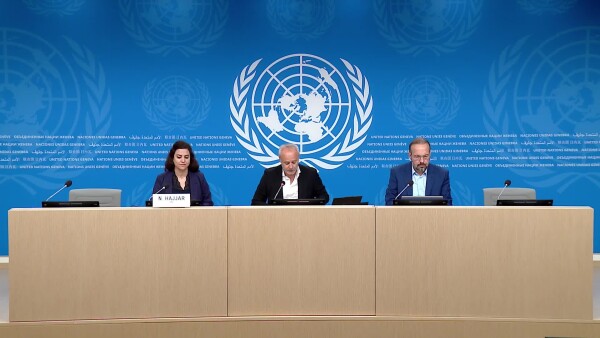
- Medium shot: podium speakers seated next to large screen TV relaying broadcast image of the press conference, Room XIV, Palais des Nations
- SOUNDBITE (English): ITC Executive Director, Pamela Coke-Hamilton: “The pandemic has shown that the resilience of businesses matter. It has also laid bare a resilience divide between small and large firms. Developed countries have the financial means to sustain their economies and protect the most vulnerable. But most developed and least developed countries are unable to do the same.”
- Medium shot, journalist, masked and seated, texting on mobile phone in front of laptop.
- SOUNDBITE (English): ITC Executive Director, Pamela Coke-Hamilton: “If such resilience was necessary during the pandemic, it will be even more crucial in addressing climate change. The economic disruption of climate change is expected to be like that of a COVID-19-size pandemic happening every decade. Going green is a survival imperative; the longer firms take to act, the higher the costs become.”
- Medium shot, journalists seated, masked and distanced.
- SOUNDBITE (English): ITC Chief Economist Barbara Ramos: “We need to learn from COVID in order to increase the resilience of small firms. So what have we learned? Our SME report last year showed that two out of three micro and small firms were strongly affected by the pandemic, and that’s compared to half of large firms; we know that. We also know that one in four micro firms were at risk of shutting down within three months and this is compared to one in 10 large firms.”
- Medium shot, side view of podium speakers seated during press conference.
- SOUNDBITE (English): ITC Chief Economist Barbara Ramos: “This matters because we found that companies that were resilient to this crisis were five times less likely to fire employees during the crisis, five times less likely. And if you add to that the fact that SMEs employ a large share of the world’s population, their resilience really does matter.”
- Medium shot, participant, seated and masked, following the press conference slide presentation on his laptop.
- SOUNDBITE (English): ITC Executive Director, Pamela Coke-Hamilton: “During the pandemic, the liquidity of banks especially in the Caribbean was upwards of $9 billion, but somehow they lacked the ability to attribute value to the green transition process and what this will mean. And so it’s also important for BSOs and governments to advocate with the financial institutions to help them understand the long-term strategy and the need to invest and allow you know this kind of support to come into effect.”
- Medium shot, journalist, seated with reading glasses resting on forehead which he then puts on, examining ITC report.
- Medium-wide shot, journalists, seated and distanced, with podium speakers to rear.
Similar Stories
1
1
1
Edited News | OCHA , UNICEF , WFP
Aid agencies warned on Friday of the fast-developing humanitarian emergency inside Taiz City in Yemen, which has been encircled by de facto Houthi forces fighting government troops along the country’s west coast.
1
1
1
Press Conferences | UN WOMEN , WFP , WHO
UN WOMEN: Sudan Women and girls one year after the fall of El Fasher; increasing drone attacks across the country; WFP: DRC - Ebola spreads to eighth DRC province as WFP delivers food, builds treatment centres and keeps supplies moving; WHO - Update on Ebola (Bundibugyo Virus Disease)
1
12
1
1
Press Conferences , Images | UNOG
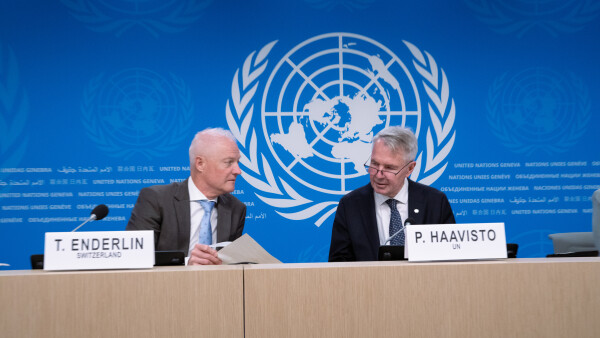
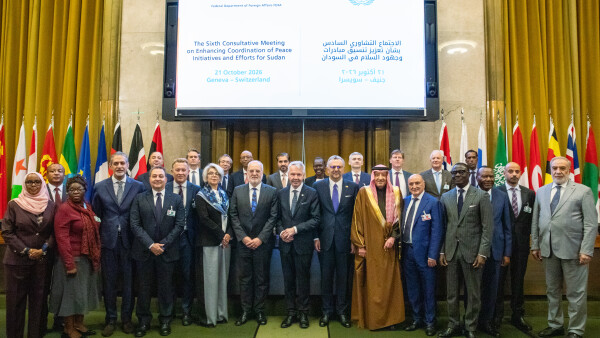
Closing Press Conference following the Sixth Consultative Meeting on Enhancing Coordination of Peace Initiatives and Efforts in Sudan

2
17
1
2
Edited News , Press Conferences , Images | OCHA , WMO
Two UN agencies teamed up on Wednesday to issue an appeal for immediate assistance to help communities already being impacted by the strongest El Niño on record.
3
16
2
2
Edited News , B-roll , Conferences , Images | UNITED NATIONS , UNOG
Sixth Consultative Meeting on Enhancing Coordination of Peace Initiatives and Efforts for Sudan
1
1
1
Press Conferences | CITES
Wildlife trade and conservation policy discussions at the 81st meeting of the CITES Standing Committee (SC81)

1
1
1
Edited News | UNICEF , WHO , UNHCR
Yemen war continues to force families from homes amid hunger and disease
More than 250,000 people have now fled renewed fighting in Yemen, the UN said on Tuesday, citing particular concern for those sheltering in the southwestern city of Taiz and the wider governorate, where access is “essentially blocked”.
1
1
1
Press Conferences | UNHCR , UNCTAD , WMO , OCHA , UNICEF , WHO
UNHCR Hungary’s 1956 Refugee Crisis: 70 Years On, UNCTAD World Investment Forum 2026, Doha, WMO Greenhouse Gas Bulletin and Climate Update for COP31, OCHA Afghanistan: Malnutrition, Girls’ Education and Recovery, UNICEF Yemen: Child Malnutrition and Unsafe Water in Taiz, WHO Inequalities in Noncommunicable Diseases and Risk Factors
1
1
1
Press Conferences | UNHCR
End of UNHCR's 77th Annual Executive Committee (ExCom) meeting week

1
1
1
Edited News | UNICEF
A little over one year since a ceasefire agreement was announced between Hamas fighters and Israel, more than 340 children have been reported killed and hundreds more injured, the UN Children’s Fund, UNICEF, said on Friday.
1
1
1
Press Conferences | UNICEF , IOM , UNHCR
UN Special Assistant to the Personal Envoy Office (SUDAN): Peace Initiatives and Efforts in Sudan; UNICEF: Dire situation of children in Gaza; IOM: Damaged Homes and Energy Attacks Risk Displacing Ukrainians for this winter; UNHCR: update on EXCOM week

1
1
1
Press Conferences | IOM , UNDRR
UN stresses importance of household preparedness for disaster risk reduction.