

The United Nations Office at Geneva
Multimedia Newsroom
UN sounds alarm over killings at Syrian camp for displaced people
The Al Hol camp, Syria’s largest site for refugees and displaced persons, has been the site of 12 killings since the beginning of the year, the United Nations humanitarian office reported today. The camp shelters 62,000 people who have fled violence and hardship from several countries, and operates under the control of Syrian Kurdish forces.
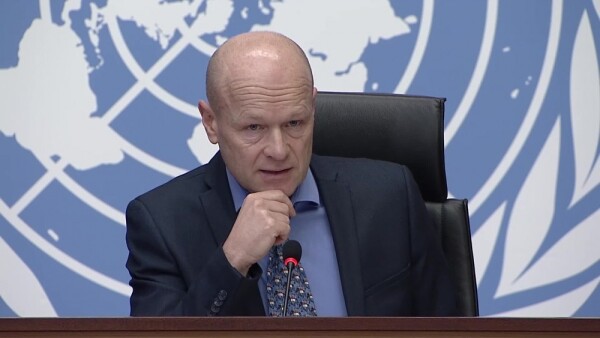
“We are seriously concerned over the deteriorating security situation in Al Hol camp in north-east Syria. Between 1 and 16 January, the UN has received reports of the murders of 12 Syrian and Iraqi camp residents, including one female Iraqi refugee. Another person was critically injured in a violent attack”, Jens Laerke, Spokesperson for the UN Office for the Coordination of Humanitarian Affairs (OCHA) said today at a news briefing at the UN in Geneva, Switzerland.
Most of the people in the camp are women and children who came to Al Hol seeking protection and humanitarian assistance. According to UNICEF, 94 per cent of the people in the camp are women and children, and 66 per cent are children.
“There is such a high proportion of children in the camp. [It is important] for those children to be treated as children, and that the world does what is in those children’s best interest”, OCHA’s Jens Laerke said. “I don’t think anybody can be in doubt that it’s not in their best interest to be stuck in this camp for years on end. So repatriation of not least particularly children would be most welcome”.
Included in the camp’s population are family members of fighters for the so-called Islamic State, as well as their supporters and victims. Almost half of the camp’s residents are Iraqi nationals, and 38 per cent are Syrian.
“This recent rise in violence among the camp population is not only, of course, a tragic loss of life, but it also jeopardizes the ability of the UN and humanitarian partners to continue to safely deliver critical humanitarian assistance and services to the residents,” Laerke said.
“The United Nations and humanitarian partners provide a range of assistance in Al Hol, including emergency and primary health care, water, shelter, food and hygiene distributions, and protection,” he added.
The UN Humanitarian Coordinator in Syria, Imran Riza, and the UN Regional Humanitarian Coordinator for the Syria Crisis, Muhannad Hadi, have issued a statement on the utmost importance of ensuring the safety and wellbeing of people at Al Hol. In their statement, the two UN officials stressed the "urgent need for durable solutions to be found for every person living in the camp".
“We are calling on those authorities who control the security in the camp to ensure the safety of the camp residents, first and foremost -- but also the humanitarian workers”, Laerke said.
Since the fall of Daesh’s self-proclaimed caliphate in March 2019, after a US-backed Kurdish offensive in eastern Syria, Kurdish authorities in the area have repeatedly demanded that the women and children in the camp be repatriated to their countries and areas of origin.
- Exterior wide shot, Palais des Nations, Flag alley, a cloudy day.
- Wide shot, press briefing room
- SOUNDBITE (English) — Jens Laerke, Spokesperson for the UN Office for the Coordination of Humanitarian Affairs (OCHA): “We are seriously concerned over the deteriorating security situation in Al Hol camp in north-east Syria. Between 1 and 16 January, the UN has received reports of the murders of 12 Syrian and Iraqi camp residents, including one female Iraqi refugee. Another person was critically injured in a violent attack”.
- Close up, journalist in the room
- SOUNDBITE (English) - Jens Laerke, Spokesperson for the UN Office for the Coordination of Humanitarian Affairs (OCHA): “There is such a high proportion of children in the camp. For those children to be treated as children, and that the world does what is in those children’s best interest. I don’t think anybody can be in doubt that it’s not in their best interest to be stuck in this camp for years on end. So repatriation of not least particularly children would be most welcome”.
- Medium shot, camera finder with podium in background
- SOUNDBITE (English) - Jens Laerke, Spokesperson for the UN Office for the Coordination of Humanitarian Affairs (OCHA): “This recent rise in violence among the camp population is not only of course a tragic loss of life, but it also jeopardizes the ability of the UN and humanitarian partners’ to continue to safely deliver critical humanitarian assistance and services to the residents. The United Nations and humanitarian partners provide a range of assistance in Al Hol, including emergency and primary health care, water, shelter, food and hygiene distributions, and protection”.
- Medium shot, journalist in press briefing room at the UN Palais
- SOUNDBITE (English) - Jens Laerke, Spokesperson for the UN Office for the Coordination of Humanitarian Affairs (OCHA): “We are calling on those authorities who control the security in the camp to ensure the safety of the camp residents, first and foremost, but also the humanitarian workers”.
- Medium shot, spokesperson OHCHR and journalist in press briefing room
- Wide shot, podium with spokespersons
- Medium shot, journalist with cell phone in press briefing room
Similar Stories

1
1
1
Edited News | OCHA , UNICEF , WFP
Aid agencies warned on Friday of the fast-developing humanitarian emergency inside Taiz City in Yemen, which has been encircled by de facto Houthi forces fighting government troops along the country’s west coast.

2
17
1
2
Edited News , Press Conferences , Images | OCHA , WMO
Two UN agencies teamed up on Wednesday to issue an appeal for immediate assistance to help communities already being impacted by the strongest El Niño on record.

3
16
2
2
Edited News , B-roll , Conferences , Images | UNITED NATIONS , UNOG
Sixth Consultative Meeting on Enhancing Coordination of Peace Initiatives and Efforts for Sudan

1
1
1
Edited News | UNICEF , WHO , UNHCR
Yemen war continues to force families from homes amid hunger and disease
More than 250,000 people have now fled renewed fighting in Yemen, the UN said on Tuesday, citing particular concern for those sheltering in the southwestern city of Taiz and the wider governorate, where access is “essentially blocked”.

1
1
1
Edited News | UNICEF
A little over one year since a ceasefire agreement was announced between Hamas fighters and Israel, more than 340 children have been reported killed and hundreds more injured, the UN Children’s Fund, UNICEF, said on Friday.

1
1
1
Edited News | UNICEF , IFRC
Six weeks after Nepal’s deadly flooding disaster, communities are still struggling to rebuild their lives, but they will need sustained help as global warming increases the risk of another Himalayan catastrophe, the UN Children’s Fund (UNICEF) said on Friday.

1
1
1
Edited News | WHO
In suspected Russia plague death, testing and monitoring underway – WHO
The death of a lab worker in Russia’s Siberia region has sparked concerns about plague being the cause, the UN World Health Organization (WHO) said on Tuesday, adding that it was following the situation closely.

1
1
Edited News | OHCHR , UNOG
UN Human Rights Chief Volker Türk on Friday provided and oral update to the 63rd session of the Human rights Council on Ukraine.

1
1
1
Edited News | OHCHR , UNOG
UN Human Rights Chief Volker Türk on Friday provided and oral update to the 63rd session of the Human rights Council on the human rights situation in Haiti.

1
1
1
Edited News | WHO
Repeated delays in bringing lifesaving medicines, prosthetics and more from Israel into Gaza risk having devastating consequences on Palestinians who urgently need them in the wartorn enclave, the UN World Health Organization (WHO) said on Friday. “A truck full of non-priority supplies or the right supplies arriving too late, doesn't save lives. That's the question that actually matters," said Dr Reinhilde Van De Weerdt, WHO Representative in the OPT.

1
1
1
Edited News | WHO
DRC: Early access to care and oxygen decisive for Ebola patients’ survival – WHO
In the Democratic Republic of the Congo (DRC), health workers fighting the country’s largest-ever Ebola outbreak are struggling to overcome critical challenges to patient care, the UN World Health Organization (WHO) warned on Tuesday.

1
1
1
Edited News | OCHA , UN
Civilians in Iran are continuing to feel the consequences of months of conflict and military escalation, the UN’s top official in the country has said, as loss of life, damage to civilian infrastructure and mounting economic pressures leave many facing continued uncertainty.