

The United Nations Office at Geneva
Multimedia Newsroom
DRC: Early access to care and oxygen decisive for Ebola patients’ survival – WHO
In the Democratic Republic of the Congo (DRC), health workers fighting the country’s largest-ever Ebola outbreak are struggling to overcome critical challenges to patient care, the UN World Health Organization (WHO) warned on Tuesday.
The number of confirmed Ebola cases has passed 8,000 for the first time since the current outbreak began, according to the Congolese authorities.
“While we are beginning to see a reduction in transmission in some areas, the number of cases remains high for this outbreak,” Dr Janet Diaz of WHO’s Health Emergencies Programme told reporters in Geneva.
With 8,067 confirmed cases and 3,901 deaths, the case fatality rate is more than 48 per cent.
“We know that for Ebola disease, early access to care can significantly improve chances of survival,” Dr Diaz said. “Yet in this outbreak, many people are still dying at home or in their communities because they are unable to reach health facilities on time.”
The WHO medic recently returned from her second visit to the DRC since the current Ebola outbreak caused by the Bundibugyo virus was declared in May. She notably visited treatment centres in the epicentre of the epidemic, Bunia, capital of the Ituri province in the country’s northeast.
“Delays in seeking care, together with challenges in access and referral, continue to complicate the response,” she said, adding that WHO and its partners have focused on improving early recognition of illness, rapid referral systems, and early supportive care.
Dr Diaz said that as part of the response, Ebola treatment capacity has been expanded “from only a handful of beds… at the start of the outbreak to more than 1,600 beds across 50 treatment centres within the seven affected provinces,” with plans for further expansion to over 2,000 beds.
WHO and partners have also trained nearly 400 health workers, launching a training hub in Bunia for this purpose.
“Every patient bed requires a skilled workforce to provide safe, quality care around the clock,” Dr Diaz insisted.
A key component of supportive care for patients with Ebola, particularly those with severe illness, is oxygen, yet this life-saving medicine remains “unavailable or unreliable in many health facilities, especially in emergency settings”.
Ensuring access to oxygen “is about much more than cylinders or equipment”, the WHO official insisted, as it requires functioning health systems, reliable infrastructure, trained health workers and sustainable delivery systems “that reach patients wherever they are”.
“Without previous oxygen scale-up efforts in Ebola and Marburg [virus disease] responses, we would not be where we are today in terms of more positive outcomes for patients,” she concluded.
While there is currently no approved vaccine against Ebola Bundibugyo virus, vaccine trials are underway. Last week, WHO announced that 20,000 doses of the Ervebo vaccine, which has been effective against Ebola Zaire virus in the past, have been allocated for a research vaccination programme in Ituri province.
-ends-
STORY DRC Ebola update – WHO
TRT: 2:41’’
SOURCE: UNTV CH
RESTRICTIONS: CREDIT WHO BROLL
LANGUAGE: ENGLISH/NATS
ASPECT RATIO: 16:9
DATELINE: 29 SEPTEMBER 2026 GENEVA, SWITZERLAND and 22 JULY 2026 EBOLA TREATMENT CENTRE (ETC) AT THE EVANGELICAL MEDICAL CENTRE, BUNIA, ITURI PROVINCE, DEMOCRATIC REPUBLIC OF THE CONGO
1. Exterior wide shot: Palais des Nations, Flag Alley.
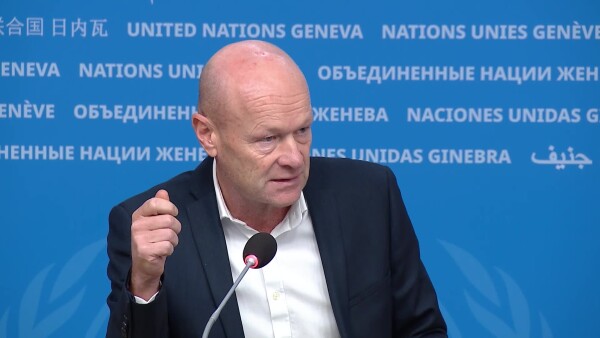
2. Medium shot: Speakers at the podium of the press conference.
3. SOUNDBITE (English) – Dr Janet Diaz, Unit Head, Safe Scalable Care, Health Emergencies Programme, World Health Organization (WHO): “While we are beginning to see a reduction in transmission in some areas, the number of cases remains high for this outbreak. We know that for Ebola disease, early access to care can significantly improve chances of survival. Yet in this outbreak, many people are still dying at home or in their communities because they are unable to reach health facilities on time.”
4. Medium reverse shot: Speakers at the podium of the press conference; speakers on screens; journalists in the Press room.
5. SOUNDBITE (English) – Dr Janet Diaz, Unit Head, Safe Scalable Care, Health Emergencies Programme, World Health Organization (WHO): “Delays in seeking care, together with challenges in access and referral, continue to complicate the response. WHO and partners have focused on strengthening early recognition of illness, rapid referral systems, and early supportive care in this response.”
6. Wide shot: Speaker on screens; journalists in the Press room.
7. SOUNDBITE (English) – Dr Janet Diaz, Unit Head, Safe Scalable Care, Health Emergencies Programme, World Health Organization (WHO): “We have expanded Ebola treatment capacity from only a handful of beds that was at the start of the outbreak to more than 1,600 beds across 50 treatment centers within the seven affected provinces, with further expansion planned to reach just over 2,000 beds.”
8. Medium reverse shot: Speakers at the podium of the press conference; speakers on screens; journalists in the Press room.
9. SOUNDBITE (English) – Dr Janet Diaz, Unit Head, Safe Scalable Care, Health Emergencies Programme, World Health Organization (WHO): “We have trained a large number of health workers, in total nearly 400, with the newly launched training hub in Bunia training around 30 to 60 health workers a week. Every patient bed requires a skilled workforce to provide safe, quality care around the clock.”
10. Wide reverse shot: Speakers at the podium of the press conference; speakers on screens; journalists in the Press room.
11. SOUNDBITE (English) – Dr Janet Diaz, Unit Head, Safe Scalable Care, Health Emergencies Programme, World Health Organization (WHO): “Without previous oxygen scale-up efforts in Ebola and Marburg responses, we would not be where we are today in terms of more positive outcomes for patients. Oxygen is an essential life-saving medicine and a critical component of supportive care for patients with Ebola, particularly those with severe illness.”
12. Various shots: Journalists in the Press room.
WHO BROLL – CREDIT WHO: 22 JULY 2026, EBOLA TREATMENT CENTRE (ETC) AT THE EVANGELICAL MEDICAL CENTRE, BUNIA, ITURI PROVINCE, DEMOCRATIC REPUBLIC OF THE CONGO
13. MED outside shot, Ebola Treatment Centre, Bunia
14. Various shots of a health worker donning PPE
15. Various shots of health workers in PPE examining a patient in an isolation room
16. MED of white cylinder
17. Various shots of a health worker helping to feed a patient.

Similar Stories
1
1
1
Edited News | OCHA , UNICEF , WFP
Aid agencies warned on Friday of the fast-developing humanitarian emergency inside Taiz City in Yemen, which has been encircled by de facto Houthi forces fighting government troops along the country’s west coast.

2
17
1
2
Edited News , Press Conferences , Images | OCHA , WMO
Two UN agencies teamed up on Wednesday to issue an appeal for immediate assistance to help communities already being impacted by the strongest El Niño on record.
3
16
2
2
Edited News , B-roll , Conferences , Images | UNITED NATIONS , UNOG
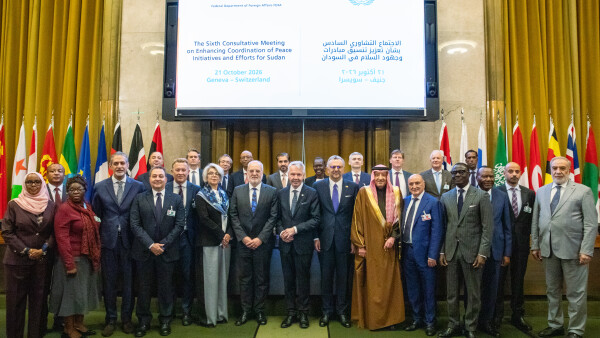
Sixth Consultative Meeting on Enhancing Coordination of Peace Initiatives and Efforts for Sudan

1
1
1
Edited News | UNICEF , WHO , UNHCR
Yemen war continues to force families from homes amid hunger and disease
More than 250,000 people have now fled renewed fighting in Yemen, the UN said on Tuesday, citing particular concern for those sheltering in the southwestern city of Taiz and the wider governorate, where access is “essentially blocked”.

1
1
1
Edited News | UNICEF
A little over one year since a ceasefire agreement was announced between Hamas fighters and Israel, more than 340 children have been reported killed and hundreds more injured, the UN Children’s Fund, UNICEF, said on Friday.

1
1
1
Edited News | UNICEF , IFRC
Six weeks after Nepal’s deadly flooding disaster, communities are still struggling to rebuild their lives, but they will need sustained help as global warming increases the risk of another Himalayan catastrophe, the UN Children’s Fund (UNICEF) said on Friday.

1
1
1
Edited News | WHO
In suspected Russia plague death, testing and monitoring underway – WHO
The death of a lab worker in Russia’s Siberia region has sparked concerns about plague being the cause, the UN World Health Organization (WHO) said on Tuesday, adding that it was following the situation closely.

1
1
Edited News | OHCHR , UNOG
UN Human Rights Chief Volker Türk on Friday provided and oral update to the 63rd session of the Human rights Council on Ukraine.

1
1
1
Edited News | OHCHR , UNOG
UN Human Rights Chief Volker Türk on Friday provided and oral update to the 63rd session of the Human rights Council on the human rights situation in Haiti.

1
1
1
Edited News | WHO
Repeated delays in bringing lifesaving medicines, prosthetics and more from Israel into Gaza risk having devastating consequences on Palestinians who urgently need them in the wartorn enclave, the UN World Health Organization (WHO) said on Friday. “A truck full of non-priority supplies or the right supplies arriving too late, doesn't save lives. That's the question that actually matters," said Dr Reinhilde Van De Weerdt, WHO Representative in the OPT.

1
1
1
Edited News | OCHA , UN
Civilians in Iran are continuing to feel the consequences of months of conflict and military escalation, the UN’s top official in the country has said, as loss of life, damage to civilian infrastructure and mounting economic pressures leave many facing continued uncertainty.
1
1
1
Edited News | WHO , UNICEF
Aid agencies in Yemen highlighted the growing hunger emergency sparked by renewed fighting between Houthi opposition forces and Government troops, after mobile health clinics reported that hundreds of children displaced by the violence are suffering from the most deadly form of malnutrition.