

The United Nations Office at Geneva
Multimedia Newsroom
Somalia: child hunger surges as humanitarian aid dries up – UNICEF
The global funding crisis for vital lifesaving work is taking a growing toll on the most vulnerable children in Somalia, where hundreds of health and nutrition facilities have been forced to close, the UN Children’s Fund (UNICEF) warned on Friday.
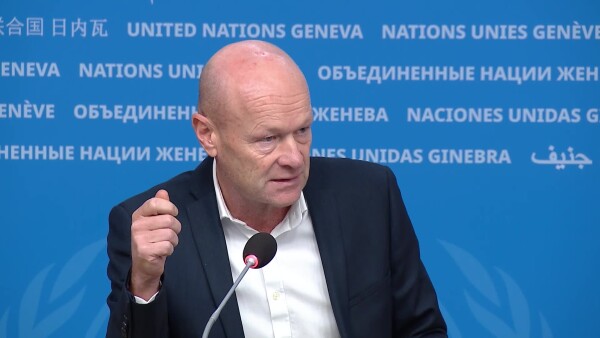
“In Somalia today, aid cuts are closing the doors to health care. They're shutting down nutrition centres and they're pushing water protection and education further and further from those who need it,” said James Elder, UNICEF spokesperson, to journalists in Geneva.
Speaking from Nairobi after visiting Baidoa and Burhakaba regions, northwest of Mogadishu, Mr. Elder highlighted how 205 nutrition facilities have already closed amid unprecedented cuts in funding humanitarian aid, further limiting access to essential services and care for children facing hunger and malnutrition. “As ever, children are paying the price,” he said.
In the first six months of this year, compared to the same time last year, Somalia has seen a 32 per cent increase in children being admitted to stabilisation centres with severe acute malnutrition and complications.
“Fewer facilities mean longer journeys for mums and babies. Longer journeys mean later treatment. Later treatment means more severe illness and greater risk of preventable death,” warned Mr. Elder.
Drought and displacement are worsening malnutrition
Consecutive failed rains and worsening drought have ruined crops and livestock, depriving hundreds of thousands of people across the country of food and water. More than half a million people were displaced in the first three months of 2026, with drought accounting for nine out of every 10 displacements. Alarmingly, 85 per cent of those displaced are women and children, who are also among the most severely affected by malnutrition.
“This is the wrong moment to retreat. Somalia is confronting a worsening climate crisis, severe droughts in parts of the north, conflict, displacement, all on the back of a war in Iran and rising costs for fuel and fertilizer,” the UNICEF official warned. The record strength of El Niño threatens to compound Somalia's ongoing humanitarian crisis with severe flooding forecast in the coming months.
“Funding cuts have contributed to a 30 per cent reduction in health and nutrition coverage and the potential scale for further disruption is enormous. Under these severe funding scenarios that we are living out, as many as 618 health facilities could close nationwide,” he added.
According to the UN World Food Programme, approximately six million people in Somalia face acute food insecurity. Nearly 500,000 children under the age of five urgently need treatment for acute malnutrition.
“Nearly 1.2 million children are projected to suffer from malnutrition this year, including half a million – say it slowly – 500,000 girls and boys with severe acute malnutrition, the deadliest form,” Mr. Elder stressed.
During the drought of 2022, UNICEF’s support helped 130,000 girls and boys to stay in school, a key boost to child protection in a country that has one of the world’s highest rates of reported violations against youngsters. In 2024 and 2025, thousands of children formerly associated with armed groups, or at risk of recruitment, received reintegration support through child protection service points.
In today’s interconnected world, cuts to humanitarian aid risk undermining not only lives and livelihoods but also security and economic stability beyond Somalia according to UNICEF’s spokesperson.
“Dismantling effective aid at this moment of greatest need, it is not a saving; it's a decision to pay more later in money, in security, in lost development and increasingly, in child's lives,” said Mr. Elder.
Ends
Story: “Somalia child hunger - UNICEF” – Friday 21 August 2026
Speaker:
- James Elder, UNICEF spokesperson (from Nairobi)
TRT: 02’53”
SOURCE: UNTV CH
RESTRICTIONS: NONE
LANGUAGE: ENGLISH / NATS
ASPECT RATIO: 16:9
DATELINE: 21 August 2026 - GENEVA, SWITZERLAND
Geneva Press briefing
SHOTLIST
- Exterior medium shot: UN flag alley.
- Wide shot of the press conference room.
- SOUNDBITE (English) James Elder, UNICEF spokesperson: “In Somalia today, aid cuts are closing the doors to health care, they're shutting down nutrition centres and they're pushing water protection and education further and further from those who need it. As ever, children are paying the price. So, on the back of unprecedented cuts in humanitarian aid, 205 nutrition facilities have already closed.”
- Medium shot: journalists taking notes in the press conference room.
- SOUNDBITE (English) James Elder, UNICEF spokesperson: “Fewer facilities mean longer journeys for mums and babies. Longer journeys mean later treatment. Later treatment means more severe illness and greater risk of preventable death.”
- Close shot: journalist taking notes in the press conference room.
- SOUNDBITE (English) James Elder, UNICEF spokesperson: “This is the wrong moment to retreat. Somalia is confronting a worsening climate crisis, severe droughts in parts of the north, conflict, displacement, all on the back of a war in Iran and rising costs for fuel and fertilizer. And, of course, a record strength El Niño threatens to compound Somalia's ongoing humanitarian crisis with severe flooding forecasted to come in the coming months.”
- Medium shot of the press conference room.
- SOUNDBITE (English) James Elder, UNICEF spokesperson: “Funding cuts have contributed to a 30 per cent reduction in health and nutrition coverage and the potential scale for further disruption is enormous. Under these severe funding scenarios that we are living out, as many as 618 health facilities could close nationwide.”
- Lateral medium shot of the screens in the press conference room.
- SOUNDBITE (English) James Elder, UNICEF spokesperson: “Nearly 1.2 million children are projected to suffer from malnutrition this year, including half a million - say it slowly - 500,000 girls and boys with severe acute malnutrition, the deadliest form.”
- Large shot of the press conference room.
13. SOUNDBITE (English) James Elder, UNICEF spokesperson: “Protecting children is not a discretionary expense. Preventing suffering is not an inefficiency and dismantling effective aid at the moment of greatest need, it is not a saving; it's a decision to pay more later in money, in security, in lost development and increasingly in child's lives.”
- Somalia B-Rolls: Balow internal displaced camp – shot on 17-18 August 2026.
Medium shot of woman in the camp. Medium shot of woman preparing a fire to cook. CREDIT ON-SCREEN UNICEF.
15. Somalia B-Rolls: Mothers and children at Burhakaba District Hospital, Stabilization Centre – shot on 17-18 August 2026. CREDIT ON-SCREEN UNICEF.

Similar Stories
1
1
1
Edited News | OCHA , UNICEF , WFP
Aid agencies warned on Friday of the fast-developing humanitarian emergency inside Taiz City in Yemen, which has been encircled by de facto Houthi forces fighting government troops along the country’s west coast.

2
17
1
2
Edited News , Press Conferences , Images | OCHA , WMO
Two UN agencies teamed up on Wednesday to issue an appeal for immediate assistance to help communities already being impacted by the strongest El Niño on record.
3
16
2
2
Edited News , B-roll , Conferences , Images | UNITED NATIONS , UNOG
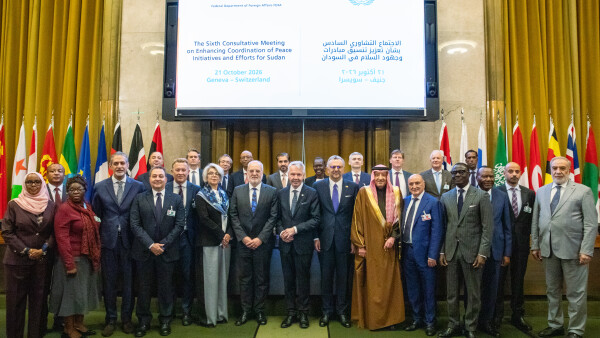
Sixth Consultative Meeting on Enhancing Coordination of Peace Initiatives and Efforts for Sudan
1
1
1
Edited News | UNICEF , WHO , UNHCR
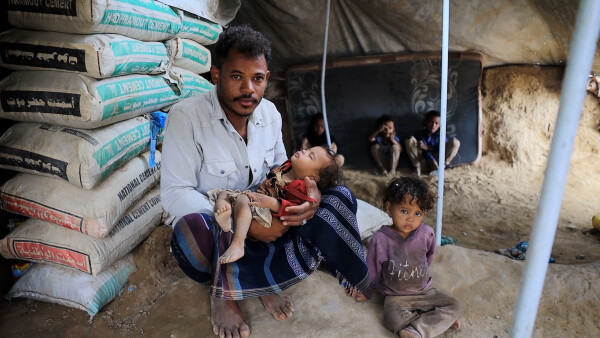
Yemen war continues to force families from homes amid hunger and disease
More than 250,000 people have now fled renewed fighting in Yemen, the UN said on Tuesday, citing particular concern for those sheltering in the southwestern city of Taiz and the wider governorate, where access is “essentially blocked”.

1
1
1
Edited News | UNICEF
A little over one year since a ceasefire agreement was announced between Hamas fighters and Israel, more than 340 children have been reported killed and hundreds more injured, the UN Children’s Fund, UNICEF, said on Friday.

1
1
1
Edited News | UNICEF , IFRC
Six weeks after Nepal’s deadly flooding disaster, communities are still struggling to rebuild their lives, but they will need sustained help as global warming increases the risk of another Himalayan catastrophe, the UN Children’s Fund (UNICEF) said on Friday.

1
1
1
Edited News | WHO
In suspected Russia plague death, testing and monitoring underway – WHO
The death of a lab worker in Russia’s Siberia region has sparked concerns about plague being the cause, the UN World Health Organization (WHO) said on Tuesday, adding that it was following the situation closely.

1
1
Edited News | OHCHR , UNOG
UN Human Rights Chief Volker Türk on Friday provided and oral update to the 63rd session of the Human rights Council on Ukraine.

1
1
1
Edited News | OHCHR , UNOG
UN Human Rights Chief Volker Türk on Friday provided and oral update to the 63rd session of the Human rights Council on the human rights situation in Haiti.

1
1
1
Edited News | WHO
Repeated delays in bringing lifesaving medicines, prosthetics and more from Israel into Gaza risk having devastating consequences on Palestinians who urgently need them in the wartorn enclave, the UN World Health Organization (WHO) said on Friday. “A truck full of non-priority supplies or the right supplies arriving too late, doesn't save lives. That's the question that actually matters," said Dr Reinhilde Van De Weerdt, WHO Representative in the OPT.

1
1
1
Edited News | WHO
DRC: Early access to care and oxygen decisive for Ebola patients’ survival – WHO
In the Democratic Republic of the Congo (DRC), health workers fighting the country’s largest-ever Ebola outbreak are struggling to overcome critical challenges to patient care, the UN World Health Organization (WHO) warned on Tuesday.

1
1
1
Edited News | OCHA , UN
Civilians in Iran are continuing to feel the consequences of months of conflict and military escalation, the UN’s top official in the country has said, as loss of life, damage to civilian infrastructure and mounting economic pressures leave many facing continued uncertainty.