

The United Nations Office at Geneva
Multimedia Newsroom
Afghanistan in Crisis: Drought, Malnutrition, and a Worsening Humanitarian Situation
Imagine being one of a family of nine and sitting down to a meal of potato peelings and other scraps, boiled up into a soup. This is the harsh reality for many of Afghanistan’s most vulnerable families, forced on them by climate change and drought, widespread malnutrition and increasing restrictions on women, since the Taliban overran Kabul in 2021.
Aid agencies are doing what they can to help, including by identifying dangerously malnourished children in sparsely populated “ghost villages” where those who can leave, do so, said Olga Cherevko from the UN aid coordination office, OCHA.
But with nearly 22 million people in need across Afghanistan and the UN’s $1.7 billion appeal only 14 per cent funded, life is “becoming impossible” in remote areas, the agency warns.
Survival strategy
Water scarcity is the main cause of strife for villagers in Bamyan province who struggle, far from Afghanistan’s major cities.
“This particular village that I went to, they told me that around half of the population had left, actually, because there’s simply no water to irrigate the lands, and so all the crops that they were growing, they dried up,” Ms. Cherevko told UN News. “People who could leave, they left.”
Those who have remained often do so because they have no choice; they cannot afford to leave.
Ms. Cherevko shared a striking example: “One of the men that I met had nine family members. He showed me what they were having for lunch; it was essentially a bowl of what looked like rotten potato peelings, cooked into a soup just to survive.”
3.7 million children facing acute malnutrition in 2026
Today, an estimated 3.7 million children in Afghanistan suffer from acute malnutrition. Many cases go unrecognized and in some UN-supported clinics, “children die because parents simply didn’t know what was happening; by the time they brought the child in, it was already too late”, Ms. Cherevko explained.
The UN is addressing this critical issue by providing screening and medical support, but also by visiting remote communities and raising awareness.
Forced returnees’ plight
Agencies also provide basic assistance and registration every day to thousands of people who are often forcibly returned to the country by its neighbours.
Most of these returnees have never lived in Afghanistan and did not choose to return. Their biggest concern is survival in a land of few opportunities. “Once the buses drop them in towns, many have nowhere to go,” Ms. Cherevko explained. Some attempt to return to the countries they came from, only to be deported again. Despite this, many continue trying to leave Afghanistan, driven by desperation and a lack of alternatives.
Alarming situation for women and girls
With Bamyan province fresh in her mind, Ms. Cherevko highlighted a recurring message from the Afghan women she visited: when opportunities for women are limited, the entire household suffers. Restrictions on education for girls decreed by the Taliban are denying them future employment. “All the women I spoke to are deeply worried about their daughters, who can no longer attend school and may have no future,” the OCHA worker said.
These restrictions are affecting the work of the UN and essential services in turn.
A shortage of female professionals, particularly doctors, has become critical, for instance. Now, when a female doctor leaves her position, it is often nearly impossible to replace her. This has limited women’s and girls’ access to life-saving healthcare drastically, including maternal and neonatal care, as well as services for malnutrition and education.
From January to April 2026, aid partners reached 5.9 million people in Afghanistan with at least one form of assistance. Of this number, 3.5 million received food assistance, underscoring the scale of acute food insecurity and the many other needs of millions of people “who require repeated and complementary support throughout the year to ensure their needs are adequately met”, OCHA said.
ends
STORY: Afghanistan humanitarian update - OCHA
TRT: 03:46”
SOURCE: UNTV CH
RESTRICTIONS: FOR BROLL PLEASE CREDIT OCHA.
LANGUAGE: ENGLISH / NATS
ASPECT RATIO: 16:9
DATELINE: 22 JUNE 2026 GENEVA, SWITZERLAND
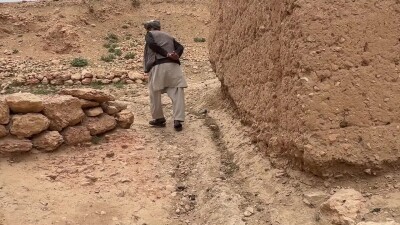
- Wide shot of the road in Bayman province, 11 June 2026. Please credit OCHA.
- SOUNDBITE (English) – Olga Cherevko from the United Nations Office for the Coordination of Humanitarian Affairs in Afghanistan (OCHA): “A lot of times, particularly in communities that are very remote people may not know what it entails, or what it means for a child to become malnourished. And a lot of times, they actually will not bring a child for treatment or for screening until it's too late.”
- Medium shot of a house Baghlak Sofia village in Bayman province, 11 June 2026. Please credit OCHA.
- SOUNDBITE (English) – Olga Cherevko from the United Nations Office for the Coordination of Humanitarian Affairs in Afghanistan (OCHA): “This particular village that I went to, they told me that around half of the population had left, actually, because there's simply no water to irrigate the lands, and so all the crops that they were growing, they dried up. And people who could leave, they left.”
- Medium shot in Baghlak Sofia village in Bayman province, 11 June 2026. Please credit OCHA.
- SOUNDBITE (English) – Olga Cherevko from the United Nations Office for the Coordination of Humanitarian Affairs in Afghanistan (OCHA): “One of the men that I met, he has nine family members in his family, and he showed me what they're having for lunch, and it was basically a bowl of what looked like rotten potato peels that they would then cook into some sort of a soup or whatever to survive."
- Medium shot of houses in Baghlak Sofia village in Bayman province, 11 June 2026. Please credit OCHA.
- SOUNDBITE (English) – Olga Cherevko from the United Nations Office for the Coordination of Humanitarian Affairs in Afghanistan (OCHA): “Nutrition and malnutrition is a huge issue here in Afghanistan, and of course, the UN does what they do in most other countries with this kind of problem, which is screen children, they treat them, they refer them for further treatment, but just as important as these screenings and as these treatments to make sure that malnutrition or deterioration is prevented, and malnutrition is prevented before it even starts, is education and awareness raising."
- Wide shot of the mountains and cars in Bayman province, 11 June 2026. Please credit OCHA.
- SOUNDBITE (English) – Olga Cherevko from the United Nations Office for the Coordination of Humanitarian Affairs in Afghanistan (OCHA): “There's thousands of people who are crossing the border every day, and we have reception centres with some basic assistance and registration and so forth that we offer as the UN system and as humanitarian partners.”
- Medium shot of a family pumping water in Bayman province, 11 June 2026. Please credit OCHA.
- SOUNDBITE (English) – Olga Cherevko from the United Nations Office for the Coordination of Humanitarian Affairs in Afghanistan (OCHA): “A lot of these returns are forced returns. They are not choosing to come, and their biggest concern, and I spoke with a lot of women and a lot of men is that, there are no opportunities for them here, and they don't know how they will survive, where they will go, past the, you know, once the bus takes them into town and drops them off, and a lot of them have nowhere to go.”
- Close up shot of kids pumping water in Bayman province, 11 June 2026. Please credit OCHA.
- SOUNDBITE (English) – Olga Cherevko from the United Nations Office for the Coordination of Humanitarian Affairs in Afghanistan (OCHA): “The UN is doing everything that they can, with the very little resources that we have these days because of the funding cuts, which are impacting families in a very difficult way. So, whether it's to provide livelihood opportunities, whether it's to provide resources for wells and any other sort of measures to try to help the people.”
- Various shots of in Bayman province, 11 June 2026. Please credit OCHA.
Similar Stories

1
1
1
Edited News | UNICEF , WHO , UNHCR
Yemen war continues to force families from homes amid hunger and disease
More than 250,000 people have now fled renewed fighting in Yemen, the UN said on Tuesday, citing particular concern for those sheltering in the southwestern city of Taiz and the wider governorate, where access is “essentially blocked”.

1
1
1
Edited News | UNICEF
A little over one year since a ceasefire agreement was announced between Hamas fighters and Israel, more than 340 children have been reported killed and hundreds more injured, the UN Children’s Fund, UNICEF, said on Friday.

1
1
1
Edited News | UNICEF , IFRC
Six weeks after Nepal’s deadly flooding disaster, communities are still struggling to rebuild their lives, but they will need sustained help as global warming increases the risk of another Himalayan catastrophe, the UN Children’s Fund (UNICEF) said on Friday.

1
1
1
Edited News | WHO
In suspected Russia plague death, testing and monitoring underway – WHO
The death of a lab worker in Russia’s Siberia region has sparked concerns about plague being the cause, the UN World Health Organization (WHO) said on Tuesday, adding that it was following the situation closely.

1
1
Edited News | OHCHR , UNOG
UN Human Rights Chief Volker Türk on Friday provided and oral update to the 63rd session of the Human rights Council on Ukraine.

1
1
1
Edited News | OHCHR , UNOG
UN Human Rights Chief Volker Türk on Friday provided and oral update to the 63rd session of the Human rights Council on the human rights situation in Haiti.

1
1
1
Edited News | WHO
Repeated delays in bringing lifesaving medicines, prosthetics and more from Israel into Gaza risk having devastating consequences on Palestinians who urgently need them in the wartorn enclave, the UN World Health Organization (WHO) said on Friday. “A truck full of non-priority supplies or the right supplies arriving too late, doesn't save lives. That's the question that actually matters," said Dr Reinhilde Van De Weerdt, WHO Representative in the OPT.

1
1
1
Edited News | WHO
DRC: Early access to care and oxygen decisive for Ebola patients’ survival – WHO
In the Democratic Republic of the Congo (DRC), health workers fighting the country’s largest-ever Ebola outbreak are struggling to overcome critical challenges to patient care, the UN World Health Organization (WHO) warned on Tuesday.

1
1
1
Edited News | OCHA , UN
Civilians in Iran are continuing to feel the consequences of months of conflict and military escalation, the UN’s top official in the country has said, as loss of life, damage to civilian infrastructure and mounting economic pressures leave many facing continued uncertainty.
1
1
1
Edited News | WHO , UNICEF
Aid agencies in Yemen highlighted the growing hunger emergency sparked by renewed fighting between Houthi opposition forces and Government troops, after mobile health clinics reported that hundreds of children displaced by the violence are suffering from the most deadly form of malnutrition.
1
1
1
Edited News | UNHCR
Displacement on the rise in Yemen as fighting continues - UNHCR
As hostilities worsen in Yemen, more people have been fleeing their homes, further intensifying the humanitarian crisis within the region, the UN Refugee Agency (UNHCR) warned on Tuesday.
1
1
1
Edited News | IOM , OHCHR , UNFPA , UNOG , UNHCR , WHO
Yemen’s humanitarian crisis growing by the hour amid spike in displacement
Yemenis displaced by renewed fighting have described fleeing for their lives amid shelling and gunfire, aid agencies reported on Friday, while highlighting the dramatic increase in humanitarian needs in the country and in Djibouti, where thousands have sought shelter.