

The United Nations Office at Geneva
Multimedia Newsroom
Edited News | IFRC , OHCHR
Flak jackets and final goodbyes: Lebanon’s first responders under fire
Flak jackets and final goodbyes: Lebanon’s first responders under fire
Before heading to strike sites in war-torn Lebanon, rescue workers and paramedics often say goodbye to one another – a ritual captured in widely shared videos reflecting the growing dangers faced by aid workers since hostilities between Hezbollah and Israel erupted on 2 March.
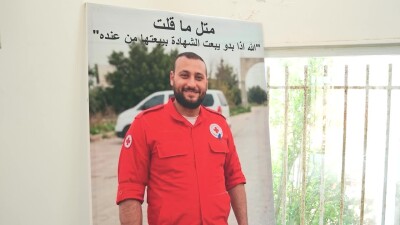
Recent attacks killed two Lebanese Red Cross volunteers: Youssef Assaf, who died during a rescue operation on 9 March, and Hassan Badawi, killed in a drone strike on 12 April.
According to the UN World Health Organization (WHO), there have been 169 confirmed attacks on healthcare workers and facilities in Lebanon, resulting in 116 deaths.
Lebanese authorities say more than 3,000 people have been killed since hostilities escalated in March, with violence continuing despite the ceasefire. Hezbollah fighters based in Lebanon began shelling Israeli communities shortly after the Israeli-US bombing of Iran began; exchanges of fire continue today, with media reports indicating that 21 Israeli soldiers have been killed since 2 March.
UN News spoke with Thameen Al-Kheetan, spokesperson for the UN human rights office, OHCHR; Tommaso Della Longa, spokesperson for the International Federation of Red Cross and Red Crescent Societies (IFRC); and Ali Saad from the Lebanese Red Cross. All of them agree on one thing: that first responders should never be targets.
Aid workers caught in the crossfire
From a human rights perspective, deliberately targeting medical personnel constitutes a war crime. According to OHCHR’s Mr. Al-Kheetan, the international community must do more to ensure the protection of healthcare workers in all conflicts.
The office “has documented cases where Israeli forces launched attacks involving direct strikes on civilians, including medical personnel,” he maintained, stressing that such attacks are not unprecedented, pointing to similar patterns previously documented in Gaza and in other conflicts around the world.
A ‘shocking’ sight
Describing a recent visit to Lebanon, IFRC’s Mr. Della Longa recalled the jarring sight of Red Cross volunteers putting on flak jackets and helmets before heading out to save lives.
“What shocked me most,” he said, “was seeing Lebanon lose people who are committed to humanity and to serving others.”
Mr. Della Longa explained that the details and location of Youssef Assaf and Hassan Badawi’s mission had been shared with the warring parties. They were also travelling in ambulances clearly marked with the Red Cross insignia when they were killed.
‘They are not just numbers’
“Behind every paramedic or volunteer killed, there is a family – they are not just numbers,” he said. “Hassan had a pregnant wife and a son waiting for him at home.”
For Mr. Della Longa, “hitting an ambulance and killing a humanitarian worker means weakening entire communities.”
He renewed the call for the international community to respect and protect civilians, humanitarian workers, and medical transports in accordance with international law.
Deconfliction failing on the ground
To help protect rescue teams, the Lebanese Red Cross works with the UN Interim Force in Lebanon (UNIFIL), sharing coordinates and ensuring that all belligerents are informed of the paramedics’ whereabouts. This vital work is known as deconfliction, explained Mr. Saad, a liaison coordinator with the Lebanese Red Cross.
But even with all these measures in place, rescuers have still been targeted.
“This is why the Red Cross volunteers hug each other and say goodbye before every mission,” he explained.
The killing of Youssef Assaf and Hassan Badawi still haunts their volunteer colleagues who have had no explanation why they were targeted. Such attacks – and the killing of Lebanese journalist Amal Khalil on 22 April – are evidence of a “double tap” trend which is increasing, insisted Mr. Saad.
Killed carrying a stretcher
Hassan Badawi was killed in a strike while stepping out of an ambulance with a stretcher during a rescue mission in southern Lebanon, Mr. Saad said, “a drone attacked him directly leaving 300 pieces of shrapnel in his body.”
Given UNIFIL’s key deconfliction role, their impending drawdown and withdrawal from Lebanon next year is unthinkable, the Red Cross worker says: “I don’t know who will support us, but UNIFIL truly, they were international witnesses on what is going on. They might not stop the war or provide a security umbrella, but they were the only true witness to this situation.”
In the meantime, the 5,000 Red Cross volunteers will continue to go on mission and risk their lives. They can access zones located in the so-called “yellow line” – a no-go zone inside southern Lebanon created by the Israeli military last month – but cannot enter battlefield zones near the border, not even to pick up dead bodies.
“They are not military people, their only weapon is a bandage and helping people,” which should be good enough reason to protect them, Mr. Saad insists.
-ends-
STORY: Flak jackets and final goodbyes: Lebanon’s first responders under fire
TRT: 05:35”
SOURCE: UNTV CH
RESTRICTIONS: FOR BROLL PLEASE CREDIT IFRC AND LEBANESE RED CROSS.
LANGUAGE: ENGLISH / NATS
ASPECT RATIO: 16:9
DATELINE: 21 MAY 2026 GENEVA, SWITZERLAND
- Exterior wide shot flag alley Geneva.
- SOUNDBITE (English) – Thameen Al-Kheetan, spokesperson for the Office of the United Nations High Commissioner for Human Rights (OHCHR): “Unfortunately, in this escalation of hostilities in Lebanon, we have documented and monitored cases where Israeli forces in Lebanon, have launched attacks that involved cases of direct attacks on civilians, including medical personnel.”
- IFRC and Red Cross personnel April 2026, Lebanon different locations. Please credit IFRC.
- SOUNDBITE (English) – Thameen Al-Kheetan, spokesperson for the Office of the United Nations High Commissioner for Human Rights (OHCHR): “It is very important here to remind Israel and all parties that medical personnel, whether they are civilians or military, are protected under international humanitarian law and deliberately targeting civilians, deliberately targeting medical personnel is a war crime. This is why there must be investigations and accountability for any violations of international humanitarian law.”
- IFRC and Red Cross personnel April 2026, Lebanon different locations. Please credit IFRC.
- SOUNDBITE (English) – Thameen Al-Kheetan, spokesperson for the Office of the United Nations High Commissioner for Human Rights (OHCHR): “The international community needs to step up and ensure that these people are protected everywhere, in all conflicts: Ukraine, Sudan, Iran, Gaza, and of course Lebanon.”
- IFRC and Red Cross personnel April 2026, Lebanon different locations. Please credit IFRC.
- SOUNDBITE (English) – Tommaso Della Longa, spokesperson for the International Federation of Red Cross and Red Crescent Societies (IFRC): “Sadly, this is not a new trend. I mean, we have been seeing this in different countries in the recent past. Whether is Palestine, Sudan, and recently, sadly, in Lebanon and Iran, where humanitarian workers are more and more in danger. I mean, we have been seeing numbers, that are not even comparable to the last years.”
- IFRC and Red Cross personnel April 2026, Lebanon different locations. Please credit IFRC.
- SOUNDBITE (English) – Tommaso Della Longa, spokesperson for the International Federation of Red Cross and Red Crescent Societies (IFRC): “As we all know, 2024 was the deadliest year on record for humanitarian workers. So, of course, this is shocking first and foremost, of course, because we are losing colleagues who are committed to humanity, to serve the others. In the case of Lebanon, we lost Youssef and Hassan, two paramedics and in both cases, they were in ambulances, clear marked by the Red Cross protective emblem, their suits the same and they were even wearing flak jackets and helmets.”
- IFRC and Red Cross personnel April 2026, Lebanon different locations. Please credit IFRC.
- SOUNDBITE (English) – Tommaso Della Longa, spokesperson for the International Federation of Red Cross and Red Crescent Societies (IFRC): “I cannot even imagine what does it mean during a CPR maneuver in an ambulance with a flak jacket and helmet but still both were killed in the line of duty. And this is pretty alarming, because it means, not only that what we have given for granted, like the protection, the respect of international humanitarian law, the respect of international laws in general, is not anymore there. But it's also alarming because, of course, hitting an ambulance, killing a humanitarian means weakening entire communities.”
- IFRC and Red Cross personnel April 2026, Lebanon different locations. Please credit IFRC.
- SOUNDBITE (English) – Tommaso Della Longa, spokesperson for the International Federation of Red Cross and Red Crescent Societies (IFRC): “It has been very painful, first to see, women and men of the Red Cross, who has to wear gears, like flak jackets and helmets, that are used to prepare for war, not to prepare to save lives.”
- IFRC and Red Cross personnel April 2026, Lebanon different locations (video and photos). Please credit IFRC.
- SOUNDBITE (English) – Ali Saad, Lebanese Red Cross Liaison Coordinator with UNIFIL: “Many of our volunteers, when they go on a mission, they hug each other and they say goodbye, they might not return, because there's a lot of violation to those principles, to those protocols, to the IHL [international humanitarian law], to Geneva Conventions. As everybody knows, many of those medical and rescue teams, they're being targeted, and they lost their lives.”
- Medium shot of a photo of Youssef Assaf. Please credit IFRC.
- SOUNDBITE (English) – Ali Saad, Lebanese Red Cross Liaison Coordinator with UNIFIL: “On 9 March, when one of our ambulances was attacked in Majdal Zoun (Tyre) village, we lost Youssef and injured another person. His name is Ali, and he had the critical wounds at that time, and we lost Youssef after two days due to the critical injuries in hospital.”
- Photo of Hassan Badawi. Please credit Lebanese Red Cross.
- SOUNDBITE (English) – Ali Saad, Lebanese Red Cross Liaison Coordinator with UNIFIL: “On 12 April, another direct attack and we lost Hassan Badawi and another colleague of his, his name is Muhammad, also was injured.”
- IFRC and Red Cross personnel April 2026, Lebanon different locations. Please credit IFRC.
- SOUNDBITE (English) – Ali Saad, Lebanese Red Cross Liaison Coordinator with UNIFIL: “We ask why, and till now, we have got no answers, no reply and we have 5,000 similar volunteers, they always ask why.”
- IFRC and Red Cross personnel April 2026, Lebanon different locations. Please credit IFRC.
- SOUNDBITE (English) – Ali Saad, Lebanese Red Cross Liaison Coordinator with UNIFIL: “5,000 volunteers, they do this mission without any gain of any profit. They do it volunteering. They came, they are not military people. Their weapon is the bandage and to go and support those people who are in need.”
- IFRC and Red Cross personnel April 2026, Lebanon different locations. Please credit IFRC.
Similar Stories
1
1
1
Edited News | WHO , UNICEF
Aid agencies in Yemen highlighted the growing hunger emergency sparked by renewed fighting between Houthi opposition forces and Government troops, after mobile health clinics reported that hundreds of children displaced by the violence are suffering from the most deadly form of malnutrition.
1
1
1
Edited News | UNHCR
Displacement on the rise in Yemen as fighting continues - UNHCR
As hostilities worsen in Yemen, more people have been fleeing their homes, further intensifying the humanitarian crisis within the region, the UN Refugee Agency (UNHCR) warned on Tuesday.
1
1
1
Edited News | IOM , OHCHR , UNFPA , UNOG , UNHCR , WHO
Yemen’s humanitarian crisis growing by the hour amid spike in displacement
Yemenis displaced by renewed fighting have described fleeing for their lives amid shelling and gunfire, aid agencies reported on Friday, while highlighting the dramatic increase in humanitarian needs in the country and in Djibouti, where thousands have sought shelter.
1
1
1
Edited News | OHCHR , UNOG
The UN Human Rights Office issued on Friday a report documenting a shocking pattern of sexual violence amid Russia’s full-scale armed attack on Ukraine.
2
1
2
Edited News , Press Conferences | WMO
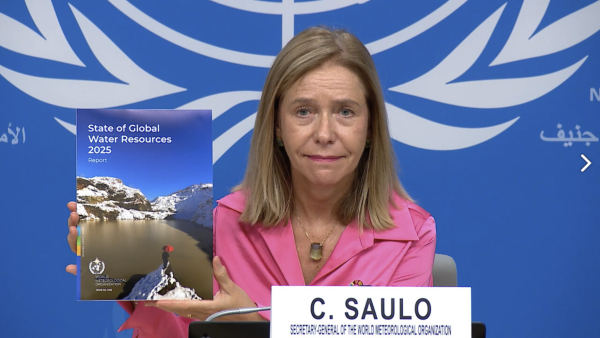
As world’s water reserves change, countries must prepare for a new reality: WMO
New data showing that rivers were at their lowest level for decades last year provides further evidence that the climate crisis is real and countries must act immediately to protect themselves from the increasing threat to communities and livelihoods, the UN World Meteorological Organization (WMO) said on Thursday.
The key findings from WMO’s State of Global Water Resources 2025 report covering the hydrological cycle and extreme events in the five-year period to last year:
- 2025 was one of driest years for river discharge in 35 years
- Past seven years have seen abnorfmal river flows
- Water storage on Earth’s land surface has decreased in past decade
- Widespread glacier loss across all regions for fourth consecutive year
- Asia and Africa are regions most affected by water-related disasters
- Water data availability has improved, but gaps remain in hard-hit areas
Highlighting the long-term decline in the Earth’s freshwater storage and glacier melt, WMO Secretary-General Celeste Saulo explained that the planet’s water reserves used to act as a planetary “savings account” that absorbed the occasional dry season, avoiding a water crisis. “One of the central stories of the 2025 report is what is happening to that savings account? And the simple answer is that we are depleting it,” she told journalists in Geneva.
Groundwater reserves are equally stretched and have been in decline since 2014, WMO’s report states, with nearly two-thirds of monitored wells worldwide showing levels lower than the historical norm and indicating a shift “further toward deficit…not recovery”.
“At the same time, we are seeing more water-related disasters,” Ms. Saulo said, while also stressing that the currently strengthening El Niño “will increase the risk of drought in some areas, and flooding in others”.
Glaciers disappearing
In 2025, for the fourth consecutive year, every major glaciated region on Earth lost ice mass, leading to short-term hazards including floods and long-term water insecurity, according to WMO.
Responding to a question about whether the changing global water cycle might have contributed to the deadly Nepal-China flooding disaster, Ms. Saulo explained that melting ice and rock was just one factor in the chain of events that ultimately sent a massive and deadly wall of water and debris downstream on 26 August, killing at least 1,367 people.
“You asked if it could happen again? Absolutely; the problem in this region is that there’s 63,700 glaciers at the last count,” she told a Press Conference in Geneva. “Even if you’re looking with remote sensing with satellites at these glaciers, you might see some faults, you might see some slight shifting, that does not mean necessarily catastrophic collapse. So, in order to plan for this, it’s very, very difficult. But the international community is looking very hard at ways in which we can bring people together to solve some of these monitoring issues.”
Data indicates that glaciers shrank between 2023 and 2025 with cumulative losses of 1,400 gigatonnes of water – or about one third of annual fresh water needs.
Every major glacier region on Earth lost ice for the fourth consecutive year.
“All 19 glacier regions around the globe lost ice; in Central Asia, Iceland, the Russian Arctic and western Canada and the United States, it was among the three worst years on record,” said Wayne Jenkinson, WMO’s Director of Hydrology and Cryosphere.
Some regions with smaller glaciers such as Central Europe, the Caucasus, the western Canada and the United States may already have reached “peak water”, Mr. Jenkinson warned.
“After this point, the glacier gives less meltwater each year simply because there is less ice left to melt. That matters for every community downstream that relies on water during hot, dry summers,” he explained.
Narelle van der Wel, WMO’s Head of Cryosphere Monitoring, Predictions and Services, stressed that while some further glacier loss is unavoidable, the eventual scale of the decline is not predetermined.
“Some glacier loss is inevitable, but total loss of glaciers is not yet inevitable,” she said, pointing to emissions reductions as central to limiting future losses.
Preparing for moving baselines
The report does not attribute every observed change to climate change alone. WMO says pressure on water resources and natural variability also contribute.
Mr. Jenkinson said governments need to prepare for “moving baselines” as historical patterns become less reliable.
“The situation 30 years ago is not where we are today,” he said. Countries, he added, need to prepare “for those changes that have really already arrived”.
ends
1
1
1
Edited News | OCHA , WHO
The deadly Ebola virus outbreak in DR Congo continues to spread across the vast country despite some success in containing it, aid officials said on Tuesday, in a renewed call for international support to help responders on the ground.
2
1
2
Press Conferences , Edited News | WFP
‘Super El Niño’ and converging crises worsen hunger in South Sudan and across the region - WFP
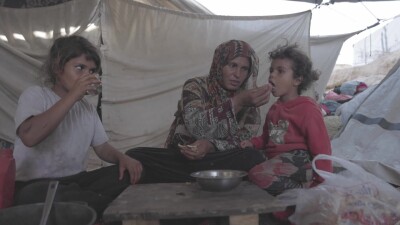
South Sudan’s hunger crisis is becoming increasingly catastrophic as violence, extreme weather and dwindling aid leave millions without enough food, the UN World Food Programme (WFP) warned on Tuesday.
1
1
1
Edited News | UN WOMEN
In war-torn Gaza, a growing number of women-headed households face “impossible decisions” every day, amid ongoing Israeli airstrikes and still-scarce resources, UN humanitarians said on Tuesday.
1
1
1
Edited News | OHCHR , UNOG
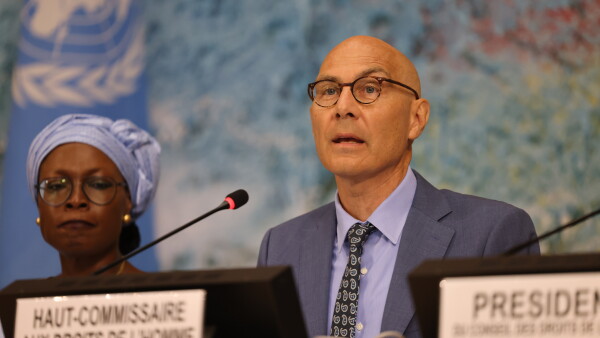
UN Human Rights Chief Volker Türk made the following remarks to the Enhanced Interactive Dialogue on the Independent Investigative Mechanism for Myanmar at the 63rd Human Rights Council.
1
Edited News | OHCHR , UNOG
UN Human Rights Chief Volker Türk today delivered an update on the global human rights situation to the 63rdsession of the Human Rights Council in Geneva.

1
1
1
Edited News | WHO
Repeated attacks on humanitarian warehouses put vital medical aid at risk in Ukraine - WHO
A new airstrike overnight damaged one of the main warehouses used by the UN health agency to store humanitarian medical supplies in the Kyiv region, the World Health Organization (WHO) said on Friday. This is the third attack to affect a WHO-used storage in the last three months.
2
2
2
Press Conferences , Edited News | WMO
Powerful El Niño heightens extreme-weather risks through 2027, as countries brace for impact - WMO
Fuelled by extraordinarily warm waters across the tropical Pacific Ocean, the El Niño climate pattern is expected to intensify in the coming months. Forecasters are almost certain that it will persist through February next year, with unusually warm conditions expected across the globe.