

The United Nations Office at Geneva
Multimedia Newsroom
Middle East war may deepen global hunger; mass displacement, rights violations on the rise
The Middle East war could cause the worst disruption to lifesaving humanitarian work since COVID, the UN World Food Programme (WFP) warned on Tuesday.
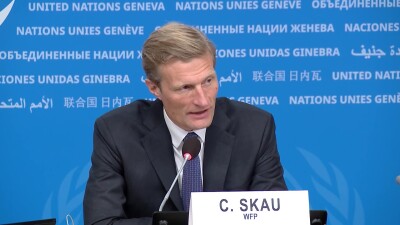
“Beyond the immediate fallout in Lebanon, the conflict has also caused major knock-on effects on global humanitarian operations; we are really feeling the pain on this,” WFP Deputy Executive Director Carl Skau told reporters in Geneva. “Our supply chains may really be on the brink of the most severe disruption since COVID and the Ukraine war back in 2022.”
Mr. Skau said that relief operations are suffering from longer shipping times and an increase in costs as the escalating violence in the Middle East continues into its third week, sparked by Israeli and US strikes on Iran and retaliatory attacks by Tehran and allied groups.
Amid ongoing hostilities – including Iranian counterstrikes against Gulf states and Israeli attacks on Hezbollah targets in Lebanon – WFP’s shipping costs “are up 18 per cent so far and we have thousands of trucks on the roads every day,” Mr. Skau explained. “These are now running on much more expensive fuel, due to the oil prices.”
He deplored the impact of higher costs which “mean that we can buy less food or provide less cash to beneficiaries”.
The agency has been forced to cut food rations for people in famine conditions in Sudan and is only able to support one in four acutely malnourished children in Afghanistan – currently the world's worst malnutrition crisis.
Another major concern is related to the disruption of global fertilizer markets “just as sub-Saharan Africa heads into a planting season”, Mr. Skau said.
A quarter of the world’s fertilizer supply comes through the Strait of Hormuz, “which is now at a virtual standstill”, he explained.
Mr. Skau stressed that the spike in global food and fuel costs “could leave millions of families priced out of staple foods, particularly in import-dependent countries, like sub-Saharan Africa and Asia.”
“If the Middle East conflict continues through June, an additional 45 million people could be pushed into acute hunger by price rises,” he warned.
“This would take global hunger levels to an all-time record and it's a terrible, terrible prospect.”
Meanwhile the humanitarian effects of air traffic disruption continue to be felt acutely in Lebanon, one of the epicentres of the conflict, the UN’s top aid official in the country, Imran Riza, told reporters in Geneva.
“In 2024 [during the previous Israel-Lebanon conflict] we were receiving an incredible amount of assistance from the Gulf states, from the Saudis, from Qatar, from the UAE, from Oman, from Bahrain…We were getting a lot from Kuwait, and none of that is happening,” he said.
“The air bridge is no longer there.”
Displacement and humanitarian needs across Lebanon have surged as a result of Israeli airstrikes and displacement orders covering ever larger portions of the small Middle Eastern nation’s territory.
Mr. Riza said that while some 132,700 people are currently staying in some 622 shelters, estimates of the total number of those who’ve had to flee their homes are much higher – over one million.
“If you think that the population of Lebanon, citizens as well as refugees…, is close to about five and a half million, [we’re] talking about almost 20 per cent of the people living in Lebanon having been displaced - and it's going to continue,” he said.
The evacuation orders apply to southern Lebanon, Beirut’s southern suburbs and parts of Bekaa.
About 70 per cent of the displaced are not in shelters, Mr. Riza said, which creates challenges for humanitarians trying to reach them.
He also explained that because of military operations it has become very difficult to access people refusing to leave their villages.
He spoke in particular of the elderly, “people who can't physically move and are very scared to leave”.
“They’re very vulnerable people that are remaining behind - and there are others that want don't want to risk losing their homes, their villages.”
Recalling that Israel has extended its warning and displacement orders across southern Lebanon, “adding the region between the Litani and the Zahrani rivers to the broad swathes of Lebanese territory already covered,” UN Human Rights Office (OHCHR) spokesperson Thameen Al-Kheetan warned that these orders “may amount to forced displacement”, which is prohibited under international humanitarian law.
Mr. Al-Kheetan stressed that in many instances, Israeli airstrikes “have destroyed entire residential buildings in dense urban environments, with multiple members of the same family, including women and children, often killed together”.
The UN human rights spokesperson added that people displaced by the fighting and living in tents along Beirut's seafront have been hit by airstrikes, while at least 16 medical staff have been killed in recent days.
“Statements by Israeli officials threatening to impose the same level of destruction on Lebanon as inflicted in Gaza are wholly unacceptable,” Mr. Al-Kheetan insisted.
“Such rhetoric, coupled with the Israeli military's announcement that it would deploy additional forces and expand its ground incursion, intensify deep fear and anxiety among the Lebanese population,” he said.
-Ends-
STORY Middle East war humanitarian fallout - WFP, UN OCHA, OHCHR
TRT: 3:53”
SOURCE: UNTV CH
RESTRICTIONS: NONE
LANGUAGE: ENGLISH/NATS
ASPECT RATIO: 16:9
DATELINE: 17 MARCH 2026 GENEVA, SWITZERLAND
1. Exterior wide shot: Palais des Nations, Flag Alley.
2. Medium shot: Speakers at the podium of the press conference.
3. SOUNDBITE (English) – Carl Skau, Deputy Executive Director, World Food Programme (WFP): “Our supply chains may be on the brink of the most severe disruption since COVID and the Ukraine war back in 2022. Our shipments of life-saving food are being affected by the squeeze on trade. It is taking us longer to deliver by sea and our costs have increased.”
4. Medium reverse shot: Speakers at the podium of the press conference; journalists in the Press room; speaker on screens.
5. SOUNDBITE (English) – Carl Skau, Deputy Executive Director, World Food Programme (WFP): “Our shipping costs are up 18 per cent so far and we have thousands of trucks on the roads every day, and these are now running on much more expensive fuel due to the oil prices. Higher costs mean that we can buy less food or provide less cash to beneficiaries.”
6. Medium-wide shot: Journalists in the Press room; speaker on screens.
7. SOUNDBITE (English) – Carl Skau, Deputy Executive Director, World Food Programme (WFP): “We have been forced to cut life-saving food rations for people in famine conditions in Sudan. We are only able to support one in four acutely malnourished children in Afghanistan, which is now the world's worst malnutrition crisis.”
8. Wide reverse shot: Speakers at the podium of the press conference; journalists in the Press room; speaker on screens.
9. SOUNDBITE (English) – Carl Skau, Deputy Executive Director, World Food Programme (WFP): “The spike in global food and fuel costs could leave millions of families priced out of staple foods, particularly in import-dependent countries like sub-Saharan Africa and Asia. In fact, our analysis projects that if the Middle East conflict continues through June, an additional 45 million people could be pushed into acute hunger by price rises. This would take global hunger levels to an all-time record, and it's a terrible, terrible prospect.”
10. Wide shot: Speaker on screens; journalists in the Press room.
11. SOUNDBITE (English) – Imran Riza, UN Humanitarian Coordinator in Lebanon: “In [20]24 we were receiving an incredible amount of assistance also from the Gulf states, from the Saudis, from Qatar, from the UAE, from Oman, from Bahrain, etc, etc. We were getting a lot from Kuwait, and none of that is happening. The air bridge is no longer there.”
12. Medium reverse shot: Speakers at the podium of the press conference; speaker on screens; journalists in the Press room.
13. SOUNDBITE (English) – Imran Riza, UN Humanitarian Coordinator in Lebanon: “If you think that the population of Lebanon, the people living in Lebanon, meaning citizens as well as the refugees, the Syrians, others, etc, is close to about five and a half million, we’re talking about almost 20 per cent of the people living in Lebanon having been displaced and it's going to continue.”
14. Medium shot: Speakers at the podium of the press conference.
15. SOUNDBITE (English) – Thameen Al-Kheetan, spokesperson, UN Human Rights (OHCHR): “In many instances, Israeli airstrikes have destroyed entire residential buildings in dense urban environments, with multiple members of the same family, including women and children, often killed together. Such attacks raise concerns under international humanitarian law. People displaced by the fighting and living in tents along Beirut's seafront have also been hit, and in recent days, at least 16 medical staff have been killed.”
16. Medium shot: Speakers at the podium of the press conference.
17. SOUNDBITE (English) – Thameen Al-Kheetan, spokesperson, UN Human Rights (OHCHR): “Statements by Israeli officials threatening to impose the same level of destruction on Lebanon as inflicted in Gaza are wholly unacceptable. Such rhetoric, coupled with the Israeli military's announcement that it would deploy additional forces and expand its ground incursion, intensify deep fear and anxiety among the Lebanese population.”
18. Various shots of journalists in the Press room.
Similar Stories
1
1
1
Edited News | OCHA , UNICEF , WFP
Aid agencies warned on Friday of the fast-developing humanitarian emergency inside Taiz City in Yemen, which has been encircled by de facto Houthi forces fighting government troops along the country’s west coast.

2
17
1
2
Edited News , Press Conferences , Images | OCHA , WMO
Two UN agencies teamed up on Wednesday to issue an appeal for immediate assistance to help communities already being impacted by the strongest El Niño on record.
3
16
2
2
Edited News , B-roll , Conferences , Images | UNITED NATIONS , UNOG
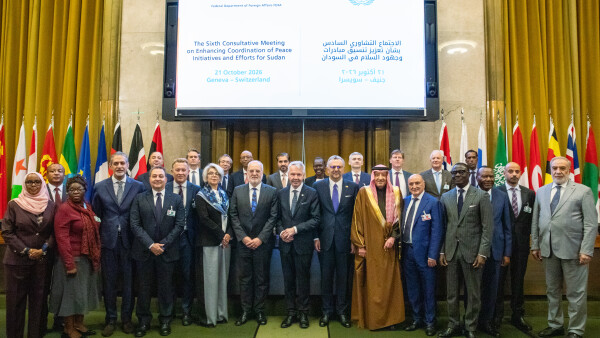
Sixth Consultative Meeting on Enhancing Coordination of Peace Initiatives and Efforts for Sudan

1
1
1
Edited News | UNICEF , WHO , UNHCR
Yemen war continues to force families from homes amid hunger and disease
More than 250,000 people have now fled renewed fighting in Yemen, the UN said on Tuesday, citing particular concern for those sheltering in the southwestern city of Taiz and the wider governorate, where access is “essentially blocked”.

1
1
1
Edited News | UNICEF
A little over one year since a ceasefire agreement was announced between Hamas fighters and Israel, more than 340 children have been reported killed and hundreds more injured, the UN Children’s Fund, UNICEF, said on Friday.

1
1
1
Edited News | UNICEF , IFRC
Six weeks after Nepal’s deadly flooding disaster, communities are still struggling to rebuild their lives, but they will need sustained help as global warming increases the risk of another Himalayan catastrophe, the UN Children’s Fund (UNICEF) said on Friday.

1
1
1
Edited News | WHO
In suspected Russia plague death, testing and monitoring underway – WHO
The death of a lab worker in Russia’s Siberia region has sparked concerns about plague being the cause, the UN World Health Organization (WHO) said on Tuesday, adding that it was following the situation closely.

1
1
Edited News | OHCHR , UNOG
UN Human Rights Chief Volker Türk on Friday provided and oral update to the 63rd session of the Human rights Council on Ukraine.

1
1
1
Edited News | OHCHR , UNOG
UN Human Rights Chief Volker Türk on Friday provided and oral update to the 63rd session of the Human rights Council on the human rights situation in Haiti.

1
1
1
Edited News | WHO
Repeated delays in bringing lifesaving medicines, prosthetics and more from Israel into Gaza risk having devastating consequences on Palestinians who urgently need them in the wartorn enclave, the UN World Health Organization (WHO) said on Friday. “A truck full of non-priority supplies or the right supplies arriving too late, doesn't save lives. That's the question that actually matters," said Dr Reinhilde Van De Weerdt, WHO Representative in the OPT.

1
1
1
Edited News | WHO
DRC: Early access to care and oxygen decisive for Ebola patients’ survival – WHO
In the Democratic Republic of the Congo (DRC), health workers fighting the country’s largest-ever Ebola outbreak are struggling to overcome critical challenges to patient care, the UN World Health Organization (WHO) warned on Tuesday.

1
1
1
Edited News | OCHA , UN
Civilians in Iran are continuing to feel the consequences of months of conflict and military escalation, the UN’s top official in the country has said, as loss of life, damage to civilian infrastructure and mounting economic pressures leave many facing continued uncertainty.