

The United Nations Office at Geneva
Multimedia Newsroom
New flu variant is surging, but vaccination still our best bet - WHO
Amid an early start to the Northern Hemisphere influenza season a new variant of the virus is rapidly gaining ground - but vaccination remains the “most effective defence”, the UN health agency said on Tuesday.
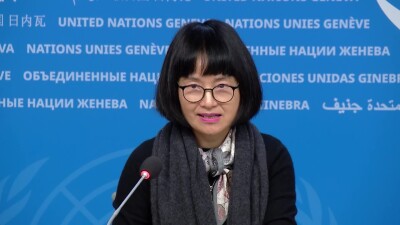
Influenza and other respiratory viruses are surging, Dr Wenqing Zhang, Unit Head for Global Respiratory Threats at the Department of Epidemic and Pandemic Threats Management of the World Health Organization (WHO) told reporters in Geneva, and this year is marked by “the emergence and the rapid expansion of a new AH3N2 virus subclade”.
The new variant - called J.2.4.1 or subclade K - was first noted in August in Australia and New Zealand and has since been detected in over 30 countries, she said.
“Current epidemiological data do not indicate an increase in disease severity, although this genetic shift makes a notable evolution in the virus,” Dr Zhang said.
Influenza viruses are constantly evolving, she explained, which is why the influenza vaccine composition is regularly updated.
“WHO tracks these changes, assesses associated risks to public health and makes vaccine composition recommendations twice a year, through a longstanding global system – the Global Influenza Surveillance and Response System (GISRS), in collaboration with other global experts,” Dr. Zhang said.
The new variant is not part of the composition of the latest vaccines produced for the Northern Hemisphere influenza season, the WHO expert explained.
Still, “early evidence suggests that current seasonal vaccines continue to offer protection against severe diseases and reduce the risk of hospital hospitalization,” she said.
WHO estimates that there are around one billion cases of seasonal influenza annually, including up to five million cases of severe respiratory illness. Up to 650,000 deaths each year are owing to seasonal influenza-related respiratory disease.
“Vaccination remains our most effective defence, including against drifted strains, particularly for high-risk populations and those taking care of them,” Dr Zhang insisted.
The WHO expert shared the results of an early estimation of the vaccine’s effectiveness against the new variant, published in the United Kingdom some weeks ago.
“It's quite promising,” she said, pointing to the data which showed that the vaccine is around 75 per cent effective against severe disease and hospitalization in children and around 35 per cent among adults.
Dr Zhang warned that the upcoming holiday season may bring a further surge in respiratory illnesses. “Advanced planning and preparedness efforts, including encouraging vaccination uptake and strengthening health system readiness, are strongly recommended,” she said.
The WHO expert advised countries to strengthen lab diagnostics and year‑round disease surveillance and to participate in the WHO GISRS surveillance network.
The network comprises influenza centres in 130 countries as well as a dozen reference laboratories.
Asked about whether the United States will remain a member of the network next year despite the country’s decision to leave WHO, effective 22 January 2026, Dr Zhang said that “from the flu perspective, from the respiratory surveillance and preparedness perspective, certainly we would need all the countries in the world to participate in the surveillance, preparedness and a response for influenza and other respiratory viruses because we don't know the next pandemic strain, when and where it would emerge”.
“And that time between the emergence and being picked up and characterized and put into vaccines… it would make a lot of difference with regards to the number of lives that could be saved,” she concluded.
-ENDS-
STORY Influenza new variant – WHO
TRT: 2:27”
SOURCE: UNTV CH
RESTRICTIONS: NONE
LANGUAGE: ENGLISH/NATS
ASPECT RATIO: 16:9
DATELINE: 16 DECEMBER 2025 GENEVA, SWITZERLAND
1. Exterior wide shot: Palais des Nations, Flag Alley.
2. Wide shot: Speakers at the podium of the press conference, speaker on screens; journalists in the Press room.
3. SOUNDBITE (English) – Dr Wenqing Zhang, Unit Head for Global Respiratory Threats, Department of Epidemic and Pandemic Threats Management, World Health Organization (WHO): “We have seen the emergence and the rapid expansion of a new AH3N2 virus subclade called J.2.4.1 aliased as K. The subclade K virus was first noted in August in Australia and New Zealand and has since [been] detected in over 30 countries.”
4. Wide shot: Speaker on screens; journalists in the Press room.
5. SOUNDBITE (English) – Dr Wenqing Zhang, Unit Head for Global Respiratory Threats, Department of Epidemic and Pandemic Threats Management, World Health Organization (WHO): “Current epidemiological data do not indicate an increase in disease severity, although this genetic shift makes a notable evolution in the virus.”
6. Medium shot: Speakers at the podium of the press conference, speaker on screens.
7. SOUNDBITE (English) – Dr Wenqing Zhang, Unit Head for Global Respiratory Threats, Department of Epidemic and Pandemic Threats Management, World Health Organization (WHO): “Although this new variant is not a part of the composition of the current vaccines for Northern Hemisphere season, early evidence suggests that current seasonal vaccines continue to offer protection against severe diseases and reduce the risk of hospitalization. Vaccination remains our most effective defense, including against drifted strains, particularly for high-risk population and those taking care of them.”
8. Medium/wide shot: Speakers at the podium of the press conference, speaker on screens; journalists in the Press room.
9. SOUNDBITE (English) – Dr Wenqing Zhang, Unit Head for Global Respiratory Threats, Department of Epidemic and Pandemic Threats Management, World Health Organization (WHO): “In UK some weeks ago they published the early estimation of the vaccine effectiveness data, it's quite promising. They estimated the vaccine effectiveness against that particular new variant.”
10. Wide shot: Speakers at the podium of the press conference, speaker on screens; journalists in the Press room.
11. SOUNDBITE (English) – Dr Wenqing Zhang, Unit Head for Global Respiratory Threats, Department of Epidemic and Pandemic Threats Management, World Health Organization (WHO): “From the flu perspective, from the respiratory surveillance and preparedness perspective, certainly we would need all the countries in the world to participate, participate in the surveillance, preparedness and a response for influenza and other respiratory viruses because we don't know the next pandemic strain, when and where it would emerge.”
12. Various shots of journalists in the Press room.
Similar Stories

2
17
1
2
Edited News , Press Conferences | OCHA , WMO
Two UN agencies teamed up on Wednesday to issue an appeal for immediate assistance to help communities already being impacted by the strongest El Niño on record.

3
16
2
2
B-roll , Conferences , Edited News | UNITED NATIONS , UNOG
Sixth Consultative Meeting on Enhancing Coordination of Peace Initiatives and Efforts for Sudan

1
1
1
Edited News | UNICEF , WHO , UNHCR
Yemen war continues to force families from homes amid hunger and disease
More than 250,000 people have now fled renewed fighting in Yemen, the UN said on Tuesday, citing particular concern for those sheltering in the southwestern city of Taiz and the wider governorate, where access is “essentially blocked”.

1
1
1
Edited News | UNICEF
A little over one year since a ceasefire agreement was announced between Hamas fighters and Israel, more than 340 children have been reported killed and hundreds more injured, the UN Children’s Fund, UNICEF, said on Friday.

1
1
1
Edited News | UNICEF , IFRC
Six weeks after Nepal’s deadly flooding disaster, communities are still struggling to rebuild their lives, but they will need sustained help as global warming increases the risk of another Himalayan catastrophe, the UN Children’s Fund (UNICEF) said on Friday.

1
1
1
Edited News | WHO
In suspected Russia plague death, testing and monitoring underway – WHO
The death of a lab worker in Russia’s Siberia region has sparked concerns about plague being the cause, the UN World Health Organization (WHO) said on Tuesday, adding that it was following the situation closely.

1
1
Edited News | OHCHR , UNOG
UN Human Rights Chief Volker Türk on Friday provided and oral update to the 63rd session of the Human rights Council on Ukraine.

1
1
1
Edited News | OHCHR , UNOG
UN Human Rights Chief Volker Türk on Friday provided and oral update to the 63rd session of the Human rights Council on the human rights situation in Haiti.

1
1
1
Edited News | WHO
Repeated delays in bringing lifesaving medicines, prosthetics and more from Israel into Gaza risk having devastating consequences on Palestinians who urgently need them in the wartorn enclave, the UN World Health Organization (WHO) said on Friday. “A truck full of non-priority supplies or the right supplies arriving too late, doesn't save lives. That's the question that actually matters," said Dr Reinhilde Van De Weerdt, WHO Representative in the OPT.

1
1
1
Edited News | WHO
DRC: Early access to care and oxygen decisive for Ebola patients’ survival – WHO
In the Democratic Republic of the Congo (DRC), health workers fighting the country’s largest-ever Ebola outbreak are struggling to overcome critical challenges to patient care, the UN World Health Organization (WHO) warned on Tuesday.

1
1
1
Edited News | OCHA , UN
Civilians in Iran are continuing to feel the consequences of months of conflict and military escalation, the UN’s top official in the country has said, as loss of life, damage to civilian infrastructure and mounting economic pressures leave many facing continued uncertainty.
1
1
1
Edited News | WHO , UNICEF
Aid agencies in Yemen highlighted the growing hunger emergency sparked by renewed fighting between Houthi opposition forces and Government troops, after mobile health clinics reported that hundreds of children displaced by the violence are suffering from the most deadly form of malnutrition.