

The United Nations Office at Geneva
Multimedia Newsroom
“There are a number of concerns about holding a vote in the present environment in Myanmar. As you know this crisis has been unravelling for almost five years,” James Rodehaver, head of the UN Human Rights team for Myanmar, told reporters.
The growing insecurity and the lack of measures to protect civilians raise serious concerns about the safety of voters who choose or are forced to participate.
“We are also investigating claims from displaced persons that they are being ordered by the military to return to their villages to vote,” Rodehaver, speaking from Bangkok, said.
“Some groups have been targeted in air strikes and told ‘you must return to town, if you do not we will continue to bomb you,”he said.
The elections are taking place in an environment in which the military is actively suppressing participation. Many major political parties are excluded and over 30,000 of the military’s political opponents, including members of the democratically elected government and political representatives, have been detained since 2021.
“Yesterday, the military claimed that they had issued pardons – some 4,000 of whom were issued to dissidents who had been charged or convicted of sedition or incitement,” Rodehaver said.
Adding “It is important to note, however, that the military has issued announcements of pardons or commutations in past. Rarely do the numbers released match those actually released and rarely are political detainees among who are actually allowed to leave detention centres.”
Discrimination also looms large in the electoral process, with Rohingya, Tamils, Gurkhas, and Chinese, among others, excluded from voting. Civil society and independent media have little to no voice. The military has stepped up mass electronic surveillance to identify dissidents, and there are fears this will be used at the polling stations.
Additionally, the military lacks control over large areas of the country and it will be unable to cover the entire country in a meaningful and representative manner. Some 56 townships, in which martial law declarations remain active, will be excluded. Some 31 townships in the first round will have no actual voting due to the absence of candidates.
“At the same time, the military is boasting of over a hundred persons it claims to have arrested under its newly imposed ‘election-protection’ rules,” said Rodehaver.
“While we are still investigating these claims, we have credible information showing that among the dozens who have been arrested include three young people who hung up posters depicting a bullet on a ballot box. They reportedly received 49 years in prison.”
Far from being a process that could spear-head a political transition from crisis to stability and the restoration of democratic, civilian rule, UN Human Rights Chief Volker Türk says this process seems nearly certain to further ingrain insecurity, fear and polarization throughout the country. The utmost priority must be to end the violence and ensure the flow of humanitarian aid.
ENDS
For more information and media requests, please contact
In Geneva:
Ravina Shamdasani: +41 22 917 9169 / ravina.shamdasani@un.org
Jeremy Laurence: +41 22 917 9383 / jeremy.laurence@un.org
Tag and share - X: @UNHumanRights and Facebook: unitednationshumanrights
STORY: James Rodehaver, head of the UN Human Rights team for Myanmar raises concern about upcoming election process
TRT: 02:13
SOURCE: OHCHR / UNOG
RESTRICTIONS: NONE
LANGUAGE: English/NATS
ASPECT RATIO: 16:9
DATELINE: 28 November 2025 GENEVA, SWITZERLAND
SHOTLIST
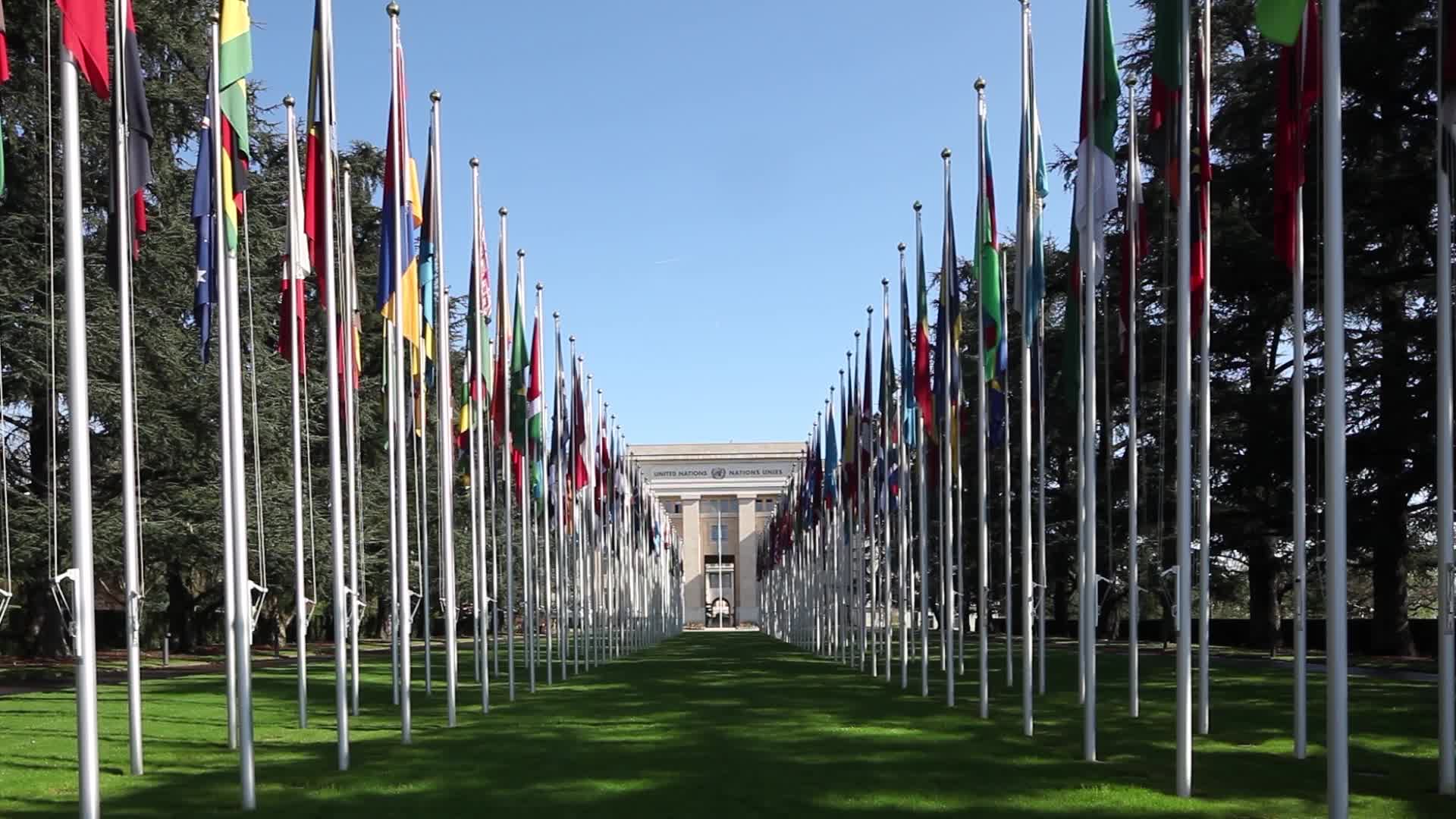
- Exterior shot : Palais des Nations
- Interior shot : Briefing room
- SOUNDBITE (English)— James Rodehaver, head of the UN Human Rights team for Myanmar(OHCHR): “There are a number of concerns about holding a vote in the present environment in Myanmar. As you know this crisis has been unravelling for almost five years.”
- Cut away: Briefing room
- SOUNDBITE (English)— James Rodehaver, head of the UN Human Rights team for Myanmar(OHCHR): “We are also investigating claims from displaced persons that they are being ordered by the military to return to their villages to vote.”
- Cut away: Briefing room
- SOUNDBITE (English)— James Rodehaver, head of the UN Human Rights team for Myanmar(OHCHR): “Some groups have been targeted in air strikes and told ‘you must return to town, if you do not we will continue to bomb you.”
- Cut away: Briefing room
- SOUNDBITE (English)— James Rodehaver, head of the UN Human Rights team for Myanmar(OHCHR): “Yesterday, the military claimed that they had issued pardons – some 4,000 of whom were issued to dissidents who had been charged or convicted of sedition or incitement.”
- Cut away: Briefing room
- SOUNDBITE (English)— James Rodehaver, head of the UN Human Rights team for Myanmar(OHCHR): “It is important to note, however, that the military has issued announcements of pardons or commutations in past. Rarely do the numbers released match those actually released and rarely are political detainees among who are actually allowed to leave detention centres.”
- Cut away: Briefing room
- SOUNDBITE (English)— James Rodehaver, head of the UN Human Rights team for Myanmar(OHCHR): “At the same time, the military is boasting of over a hundred persons it claims to have arrested under its newly imposed ‘election-protection’ rules.”
- Cut away: Briefing room
- SOUNDBITE (English)— James Rodehaver, head of the UN Human Rights team for Myanmar(OHCHR): “While we are still investigating these claims, we have credible information showing that among the dozens who have been arrested include three young people who hung up posters depicting a bullet on a ballot box. They reportedly received 49 years in prison.”
Similar Stories

1
1
1
Edited News | UNICEF , WHO , UNHCR
Yemen war continues to force families from homes amid hunger and disease
More than 250,000 people have now fled renewed fighting in Yemen, the UN said on Tuesday, citing particular concern for those sheltering in the southwestern city of Taiz and the wider governorate, where access is “essentially blocked”.

1
1
1
Edited News | UNICEF
A little over one year since a ceasefire agreement was announced between Hamas fighters and Israel, more than 340 children have been reported killed and hundreds more injured, the UN Children’s Fund, UNICEF, said on Friday.

1
1
1
Edited News | UNICEF , IFRC
Six weeks after Nepal’s deadly flooding disaster, communities are still struggling to rebuild their lives, but they will need sustained help as global warming increases the risk of another Himalayan catastrophe, the UN Children’s Fund (UNICEF) said on Friday.

1
1
1
Edited News | WHO
In suspected Russia plague death, testing and monitoring underway – WHO
The death of a lab worker in Russia’s Siberia region has sparked concerns about plague being the cause, the UN World Health Organization (WHO) said on Tuesday, adding that it was following the situation closely.

1
1
Edited News | OHCHR , UNOG
UN Human Rights Chief Volker Türk on Friday provided and oral update to the 63rd session of the Human rights Council on Ukraine.

1
1
1
Edited News | OHCHR , UNOG
UN Human Rights Chief Volker Türk on Friday provided and oral update to the 63rd session of the Human rights Council on the human rights situation in Haiti.

1
1
1
Edited News | WHO
Repeated delays in bringing lifesaving medicines, prosthetics and more from Israel into Gaza risk having devastating consequences on Palestinians who urgently need them in the wartorn enclave, the UN World Health Organization (WHO) said on Friday. “A truck full of non-priority supplies or the right supplies arriving too late, doesn't save lives. That's the question that actually matters," said Dr Reinhilde Van De Weerdt, WHO Representative in the OPT.

1
1
1
Edited News | WHO
DRC: Early access to care and oxygen decisive for Ebola patients’ survival – WHO
In the Democratic Republic of the Congo (DRC), health workers fighting the country’s largest-ever Ebola outbreak are struggling to overcome critical challenges to patient care, the UN World Health Organization (WHO) warned on Tuesday.

1
1
1
Edited News | OCHA , UN
Civilians in Iran are continuing to feel the consequences of months of conflict and military escalation, the UN’s top official in the country has said, as loss of life, damage to civilian infrastructure and mounting economic pressures leave many facing continued uncertainty.
1
1
1
Edited News | WHO , UNICEF
Aid agencies in Yemen highlighted the growing hunger emergency sparked by renewed fighting between Houthi opposition forces and Government troops, after mobile health clinics reported that hundreds of children displaced by the violence are suffering from the most deadly form of malnutrition.
1
1
1
Edited News | UNHCR
Displacement on the rise in Yemen as fighting continues - UNHCR
As hostilities worsen in Yemen, more people have been fleeing their homes, further intensifying the humanitarian crisis within the region, the UN Refugee Agency (UNHCR) warned on Tuesday.
1
1
1
Edited News | IOM , OHCHR , UNFPA , UNOG , UNHCR , WHO
Yemen’s humanitarian crisis growing by the hour amid spike in displacement
Yemenis displaced by renewed fighting have described fleeing for their lives amid shelling and gunfire, aid agencies reported on Friday, while highlighting the dramatic increase in humanitarian needs in the country and in Djibouti, where thousands have sought shelter.