

The United Nations Office at Geneva
Multimedia Newsroom
Sudan war: Life-saving cholera vaccination campaign begins in Darfur
Amid the devastating war in Sudan, UN aid teams are overcoming major obstacles to curb a cholera outbreak claiming lives across the country, with young children particularly at risk.
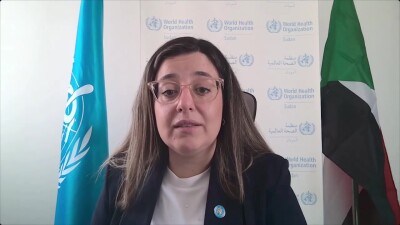
The World Health Organization (WHO)’s Deputy Representative to the country Hala Khudari told reporters in Geneva on Tuesday that the outbreak, which started in July 2024 in Kassala, has spread to all 18 states of the country.
More than 113,600 cases have been registered so far and over 3,000 deaths – a “concerning case fatality rate” of 2.7 per cent.
Speaking from Port Sudan, she said that the past year saw surges in White Nile and Khartoum among other states, resulting from the impact of the conflict and increased population movement. This critical situation has been compounded by severely limited basic services such as water, food and health, caused by ongoing heavy fighting between the Sudanese army and the paramilitary Rapid Support Forces.
Cholera is an acute intestinal infection that spreads through bacteria-contaminated food and water. According to WHO, it can kill within hours when not treated, and case fatality rates above one per cent indicate “serious gaps in case management and delayed access to care”.
The resurgence of cholera in Sudan has been fuelled by heavy rains and flooding, overcrowding and lack of access to clean water in displacement sites and within communities.
In the Darfur region, where cholera has been spreading since May, the number of cases continues to increase amid “severe access constraints” which are impeding the response, including inaccessible roads due to the rainy season, Ms. Khudari said. As of two days ago 12,739 cases and 358 deaths were reported in more than half of all the localities of the five Darfur states.
In certain localities in West Darfur, the case fatality rate has been as high as 11.8 per cent, she said.
Ms. Khudari explained that WHO and partners have been working to control the outbreak with a vaccination campaign in the worst-hit communities. It began last Sunday “after weeks of preparations to overcome access, transport and logistical challenges”.
The campaign aims to protect 1.86 million people in six priority localities of the Darfurs.
The WHO representative said that the “biggest challenge” in launching the campaign was to “actually get the vaccines there”. She described the difficulties in delivering the life-saving immunizations and supporting supplies via “long routes” to Nyala in South Darfur state earlier this month, amid ongoing security concerns.
Preparations are ongoing to launch the campaign by the end of September in Tawila in North Darfur State, which hosts more than 575,000 internally displaced people, most of whom have fled from the besieged city of El Fasher.
The vaccines are being deployed in Sudan with the support of the UN Children’s Fund (UNICEF), whose spokesperson Ricardo Pires raised the alarm over the severe risks of cholera for children.
Children under five have been “disproportionately affected”, he told reporters, and so far at least 380 have died.
Access to life-saving treatment for cholera in Sudan is limited as the almost two-and-a-half-year-old violent conflict has devastated the health system.
The outbreak comes at a time when “more than 70 per cent of hospitals in conflict-affected areas are non-operational, with health centres being damaged or destroyed during the conflict, lacking supplies and even staff, as well as facilities being often used as shelter,” Mr. Pires stressed.
The UNICEF spokesperson also underscored the impact of “relentless” attacks on the country’s power and water infrastructure which have off cut millions of people including many children from safe and clean water, forcing families to collect water from unsafe and contaminated sources.
-Ends-
STORY Sudan cholera update WHO – UNICEF 23 September 2025
TRT: 3:04”
SOURCE: UNTV CH
RESTRICTIONS: NONE
LANGUAGE: ENGLISH/NATS
ASPECT RATIO: 16:9
DATELINE: 23 SEPTEMBER 2025 GENEVA, SWITZERLAND
1. Exterior wide shot: Palais des Nations, Flag Alley.
2. Wide shot: Speakers at the podium of the press conference; speaker on screens; journalists in the Press room.
3. SOUNDBITE (English) – Hala Khudari, Acting Deputy Representative to Sudan, World Health Organization (WHO): “We have reported more than 113,600 cases and over 3000 deaths from across the country and this is really a concerning case fatality rate of 2.7 [per cent]. Over the past year we have witnessed surges of cases in White Nile and Khartoum among other states. This is resulting from the impact of the conflict and increased population movement compounded with severely limited basic services such as water, food and health.”
4. Wide shot: Speakers at the podium of the press conference; speaker on screens; journalists in the Press room.
5. SOUNDBITE (English) – Hala Khudari, Acting Deputy Representative to Sudan, World Health Organization (WHO): “Reported cases in Darfur continue to increase amid severe access constraints that are impeding the required scale of response. According to the latest update, as of two days ago, 12,739 cases as well as 358 deaths were reported in 36 of the 64 localities of the five Darfur states.”
6. Medium wide shot: Speaker at the podium of the press conference; speaker on screens.
7. SOUNDBITE (English) – Hala Khudari, Acting Deputy Representative to Sudan, World Health Organization (WHO): “After weeks of preparations to overcome access, transport and logistical challenges, the cholera vaccination campaign has kicked off this Sunday.”
8. Wide shot: Speaker on screens in the Press room.
9. SOUNDBITE (English) – Hala Khudari, Acting Deputy Representative to Sudan, World Health Organization (WHO): “The hardest part really is to, is to actually get the vaccines there and I think that has been our biggest challenge over the last few weeks when it came to addressing the campaign in Nyala and the neighbouring localities.”
10. Medium wide shot: Speaker at the podium of the press conference; speaker on screens.
11. SOUNDBITE (English) – Ricardo Pires, spokesperson, UN Children’s Fund (UNICEF): “Especially children under five have been slightly disproportionately affected. We know that so far at least 380 have died.”
12. Wide shot: Speakers at the podium of the press conference; speaker on screens; journalists in the Press room.
13. SOUNDBITE (English) – Ricardo Pires, spokesperson, UN Children’s Fund (UNICEF): “This comes of course at a time when more than 70 per cent of hospitals in conflict-affected areas are non-operational, with health centres being damaged or destroyed during the conflict, lacking supplies and even staff, as well as facilities being often used as shelter.”
14. Wide shot: Speaker on screens; journalists in the Press room.
15. SOUNDBITE (English) – Ricardo Pires, spokesperson, UN Children’s Fund (UNICEF): “This is also in addition to relentless attacks on power and water infrastructure that have cut millions of people, lots of them children, from safe and clean water and forced many families to collect water from unsafe and contaminated sources.”
16. Various shots of journalists in the Press room.
Similar Stories

1
1
1
Edited News | UNICEF
A little over one year since a ceasefire agreement was announced between Hamas fighters and Israel, more than 340 children have been reported killed and hundreds more injured, the UN Children’s Fund, UNICEF, said on Friday.

1
1
1
Edited News | UNICEF , IFRC
Six weeks after Nepal’s deadly flooding disaster, communities are still struggling to rebuild their lives, but they will need sustained help as global warming increases the risk of another Himalayan catastrophe, the UN Children’s Fund (UNICEF) said on Friday.

1
1
1
Edited News | WHO
In suspected Russia plague death, testing and monitoring underway – WHO
The death of a lab worker in Russia’s Siberia region has sparked concerns about plague being the cause, the UN World Health Organization (WHO) said on Tuesday, adding that it was following the situation closely.

1
1
Edited News | OHCHR , UNOG
UN Human Rights Chief Volker Türk on Friday provided and oral update to the 63rd session of the Human rights Council on Ukraine.

1
1
1
Edited News | OHCHR , UNOG
UN Human Rights Chief Volker Türk on Friday provided and oral update to the 63rd session of the Human rights Council on the human rights situation in Haiti.

1
1
1
Edited News | WHO
Repeated delays in bringing lifesaving medicines, prosthetics and more from Israel into Gaza risk having devastating consequences on Palestinians who urgently need them in the wartorn enclave, the UN World Health Organization (WHO) said on Friday. “A truck full of non-priority supplies or the right supplies arriving too late, doesn't save lives. That's the question that actually matters," said Dr Reinhilde Van De Weerdt, WHO Representative in the OPT.

1
1
1
Edited News | WHO
DRC: Early access to care and oxygen decisive for Ebola patients’ survival – WHO
In the Democratic Republic of the Congo (DRC), health workers fighting the country’s largest-ever Ebola outbreak are struggling to overcome critical challenges to patient care, the UN World Health Organization (WHO) warned on Tuesday.

1
1
1
Edited News | OCHA , UN
Civilians in Iran are continuing to feel the consequences of months of conflict and military escalation, the UN’s top official in the country has said, as loss of life, damage to civilian infrastructure and mounting economic pressures leave many facing continued uncertainty.
1
1
1
Edited News | WHO , UNICEF
Aid agencies in Yemen highlighted the growing hunger emergency sparked by renewed fighting between Houthi opposition forces and Government troops, after mobile health clinics reported that hundreds of children displaced by the violence are suffering from the most deadly form of malnutrition.
1
1
1
Edited News | UNHCR
Displacement on the rise in Yemen as fighting continues - UNHCR
As hostilities worsen in Yemen, more people have been fleeing their homes, further intensifying the humanitarian crisis within the region, the UN Refugee Agency (UNHCR) warned on Tuesday.
1
1
1
Edited News | IOM , OHCHR , UNFPA , UNOG , UNHCR , WHO
Yemen’s humanitarian crisis growing by the hour amid spike in displacement
Yemenis displaced by renewed fighting have described fleeing for their lives amid shelling and gunfire, aid agencies reported on Friday, while highlighting the dramatic increase in humanitarian needs in the country and in Djibouti, where thousands have sought shelter.
1
1
1
Edited News | OHCHR , UNOG
The UN Human Rights Office issued on Friday a report documenting a shocking pattern of sexual violence amid Russia’s full-scale armed attack on Ukraine.