

The United Nations Office at Geneva
Multimedia Newsroom
Edited News | IOM , mcc , UNHCR
UNHCR IOM MCC: Report on risks faced by refugees and migrants on the central mediterranean route
Refugees, migrants face violence, abuse and death on routes across Africa, new data shows
Refugees and migrants continue to face extreme forms of violence, exploitation and death on sea and on land across Africa as they move through the continent, UN agencies said on Friday, in an appeal to border authorities to do more to protect them.
Data from a new report by the UN refugee agency, UNHCR, the UN migration agency IOM and the Mixed Migration Centre (MMC) highlights the often under-reported perils facing vulnerable people on the move on dangerous land routes.
Abuse along the route
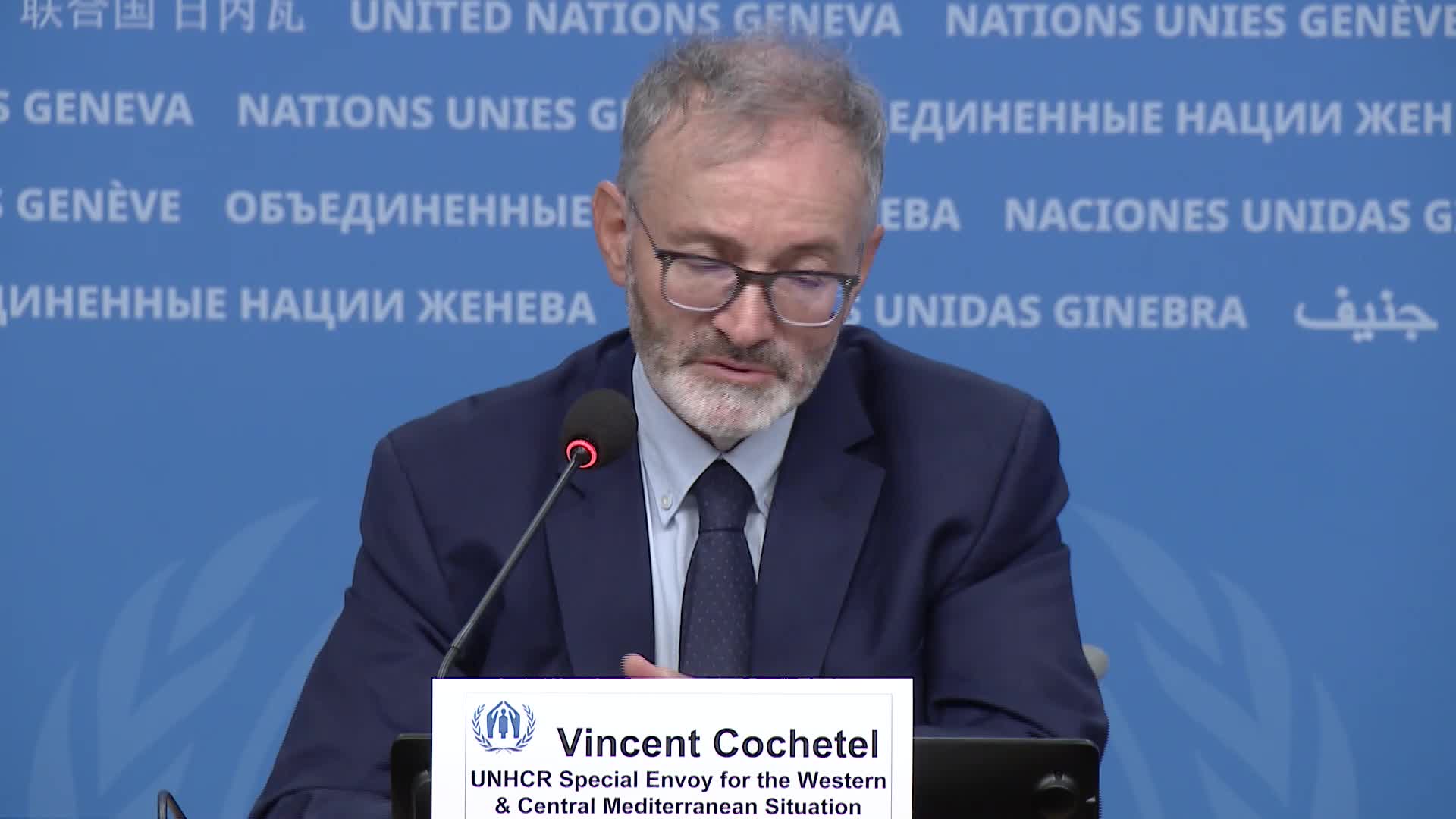
“Regardless of their status, migrants, refugees, seem to face serious human rights violations and abuse along the route...We cannot lose our capacity to get outraged by this level of violence,” said Vincent Cochetel, UNHCR Special Envoy for the Western and Central Mediterranean.
More people are estimated to cross the Sahara desert than the Mediterranean Sea and deaths of refugees and migrants in the desert are presumed to be double those at sea. The report - “On this journey, no-one cares if you live or die” – spans a three-year data collection period and warns of an increase in the number of people attempting these perilous land crossings.
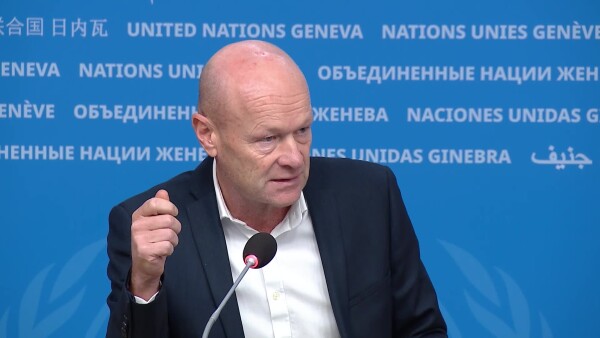
Highlighting that the central Mediterranean migration route continues to be among the deadliest in the world, IOM Director of the Coordination Office for the Mediterranean Laurence Hart noted that “a very high number of people” still take the risk of embarking on “very dangerous journeys. Obviously, there's a lot of people do not choose to move, but they are pushed because of…political conflict, instability.”
Push factors
So-called push factors on the migration route include the deteriorating situation in countries of origin and host countries – such as new conflicts in the Sahel and Sudan - the devastating impact of climate change and disasters on new and protracted emergencies in the East and Horn of Africa, as well as racism and xenophobia towards refugees and migrants.
Huge gaps in protection and assistance prevail across the Central Mediterranean route, pushing refugees and migrants to move onward on dangerous journeys, the report notes.
“Just last week, we heard that 5,000 people died on the Atlantic route to the Canary Islands in the first five months of this year - that's an increase of 700 per cent compared to the same period last year,” said Bram Frouws, Director of the Mixed Migration Centre (MMC). “We also know even though we don't have fully accurate numbers, and indeed it is an underestimation that countless others die on the land routes, up to the Mediterranean coast, possibly even more than at sea.”
Insufficient efforts
Despite commitments undertaken by the international community to save lives and address vulnerabilities, the report’s authors warned that current efforts to hold all those accountable for the abuse and dangers that migrants and refugees suffer are inadequate. Criminal groups and traffickers are often responsible for terrible abuses, Mr. Frouws said, but “State officials - like police, military and border guards" – also played a role. “But whoever they are, whichever category, they should be held accountable. But at the moment, much of this is happening in a situation of near complete impunity.”
The report noted that smuggling routes are shifting towards more remote areas to avoid active conflict zones or border controls by State and non-State actors, subjecting people on the move to even greater risks.
The kinds of abuse reported include torture, physical violence, arbitrary detention, death, kidnapping for ransom, sexual violence and exploitation, enslavement, human trafficking, forced labour, organ removal, robbery, arbitrary detention, collective expulsions and refoulement.
Stepping up life-saving protection
Support as well as access to justice for survivors of various forms of abuse is rarely available anywhere on the routes, the report indicated, citing inadequate funding and restrictions on humanitarian access. This is particularly the case in key locations such as informal detention centres and holding facilities.
Despite these challenges, UNHCR, IOM and partners including NGOs and several governments have stepped up life-saving protection services and assistance, identification and referral mechanisms along the routes. But they insist that humanitarian action is not enough.
“It's important to look at how to regularize or legalise migrants in countries of transit if there is a need, but also further afield…in European countries responding to the need for talents and for manpower,” said IOM’s Mr. Hart. “Opening up regular channels is indeed not the silver bullet, but certainly an enabler. Another element, another pillar, on which migration governance hinges on.”
ends
SPEAKERS:
- Vincent Cochetel, UNHCR, Special Envoy for the Western & Central Mediterranean
- Laurence Hart, IOM, Director, Coordination Office for the Mediterranean- Chief of Mission for Italy and Malta – Representative for the Holy See
- Bram Frouws, MMC, Director of the Mixed Migration Centre
STORY: New report highlights extreme horrors faced by refugees and migrants on land routes to Africa's Mediterranean coast UNHCR - IOM - MCC
TRT: 04 min 26s
SOURCE: UNTV CH
RESTRICTIONS: NONE
LANGUAGE: ENGLISH / NATS
ASPECT RATIO: 16:9
DATELINE: 4 JULY 2024 GENEVA, SWITZERLAND
1. SOUNDBITE (English) — Vincent Cochetel, UNHCR, Special Envoy for the Western & Central Mediterranean Situation: “Regardless of their status, migrants and refugees seem to face serious human rights violations and abuse along the route. We distinguish ‘abuse’ from ‘violation’ using that legal terminology, ‘abuses’ by non-state actors, whereas ‘violation’ is by state authorities. A total of more than 32,000 people have been interviewed. So, it's a huge body of evidence.”
2. SOUNDBITE (English) — Vincent Cochetel, UNHCR, Special Envoy for the Western & Central Mediterranean Situation: “We cannot lose our capacity to get outraged by this level of violence along the route. Some of it can be addressed -and we can't go to a risk zero-, but there has to be some better response on some parts of the routes, on better border management, which has become the shortcut that many states are using in saying that's the way to fix it. Well, better border management cannot be your justification for that level of violence along the route. It has to come with proper referral, proper services and proper accountability for those causing that violence along the route.”
3. SOUNDBITE (English) — Laurence Hart, IOM, Director, Coordination Office for the Mediterranean- Chief of Mission for Italy and Malta – Representative for the Holy See: “The central Mediterranean continues to be the deadliest routes. And, you know, I'm also quite surprised when, in an era (of) access to media, to social media, to information, there is still a very high number of people taking the risks of embarking on dangerous, very dangerous journeys. Obviously, a lot of people do not choose to move, but they are pushed because of various situations, political conflict, instability... However, the misinformation still subsists.”
4. SOUNDBITE (English) — Laurence Hart, IOM, Director, Coordination Office for the Mediterranean- Chief of Mission for Italy and Malta – Representative for the Holy See: “It's important to look at how to regularise or legalise migrants in countries of transit. If there is a need for example, but also further afield when it comes, for example, in European countries responding to the need for talents and for manpower in countries of destination. Opening up regular channels is indeed not the silver bullet, but certainly an enabler, another element, another pillar on which migration governance hinges on.”
5. SOUNDBITE (English) — Bram Frouws, MMC, Director of the Mixed Migration Centre: “Just last week, we heard that 5,000 people died on the Atlantic route to the Canary Islands in the first five months of this year. That's an increase of 700 per cent compared to the same period last year. And we also know, even though we don't have fully accurate numbers, that indeed it is an underestimation, that countless others die on the land routes up to the Mediterranean coast, possibly even more than at sea.”
6. SOUNDBITE (English) — Bram Frouws, MMC, Director of the Mixed Migration Centre: “This report also explores who are the perpetrators of violence and common perpetrators are smugglers. There are among the perpetrators, other criminal groups, but also, as Vincent alluded to, state officials like police, military and border guards. But whoever they are, whichever category, they should be held accountable. But at the moment, much of this is happening in a situation of near complete impunity.”
7. Wide shot: podium with speakers at the press room.
9. Medium-wide shot: podium with speakers at the press room.
10. Close-up of Vincent Cochetel speaking to journalists at the press room. at the press room.
11. Medium-wide shot: podium with speakers with TV screen showing press conference in foreground and room with journalists to rear with male journalist speaking (from right side).
11. Wide shot, podium with speakers with TV screen showing press conference in foreground and room with journalists to rear with female journalist speaking (from left side).
12. Medium-wide shot: press room with journalists and female journalist speaking.
13. Wide shot: podium with speakers and moderator Shabia Mantoo, UNHCR moderator speaking.
14. Wide shot: podium with speakers with TV screen showing press conference in foreground and room with journalists to rear with male journalist speaking (from left side).
Similar Stories

2
17
1
2
Edited News , Press Conferences , Images | OCHA , WMO
Two UN agencies teamed up on Wednesday to issue an appeal for immediate assistance to help communities already being impacted by the strongest El Niño on record.
3
16
2
2
Edited News , B-roll , Conferences , Images | UNITED NATIONS , UNOG
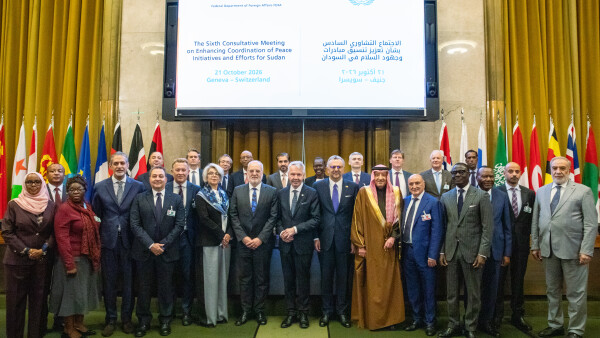
Sixth Consultative Meeting on Enhancing Coordination of Peace Initiatives and Efforts for Sudan

1
1
1
Edited News | UNICEF , WHO , UNHCR
Yemen war continues to force families from homes amid hunger and disease
More than 250,000 people have now fled renewed fighting in Yemen, the UN said on Tuesday, citing particular concern for those sheltering in the southwestern city of Taiz and the wider governorate, where access is “essentially blocked”.

1
1
1
Edited News | UNICEF
A little over one year since a ceasefire agreement was announced between Hamas fighters and Israel, more than 340 children have been reported killed and hundreds more injured, the UN Children’s Fund, UNICEF, said on Friday.

1
1
1
Edited News | UNICEF , IFRC
Six weeks after Nepal’s deadly flooding disaster, communities are still struggling to rebuild their lives, but they will need sustained help as global warming increases the risk of another Himalayan catastrophe, the UN Children’s Fund (UNICEF) said on Friday.

1
1
1
Edited News | WHO
In suspected Russia plague death, testing and monitoring underway – WHO
The death of a lab worker in Russia’s Siberia region has sparked concerns about plague being the cause, the UN World Health Organization (WHO) said on Tuesday, adding that it was following the situation closely.

1
1
Edited News | OHCHR , UNOG
UN Human Rights Chief Volker Türk on Friday provided and oral update to the 63rd session of the Human rights Council on Ukraine.

1
1
1
Edited News | OHCHR , UNOG
UN Human Rights Chief Volker Türk on Friday provided and oral update to the 63rd session of the Human rights Council on the human rights situation in Haiti.

1
1
1
Edited News | WHO
Repeated delays in bringing lifesaving medicines, prosthetics and more from Israel into Gaza risk having devastating consequences on Palestinians who urgently need them in the wartorn enclave, the UN World Health Organization (WHO) said on Friday. “A truck full of non-priority supplies or the right supplies arriving too late, doesn't save lives. That's the question that actually matters," said Dr Reinhilde Van De Weerdt, WHO Representative in the OPT.

1
1
1
Edited News | WHO
DRC: Early access to care and oxygen decisive for Ebola patients’ survival – WHO
In the Democratic Republic of the Congo (DRC), health workers fighting the country’s largest-ever Ebola outbreak are struggling to overcome critical challenges to patient care, the UN World Health Organization (WHO) warned on Tuesday.

1
1
1
Edited News | OCHA , UN
Civilians in Iran are continuing to feel the consequences of months of conflict and military escalation, the UN’s top official in the country has said, as loss of life, damage to civilian infrastructure and mounting economic pressures leave many facing continued uncertainty.