

The United Nations Office at Geneva
Multimedia Newsroom
Press Conferences | FAO , WFP , WHO
WHO FAO WFP - Greater Horn of Africa Crisis - Press conference 26 June 2023
Greater Horn of Africa: Highest level of severely malnourished people and disease outbreaks since crisis began three years ago
Climate, armed conflict, high food prices and post-COVID-19 economic fall-out have caused record food insecurity in the Horn of Africa, with an estimated 60 million urgently in need of help, UN humanitarian agencies warned on Monday.
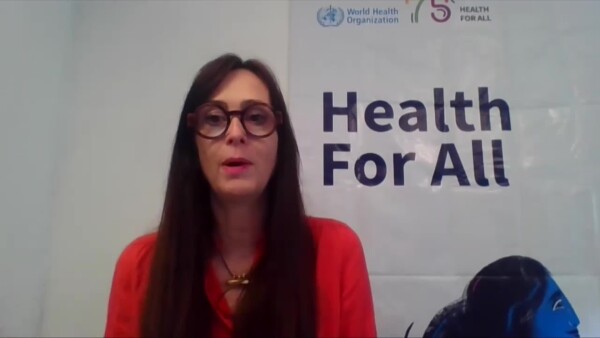
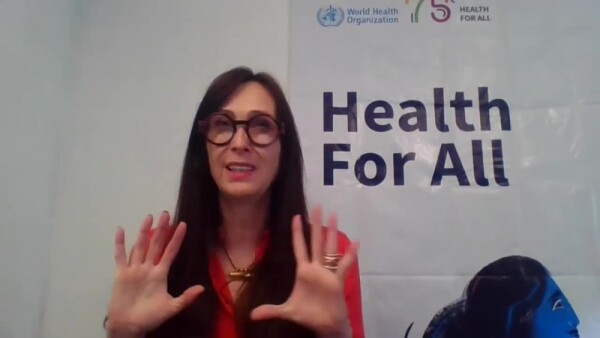
“About five million children under the age of five are estimated to be facing acute malnutrition in 2023 in the Horn region, in the Greater Horn. That is about 10.4 million, that is just a staggering figure,” said Liesbeth Aelbrecht, World Health Organization (WHO)’s incident manager for the greater Horn of Africa emergency.
“What our colleagues are seeing in clinics and in hospitals, since the beginning of this year, are the highest level of severely malnourished children who are now coming to these facilities with medical complications since the crisis began three years ago.”
Echoing that alert, World Food Programme (WFP) Senior Emergency Office Dominique Ferretti said that almost three years of drought had given way to rains and devastating flash floods. “While we just concluded a rainy season which performed better than predicted, one rainy season is not enough to bring an end to the crisis.”
Although long-awaited rains arrived in March in the eight-member Intergovernmental Authority on Development (IGAD) region encompassing Djibouti, Eritrea, Ethiopia, Kenya, Somalia, South Sudan, Sudan and Uganda) and with it the hope to bring some relief, flash-flooding inundated homes and farmland, washed away livestock and closed schools and health facilities.
The result was the highest number of reported disease outbreaks in the greater Horn of Africa so far this century. Their frequency can be linked directly to extreme climate events, according to the UN health agency.
“Many of the ongoing disease outbreaks, such as cholera, measles, we have been seeing last year and this year very high numbers of malaria as well,” reported Ms. Aelbrecht. “So with the impact of flooding, we see these diseases worsening. Malaria, I would like to remind you, is one of the biggest killers in the region.”
Climate concerns are key to food security in the coming months, the UN Food and Agriculture Agency (FAO) noted at a press conference in Geneva. Global forecasts indicate that El Niño conditions are already present and will strengthen through the rest of the year, which could bring above-average rains during the October to December rainy season across eastern parts of the region, including much of Kenya, the Somali region of Ethiopia and Somalia.
“El Niño may somewhat reduce the risk of flooding in flood-prone areas such as South Sudan,” said Brenda Lazarus, Food Security and Early Warning Economist at FAO’s Subregional Office for Eastern Africa. Nevertheless, she indicated that “on the risk’ side however, below-average rains and dry spells, along with other drivers of food insecurity such as conflict, would likely negatively impact agricultural production and increase already alarming levels of food insecurity. And again, this is the South Sudan, Sudan, parts of Ethiopia … (the) western parts of the region.”
FAO emphasized the need to shift from a system focused mainly on emergency response, to anticipating and mitigating crises through investments such as rainwater harvesting, the use of different soil and water conservation techniques - or the use of more drought tolerant crops and to ensure that seeds are available at local level. Involving young people in building silos could also boost community resilience, the UN agency noted.
The 60 million severely food insecure people in need of humanitarian assistance include more than 15 million women of reproductive age, 5.6 million adolescent girls and close to 1.1 million pregnant women. Close to 360,000 of them are expected to give birth in the next three months, according to the United Nations Population Fund (UNFPA).
“Once women who are looking for food, most of them they do so on the expense of their own health,” said Michael Ebele, UNFPA Regional Humanitarian Adviser for East and Southern Africa. “So, we are seeing pregnant women not being able to go for antenatal care, not attending to other illnesses they may be having. And then, that comes with risks of complications, or if these risks are not picked up by the health workers because they don’t remain in antenatal care, then the risks of maternal deaths increase.”
Malnutrition among pregnant and lactating mothers puts their unborn and breast-feeding children at risk of malnutrition and propagates malnutrition through entire life cycles in communities. Malnourished mothers are also less able to withstand complications in pregnancy which put them at greater risk of losing their child.
“Because of the limited amount of resources, we have seen an increase in the risks of survival sex. That comes with the risk of sexual exploitation and abuse, particularly of women and girls,” said Mr. Ebele.
Asked by journalists how badly the Horn of Africa would be affected if the UN-brokered Black Sea Initiative to facilitate Ukrainian grain exports to the world’s markets is not renewed next month, WFP’s Mr. Ferretti replied that “the reality is that Ukraine is the breadbasket, it is a major supplier and it would hit us hard if this Black Sea initiative was not renewed”.
-ends-
- Exterior wide shot: UN flag alley UN Geneva
- Wide shot: Press room
- SOUNDBITE (English) – Liesbeth Aelbrecht, WHO incident manager for the greater Horn of Africa Emergency: “About 5 million children under the age of 5 are estimated to be facing acute malnutrition in 2023 in the Horn region, in the Greater Horn. That is about 10.4 million, that is just a staggering figure.”
- Close lateral shot: attendee at the press conference, screen with speaker in the background
- SOUNDBITE (English) – Liesbeth Aelbrecht, WHO incident manager for the greater Horn of Africa Emergency: “What we are seeing at health facility level, so what our colleagues are seeing in clinic and in hospitals, since the beginning of this year, are the highest level of severely malnourished children who are now coming to these facilities with medical complications since the crisis began 3 years ago.”
- Medium shot: moderator taking notes at the press conference, screen with speakers in the background
- SOUNDBITE (English) – Liesbeth Aelbrecht, WHO incident manager for the greater Horn of Africa Emergency: “Many of the ongoing disease outbreaks, such as cholera, measles we have been seeing last year and this year very high numbers of malaria as well. So with the impact of flooding, we see these diseases worsening. Malaria, I would like to remind you, is one of the biggest killers in the region.”
- Close up: screen with speakers, attendee in the foreground
- SOUNDBITE (English) – Dominique Ferretti, WFP Senior Emergency Officer, Regional Bureau Nairobi: “Almost three years of drought has given way to rains and devastating flash floods. While we just concluded a rainy season which performed better than predicted, one rainy season is not enough to bring an end to the crisis.”
- Medium lateral shot: attendees at the press conference, screen with speakers in the background
- SOUNDBITE (English) – Brenda Lazarus, Food Security and Early Warning Economist at FAO’s Subregional Office for Eastern Africa: “El Niño may somewhat reduce the risk of flooding in flood-prone areas such as South Sudan. On the risk’ side however, below-average rains and dry spells, along with other drivers of food insecurity such as conflict, would likely negatively impact agricultural production and increase already alarming levels of food insecurity. And again, this is the South Sudan, Sudan, parts of Ethiopia, kind of the western parts of the region.”
- Medium lateral shot: moderator at podium, screen with speakers in the background
- SOUNDBITE (English) – Michael Ebele, UNFPA Regional Humanitarian Adviser for East and Southern Africa: “Because of the limited amount of resources, we have seen an increase in the risks of survival sex. That comes the risk really of sexual exploitation and abuse, particularly of women and girls.”
- Close shot: attendee at the press conference
- SOUNDBITE (English) – Michael Ebele, UNFPA Regional Humanitarian Adviser for East and Southern Africa: “Once women who are looking for food, most of them they do so on the expense of their own health. So we are seeing pregnant women not being able to go for antenatal care, not attending to other illnesses they may be having. And then, that comes with risks of complications, or if these risks are not picked up by the health workers because they don’t remain in antenatal care, then the risks of maternal deaths increase.”
- Medium lateral shot: moderator at podium, moderator in the foreground, screens with speakers in the background
- SOUNDBITE (English) – Dominique Ferretti, WFP Senior Emergency Officer, Regional Bureau Nairobi: “The reality is that Ukraine, Ukraine is the bread basket, it is a major supplier and it would hit us hard if this Black Sea initiative was not renewed.”
- Close shot: attendee at the press conference
- Close lateral shot: moderator at podium, screens with speakers in the background
- Close shot: attendee taking notes
Similar Stories
1
1
1
Press Conferences | UN WOMEN , WFP , WHO
UN WOMEN: Sudan Women and girls one year after the fall of El Fasher; increasing drone attacks across the country; WFP: DRC - Ebola spreads to eighth DRC province as WFP delivers food, builds treatment centres and keeps supplies moving; WHO - Update on Ebola (Bundibugyo Virus Disease)
1
12
1
1
Press Conferences , Images | UNOG
Closing Press Conference following the Sixth Consultative Meeting on Enhancing Coordination of Peace Initiatives and Efforts in Sudan

2
17
1
2
Edited News , Press Conferences , Images | OCHA , WMO
Two UN agencies teamed up on Wednesday to issue an appeal for immediate assistance to help communities already being impacted by the strongest El Niño on record.
1
1
1
Press Conferences | CITES
Wildlife trade and conservation policy discussions at the 81st meeting of the CITES Standing Committee (SC81)
1
1
1
Press Conferences | UNHCR , UNCTAD , WMO , OCHA , UNICEF , WHO
UNHCR Hungary’s 1956 Refugee Crisis: 70 Years On, UNCTAD World Investment Forum 2026, Doha, WMO Greenhouse Gas Bulletin and Climate Update for COP31, OCHA Afghanistan: Malnutrition, Girls’ Education and Recovery, UNICEF Yemen: Child Malnutrition and Unsafe Water in Taiz, WHO Inequalities in Noncommunicable Diseases and Risk Factors
1
1
1
Press Conferences | UNHCR
End of UNHCR's 77th Annual Executive Committee (ExCom) meeting week
1
1
1
Press Conferences | UNICEF , IOM , UNHCR
UN Special Assistant to the Personal Envoy Office (SUDAN): Peace Initiatives and Efforts in Sudan; UNICEF: Dire situation of children in Gaza; IOM: Damaged Homes and Energy Attacks Risk Displacing Ukrainians for this winter; UNHCR: update on EXCOM week
1
1
1
Press Conferences | IOM , UNDRR
UN stresses importance of household preparedness for disaster risk reduction.
1
1
1
Statements , Press Conferences | OHCHR
1
1
1
Press Conferences | UNHCR , UNICEF , IFRC , OHCHR , UN WOMEN , IOM , OCHA , WHO
UNHCR – ExCom Meeting, UNICEF – Nepal Recovery, IFRC – Flash Floods, WHO – Mental Health, IOM – South Sudan Floods, OCHA – DRC Humanitarian aid, UNHCR – Sahel Displacement, UNICEF – Yemen Update, IOM – Gaza Shelter, UN Women – Gaza Women, OHCHR – Arrests and detentions of Syrians by Israeli force
2
1
2
Press Conferences | UNCTAD
Presentation of the Trade and Developement Report 2026
Embargoed until 9 October 2026 at 11 a.m. (Geneva Time)
UNCTAD: UNCTAD’s flagship report finds that governments increasingly use industrial, trade, financial and technology policies to pursue economic and national security objectives. Market access and the ability to move into higher-value activities now depend more heavily on technology, finance and geopolitics.
1
1
1
Press Conferences | UPU
Release of the State of the Postal Sector Report 2026