

The United Nations Office at Geneva
Multimedia Newsroom
Edited News | UNHCR
Bi-Weekly Press Briefing: Assistance To Refugees In Northern Ethiopia - UNHCR
The UN Refugee Agency (UNHCR) has been able to step up humanitarian assistance to conflict-affected populations in Ethiopia’s northern Tigray, Afar and Amhara regions since the signing of the peace agreement between the Ethiopian government and the Tigray People’s Liberation Front (TPLF) about 6 weeks ago.
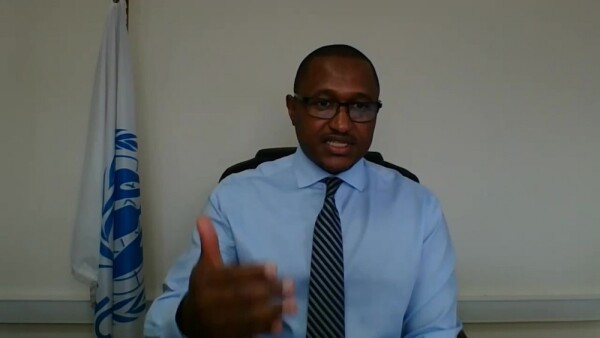
Speaking to journalists at a news briefing at the United Nations in Geneva, the UNHCR Representative in Ethiopia, Mamadou Dian Balde, said that “the peace agreement was signed on the 2nd of November. And since then, UNHCR and partners have been able to increase the level of assistance as well as protection and solutions within Tigray, but also in the northern part of Ethiopia, meaning Amhara as well as Afar.”
In the Peace agreement signed by the Government of the Federal Democratic Republic of Ethiopia and the Tigray People’s Liberation Front (TPLF) on 2nd November, both parties agreed to a “permanent cessation of hostilities” to end the Tigray war. This agreement was a critical first step towards ending the devastating two-year old conflict in which the lives and livelihoods of so many Ethiopians have been lost.
As of this week, UNHCR has been able to send 61 trucks into Tigray, carrying 2,400 metric tons of much-needed relief including medicine, shelter materials, blankets and household items, and a tanker carrying 20,000 litres of fuel to help us bring aid to those most in need.
“Not only were we able to have 16,000 refugees relocated to Alemwach, but since the signing of the agreement with the Government’s Refugees and Returnees Service (RRS), we've been able to support the relocation of 7,000 of them, so which really help thousands of refugees who have been stranded to really start rebuilding their own lives,” noted the UNHCR representative.
The Refugee Agency has now resumed operations in secondary field locations like in Maichew, Adigrat, and Abi Adi. Throughout the conflict, UNHCR teams were operating in Tigray from Mekelle and Shire to assist the vulnerable populations as conditions for Eritrean refugees in Tigray were dire.
“We were able to provide them with some limited support”, said Mr. Balde. “Whenever we had opportunities for flying in medical supplies, we did it, but there were not enough. They were not commensurate to the needs. And yes, people have suffered, and they have suffered, and they have suffered.”
UNHCR is now also working closely with local authorities in northern Ethiopia to support Ethiopians displaced by the conflict.
“UNHCR in Ethiopia is not only working on refugees, we also work on Ethiopians displaced by the conflict”, noted the UNHCR Representative. “We have been able to support over 2 million internally displaced persons through our protection services, shelter services as well as our housing, land and property and additional services.”
UNHCR has been providing counselling and support to the most vulnerable including separated children and survivors of gender-based violence. Over 50,000 internally displaced have been assisted to return to their homes within Tigray, Afar and Amhara.
-ends-
STORY: Assistance to Refugees in Northern Ethiopia - UNHCR
TRT: 1 min 57s
SOURCE: UNTV CH
RESTRICTIONS: NONE
LANGUAGE: ENGLISH/NATS
ASPECT RATIO: 16:9
DATELINE: 09 December 2022 GENEVA, SWITZERLAND
SHOTLIST
- Medium shot, UN Geneva flag alley.
- Medium shot, conference room, journalists taking notes, screen in background.
- SOUNDBITE (ENGLISH), UNHCR Representative in Ethiopia, Mamadou Dian Balde: “The peace agreement was signed on the 2nd of November. And since then, UNHCR and partners have been able to increase the level of assistance as well as protection and solutions within Tigray, but also in the northern part of Ethiopia, meaning Amhara as well as Afar.”
- Medium shot, journalists taking notes.
- SOUNDBITE (ENGLISH), UNHCR Representative in Ethiopia, Mamadou Dian Balde: “Not only were we able to have 16,000 refugees relocated to Alemwach, but since the signing of the agreement with the Government’s Refugees and Returnees Service (RRS), we've been able to support the relocation of 7,000 of them, so which really help thousands of refugees who have been stranded to really start rebuilding their own lives.”
- Close-up shot, staff monitoring conference.
- SOUNDBITE (ENGLISH), UNHCR Representative in Ethiopia, Mamadou Dian Balde: “So we were able to provide them with some limited support. Whenever we had opportunities for flying in medical supplies, we did it, but there were not enough. They were not commensurate to the needs. And yes, people have suffered, and they have suffered, and they have suffered.”
- Medium shot, journalists taking notes.
- SOUNDBITE (ENGLISH), UNHCR Representative in Ethiopia, Mamadou Dian Balde: “UNHCR in Ethiopia is not only working on refugees, we also work on Ethiopians displaced by the conflict. We have been able to support over 2 million internally displaced persons through our protection services, shelter services as well as our housing, land and property and additional services.”
- Medium shot, journalists taking notes, podium in the background.
- Medium shot, conference room, journalists taking notes.
- Close-up shot, journalists.
Similar Stories
1
1
1
Edited News | OCHA , UNICEF , WFP
Aid agencies warned on Friday of the fast-developing humanitarian emergency inside Taiz City in Yemen, which has been encircled by de facto Houthi forces fighting government troops along the country’s west coast.

2
17
1
2
Edited News , Press Conferences , Images | OCHA , WMO
Two UN agencies teamed up on Wednesday to issue an appeal for immediate assistance to help communities already being impacted by the strongest El Niño on record.

3
16
2
2
Edited News , B-roll , Conferences , Images | UNITED NATIONS , UNOG
Sixth Consultative Meeting on Enhancing Coordination of Peace Initiatives and Efforts for Sudan

1
1
1
Edited News | UNICEF , WHO , UNHCR
Yemen war continues to force families from homes amid hunger and disease
More than 250,000 people have now fled renewed fighting in Yemen, the UN said on Tuesday, citing particular concern for those sheltering in the southwestern city of Taiz and the wider governorate, where access is “essentially blocked”.

1
1
1
Edited News | UNICEF
A little over one year since a ceasefire agreement was announced between Hamas fighters and Israel, more than 340 children have been reported killed and hundreds more injured, the UN Children’s Fund, UNICEF, said on Friday.

1
1
1
Edited News | UNICEF , IFRC
Six weeks after Nepal’s deadly flooding disaster, communities are still struggling to rebuild their lives, but they will need sustained help as global warming increases the risk of another Himalayan catastrophe, the UN Children’s Fund (UNICEF) said on Friday.

1
1
1
Edited News | WHO
In suspected Russia plague death, testing and monitoring underway – WHO
The death of a lab worker in Russia’s Siberia region has sparked concerns about plague being the cause, the UN World Health Organization (WHO) said on Tuesday, adding that it was following the situation closely.

1
1
Edited News | OHCHR , UNOG
UN Human Rights Chief Volker Türk on Friday provided and oral update to the 63rd session of the Human rights Council on Ukraine.

1
1
1
Edited News | OHCHR , UNOG
UN Human Rights Chief Volker Türk on Friday provided and oral update to the 63rd session of the Human rights Council on the human rights situation in Haiti.

1
1
1
Edited News | WHO
Repeated delays in bringing lifesaving medicines, prosthetics and more from Israel into Gaza risk having devastating consequences on Palestinians who urgently need them in the wartorn enclave, the UN World Health Organization (WHO) said on Friday. “A truck full of non-priority supplies or the right supplies arriving too late, doesn't save lives. That's the question that actually matters," said Dr Reinhilde Van De Weerdt, WHO Representative in the OPT.

1
1
1
Edited News | WHO
DRC: Early access to care and oxygen decisive for Ebola patients’ survival – WHO
In the Democratic Republic of the Congo (DRC), health workers fighting the country’s largest-ever Ebola outbreak are struggling to overcome critical challenges to patient care, the UN World Health Organization (WHO) warned on Tuesday.

1
1
1
Edited News | OCHA , UN
Civilians in Iran are continuing to feel the consequences of months of conflict and military escalation, the UN’s top official in the country has said, as loss of life, damage to civilian infrastructure and mounting economic pressures leave many facing continued uncertainty.