

The United Nations Office at Geneva
Multimedia Newsroom
Peru’s food crisis grows amid soaring prices
Half the population of the Andean country is suffering from food insecurity, twice as many as before the pandemic – FAO
Peru has become the most food insecure country in South America, according to the UN's Food and Agriculture Organization, FAO.
Some 16.6 million people --more than half the population -- now find themselves without regular access to enough safe and nutritious food.
It's a shocking reversal for Peru, an upper middle-income country in the World Bank's rankings, that can grow all the food it needs.
According to a 2021 study of FAO, 51 per cent of the population is living in moderate food insecurity. “20 per cent of that group is in acute food insecurity, explains Fernando Castro Verastegui, Project coordinator at FAO Peru. That means people have reduced the quality of their diet or are eating less than they need.”
Poverty is to blame, says the Food and Agriculture Organization. The poverty rate this year is 25 per cent, meaning one in four Peruvians doesn’t have enough money to cover their basic food basket. Most people end up simply alleviating their hunger, but not eating adequate food with all the necessary nutrients, such as proteins. In parts of the Peruvian Amazon rainforest - known locally as the “Selva” region - up to 70 per cent of the population is anemic.
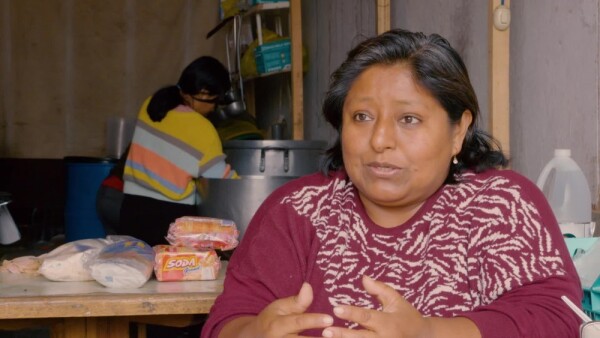
In the poor and dusty suburb of Chorrillos, one of Lima’s shanty towns overlooking the Pacific Ocean, women are busy behind the stove.
Among them, Jenny Rojas Chumbe, a community activist, president of the soup kitchen “Ayuda Social” (Social support).
When COVID-19 hit the country, sending millions home with no income, Jenny saw up close the urgent needs in her community and started collecting food to organize soup kitchens.
These “ollas comunes” - as they are known here - are getting donations from food banks as well as other organizations and individuals. From 220 daily meals at the peak of the pandemic, she is still serving about 100 a day today, even though many have gone back to work.
“The number of meals we were giving had dropped to 50 a day, because the neighbors were doing better in terms of purchasing power. But lately, it’s been raising because the crisis is affecting a lot of people. If you take the vegetables, they are far too expensive. A kilogram of potatoes costs more than three Soles (0,80$), a liter of cooking oil, more than 12 Soles (3.15$),” explains Jenny Rojas Chumbe.
Soaring potato prices have a real impact - and a powerful symbolic one in Peru: it is on the shores of Lake Titicaca that potatoes were first cultivated,.
As for meat, chicken is the main source of protein in Peru... for those who can afford it. As a matter of fact, Jenny Rojas Chumbe doesn’t cook chicken every day for her neighbors, “sometimes, once, or twice a week, because it would be out of our budget.”
Peru's annual inflation rate for 2022 remains above 8 per cent in the past months, its highest level in 24 years. Staples like wheat, rice, and cooking oil have more than doubled in price.
The soup kitchens were a citizen response to the food problem that had been going on since before COVID, explains Fernando Castro Verastegui. “We had rates of, for example, malnutrition and anemia that had stagnated. The economic, political, and environmental problems that we were already having were telling us that the food situation was at risk. When COVID came, this exploded.”
Peru was hit badly by COVID-19. It suffered the world’s highest mortality rate during the pandemic, as more than 0.65 percent of the population succumbed to the virus. In parallel, lockdowns increased unemployment.
Added to the post-COVID downturn, inflation, driven by the war in Ukraine, is weighing heavily on prospects for recovery. Peru is also “experiencing the increase in prices, says Mr Castro Verastegui, as a result of a series of phenomena that are taking place at a global level, especially the increase in fuel prices, supplies also as a result of the conflicts in Ukraine.”
In addition to the price hikes of food and energy, FAO points out, government mismanagement, dietary habits, and an over-reliance on imported food staples and fertilizers as further causes of Peru's food crisis.
Imported chemical fertilizers cost up to four times what they did a year ago, forcing farmers to reduce its use. This is likely to impact food production for the coming months and aggravate the situation.
Ends
STORY: Peru’s food crisis grows amid soaring prices - FAO
TRT: 03’58”
SOURCE: UNTV CH
LANGUAGE: SPANISH / NATS
ASPECT RATIO: 16:9
DATES SHOT: 24 and 28 Oct. 2022 (See shotlist below for details)
LOCATIONS: LIMA CAPITAL; CHORRILLOS shanty town, Lima; CANTA, Lima Province, PERU. (See shotlist below for details)
DATELINE: 15 Nov. 2022
Speakers:
- Fernando Castro Verastegui, Project coordinator, FAO Peru.
- Jenny Rojas Chumbe, President of the Soup Kitchen “Ayuda Social” (Social aid) in Chorrillos township, Lima, Peru.
SHOTLIST:
25 OCTOBER 2022, CHORRILLOS Town ship, LIMA, PERU
- Wide shot, drone shot of Costa Verde over the Pacific Ocean, Lima.
- Wide shot, drone shot of Chorrillos Town Ship, Lima.
- Wide shot, street of Chorrillos with girl running towards her mother.
- Wide shot, street of Chorrillos, Pacific Ocean in the background.
- Medium shot, Chorrillos neighbors walking on the street.
- Various medium shots, neighbors and volunteers unloading donated food from the truck.
28 OCTOBER 2022, FAO Office, LIMA, PERU
- SOUNDBITE (SPANISH) Fernando Castro Verastegui, coordinador de proyectos, FAO Peru: “Se estima, según un análisis que se hizo en el año 2021, que un 51 por ciento de la población está en inseguridad moderada y un 20 por ciento de ese grupo está en inseguridad severa. Eso significa que la población ha reducido la calidad de su dieta o está consumiendo menos alimentos.”
ENGLISH translation Fernando Castro Verastegui, Project coordinator, FAO Peru: “According to a study we did in 2021, we estimate that 51 per cent of the population is living in moderate food insecurity, and 20 per cent of that group is in acute food insecurity. That means people have reduced the quality of their diet or are eating less than they need.”
25 OCTOBER 2022, CHORRILLOS Town ship, LIMA, PERU
- Medium shot, unloaded vegetables stored in a room before their distribution to different soup kitchens.
- Medium shot, people selecting vegetables in the distribution site.
- Close-up shot, women picking up zucchini.
- Close-up shot, neighbors selecting vegetables.
- Medium shot, Jenny Rojas Chumbe walking back to her soup kitchen with a box full of food.
- Medium shot, Jenny Rojas Chumbe walking into her soup kitchen.
- Close-up shot, poster with soup kitchen information.
- Medium shot, women grabbing potatoes to cook them.
- Close-up shot, women firing up the stove.
- SOUNDBITE (SPANISH) Jenny Rojas Chumbe, President of the soup kitchen “Ollita Ayuda Social” (Social aid) in Chorrillos, Lima, Peru: “Ahora, último empezó a subir porque ya había bajado hasta 50 menús que dábamos porque eso nos daba a entender que los vecinos ya tenían mejor adquisición y podían apoyarse. Pero último, empezaba a subir porque la crisis está afectando a muchos vecinos. Usted ve las verduras, están demasiado carísimo. Un kilo de papa llega a más de tres soles, un litro de aceite, más de 12 soles.”
ENGLISH translation: “Lately, it’s raising again. The number of meals we were giving had dropped to 50 a day, because the neighbors were doing better in terms of purchasing power. But lately, it’s been raising because the crisis is affecting a lot of people in the community. Take the vegetables; they are far too expensive. A kilogram of potatoes costs more than three Soles (0,80$), a liter of cooking oil, more than 12 Soles (3.15$).”
- Close-up shot, woman pouring soup in a plastic bowl.
- Close-up shot, old man packing the bowl in a plastic bag to take it home.
- Medium shot, old man leaving the soup kitchen.
- SOUNDBITE (SPANISH) Jenny Rojas Chumbe, President of the soup kitchen “Ollita Ayuda Social” (Social aid) in Chorrillos township, Lima, Peru: “Nosotros, a diario no cocinamos presas de pollo. A veces a la semana, una o dos veces, porque no nos permite, porque saldría de nuestro presupuesto”
ENGLISH translation: “We don’t cook chicken every day. Sometimes, once, or twice a week, because we can’t, it would be out of our budget.”
27 OCTOBER 2022, WHOLESALE MARKET (Mercado de mayoristas), LIMA, PERU
- Medium shot, women waiting inside the wholesale vegetable market of Lima.
- Medium shot, people working in the vegetable market.
- Medium shot, two women weighing vegetables.
- Close-up shot, price tag of the vegetable.
- Medium shot, people working in the vegetable market.
28 OCTOBER 2022, FAO Office, LIMA, PERU
- SOUNDBITE (SPANISH) Fernando Castro Verastegui, coordinador de proyectos, FAO Peru: “las ollas comunes fueron una respuesta ciudadana al problema alimentario que ya se venía dando desde antes del COVID. Teníamos índices de, por ejemplo, de desnutrición y anemia que se habían estancado. Los problemas que veníamos ya teniendo económicos, políticos, ambientales, nos iban diciendo que la situación alimentaria estaba en riesgo. Cuando vino el COVID esto explotó.”
ENGLISH translation Fernando Castro Verastegui, Project coordinator, FAO Peru: “The soup kitchens were a citizen response to the food problem that had been going on since before COVID. We had rates of, for example, malnutrition and anemia that had stagnated. The economic, political, and environmental problems that we were already having were telling us that the food situation was at risk. When COVID came, this exploded.”
27 OCTOBER 2022, SURQUILLO AREA, LIMA, PERU
- Medium shot, people walking inside the market of Surquillo, .
- Medium shot, women with child on her back in the market.
- Medium shot, street view of people walking.
28 OCTOBER 2022, FAO Office, LIMA, PERU
- SOUNDBITE (SPANISH) Fernando Castro Verastegui, coordinador de proyectos, FAO Peru: “A esto se suma el incremento de los precios que estamos viendo, producto de una serie de fenómenos que se van dando a nivel global, especialmente el incremento de los precios de los combustibles, el abastecimiento también producto de los conflictos de Ucrania.”
ENGLISH translation Fernando Castro Verastegui, Project coordinator, FAO Peru: “In addition, the increase in prices that we are seeing, as a result of a series of phenomena that are taking place at a global level, especially the increase in fuel prices, supplies also as a result of the conflicts in Ukraine.”
24 OCTOBER 2022, CANTA, LIMA PROVINCE, PERU
- Wide shot, farm worker spraying a field.
- Wide shot, farm workers picking zucchini in a field.
- Close up shot, farm workers picking zucchini in a field.
- Medium shot, farmer picking up a basket of Zucchini on his back.
- Medium shot, farm worker spraying a field.
- Wide shot, workers working in a zucchini field.
Similar Stories

1
1
1
Edited News | WHO
In suspected Russia plague death, testing and monitoring underway – WHO
The death of a lab worker in Russia’s Siberia region has sparked concerns about plague being the cause, the UN World Health Organization (WHO) said on Tuesday, adding that it was following the situation closely.

1
1
Edited News | OHCHR , UNOG
UN Human Rights Chief Volker Türk on Friday provided and oral update to the 63rd session of the Human rights Council on Ukraine.

1
1
1
Edited News | OHCHR , UNOG
UN Human Rights Chief Volker Türk on Friday provided and oral update to the 63rd session of the Human rights Council on the human rights situation in Haiti.

1
1
1
Edited News | WHO
Repeated delays in bringing lifesaving medicines, prosthetics and more from Israel into Gaza risk having devastating consequences on Palestinians who urgently need them in the wartorn enclave, the UN World Health Organization (WHO) said on Friday. “A truck full of non-priority supplies or the right supplies arriving too late, doesn't save lives. That's the question that actually matters," said Dr Reinhilde Van De Weerdt, WHO Representative in the OPT.

1
1
1
Edited News | WHO
DRC: Early access to care and oxygen decisive for Ebola patients’ survival – WHO
In the Democratic Republic of the Congo (DRC), health workers fighting the country’s largest-ever Ebola outbreak are struggling to overcome critical challenges to patient care, the UN World Health Organization (WHO) warned on Tuesday.

1
1
1
Edited News | OCHA , UN
Civilians in Iran are continuing to feel the consequences of months of conflict and military escalation, the UN’s top official in the country has said, as loss of life, damage to civilian infrastructure and mounting economic pressures leave many facing continued uncertainty.
1
1
1
Edited News | WHO , UNICEF
Aid agencies in Yemen highlighted the growing hunger emergency sparked by renewed fighting between Houthi opposition forces and Government troops, after mobile health clinics reported that hundreds of children displaced by the violence are suffering from the most deadly form of malnutrition.
1
1
1
Edited News | UNHCR
Displacement on the rise in Yemen as fighting continues - UNHCR
As hostilities worsen in Yemen, more people have been fleeing their homes, further intensifying the humanitarian crisis within the region, the UN Refugee Agency (UNHCR) warned on Tuesday.
1
1
1
Edited News | IOM , OHCHR , UNFPA , UNOG , UNHCR , WHO
Yemen’s humanitarian crisis growing by the hour amid spike in displacement
Yemenis displaced by renewed fighting have described fleeing for their lives amid shelling and gunfire, aid agencies reported on Friday, while highlighting the dramatic increase in humanitarian needs in the country and in Djibouti, where thousands have sought shelter.
1
1
1
Edited News | OHCHR , UNOG
The UN Human Rights Office issued on Friday a report documenting a shocking pattern of sexual violence amid Russia’s full-scale armed attack on Ukraine.
2
1
2
Edited News , Press Conferences | WMO
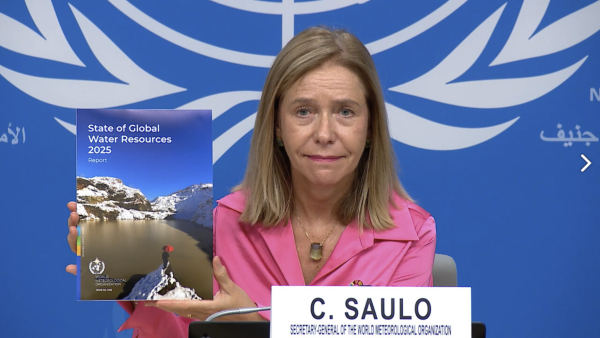
As world’s water reserves change, countries must prepare for a new reality: WMO
New data showing that rivers were at their lowest level for decades last year provides further evidence that the climate crisis is real and countries must act immediately to protect themselves from the increasing threat to communities and livelihoods, the UN World Meteorological Organization (WMO) said on Thursday.
The key findings from WMO’s State of Global Water Resources 2025 report covering the hydrological cycle and extreme events in the five-year period to last year:
- 2025 was one of driest years for river discharge in 35 years
- Past seven years have seen abnorfmal river flows
- Water storage on Earth’s land surface has decreased in past decade
- Widespread glacier loss across all regions for fourth consecutive year
- Asia and Africa are regions most affected by water-related disasters
- Water data availability has improved, but gaps remain in hard-hit areas
Highlighting the long-term decline in the Earth’s freshwater storage and glacier melt, WMO Secretary-General Celeste Saulo explained that the planet’s water reserves used to act as a planetary “savings account” that absorbed the occasional dry season, avoiding a water crisis. “One of the central stories of the 2025 report is what is happening to that savings account? And the simple answer is that we are depleting it,” she told journalists in Geneva.
Groundwater reserves are equally stretched and have been in decline since 2014, WMO’s report states, with nearly two-thirds of monitored wells worldwide showing levels lower than the historical norm and indicating a shift “further toward deficit…not recovery”.
“At the same time, we are seeing more water-related disasters,” Ms. Saulo said, while also stressing that the currently strengthening El Niño “will increase the risk of drought in some areas, and flooding in others”.
Glaciers disappearing
In 2025, for the fourth consecutive year, every major glaciated region on Earth lost ice mass, leading to short-term hazards including floods and long-term water insecurity, according to WMO.
Responding to a question about whether the changing global water cycle might have contributed to the deadly Nepal-China flooding disaster, Ms. Saulo explained that melting ice and rock was just one factor in the chain of events that ultimately sent a massive and deadly wall of water and debris downstream on 26 August, killing at least 1,367 people.
“You asked if it could happen again? Absolutely; the problem in this region is that there’s 63,700 glaciers at the last count,” she told a Press Conference in Geneva. “Even if you’re looking with remote sensing with satellites at these glaciers, you might see some faults, you might see some slight shifting, that does not mean necessarily catastrophic collapse. So, in order to plan for this, it’s very, very difficult. But the international community is looking very hard at ways in which we can bring people together to solve some of these monitoring issues.”
Data indicates that glaciers shrank between 2023 and 2025 with cumulative losses of 1,400 gigatonnes of water – or about one third of annual fresh water needs.
Every major glacier region on Earth lost ice for the fourth consecutive year.
“All 19 glacier regions around the globe lost ice; in Central Asia, Iceland, the Russian Arctic and western Canada and the United States, it was among the three worst years on record,” said Wayne Jenkinson, WMO’s Director of Hydrology and Cryosphere.
Some regions with smaller glaciers such as Central Europe, the Caucasus, the western Canada and the United States may already have reached “peak water”, Mr. Jenkinson warned.
“After this point, the glacier gives less meltwater each year simply because there is less ice left to melt. That matters for every community downstream that relies on water during hot, dry summers,” he explained.
Narelle van der Wel, WMO’s Head of Cryosphere Monitoring, Predictions and Services, stressed that while some further glacier loss is unavoidable, the eventual scale of the decline is not predetermined.
“Some glacier loss is inevitable, but total loss of glaciers is not yet inevitable,” she said, pointing to emissions reductions as central to limiting future losses.
Preparing for moving baselines
The report does not attribute every observed change to climate change alone. WMO says pressure on water resources and natural variability also contribute.
Mr. Jenkinson said governments need to prepare for “moving baselines” as historical patterns become less reliable.
“The situation 30 years ago is not where we are today,” he said. Countries, he added, need to prepare “for those changes that have really already arrived”.
ends
1
1
1
Edited News | OCHA , WHO
The deadly Ebola virus outbreak in DR Congo continues to spread across the vast country despite some success in containing it, aid officials said on Tuesday, in a renewed call for international support to help responders on the ground.