

The United Nations Office at Geneva
Multimedia Newsroom
Edited News , Statements | UNOG
UNOG-NEWS Human Rights Council Guterres, Muhammad-Bande and Bachelet
With human rights ‘under assault’, UN chief unveils blueprint for positive change
People’s basic human rights – their birthright - are “under assault”, UN Secretary-General Antonio Guterres said on Monday, as he launched a Call to Action aimed at boosting equality and reducing suffering everywhere.
“Human rights are our ultimate tool to help societies grow in freedom,” he told Member States on the opening day of the Council’s 43rd session in Geneva. “To ensure equality for women and girls. To advance sustainable development. To prevent conflict, reduce human suffering and build a just and equitable world.”
In his speech to the Human Rights Council in Geneva in which he detailed a seven-point blueprint for positive change, Mr. Guterres issued an appeal for solidarity.
“People across the world want to know we are on their side. Whether robbed of their dignity by war, repression of poverty, or simply dreaming of a better future, they rely on their irreducible rights – and they look to us to help uphold them.”
Human rights “are the birthright of every person and in the interests of every country”, the UN Secretary-General added.
Explaining his decision to come to Geneva to announce the initiative, he said: “I have come to the Human Rights Council - the fulcrum for international dialogue and cooperation to advance all human rights – to launch a Call for Action. And I decided to do it now – during the 75th anniversary year of the United Nations – because of the centrality of human rights in all UN does, and because human rights are under assault.”
Echoing the call for change, High Commissioner for Human Rights Michelle Bachelet said that although threats to human rights, development and peace were on the rise, so were the practicable solutions to these issues.
“Threats to human rights, to development and peace may be rising – but so are practical, actionable solutions based on sound human rights norms,” she said. “Multilateral agreements of recent years bring many such solutions: the 2030 Agenda, the Global Compact on Migration, the United Nations Framework Convention on Climate Change, among others. Others stem from the great body of international human rights law and the targeted human rights recommendations of this Council, its Special Procedures, the Universal Periodic Review, the Treaty Bodies, and my Office. Inventive and resourceful, young people must also be seen as part of the solution to the crises we face. Today, many are criticizing inequalities, and calling for more responsive governance, greater equality of opportunity, and respect for human rights.”
In his pledge to utilise the full weight of his office and the UN family to fulfil the Call to Action, Mr. Guterres highlighted the enduring value of the Universal Declaration of Human Rights.
This cornerstone of understanding between UN Member States was proclaimed in 1948, out of the ashes of the Second World War - and a desire to prevent such suffering from ever happening again.
All States had a responsibility to protect and promote people’s “dignity and worth”, he insisted.
“Human rights are our ultimate tool to help societies grow in freedom. To ensure equality for women and girls. To advance sustainable development. To prevent conflict, reduce human suffering and build a just and equitable world. As Universal Declaration of Human Rights proclaims, human rights are ‘humanity’s highest aspiration’.”
National sovereignty “cannot be a pretext for violating human rights”, Mr. Guterres insisted, while also maintaining that greater equality “strengthens States and societies, thereby reinforcing sovereignty”.
“Sovereignty remains a bedrock principle of international relations. But national sovereignty cannot be a pretext for violating human rights. We must overcome the false dichotomy between human rights and national sovereignty. Human rights and national sovereignty go hand in hand. The promotion of human rights strengthens States and societies, thereby reinforcing sovereignty.”
Positive change is possible, the UN chief insisted, recalling his own experience living under dictatorship in Portugal, which finally gave way to a democratic movement when he was 24 years old.
“I grew up under the Salazar dictatorship in Portugal and did not experience democracy until I was twenty-four years old,” he said. “I saw the dictatorship oppress not only its own citizens, but also people under colonial rule in Africa. But it was the human rights struggles and successes of others around the world that inspired us.”
Other “human rights struggles and successes inspired us”, Mr. Guterres said, noting how these had secured the end of apartheid in South Africa and colonial rule.
One billion people have also been lifted out of poverty in a generation, he continued, and there have also been major advances in improving access to drinking water, along with big declines in child mortality.
“Over the decades, the efforts of many have ushered in massive human rights gains on all continents,” he said. “Colonial rule and apartheid were overcome. Dictatorships have fallen. Democracy has spread. Landmark covenants spell out the full range of civil, cultural, economic, political and social rights. A robust treaty-based system is in place, along with special procedures and accountability mechanisms. One billion people have been lifted out of poverty in a generation. And we have seen big advances from the access to drinking water – to big declines in child mortality. All our societies have benefitted from human rights movements led by women, young people, minorities, indigenous peoples and others.”
Despite this, in the 75 years that the UN has strived for peace, security and development, myriad challenges persist and “no country is immune”, Mr. Guterres explained.
Chief among these challenges are several protracted, unresolved conflicts that have left families trapped in war-torn enclaves, “starved and bombed in clear violation of international law”, he said.
Human trafficking also affects “every region of the world”, the UN chief noted, leaving women and girls “enslaved, exploited and abused”, unable to realise their potential.
Journalists and civil society are also under threat, with activists jailed, religious groups and minorities – including indigenous peoples, migrants, refugees and the LGBTI community - persecuted under “overly broad definitions of national security”.
Global hunger is also increasing, Mr. Guterres warned, before highlighting a series of 21st century issues linked to huge problems that affect all countries: the climate crisis, population growth, urbanization and the dark underbelly of technological progress.
“People are being left behind. Fears are growing. Divisions are widening. And some leaders are exploiting anxieties to broaden those gaps to the breaking point. A perverse political arithmetic has taken hold: divide people to multiply votes.”
Introducing his Call to Action blueprint, Mr. Guterres explained that its aim was to “transform the ambitions of the Universal Declaration into real-world change on the ground”.
Heading the seven-point protocol is a call to put human rights at the core of sustainable development – a reference to the 17 Sustainable Development Goals (SDGs), agreed to by the international community in 2015 under the Agenda 2030 banner.
“The vast majority of the goals and targets correspond to legally binding human rights commitments made by every Member State,” Mr. Guterres said.
“When we help lift people out of abject poverty – when we ensure education for all, notably girls – when we guarantee universal healthcare…we are enabling people to claim their rights and upholding the core pledge of the 2030 Agenda to leave nobody behind.”
Among the other priorities, the UN Secretary-General highlighted that much more needs to be done to prevent violence against women.
“Violence against women is the world’s most pervasive human rights abuse,” he said, in a call to “every country” to support policies that promote gender equality, repeal discriminatory laws…ensure sexual and reproductive health and rights, and strive for women’s equal representation.
“Human rights will never be realized without the human rights of women,” he said. “Yet in this year in which we mark the 25th anniversary of the Beijing Platform of Action, we see a pushback against women’s rights, alarming levels of femicide, attacks on women human rights defenders, and the persistence of laws and policies that perpetuate subjugation and exclusion.”
The UN Secretary-General noted too that gender equality among staff was taken seriously within the organization, too.
“On 1 January — for the first time in UN history — we achieved gender parity across our senior-most ranks of full-time Under- and Assistant-Secretaries-General – 90 women and 90 men,” he said. “We pledge to reach gender parity throughout the UN system at all levels by 2028, apply a gender perspective to everything the United Nations does, strengthen our push for gender equality across the board, and better track and set benchmarks on funding for gender equality. Today, I call on every country to support policies and legislation that promote gender equality, repeal discriminatory laws, end violence against women and girls, ensure sexual and reproductive health and rights, and strive for women’s equal representation and participation in all spheres.”
Underscoring the need for sustainable growth, President of the UN General Assembly Tijjani Muhammad-Bande also underlined the importance of gender equality, calling for its streamlining in the implementation of the Sustainable Development Goals.
“There are many people around the world whose survival depends on how well the United Nations system is able to coordinate and align the three main pillars of peace and security, human rights and development,” the General Assembly President said. “Some of these people live in relatively peaceful societies, while many are trapped in conflict zones and face difficulties. We cannot continue to turn a blind eye to the human rights situation in these conflict zones, as well as to the hardship faced by many who escaped conflict and are seeking security in other places.”
Turning to 21st century challenges, Mr Guterres reiterated that the climate crisis was “the biggest threat to our survival”.
It has already threatened human rights around the world and would continue to do so in future, he noted, before underscoring people’s right to a safe, clean, healthy and sustainable planet that the Call to Action is designed to achieve.
“The climate crisis is the biggest threat to our survival as a species and is already threatening human rights around the world,” he said. “This global emergency highlights how the rights of succeeding generations must figure prominently in decision-making today. It threatens the very survival of some Member States, especially small island developing countries. Our children and grandchildren will enjoy far fewer of their fundamental rights if we do not act. And we can already hear them through the courageous voices of young people today.”
He added: “Our Call to Action will build on the September climate summit — including the youth climate summit — to push for climate action and the right to a safe, clean, healthy and sustainable environment.
We will create space for young people to not simply speak – but to participate and shape decisions that will affect their future.”
Finally, on the challenges posed to human rights by new technology, Mr Guterres explained that progress in this field “are too often used to violate rights and privacy through surveillance, repression and online harassment and hate”.
Facial recognition and robotics should never be used to deepen inequality, he insisted, while also reiterating his call for online-ready human rights norms such as the Internet Governance Forum.
At the same time, the UN chief also repeated his call for a global ban on lethal autonomous weapon systems.
ends
- Wide shot: exterior, flag alley, Palais des Nations, United Nations Geneva.
- SOUNDBITE (EN) — António Guterres, UN Secretary-General: “I have come to the Human Rights Council - the fulcrum for international dialogue and cooperation to advance all human rights – to launch a Call for Action. And I decided to do it now – during the 75th anniversary year of the United Nations – because of the centrality of human rights in all UN does, and because human rights are under assault.”
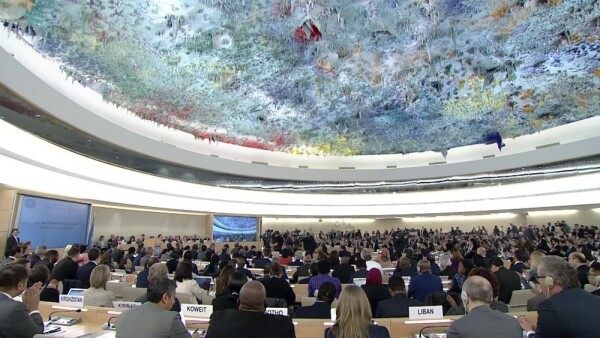
- Wide shot: delegates sitting beneath the multi-coloured ceiling fresco in the Human Rights and Alliance of Civilizations room where the Human Rights Council sits at the UN in Geneva.
- SOUNDBITE (EN) — António Guterres, UN Secretary-General: “Human rights are our ultimate tool to help societies grow in freedom. To ensure equality for women and girls. To advance sustainable development. To prevent conflict, reduce human suffering and build a just and equitable world. As Universal Declaration of Human Rights proclaims, human rights are ‘humanity’s highest aspiration’.”
- Medium shot: António Guterres, UN Secretary-General with Michelle Bachelet, High Commissioner for Human Rights, standing and flanked by various delegates and a photographer, ahead of the start of the 43rd session of the Human Rights Council in Geneva.
- SOUNDBITE (EN) — António Guterres, UN Secretary-General: “I grew up under the Salazar dictatorship in Portugal and did not experience democracy until I was 24 years old. I saw the dictatorship oppress not only its own citizens, but also people under colonial rule in Africa. But it was the human rights struggles and successes of others around the world that inspired us. Over the decades, the efforts of many have ushered in massive human rights gains on all continents. Colonial rule and apartheid were overcome. Dictatorships have fallen. Democracy has spread. Landmark covenants spell out the full range of civil, cultural, economic, political and social rights. A robust treaty-based system is in place, along with special procedures and accountability mechanisms. One billion people have been lifted out of poverty in a generation. And we have seen big advances from the access to drinking water – to big declines in child mortality. All our societies have benefitted from human rights movements led by women, young people, minorities, indigenous peoples and others. Yet, human rights today face growing challenges. And no country is immune. We see civilians trapped in war-torn enclaves, starved and bombarded in clear violation of international law. Human trafficking affecting every region in the world, preying on vulnerability and despair. Women and girls enslaved, exploited and abused, denied the opportunity to make the most of their potential. Civil society activists tossed in jail, and religious and ethnic minorities persecuted, under overly broad definitions of national security. Journalists killed or harassed for seeking only to do their jobs. Minorities, indigenous people, migrants, refugees, the LGBTI community vilified as the “other” and tormented by acts of hate. We also see global hunger on the rise and youth unemployment at alarming levels. A new set of challenges is arising from megatrends such as the climate crisis, demographic change, rapid urbanization and the march of technology. People are being left behind. Fears are growing. Divisions are widening. And some leaders are exploiting anxieties to broaden those gaps to the breaking point. A perverse political arithmetic has taken hold: divide people to multiply votes.”
- Wide shot, speakers seated at podium, UN flag and rostrum.
- SOUNDBITE (EN) — António Guterres, UN Secretary-General: “Human rights are the birthright of every person and in the interests of every country.”
- Medium shot: Michelle Bachelet, High Commissioner for Human Rights with nameplate, seated, with delegates behind.
- SOUNDBITE (EN) — António Guterres, UN Secretary-General: “Sovereignty remains a bedrock principle of international relations. But national sovereignty cannot be a pretext for violating human rights. We must overcome the false dichotomy between human rights and national sovereignty. Human rights and national sovereignty go hand in hand. The promotion of human rights strengthens States and societies, thereby reinforcing sovereignty.”
- Medium shot: Tatiana Valovaya, UN Geneva Director-General and Tijjani Muhammad-Bande, President of the General Assembly, seated at podium in front of shot, other delegates to rear.
- SOUNDBITE (EN) — António Guterres, UN Secretary-General: “Human rights will never be realized without the human rights of women. Yet in this year in which we mark the 25th anniversary of the Beijing Platform of Action, we see a pushback against women’s rights, alarming levels of femicide, attacks on women human rights defenders, and the persistence of laws and policies that perpetuate subjugation and exclusion. Violence against women and girls is the world’s most pervasive human rights abuse.”
- Wide shot: photographers taking photos of speakers, crouching.
- SOUNDBITE (EN) — António Guterres, UN Secretary-General: “On 1 January — for the first time in UN history — we achieved gender parity across our senior-most ranks of full-time Under- and Assistant-Secretaries-General – 90 women and 90 men. We pledge to reach gender parity throughout the UN system at all levels by 2028, apply a gender perspective to everything the United Nations does, strengthen our push for gender equality across the board, and better track and set benchmarks on funding for gender equality. Today, I call on every country to support policies and legislation that promote gender equality, repeal discriminatory laws, end violence against women and girls, ensure sexual and reproductive health and rights, and strive for women’s equal representation and participation in all spheres.”
- Medium shot: photographer taking photos of Mr Guterres speaking from podium.
- SOUNDBITE (FR) — António Guterres, UN Secretary-General: « Cinquièmement, les droits des générations futures. La crise climatique est la plus grande menace pour la survie de notre espèce et met d’ores et déjà en danger les droits humains aux quatre coins de la planète. Cette crise mondiale montre combien il est nécessaire de prendre pleinement en compte les droits des générations futures dans les décisions prises aujourd’hui. Elle menace l’existence même de certains États Membres, en particulier les petits États insulaires en développement. Si nous n’agissons pas, nos enfants et petits-enfants ne pourront jouir de tous leurs droits fondamentaux, loin de là. Nous entendons ces craintes à travers les voix des jeunes qui, courageusement, prennent la parole aujourd’hui. Notre Appel à l’action s’appuiera sur le Sommet pour le climat de septembre – y compris le Sommet de la jeunesse pour le climat – pour plaider en faveur de l’action climatique et du droit à un environnement sûr, propre, sain et durable. Nous entendons créer un espace où les jeunes pourront non seulement s’exprimer mais surtout participer et contribuer aux décisions qui façonneront leur avenir. »
- Medium shot: photographer, crouching, taking photos of podium speakers.
- SOUNDBITE (EN) — Michelle Bachelet, UN High Commissioner for Human Rights: “Threats to human rights, to development and peace may be rising – but so are practical, actionable solutions based on sound human rights norms. Multilateral agreements of recent years bring many such solutions: the 2030 Agenda, the Global Compact on Migration, the United Nations Framework Convention on Climate Change, among others. Others stem from the great body of international human rights law and the targeted human rights recommendations of this Council, its Special Procedures, the Universal Periodic Review, the Treaty Bodies, and my Office. Inventive and resourceful, young people must also be seen as part of the solution to the crises we face. Today, many are criticizing inequalities, and calling for more responsive governance, greater equality of opportunity, and respect for human rights.”
- Medium shot: podium and speakers, seated.
- SOUNDBITE (EN) — Tijjani Muhammad-Bande, President of the General Assembly: “Excellencies, there are many people around the world whose survival depends on how well the United Nations system is able to coordinate and align the three main pillars of peace and security, human rights and development. Some of these people live in relatively peaceful societies, while many are trapped in conflict zones and face difficulties. We cannot continue to turn a blind eye to the human rights situation in these conflict zones, as well as to the hardship faced by many who escaped conflict and are seeking security in other places.”
Similar Stories
1
1
1
Edited News | OCHA , UNICEF , WFP
Aid agencies warned on Friday of the fast-developing humanitarian emergency inside Taiz City in Yemen, which has been encircled by de facto Houthi forces fighting government troops along the country’s west coast.

2
17
1
2
Edited News , Press Conferences , Images | OCHA , WMO
Two UN agencies teamed up on Wednesday to issue an appeal for immediate assistance to help communities already being impacted by the strongest El Niño on record.
3
16
2
2
Edited News , B-roll , Conferences , Images | UNITED NATIONS , UNOG
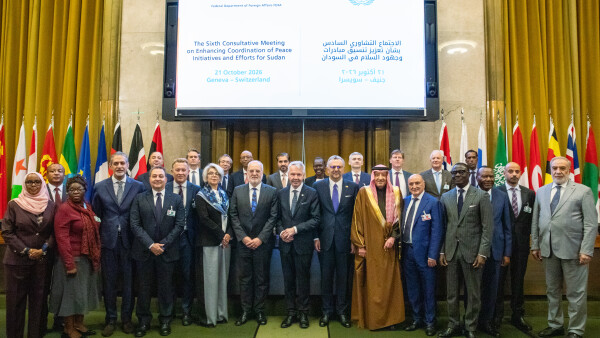
Sixth Consultative Meeting on Enhancing Coordination of Peace Initiatives and Efforts for Sudan

1
1
1
Edited News | UNICEF , WHO , UNHCR
Yemen war continues to force families from homes amid hunger and disease
More than 250,000 people have now fled renewed fighting in Yemen, the UN said on Tuesday, citing particular concern for those sheltering in the southwestern city of Taiz and the wider governorate, where access is “essentially blocked”.

1
1
1
Edited News | UNICEF
A little over one year since a ceasefire agreement was announced between Hamas fighters and Israel, more than 340 children have been reported killed and hundreds more injured, the UN Children’s Fund, UNICEF, said on Friday.

1
1
1
Edited News | UNICEF , IFRC
Six weeks after Nepal’s deadly flooding disaster, communities are still struggling to rebuild their lives, but they will need sustained help as global warming increases the risk of another Himalayan catastrophe, the UN Children’s Fund (UNICEF) said on Friday.
1
1
1
Statements , Press Conferences | OHCHR

1
1
1
Edited News | WHO
In suspected Russia plague death, testing and monitoring underway – WHO
The death of a lab worker in Russia’s Siberia region has sparked concerns about plague being the cause, the UN World Health Organization (WHO) said on Tuesday, adding that it was following the situation closely.

1
1
Edited News | OHCHR , UNOG
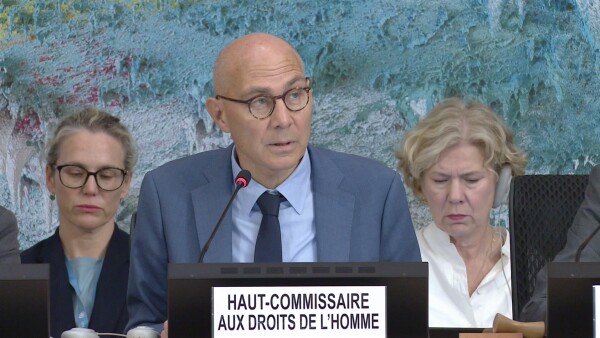
UN Human Rights Chief Volker Türk on Friday provided and oral update to the 63rd session of the Human rights Council on Ukraine.
2
1
2
Statements , Conferences | HRC , OHCHR
Interactive dialogue with the High Commissioner for Human Rights, Volker Türk on the oral update on Ukraine.

1
1
1
Edited News | OHCHR , UNOG
UN Human Rights Chief Volker Türk on Friday provided and oral update to the 63rd session of the Human rights Council on the human rights situation in Haiti.

1
1
1
Edited News | WHO
Repeated delays in bringing lifesaving medicines, prosthetics and more from Israel into Gaza risk having devastating consequences on Palestinians who urgently need them in the wartorn enclave, the UN World Health Organization (WHO) said on Friday. “A truck full of non-priority supplies or the right supplies arriving too late, doesn't save lives. That's the question that actually matters," said Dr Reinhilde Van De Weerdt, WHO Representative in the OPT.