

The United Nations Office at Geneva
Multimedia Newsroom
Secretary-General’s visit to Geneva
Rhéal LeBlanc, for the United Nations Information Service (UNIS), said that the UN Secretary-General was continuing his visit to Geneva today. This morning he had called on the international community to face up to the devastating and complex issue of internal displacement as he opened the inaugural meeting of a new High-Level Panel on Internal Displacement.
The Panel, constituted by the Secretary-General in October 2019, was co-chaired by Ms. Federica Mogherini, previously High-Representative of the European Union for Foreign Affairs and Security Policy and Vice-President of the European Commission and Dr. Donald Kaberuka, former President of the African Development Bank and current Chair of the Board of the Global Fund to Fight AIDS, TB and Malaria.
The press release on the Panel can be found here.
The Secretary-General was also meeting with young people at the Graduate Institute Geneva, as part of the global conversation on the occasion of the 75th anniversary of the United Nations.
The recording of the discussion can be viewed here.
Human Rights Council
Rolando Gomez, for the Human Rights Council (HRC), stated that the forty-third session of the Human Rights Council had opened the previous day. After hearing from the UN Secretary-General, who had announced his call to action on human rights, outlined in seven points, the High Commissioner for Human Rights, the President of the General Assembly, and the Swiss Foreign Minister, the Council had also heard from 37 dignitaries. Some of the common issues highlighted were: the role of human rights defenders and civil society; the rights of minorities, marginalized communities, including LGBTI persons, refugees and migrants; climate change and human rights; and digital technologies.
On the agenda today were a high-level panel discussion on the 25th Anniversary of the Fourth World Conference on Women at Beijing, and adoption of the Beijing Platform of Action in the morning, and a continuation of the high-level segment from 11 am, which would include some forty dignitaries. The high-level segment would continue the following morning. On Wednesday, also, the Council would hear the presentation of the High Commissioner for Human Rights on ensuring accountability for all violations of international law in the occupied Palestinian territory.
Detailed agenda of the forty-third session of the Council can be found here.
Situation in Idlib, Syria
Ruth Hetherington, for the International Committee of the Red Cross (ICRC), said that the ICRC was deeply alarmed by the rapidly deteriorating security and living conditions of the hundreds of thousands of newly displaced civilians in the Idlib area, who were running out of options to find basic safety for themselves and their families. It was the worst wave of displacement seen during the Syrian conflict. Amid the harsh winter conditions in Idlib, the ICRC saw people trapped, isolated and running out of ways to cope.
If civilians had to flee for safety reasons, all possible measures had to be taken to ensure that members of the same family were not separated, and that everyone was relocated under satisfactory conditions of shelter, hygiene, health, safety and nutrition. Civilians and civilian objects were protected against direct attack under international humanitarian law, stressed Ms. Hetherington. The ICRC urged all parties to provide the organization with access and security guarantees, so that it could adequately respond to the needs of people on both sides of the frontlines.
Full ICRC statement can be found here.
Study on climate change and transport infrastructure
Jean Rodriguez, for the United Nations Economic Commission for Europe (UNECE), informed that the UNECE was today publishing the first of its kind study on the impact of climate change on transport infrastructure in the pan-European region and Canada. From road and rail networks to ports, airports and inland waterways, critical transport resources were facing unprecedented threats from a climate which was already changing. Spain, for example, had just suffered the most powerful storms experienced in decades, destroying bridges, cutting off roads and railway lines and submerging entire towns in coastal areas.
Since the bulk of the transport infrastructure in the region had been designed for the climate of the twentieth century and had been subject to low public investment in recent decades, it was crucial to map precisely the vulnerability of these assets to extreme climate events. The study looked at the maps of inland transport infrastructure and weather forecasts and simulations, trying to identify potential weakest spots. Mr. Rodriguez said that rising temperatures linked to increased heat waves and drier and hotter summers would, inter alia, affect roads, where pavement damages, damages to bridges and increased landslides in mountainous areas were among key risks. Around 60 percent of seaports in the European Union could be under high risk of inundation by 2100. Mr. Rodriguez also warned that permafrost melting would bring significant stability risks to the road and rail transport infrastructure across Arctic regions of Europe and Canada.
Full UNECE press statement can be read here, while the study is available here.
Responding to questions, Mr. Rodriguez said that the report did not include an assessment on possible costs associated with the adaptation. Europe and Canada had provided input for the study – first of its kind anywhere in the world – which was why those regions were included and analysed. Still, it was important to note that the consequences of the climate change on transport infrastructure would be felt by countries around the world.
ITC projects
Jarle Hetland, for the International Trade Center (ITC), informed that the ITC would be launching two new projects in Nepal: Trade for Sustainable Development Hub Nepal, which would provide support to local enterprises in developing more sustainable business solutions; and the EU-Nepal Trade-Related Assistance: Facilitating Increased Trade and Participation in Coffee and Pashmina Value Chains project, which was a continuation of previous ITC intervention in Nepal and aimed to boost economic growth and development by providing support throughout the coffee and pashmina value chains.
On 6 March, the ITC would be expanding its SheTrades initiative with the launch of the SheTrades West Africa. The project would more tackle common challenges and opportunities related to women’s economic empowerment.
The launches would be led by ITC Acting Executive Director Dorothy Tembo.
COVID-19
Christian Lindmeier, for the World Health Organization (WHO), informed that a press conference by Dr. Bruce Aylward on the international mission to China would be held in the WHO Library Room at 4 p.m. today.
Responding to a question, Mr. Lindmeier said that the mission report would be shared, if available. Regarding the situation in Italy, Mr. Lindmeier said that a WHO team was meeting with the national authorities in Rome. Answering to another question, Mr. Lindmeier stated that “pandemic” was not an official term. The term which was used by the WHO would be “public health emergency of international concern”. In the meantime, the WHO advisory to countries remained the same: Member States were strongly recommended to enact plans based on national risk assessments, taking into consideration information provided by the WHO. A “pandemic” would require an uncontrollable spread in multiple locations outside of the original area. Pandemic plans could be implemented at the national level by national authorities based on their respective assessments. Mr. Lindmeier did not have a list of medical personnel who had perished due to the COVID-19.
Geneva announcements
Jarle Hetland, for the International Trade Center (ITC), informed that on 2 March, the ITC would hold its International Women’s Day event, at 10 a.m. in Room IV. The event would explore the multilateralism and women in business, and how international organizations could empower women in trade.
Christian Lindmeier, for the World Health Organization (WHO), said that on 27 February, at 9:30 a.m. in the lobby area of the WHO, an updated Essential Medicines List (EML) would be presented. The updated EML added 28 medicines for adults and 23 medicines for children, and specified new uses for 26 already listed medicines. The list now contained 460 products.
Rhéal LeBlanc, for the United Nations Information Service in Geneva, informed that the Committee on the Elimination of Discrimination Against Women would conclude its 75th session on 20 February and issue its concluding observations on the reports of the eight countries reviewed.
Mr. LeBlanc stated that the Committee on Economic, Social and Cultural Rights was concluding this morning its review of the report of Benin and would begin this afternoon the review of the report of Norway.
Mr. LeBlanc also said that the Conference on Disarmament was continuing this morning its high-level debate.
On Tuesday, 25 February at 1.00 p.m. in Room III, Tijjani Muhammad-Bande, President of the 74th session of the General Assembly will hold a press conference.
On Tuesday, 25 February at 2.30 p.m. in Press Room I, Jose Ruperto Martin M. Andanar, Secretary, Presidential Communications Office of the Philippines, will hold a press conference on press freedom in the Philippines.
On Wednesday, 26 February at 11.00 a.m. in Press Room I, Chen Xu, Permanent Representative of the People’s Republic of China to the United Nations Office at Geneva, will hold a press conference on WIPO elections.
Finally, Mr. LeBlanc informed about a Ciné-ONU screening of a documentary film called “Doin’ My Drugs” on an HIV-positive Zambian-Danish musician, followed by a discussion, at Cinerama Empire, on 1 March at 11 a.m.
* * *
The webcast for this briefing is available here: http://bit.ly/unog250220
Similar Stories
1
1
1
Press Conferences | IOM , UNDRR
UN stresses importance of household preparedness for disaster risk reduction.
1
1
1
Statements , Press Conferences | OHCHR
1
1
1
Press Conferences | UNHCR , UNICEF , IFRC , OHCHR , UN WOMEN , IOM , OCHA , WHO
UNHCR – ExCom Meeting, UNICEF – Nepal Recovery, IFRC – Flash Floods, WHO – Mental Health, IOM – South Sudan Floods, OCHA – DRC Humanitarian aid, UNHCR – Sahel Displacement, UNICEF – Yemen Update, IOM – Gaza Shelter, UN Women – Gaza Women, OHCHR – Arrests and detentions of Syrians by Israeli force
2
1
2
Press Conferences | UNCTAD
Presentation of the Trade and Developement Report 2026
Embargoed until 9 October 2026 at 11 a.m. (Geneva Time)
UNCTAD: UNCTAD’s flagship report finds that governments increasingly use industrial, trade, financial and technology policies to pursue economic and national security objectives. Market access and the ability to move into higher-value activities now depend more heavily on technology, finance and geopolitics.
1
1
1
Press Conferences | UPU
Release of the State of the Postal Sector Report 2026
1
1
1
Press Conferences | IOM , ITU , UNECE , UNICEF , WHO , WMO
UNICEF: Ebola, DRC - children orphans or separating them from parents and caregivers; IOM: Humanitarian needs in Djibouti amid arrivals from Yemen and increased migrant movements; WHO: Darfur, scale of health needs far exceeds available resources; WMO co-sponsored Global Heat Forum, Bangkok, monthly Global Seasonal Climate Update; UNECE: UN Forum of Mayors; ITU Plenipotentiary Conference 2026; WHO: child and adolescent obesity guidelines and new global roadmap to tackle pregnancy hypertension, a leading cause of maternal mortality
1
1
1
Press Conferences | OCHA , UN WOMEN , UNHCR , WFP , WHO , WTO , UNEP
OCHA – $160M CERF allocation to 12 underfunded crises; UNHCR – 5.8M refugee children remain out of school amid funding cuts; UN Women – Middle East escalation and food security among women/girls; WHO – Gaza supplies and overall situation; WFP – Yemen food insecurity and impact on global hunger ; UNEP - First International Conference of the Global Framework on Chemicals in Geneva | 16-20 November 2026
1
1
1
Press Conferences | UNHCR , WHO
Yemen's health system nears collapse amid conflict, causing rising casualties and medicine shortages.
1
1
1
Press Conferences | HRC
Update by the Expert Mechanism to Advance Racial Justice and Equality in Law Enforcement
1
1
1
Press Conferences | WIPO , WHO , UNICEF , UNHCR , IOM , WFP , FAO
WIPO Global Innovation Index 2026 launch and press conference, WHO Composition of influenza vaccines for the 2027 Southern Hemisphere flu season, UNICEF Yemen hunger and malnutrition; UNHCR Sudan displacement into Chad; IOM Ebola and population movements in DRC; WFP emergency food assistance in Nepal; and FAO food loss and waste.
2
1
2
Press Conferences | UNCTAD
Gaza reconstruction needs reach $71.5 billion as Palestinian economy and public finances face severe strain. Latest UNCTAD report documents the loss of decades of development gains, economic collapse in Gaza and tightening economic constraints in the West Bank.
The report identifies three immediate priorities: transferring withheld Palestinian revenues, safeguarding the banking system and aligning reconstruction support with the documented scale of damage and economic losses.
1
1
1
Press Conferences | HRC
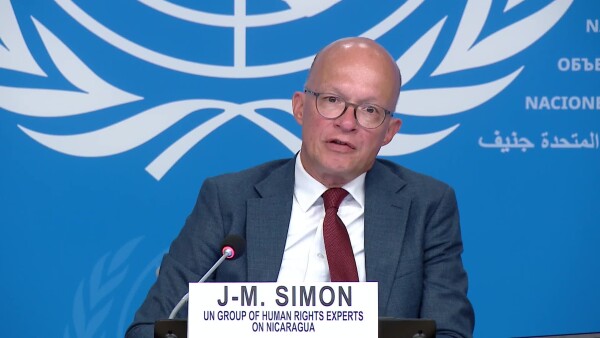
Press conference on the situation of human rights in Nicaragua by the UN Group of Human Rights Experts