

The United Nations Office at Geneva
Multimedia Newsroom
Press Conferences | UNCTAD
UNCTAD Press conference: Economic Development in Africa Report - 14 July 2022
African countries are urged to diversify their exports to better survive economic shocks such as the current global crises which are the consequences of the COVID-19 pandemic and the war in Ukraine. This is one of the key findings of the Economic Development in Africa Report 2022 published today by the UN’s leading institution dealing with trade and development (UNCTAD) in Geneva.
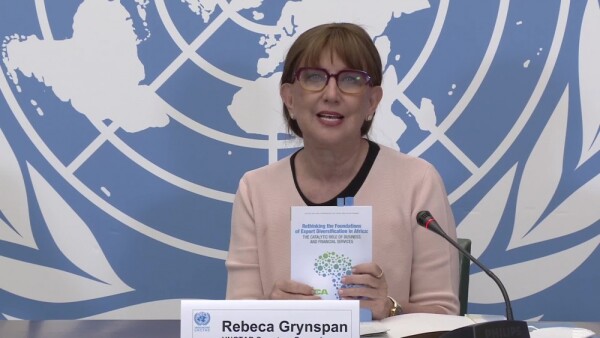
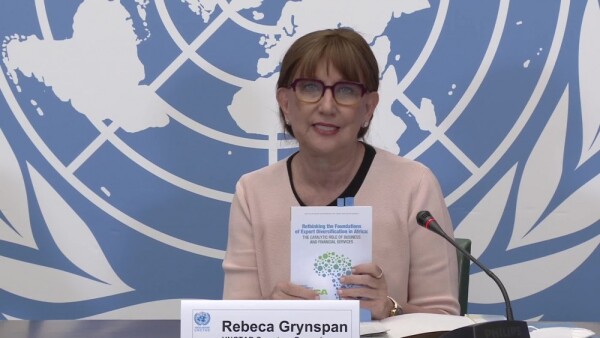
“The report makes clear the great potential for African countries to transform their economies through services, supporting the continents long standing economic diversification goals, boosting productivity and development”, said Rebeca Grynspan, UNCTAD’s Secretary General while speaking at a press briefing at the United Nations.
Despite decades-long efforts to diversify, 45 out of the continent’s 54 countries remain dependent on exports of primary products in the agricultural, mining and extractive industries.
“In 2022 for the first time in more than 25 years, most of the African countries experienced a recession”, resumed Ms. Grynspan. “This fall in economic activity produced a disproportionate effect on the poorest and most vulnerable segments of the population”.
The report entitled "Rethinking the Foundations of Export Diversification in Africa: the Catalytic Role of Business and Financial Services" outlines how African countries can rethink efforts to diversify their economies. According to UNCTAD’s Secretary-General, the continent has enormous potential to break commodity dependance and ensure its effective integration into high-end global value chains.
“This is a continent with huge potential, the African Continental Free Trade Area is a huge opportunity”. Ms Grynspan said. “But to really make good use of that opportunity, countries have to take policies to diversify, they have to go on scale, they have to integrate, to be able to more successfully, you know, reap the opportunities and the value added that the international trade can give to the countries”.
The African Continental Free Trade Area aims to create a single market for the continent’s 1.4 billion people and can boost export diversification.
As the world faces a cost-of-living crisis, 58 million people are just living above the poverty line in Africa and are at risk of sliding into poverty due to the combined effects of the COVID-19 pandemic and the war in Ukraine.
According to Ms. Grynspan, “a recent analysis by the UN Global Crisis Response Group on Food, Energy and Finance which analyses the global economic shocks caused by the war in Ukraine, indicates that Africa, and especially sub-Saharan Africa, is now one of the worlds’ most exposed regions to the current crisis”.
The report said that information technology and financial services cold be a game changer for Africa. But at the moment they account for only 20% of the continent’s services exports.
“The analyses we are sharing today provides convincing evidence that high value services, especially high intensity ones in ICT and finance are often the missing link that explain why diversification has not been achieved in the continent”, saidthe UNCTAD chief.
The report outlined how technologies can improve access to diverse and competitive markets both within and outside the continent and underscores the critical role of the private sector. This includes small and medium enterprises (SME), which account for about 90% of firms on the continent and employ around 60% of its workforce.
UNCTAD’s Director for the Division for Africa and the Least Developed Countries, Paul Akiwumi, explained that “this report outlines how technology can contribute in two ways to the diversifying economy: One, to support the diversification of the commodity sector as we know the traditional sector, and the second is to support small and medium size enterprises (SME)”.
UNCTAD also calls on countries to tackle other hurdles facing African SMEs, such as poor integration to regional and global markets to compete with large public and private firms.
-ends-
STORY: Report launch “Economic Development in Africa 2022” - UNCTAD
TRT: 3 mins 37s
SOURCE: UNTV CH
RESTRICTIONS: NONE
LANGUAGE: ENGLISH/NATS
ASPECT RATIO: 16:9
DATELINE: 14 July 2022, GENEVA, SWITZERLAND
SHOTLIST
- Wide shot, UN Geneva flag alley.
- Wide shot, Press room, UN Geneva.
- SOUNDBITE (ENGLISH): Rebeca Grynspan, UNCTAD Secretary General: “The report makes clear the great potential for African countries to transform their economies through services, supporting the continents long standing economic diversification goals, boosting productivity and development”.
- Mid shot, journalists with masks listening to the press briefing
- SOUNDBITE (ENGLISH): Rebeca Grynspan, UNCTAD Secretary General: “In 2022 for the first time in more than 25 years, most of the African countries experienced a recession. This fall in economic activity produced a disproportionate effect on the poorest and most vulnerable segments of the population”.
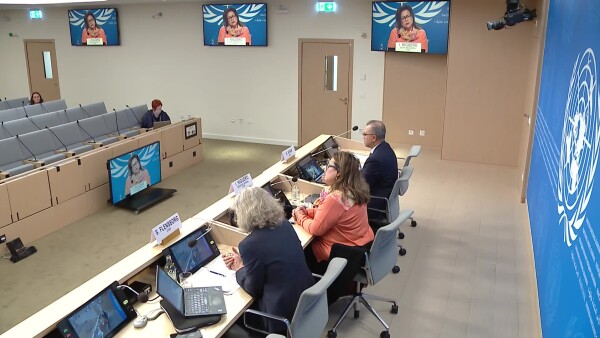
- Wide shot, laptops in the foreground, speakers at the podium behind
- SOUNDBITE (ENGLISH): Rebeca Grynspan, UNCTAD Secretary General: “This is a continent with huge potential, the African Continental Free Trade Area is a huge opportunity. But to really make good use of that opportunity, countries have to take policies to diversify, they have to go on scale, they have to integrate, to be able to more successfully, you know, reap the opportunities and the value added that the international trade can give to the countries”.
- Close-up, pan down from journalist taking notes
- SOUNDBITE (ENGLISH): Rebeca Grynspan, UNCTAD Secretary General: “A recent analysis by the UN Global Crisis Response Group on Food, Energy and Finance which analyses the global economic shocks caused by the war in Ukraine, indicates that Africa, and especially sub-Saharan Africa, is now one of the worlds’ most exposed regions to the current crisis”.
- Medium shot, journalists listening
- SOUNDBITE (ENGLISH): Rebeca Grynspan, UNCTAD Secretary General: “The analyses we are sharing today provides convincing evidence that high value services, especially high intensity ones in ICT and finance are often the missing link that explain why diversification has not been achieved in the continent”.
- Medium shot, speakers at the podium
- SOUNDBITE (ENGLISH): Paul Akiwumi, UNCTAD Director, Division for Africa, Least Developed Countries: “Now this report outlines how technology can contribute in two ways to the diversifying economy: One, to support the diversification of the commodity sector as we know the traditional sector, and the second is to support small and medium size enterprises (SME)”.
- Close up, journalists holding the report in their hands
- Medium shot, participants listening to the briefing
- Medium shot, laptop in foreground and podium with speakers in the background.
- Medium shot, two laptop screens
- Medium shot, journalist taking notes
- Close up, journalist taking notes
- Medium shot, journalist taking notes with laptop, camera next to him
- Wide shot, Press briefing room with podium and journalists
Similar Stories
1
12
1
1
Press Conferences , Images | UNOG
Closing Press Conference following the Sixth Consultative Meeting on Enhancing Coordination of Peace Initiatives and Efforts in Sudan

2
17
1
2
Edited News , Press Conferences | OCHA , WMO
Two UN agencies teamed up on Wednesday to issue an appeal for immediate assistance to help communities already being impacted by the strongest El Niño on record.
1
1
1
Press Conferences | CITES
Wildlife trade and conservation policy discussions at the 81st meeting of the CITES Standing Committee (SC81)
1
1
1
Press Conferences | UNHCR , UNCTAD , WMO , OCHA , UNICEF , WHO
UNHCR Hungary’s 1956 Refugee Crisis: 70 Years On, UNCTAD World Investment Forum 2026, Doha, WMO Greenhouse Gas Bulletin and Climate Update for COP31, OCHA Afghanistan: Malnutrition, Girls’ Education and Recovery, UNICEF Yemen: Child Malnutrition and Unsafe Water in Taiz, WHO Inequalities in Noncommunicable Diseases and Risk Factors
1
1
1
Press Conferences | UNHCR
End of UNHCR's 77th Annual Executive Committee (ExCom) meeting week
1
1
1
Press Conferences | UNICEF , IOM , UNHCR
UN Special Assistant to the Personal Envoy Office (SUDAN): Peace Initiatives and Efforts in Sudan; UNICEF: Dire situation of children in Gaza; IOM: Damaged Homes and Energy Attacks Risk Displacing Ukrainians for this winter; UNHCR: update on EXCOM week

1
1
1
Press Conferences | IOM , UNDRR
UN stresses importance of household preparedness for disaster risk reduction.

1
1
1
Statements , Press Conferences | OHCHR

1
1
1
Press Conferences | UNHCR , UNICEF , IFRC , OHCHR , UN WOMEN , IOM , OCHA , WHO
UNHCR – ExCom Meeting, UNICEF – Nepal Recovery, IFRC – Flash Floods, WHO – Mental Health, IOM – South Sudan Floods, OCHA – DRC Humanitarian aid, UNHCR – Sahel Displacement, UNICEF – Yemen Update, IOM – Gaza Shelter, UN Women – Gaza Women, OHCHR – Arrests and detentions of Syrians by Israeli force

2
1
2
Press Conferences | UNCTAD
Presentation of the Trade and Developement Report 2026
Embargoed until 9 October 2026 at 11 a.m. (Geneva Time)
UNCTAD: UNCTAD’s flagship report finds that governments increasingly use industrial, trade, financial and technology policies to pursue economic and national security objectives. Market access and the ability to move into higher-value activities now depend more heavily on technology, finance and geopolitics.

1
1
1
Press Conferences | UPU
Release of the State of the Postal Sector Report 2026
1
1
1
Press Conferences | IOM , ITU , UNECE , UNICEF , WHO , WMO
UNICEF: Ebola, DRC - children orphans or separating them from parents and caregivers; IOM: Humanitarian needs in Djibouti amid arrivals from Yemen and increased migrant movements; WHO: Darfur, scale of health needs far exceeds available resources; WMO co-sponsored Global Heat Forum, Bangkok, monthly Global Seasonal Climate Update; UNECE: UN Forum of Mayors; ITU Plenipotentiary Conference 2026; WHO: child and adolescent obesity guidelines and new global roadmap to tackle pregnancy hypertension, a leading cause of maternal mortality