

The United Nations Office at Geneva
Multimedia Newsroom
Coronavirus deaths surpass 1,000 as scientists gather at WHO headquarters to discuss next steps
Deaths from the coronavirus epidemic have surpassed 1,000, the World Health Organization (WHO) confirmed on Tuesday, as hundreds of health experts embarked on a key meeting at its headquarters in Geneva to help decide next steps.
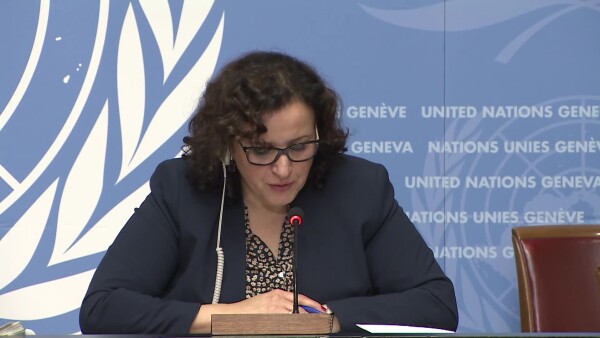
“As of 6am Geneva time this morning, there were 42,708 confirmed cases reported in China and tragically we now have surpassed 1,000 deaths,” said Fadela Chaib, WHO spokesperson.
“To be precise, it’s 1, 017 people in China who have lost their lives to this outbreak. Outside China, we have 393 cases in 24 countries with one death; the one death is in the Philippines.”
As infections tick up since novel coronavirus (2019-nCoV) was declared in central China on 31 December, Ms. Chaib noted that this was likely owing to a “combination” of improved screening and detection measures.
“It’s a combination; you are seeing more cases because we are detecting more cases and also because it’s a backlog of cases that are now being tested in labs,” she explained.
The development comes as some 300 scientists, public health agencies, ministries of health and research funders convened for an expert two-day meeting at WHO to share the latest information about the virus and decide how best to confront it.
Currently, there is no vaccine to protect against it and no proven therapeutics to infections, WHO Director-General Dr Tedros Adhanom Ghebreyesus told those gathered at WHO headquarters for the Research and Innovation Forum on novel coronavirus 2019.
Appealing to participants for their scientific insight, Tedros also called for answers to many unknowns relating to the epidemic.
These include the virus’s “reservoirs”, Tedros said, as well as its transmission dynamics and period of infectiousness, which samples to use for diagnosis and monitoring, along with discussions around how to manage severe cases of infection and any ethical issues that may surface relating to research requirements.
“This is not a meeting about politics or money. This is a meeting about science,” he insisted.
“There is still so much we don’t know….We need your collective knowledge, insight and experience to answer the questions we don’t have answers to, and to identify the questions we may not even realize we need to ask.”
One of the hoped-for outcomes of the meeting is an agreed roadmap for research around which researchers and donors will align.
A key imperative was the sharing of samples and sequences of the coronavirus, Tedros said, before insisting that “to defeat this outbreak, we need open and equitable sharing, according to the principles of fairness and equity”.
Following the West African Ebola outbreak, the UN health agency devised a strategy for developing drugs and vaccines before future epidemics, and for accelerating research and development activities during outbreaks.
In line with this protocol, an “R&D Blueprint” team at WHO began work in early January this year, to coordinate and facilitate information-sharing on research elements of the response, Tedros explained.
Echoing the WHO Director-General’s comments, Ms. Chaib told a news conference that much was still unknown about the virus, which remains principally a threat in China.
“We are still in the very early stage of understanding this virus,” she said. “How it is transmitted, the source of the virus, the incubation period, the clinical feature, the severity of it, etc…99 per cent of cases are in China; this remains very much an emergency for that country, but it’s also a high risk for the region, Asia region and for the world.”
Discussing the work of the coronavirus forum at the WHO, Ms. Chaib reiterated the hope that scientists would share information across many cross-cutting areas.
“They are not only talking about vaccines or therapeutics or diagnostic tests, they will also talk about the human-animal interface of this virus,” she said. “They will also talk about the clinical features of the patients they have seen, they will share information about all of this.”
She added: “Three hundred high-level scientists is a lot, in my opinion, and they are also working in networks in networks and organisations. The information is shared, we are sharing the genome sequencing of the virus with hundreds of laboratories worldwide, so there is a real international mobilisation against this novel coronavirus.”
In response to a question that the incubation period of the coronavirus might turn out to be longer than two weeks - the currently accepted timeline - the WHO spokesperson underscored that “we have a lot of unknowns with this virus. We are saying it’s from one to 14 days. But we are welcoming all sorts of studies and scientific papers that provides more and more knowledge to the scientific community to better understand this outbreak and the virus itself.”
- Exterior shot, flag alley, windy and bright, UN Palais des Nations.
- Wide shot, press room, journalists, podium.
- SOUNDBITE: Fadela Chaib, Spokesperson, World Health Organization (WHO): “As of 6am Geneva time this morning, there were 42,708 confirmed cases reported in China and tragically we now have surpassed 1,000 deaths, to be precise, it’s 1, 017 people in China who have lost their lives to this outbreak. Outside China, we have 393 cases in 24 countries with one death; the one death is in the Philippines.”
- Medium shot, row of journalists, in profile.
- Medium shot, journalists working on laptops.
- SOUNDBITE: Fadela Chaib, Spokesperson, World Health Organization (WHO):: “It’s a combination, you are seeing more cases because we are detecting more cases and also because it’s a backlog of cases that are now being tested in labs.”
- Close-up, journalist typing on laptop.
- SOUNDBITE: Fadela Chaib, Spokesperson, World Health Organization (WHO):: “Ninety-nine per cent of cases are in China; this remains very much an emergency for that country, but it’s also a high risk for the region, Asia region and for the world.”
- Medium shot, journalists.
- SOUNDBITE: Fadela Chaib, Spokesperson, World Health Organization (WHO): “We are still in the very early stage of understanding this virus; how it is transmitted, the source of the virus, the incubation period, the clinical feature, the severity of it, etc.”
- Medium shot, journalist writing on notepaper.
- SOUNDBITE: Fadela Chaib, Spokesperson, World Health Organization (WHO): “They are not only talking about vaccines or therapeutics or diagnostic tests, they will also talk about the human-animal interface of this virus, they will also talk about the clinical features of the patients they have seen, they will share information about all of this.”
- Medium shot, journalists.
- SOUNDBITE: Fadela Chaib, Spokesperson, World Health Organization (WHO): “Three hundred high-level scientists is a lot, in my opinion and they are also working in networks in networks and organisations. The information is shared, we are sharing the genome sequencing of the virus with hundreds of laboratories worldwide, so there is a real international mobilisation against this novel coronavirus.”
- Medium shot, journalist typing on laptop, semi-profile.
- SOUNDBITE: Fadela Chaib, Spokesperson, World Health Organization (WHO): “We have a lot of unknowns with this virus. We are saying it’s from one to 14 days. But we are welcoming all sorts of studies and scientific papers that provides more and more knowledge to the scientific community to better understand this outbreak and the virus itself.”
- Medium shot, journalists, semi-profile.
- Close-up, journalist wearing headphones, UN logo and speaker partly obscured.
Similar Stories

1
1
1
Edited News | UNICEF
A little over one year since a ceasefire agreement was announced between Hamas fighters and Israel, more than 340 children have been reported killed and hundreds more injured, the UN Children’s Fund, UNICEF, said on Friday.

1
1
1
Edited News | UNICEF , IFRC
Six weeks after Nepal’s deadly flooding disaster, communities are still struggling to rebuild their lives, but they will need sustained help as global warming increases the risk of another Himalayan catastrophe, the UN Children’s Fund (UNICEF) said on Friday.

1
1
1
Edited News | WHO
In suspected Russia plague death, testing and monitoring underway – WHO
The death of a lab worker in Russia’s Siberia region has sparked concerns about plague being the cause, the UN World Health Organization (WHO) said on Tuesday, adding that it was following the situation closely.

1
1
Edited News | OHCHR , UNOG
UN Human Rights Chief Volker Türk on Friday provided and oral update to the 63rd session of the Human rights Council on Ukraine.

1
1
1
Edited News | OHCHR , UNOG
UN Human Rights Chief Volker Türk on Friday provided and oral update to the 63rd session of the Human rights Council on the human rights situation in Haiti.

1
1
1
Edited News | WHO
Repeated delays in bringing lifesaving medicines, prosthetics and more from Israel into Gaza risk having devastating consequences on Palestinians who urgently need them in the wartorn enclave, the UN World Health Organization (WHO) said on Friday. “A truck full of non-priority supplies or the right supplies arriving too late, doesn't save lives. That's the question that actually matters," said Dr Reinhilde Van De Weerdt, WHO Representative in the OPT.

1
1
1
Edited News | WHO
DRC: Early access to care and oxygen decisive for Ebola patients’ survival – WHO
In the Democratic Republic of the Congo (DRC), health workers fighting the country’s largest-ever Ebola outbreak are struggling to overcome critical challenges to patient care, the UN World Health Organization (WHO) warned on Tuesday.

1
1
1
Edited News | OCHA , UN
Civilians in Iran are continuing to feel the consequences of months of conflict and military escalation, the UN’s top official in the country has said, as loss of life, damage to civilian infrastructure and mounting economic pressures leave many facing continued uncertainty.
1
1
1
Edited News | WHO , UNICEF
Aid agencies in Yemen highlighted the growing hunger emergency sparked by renewed fighting between Houthi opposition forces and Government troops, after mobile health clinics reported that hundreds of children displaced by the violence are suffering from the most deadly form of malnutrition.
1
1
1
Edited News | UNHCR
Displacement on the rise in Yemen as fighting continues - UNHCR
As hostilities worsen in Yemen, more people have been fleeing their homes, further intensifying the humanitarian crisis within the region, the UN Refugee Agency (UNHCR) warned on Tuesday.
1
1
1
Edited News | IOM , OHCHR , UNFPA , UNOG , UNHCR , WHO
Yemen’s humanitarian crisis growing by the hour amid spike in displacement
Yemenis displaced by renewed fighting have described fleeing for their lives amid shelling and gunfire, aid agencies reported on Friday, while highlighting the dramatic increase in humanitarian needs in the country and in Djibouti, where thousands have sought shelter.
1
1
1
Edited News | OHCHR , UNOG
The UN Human Rights Office issued on Friday a report documenting a shocking pattern of sexual violence amid Russia’s full-scale armed attack on Ukraine.