

The United Nations Office at Geneva
Multimedia Newsroom
L'Organisation mondiale de la santé (OMS) a déclaré mardi qu'elle avait achevé une deuxième mission d'évacuation de l'hôpital Nasser de Gaza, transférant un total de 32 patients critiques depuis le site malgré les restrictions d'accès, au milieu des hostilités en cours.
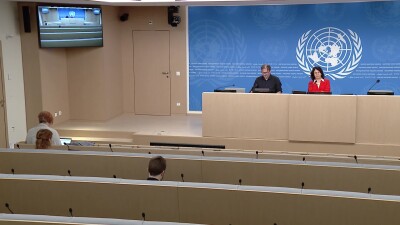
« Ensemble, lors de ces deux missions, dimanche et hier, il y avait 32 patients critiques, dont deux enfants, qui ont été transférés vers deux autres hôpitaux dans le sud de Gaza », a déclaré le porte-parole de l'OMS, Tarik Jasarevic, lors d'un briefing avec les journalistes à l'ONU à Genève.
Les deux missions vitales ont été menées en étroite collaboration avec la Société du Croissant-Rouge palestinien (PRCS) et le Bureau des Nations Unies pour la coordination des affaires humanitaires (OCHA). L'équipe a également fourni des quantités limitées de médicaments essentiels et de nourriture pour les patients et le personnel restants, qui sont autrement coupés de l'aide.
« Environ 130 patients malades et blessés, et au moins 15 médecins et infirmières, restent à l'intérieur de l'hôpital alors que l'unité de soins intensifs ne fonctionnait plus », a déclaré M. Jasarevic. « Le personnel de l'OMS a transféré uniquement les patients restants des soins intensifs vers une autre partie du complexe où d'autres patients reçoivent des soins de base. »
Le transfert des patients a été demandé par le personnel de l'hôpital Nasser après que l'établissement soit devenu non fonctionnel suite à un raid militaire le 14 février, à la fin d'un siège d'une semaine. Les patients faibles et fragiles ont été transférés au milieu du conflit actif près du convoi d'aide. Les conditions routières ont entravé le déplacement rapide des ambulances, mettant davantage en danger la santé des patients.
« Pas d'électricité et il n'y a pas non plus d'eau courante -- et les déchets médicaux et les ordures créent un terrain propice aux maladies », a rapporté le porte-parole de l'OMS. « Le personnel de l'OMS a déclaré que la destruction autour de l'hôpital était difficile à décrire. La zone était entourée de bâtiments brûlés et détruits, de couches épaisses de débris sans tronçons de routes intactes », a ajouté M. Jasarevic.
Les efforts pour faciliter d'autres transferts de patients au milieu des hostilités en cours se poursuivent. Avant les récentes missions d'évacuation, l'OMS avait reçu deux refus consécutifs d'accéder au complexe médical Nasser pour une évaluation médicale, causant des retards dans les transferts de patients urgents. Au moins cinq patients auraient été décédés dans l'unité de soins intensifs avant que des missions ou des transferts ne soient possibles.
« Idéalement, ce que nous aimerions voir, c'est que l'hôpital soit reconstruit, que les travailleurs de la santé reviennent, que le carburant, la nourriture et les fournitures médicales soient ramenés à Nasser et dans d'autres hôpitaux », a déclaré M. Jasarevic. « Ainsi, un système de santé peut être reconstruit, et les travailleurs de la santé peuvent avoir un endroit où travailler, et les gens auraient un endroit où aller pour obtenir leurs services de santé, idéalement. »
HISTOIRE : Évacuations médicales à Gaza - OMS
DURÉE : 2:01”
SOURCE : UNTV CH
RESTRICTIONS : AUCUNE
LANGUE : ANGLAIS / SONORES
FORMAT D'IMAGE : 16:9
DATE LIMITE : 20 février 2024 GENÈVE, SUISSE
- Plan moyen : allée du drapeau de l'ONU
- Plan large : orateurs au pupitre lors d'une conférence de presse
- SONORE (Anglais) – Tarik Jasarevic, porte-parole de l'Organisation mondiale de la Santé (OMS) : «Au cours de ces deux missions dimanche et hier, 32 patients critiques, dont deux enfants, ont été transférés vers deux autres hôpitaux du sud de Gaza.»
- Plan moyen : salle de presse avec des journalistes
- SONORE (Anglais) – Tarik Jasarevic, porte-parole de l'Organisation mondiale de la Santé (OMS) : «Environ 130 patients malades et blessés, ainsi qu'au moins 15 médecins et infirmières, sont encore à l'intérieur de l'hôpital car l'unité de soins intensifs ne fonctionnait plus. Le personnel de l'OMS a transféré les seuls patients restants en soins intensifs vers une autre partie du complexe où d'autres patients reçoivent des soins de base.»
- Plan moyen : gros plan sur un journaliste écoutant
- SONORE (Anglais) – Tarik Jasarevic, porte-parole de l'Organisation mondiale de la Santé (OMS) : «Il serait idéal de reconstruire l'hôpital, de permettre aux travailleurs de la santé de revenir, d'obtenir du carburant, de la nourriture et des fournitures médicales pour Nasser et d'autres hôpitaux. Ainsi, un système de santé peut être reconstruit, les travailleurs de la santé pourront avoir un lieu de travail, et les gens auront un endroit où aller pour recevoir des services de santé, idéalement.»
- Plan large : salle de presse avec des journalistes et des orateurs à l'écran
- Gros plan, journaliste écoutant
- Plan large, salle de presse avec des orateurs au pupitre et des journalistes en arrière-plan
Similar Stories

1
1
1
Edited News | OCHA , UNICEF , WFP
Aid agencies warned on Friday of the fast-developing humanitarian emergency inside Taiz City in Yemen, which has been encircled by de facto Houthi forces fighting government troops along the country’s west coast.

2
17
1
2
Edited News , Press Conferences , Images | OCHA , WMO
Two UN agencies teamed up on Wednesday to issue an appeal for immediate assistance to help communities already being impacted by the strongest El Niño on record.

3
16
2
2
Edited News , B-roll , Conferences , Images | UNITED NATIONS , UNOG
Sixth Consultative Meeting on Enhancing Coordination of Peace Initiatives and Efforts for Sudan

1
1
1
Edited News | UNICEF , WHO , UNHCR
Yemen war continues to force families from homes amid hunger and disease
More than 250,000 people have now fled renewed fighting in Yemen, the UN said on Tuesday, citing particular concern for those sheltering in the southwestern city of Taiz and the wider governorate, where access is “essentially blocked”.

1
1
1
Edited News | UNICEF
A little over one year since a ceasefire agreement was announced between Hamas fighters and Israel, more than 340 children have been reported killed and hundreds more injured, the UN Children’s Fund, UNICEF, said on Friday.

1
1
1
Edited News | UNICEF , IFRC
Six weeks after Nepal’s deadly flooding disaster, communities are still struggling to rebuild their lives, but they will need sustained help as global warming increases the risk of another Himalayan catastrophe, the UN Children’s Fund (UNICEF) said on Friday.

1
1
1
Edited News | WHO
In suspected Russia plague death, testing and monitoring underway – WHO
The death of a lab worker in Russia’s Siberia region has sparked concerns about plague being the cause, the UN World Health Organization (WHO) said on Tuesday, adding that it was following the situation closely.

1
1
Edited News | OHCHR , UNOG
UN Human Rights Chief Volker Türk on Friday provided and oral update to the 63rd session of the Human rights Council on Ukraine.

1
1
1
Edited News | OHCHR , UNOG
UN Human Rights Chief Volker Türk on Friday provided and oral update to the 63rd session of the Human rights Council on the human rights situation in Haiti.

1
1
1
Edited News | WHO
Repeated delays in bringing lifesaving medicines, prosthetics and more from Israel into Gaza risk having devastating consequences on Palestinians who urgently need them in the wartorn enclave, the UN World Health Organization (WHO) said on Friday. “A truck full of non-priority supplies or the right supplies arriving too late, doesn't save lives. That's the question that actually matters," said Dr Reinhilde Van De Weerdt, WHO Representative in the OPT.

1
1
1
Edited News | WHO
DRC: Early access to care and oxygen decisive for Ebola patients’ survival – WHO
In the Democratic Republic of the Congo (DRC), health workers fighting the country’s largest-ever Ebola outbreak are struggling to overcome critical challenges to patient care, the UN World Health Organization (WHO) warned on Tuesday.

1
1
1
Edited News | OCHA , UN
Civilians in Iran are continuing to feel the consequences of months of conflict and military escalation, the UN’s top official in the country has said, as loss of life, damage to civilian infrastructure and mounting economic pressures leave many facing continued uncertainty.