

The United Nations Office at Geneva
Multimedia Newsroom
Gaza: new evacuation orders further hamper relief operations – UN humanitarians
In Gaza, repeated mass evacuation orders issued by the Israeli military are radically shrinking the space in which aid workers can operate and depriving war-weary Palestinians of desperately needed relief items and health care, UN humanitarians said on Tuesday.
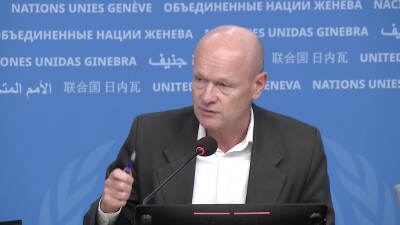
Jens Laerke, spokesperson for the UN’s humanitarian affairs coordination office (OCHA), told journalists in Geneva that since Friday, the Israeli military has issued three new evacuation orders for over 19 neighbourhoods in northern Gaza and in Deir Al-Balah, “with more than 8,000 people staying in these areas, many sheltering in displacement sites”.
“That actually brings to 16 the number of mass evacuation orders that have been issued in the month of August alone,” he stressed.
According to OCHA, Gazans from areas affected by evacuation orders are “increasingly forced to concentrate within the Israeli-designated zone in Al Mawasi”, which spans about 41 square kilometres and lacks critical infrastructure and basic services. Aid delivery in the area is “limited due to access and security issues” while severe overcrowding, with the population density reaching up to 34,000 individuals per square kilometre, compounds the dire health and sanitary conditions.
Mr. Laerke said that in central Gaza’s Deir Al-Balah city, the evacuation orders have displaced UN humanitarian staff, non-governmental organizations (NGOs) and service providers along with their families.
“These relocations took place at very short notice and in dangerous conditions,” he insisted.
The OCHA spokesperson highlighted concerns from humanitarians on the ground about an order issued Sunday for a part of Deir Al-Balah, affecting 15 premises hosting UN and NGO aid workers, four UN warehouses, Al Aqsa hospital, two clinics, three wells, one water reservoir and one desalination plant.
“The sum of this is that it effectively upends a whole lifesaving humanitarian hub that was set up in Deir Al-Balah after its earlier evacuation from Rafah back in May,” Mr. Laerke said. “And that, of course, severely impacts our ability to deliver essential support and services.”
The humanitarian hub was originally established in proximity to the Rafah border crossing, which until May was the main entry route for aid into the Strip. Rafah remains closed, while the western Erez crossing on the enclave’s northern border is open. The Kerem Shalom crossing in the south is “technically open for entry” but the area remains too dangerous for aid organizations to pick up aid there, Mr. Laerke said.
Humanitarian operations are ongoing “where feasible”, according to the OCHA spokesperson, considering that only 11 per cent of the territory of the Gaza Strip is not under evacuation orders.
“We're trying to work with that number and keep the operation going,” he said.
Regarding the impact of evacuation orders on hospitals and their patients, OCHA quoted NGO Médecins Sans Frontières (MSF) reporting on Monday that many people had chosen to flee from the Al Aqsa Hospital in close proximity to the area designated for evacuation in Deir Al-Balah. According to the Gaza Ministry of Health, from around 650 patients, only 100 now remain in the hospital.
The UN World Health Organization (WHO)’s spokesperson Dr. Margaret Harris stressed that when health facilities are abandoned “a lot of looting occurs.”
“A lot of the equipment, things like the generators, the solar power, all the things that we have spent a lot of work to put back in - it's taken every time,” she said. “It's not just that the hospital itself doesn't function, but that the hospital is often very much damaged by the experience of the evacuation order.”
OCHA also said that delivering fuel and medical supplies to health facilities is “extremely challenging” in the context of repeated evacuation orders, recalling that last week, the Kamal Adwan and Indonesian hospitals in northern Gaza renewed appeals for the “urgent” provision of diesel to keep electricity generators functional.
Gaza’s health sector remains barely functional compared to how it was before 7 October when Hamas-led terror attacks in Israel sparked the war. As of 20 August, WHO recorded 505 health attacks in the Strip, resulting in 752 people killed, 982 injured and 32 hospitals and 63 ambulances damaged.
The development comes one week since a case of polio was confirmed for the first time in 25 years in the enclave, in a 10-month-old unvaccinated child who has suffered paralysis. In response, WHO, the UN Children’s Fund (UNICEF) and the UN agency for Palestine refugees (UNRWA) are organizing a vaccination campaign aiming to reach 645,000 children under 10 across Gaza. A full 95 per cent of them need to be vaccinated for the campaign to be successful.
Over a million vaccine doses released from the global stockpile have already arrived in the Strip, WHO’s Dr. Harris said, and training for vaccinators is set to conclude on Tuesday. Still, the modalities for safe access for the health workers have not been clarified yet and no start date has been announced for the campaign.
- Ends -
STORY: Gaza new evacuation orders OCHA - WHO
TRT: 2:59”
SOURCE: UNTV CH
RESTRICTIONS: NONE
LANGUAGE: ENGLISH / NATS
ASPECT RATIO: 16:9
DATELINE: 27 AUGUST 2024 GENEVA, SWITZERLAND
1. Exterior wide shot: Palais des Nations, Flag Alley.
2. Wide shot: Speaker at the podium of the press conference; journalists in the Press room.
3. SOUNDBITE (English) – Jens Laerke, spokesperson, UN Office for the Coordination of Humanitarian Affairs (OCHA): “Since Friday, the Israeli military has issued three new evacuation orders for over 19 neighbourhoods in northern Gaza and in Deir al Balah, with more than 8,000 people staying in these areas, many sheltering in displacement sites. That actually brings to 16 the number of mass evacuation orders that have been issued in the month of August alone.”
4. Wide lateral shot: Speakers at podium from rear; speaker on screens; journalists in the Press room.
5. SOUNDBITE (English) – Jens Laerke, spokesperson, UN Office for the Coordination of Humanitarian Affairs (OCHA): “In Deir al Balah, those orders have displaced UN humanitarian staff, NGOs and service providers along with their families. These relocations took place at very short notice and in dangerous conditions.”
6. Wide lateral shot: Speaker on screens; journalists in the Press room.
7. SOUNDBITE (English) – Jens Laerke, spokesperson, UN Office for the Coordination of Humanitarian Affairs (OCHA): “Our humanitarian colleagues on the ground are particularly worried about the order issued Sunday for a part of Deir al Balah. It affected 15 premises hosting UN and NGO aid workers, four UN warehouses, Al Aqsa hospital, two clinics, three wells, one water reservoir and one desalination plant.”
8. Wide lateral shot: Speakers at podium from rear; speaker on screens; journalists in the Press room.
9. SOUNDBITE (English) – Jens Laerke, spokesperson, UN Office for the Coordination of Humanitarian Affairs (OCHA): “The sum of this is that it effectively upends a whole lifesaving humanitarian hub that was set up in Deir al Balah after its earlier evacuation from Rafah back in May - so moved again. And that, of course, severely impacts our ability to deliver essential support and services.”
10. Medium shot: Journalists in the Press room.
11. SOUNDBITE (English) – Jens Laerke, spokesperson, UN Office for the Coordination of Humanitarian Affairs (OCHA): “I want to remind you that only 11 per cent of the territory of the Gaza Strip is not under evacuation orders, 11 per cent is not under evacuation orders. So we're trying to work with that number and keep the operation going.”
12. Wide lateral shot: Speaker on screens; journalists in the Press room.
13. SOUNDBITE (English) – Dr. Margaret Harris, spokesperson, UN World Health Organization (WHO): “Whenever there’s [an] evacuation order, whenever a hospital is left, a lot of looting occurs and a lot of the equipment, things like the generators, the solar power, all the things that we have spent a lot of work to put back in - it's taken every time. So, it's not just that the hospital itself doesn't function, but that the hospital is often very much damaged by the experience of the evacuation order.”
14. Various shots of journalists in the Press room.
Similar Stories

1
1
1
Edited News | UNICEF
A little over one year since a ceasefire agreement was announced between Hamas fighters and Israel, more than 340 children have been reported killed and hundreds more injured, the UN Children’s Fund, UNICEF, said on Friday.

1
1
1
Edited News | UNICEF , IFRC
Six weeks after Nepal’s deadly flooding disaster, communities are still struggling to rebuild their lives, but they will need sustained help as global warming increases the risk of another Himalayan catastrophe, the UN Children’s Fund (UNICEF) said on Friday.

1
1
1
Edited News | WHO
In suspected Russia plague death, testing and monitoring underway – WHO
The death of a lab worker in Russia’s Siberia region has sparked concerns about plague being the cause, the UN World Health Organization (WHO) said on Tuesday, adding that it was following the situation closely.

1
1
Edited News | OHCHR , UNOG
UN Human Rights Chief Volker Türk on Friday provided and oral update to the 63rd session of the Human rights Council on Ukraine.

1
1
1
Edited News | OHCHR , UNOG
UN Human Rights Chief Volker Türk on Friday provided and oral update to the 63rd session of the Human rights Council on the human rights situation in Haiti.

1
1
1
Edited News | WHO
Repeated delays in bringing lifesaving medicines, prosthetics and more from Israel into Gaza risk having devastating consequences on Palestinians who urgently need them in the wartorn enclave, the UN World Health Organization (WHO) said on Friday. “A truck full of non-priority supplies or the right supplies arriving too late, doesn't save lives. That's the question that actually matters," said Dr Reinhilde Van De Weerdt, WHO Representative in the OPT.

1
1
1
Edited News | WHO
DRC: Early access to care and oxygen decisive for Ebola patients’ survival – WHO
In the Democratic Republic of the Congo (DRC), health workers fighting the country’s largest-ever Ebola outbreak are struggling to overcome critical challenges to patient care, the UN World Health Organization (WHO) warned on Tuesday.

1
1
1
Edited News | OCHA , UN
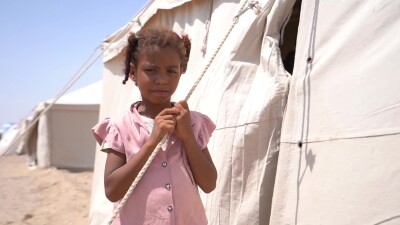
Civilians in Iran are continuing to feel the consequences of months of conflict and military escalation, the UN’s top official in the country has said, as loss of life, damage to civilian infrastructure and mounting economic pressures leave many facing continued uncertainty.
1
1
1
Edited News | WHO , UNICEF
Aid agencies in Yemen highlighted the growing hunger emergency sparked by renewed fighting between Houthi opposition forces and Government troops, after mobile health clinics reported that hundreds of children displaced by the violence are suffering from the most deadly form of malnutrition.
1
1
1
Edited News | UNHCR
Displacement on the rise in Yemen as fighting continues - UNHCR
As hostilities worsen in Yemen, more people have been fleeing their homes, further intensifying the humanitarian crisis within the region, the UN Refugee Agency (UNHCR) warned on Tuesday.
1
1
1
Edited News | IOM , OHCHR , UNFPA , UNOG , UNHCR , WHO
Yemen’s humanitarian crisis growing by the hour amid spike in displacement
Yemenis displaced by renewed fighting have described fleeing for their lives amid shelling and gunfire, aid agencies reported on Friday, while highlighting the dramatic increase in humanitarian needs in the country and in Djibouti, where thousands have sought shelter.
1
1
1
Edited News | OHCHR , UNOG
The UN Human Rights Office issued on Friday a report documenting a shocking pattern of sexual violence amid Russia’s full-scale armed attack on Ukraine.