

The United Nations Office at Geneva
Multimedia Newsroom
Edited News | UNITED NATIONS
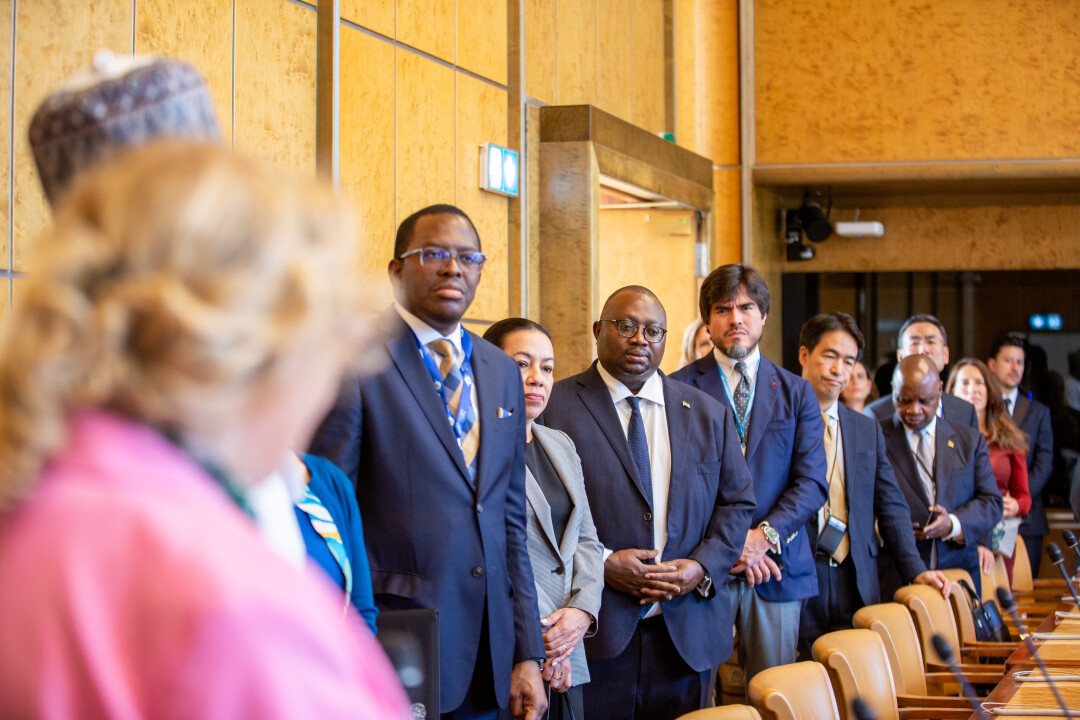
Members of Security Council informal meeting on Geneva Conventions 26 August 2024
Geneva Conventions commemoration hears urgent call to respect laws of war
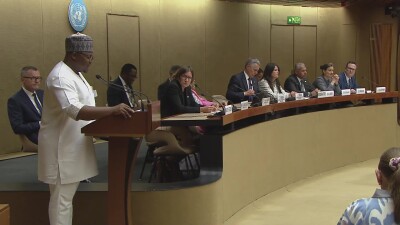
Seventy-five years since the ratification of the Geneva Conventions, a former child soldier-turned foreign minister of Sierra Leone urged greater international support for the key accords, highlighting their importance in rehabilitating him and tens of thousands of his fellow compatriots following the country’s bitter civil war.
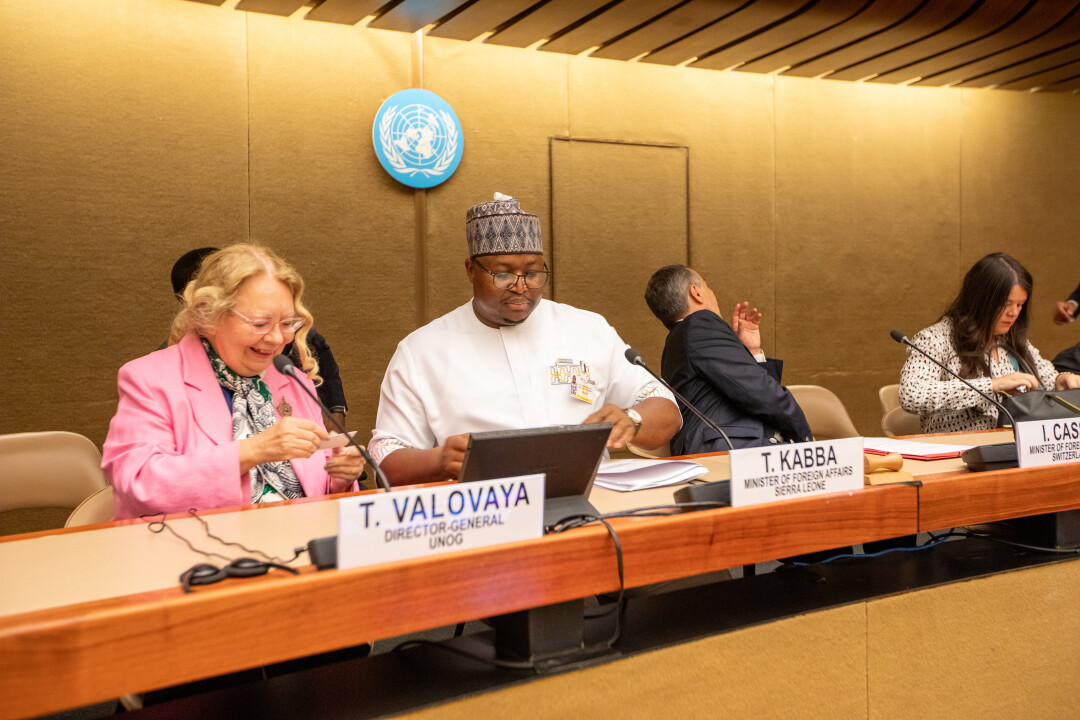
“I stand here today as a former child soldier, forcefully recruited during the civil conflict that decimated over 50,000 of my compatriots… I wouldn't be the person I am today without the critical support of the ICRC and the international community,” Musa Timothy Kabba told Members of the Security Council, referring to UN-partner the International Committee of the Red Cross, founded in the Swiss city in 1863 to protect and provide humanitarian assistance, in line with earlier accords designed to protect people in conflict.
Addressing the forum gathered at UN Geneva to mark the moment in 1949 when the international community revised three earlier Conventions - concerning the protection of soldiers wounded in battle, victims of conflict at sea and prisoners of war – and added a fourth to protect civilians impacted by war, Mr. Kabba said that he “need not dwell upon the trauma of those years” as a young soldier. “But I do need to acknowledge here today, in this birthplace of modern global humanitarianism, that it was the ICRC which profoundly helped me to overcome…the trauma of my war experience and to be reabsorbed in normal society”, after the country’s civil war in the 1990s, “during which most of the cardinal principles of the Geneva Conventions were violated”.
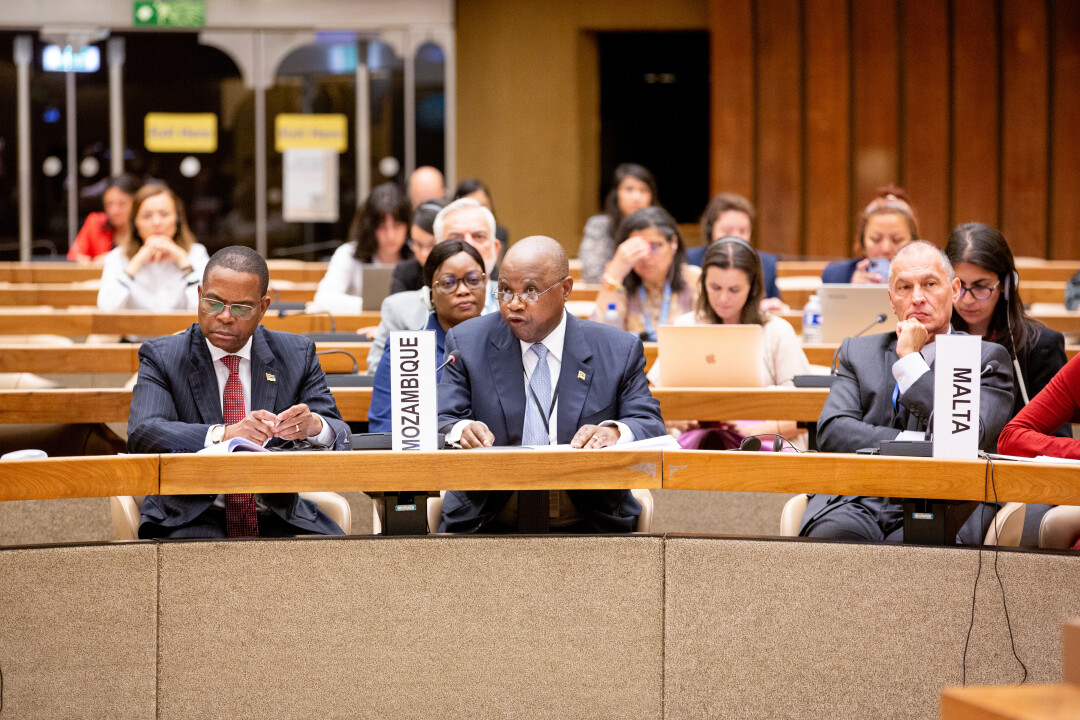
From Mozambique, Permanent Representative to the UN in New York, Pedro Comissario Afonso, insisted that the Geneva Conventions were both “a moral beacon and legal compass during and after the armed conflict in our country”, fought from 1977 to 1992. “The international humanitarian law espoused in the texts “guided the actions not only of the parties involved in conflict, but also of the humanitarian organizations that work to tirelessly to alleviate the suffering of the Mozambican people”, he continued.
The Conventions’ onus on legal and institutional norms with regard to armed conflict ensure in the Government’s approach to confronting non-state armed actors responsible for terror attacks in the country’s north, the Mozambican representative continued.
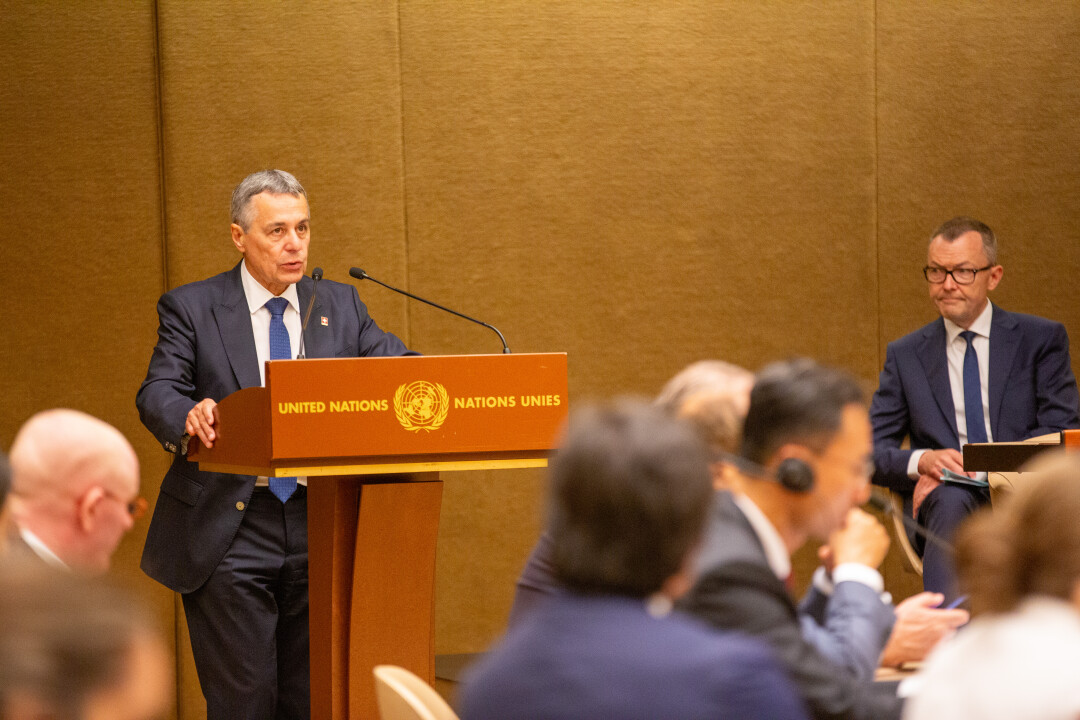
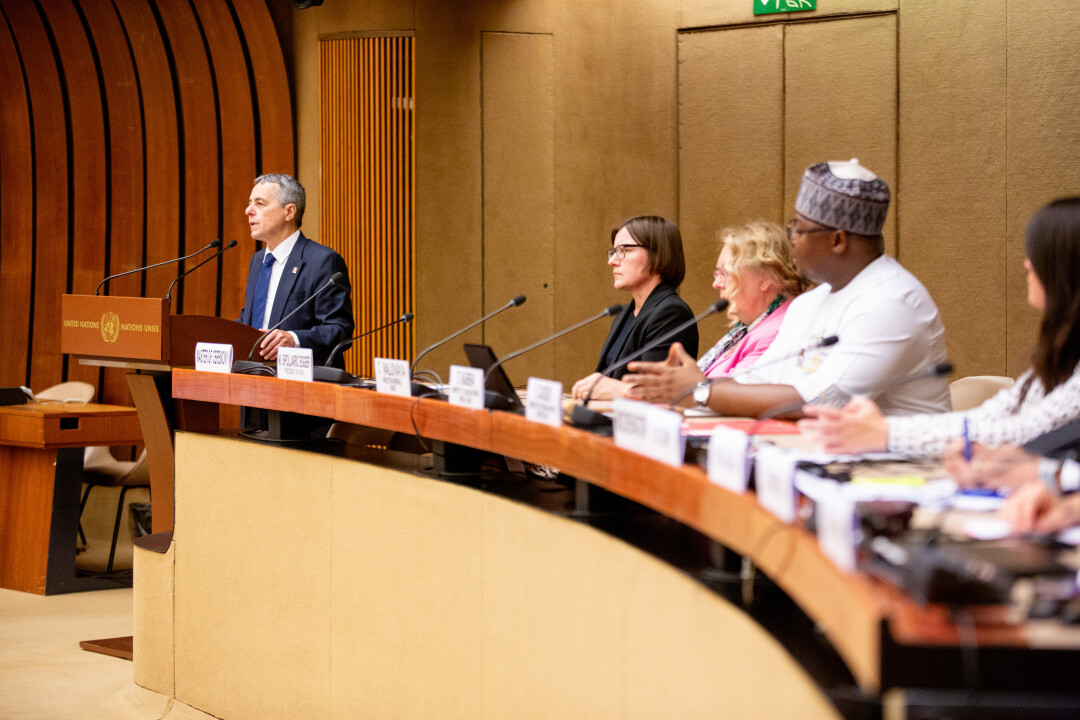
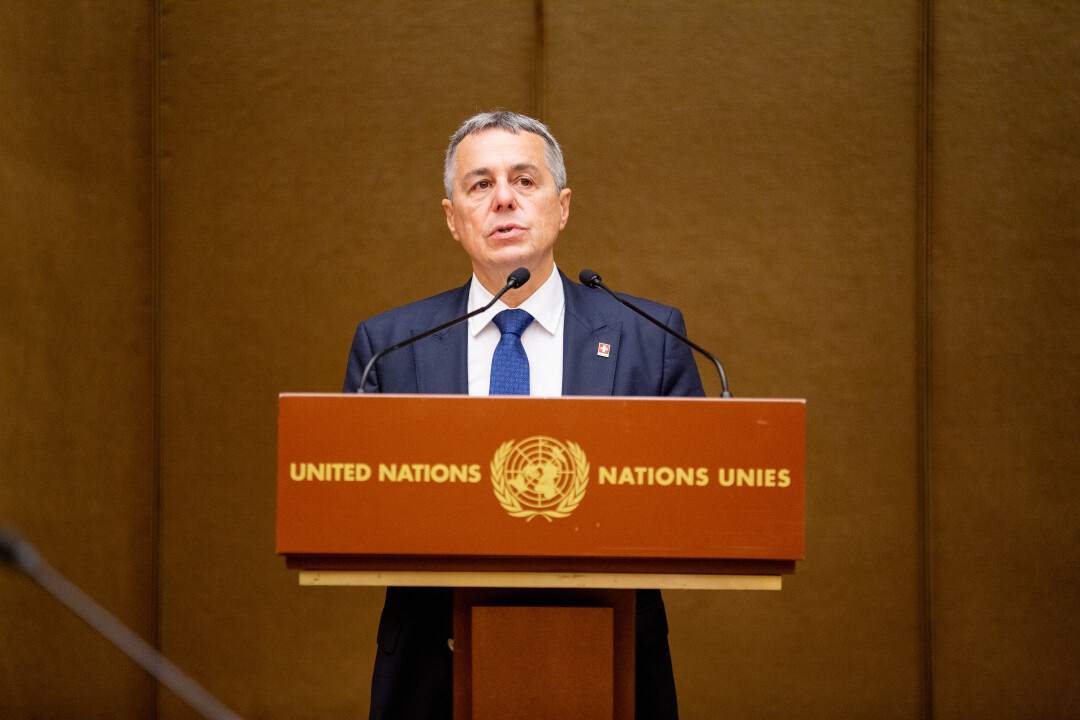
From hosts Switzerland, Foreign Minister Ignazio Cassis juxtaposed the historic milestone with the “alarming” international context.
“More than 120 armed conflicts are under way around the world,” he said. “There is Sudan, whose ceasefire talks have been held near here in recent days. There is also Ukraine, Yemen and the Middle East, to name just a few of the current conflicts that neither multilateralism nor international law have been able to avoid, let alone resolve.”
In a call for greater support for belligerents to respect international humanitarian law (IHL), Mr. Cassis insisted that IHL “cannot simply be a right written on the paper of our good conscience, nor even a right à la carte; there must be the right to action. Our voices must be powerful and convincing enough so that their echo resonates all the way to the battlefields”.
While the forum heard about the concerning trend among some nations of arguing for exemptions with regard to the clearly defined limits on what is legally allowed in war, Mirjana Spoljaric Egger insisted that there was “no reason to celebrate” the blatant disregard many States showed for the Conventions. Ms. Egger insisted that States should use “their influence and power” to enable independent and neutral humanitarian actors her organization to fulfil their role.
The ICRC President also underscored the changing nature of modern warfare which presents another challenge to international humanitarian law and efforts by the global community to limit its impact: “States must affirm that the use of new technologies of warfare, artificial intelligence, cyber operations, information operations strictly adhere to IHL and more specifically, it is urgent that States develop a normative framework that imposes certain limits on autonomous weapons systems.”
From UN Geneva, Director-General Tatiana Valovaya noted that “even if the Conventions are violated” in conflicts around the world, they remain fundamentally important, “because they allow us to remind everybody that the wars have rules, even the wars have limits”. Member States, the UN and International Geneva continue to work to develop IHL, among other “critical global issues” that are discussed and acted upon in Geneva, Ms. Valovaya insisted, from digital governance to disarmament and from health to humanitarian affairs, sustainable development and more.
Expressing the widely shared call for far greater engagement by all governments on IHL, Andrew Clapham, Professor of International Law at the Geneva Graduate Institute, told delegates that violations of the Geneva Conventions “are not just technicalities to be dealt with by somebody else”.
It should not be just the responsibility of the International Criminal Court or the International Court of Justice, humanitarian workers or the Red Cross to ensure the protection of civilians or access for aid workers, he insisted. “Violations of the Geneva Convention should be part of the daily diet of State representatives working for peace and security; taking seriously reports about violations of the Geneva Conventions puts you on the path to peace and preventing conflicts.”
Striking a more positive note, ICRC Chief Legal Officer and Head of the Legal Division, Cordula Droege, maintained that “every day, even in the world's harshest conflicts, IHL is actually being respected in countless instances”.
Often unreported acts of compliance with the Geneva Conventions “do save lives, preserve dignity and ensure humanitarian access”, she insisted. “And over the decades there can be no doubt that the Geneva Conventions have saved millions of lives.”
Members of Security Council informal meeting on Geneva Conventions
TRT: 4 min 38s
SOURCE: UNTV CH
RESTRICTIONS: NONE
LANGUAGE: ENGLISH / FRENCH / NATS
ASPECT RATIO: 16:9
DATELINE: 26 AUGUST 2024 GENEVA, SWITZERLAND
SHOTLIST
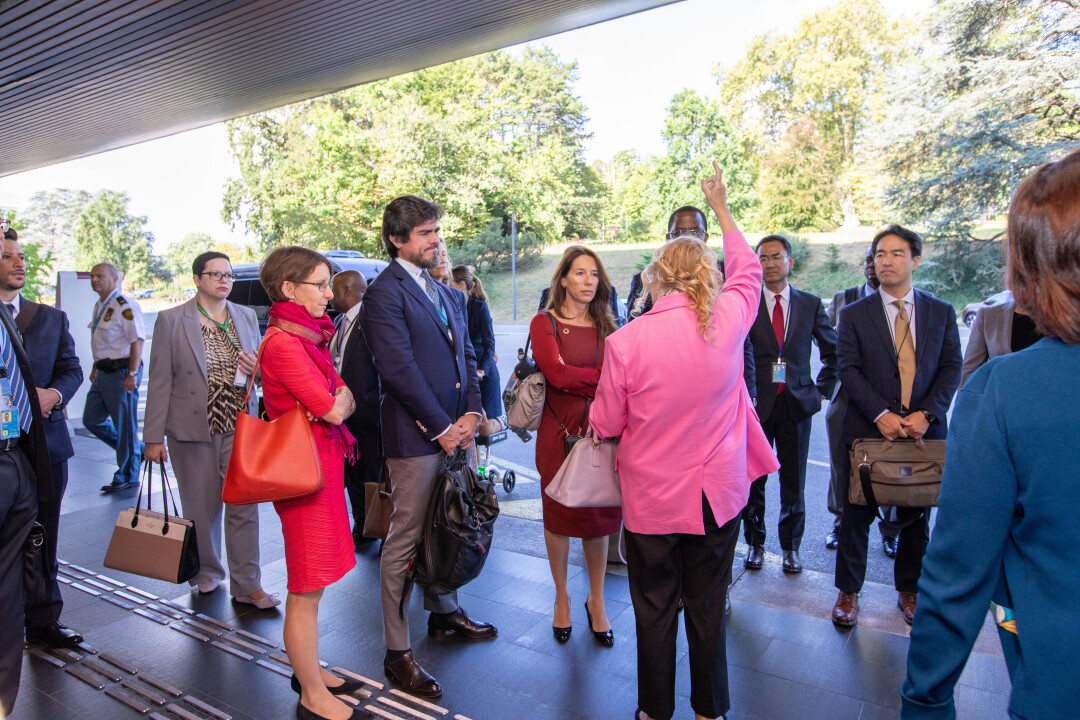
- Exterior medium shot: UN Geneva flag alley.
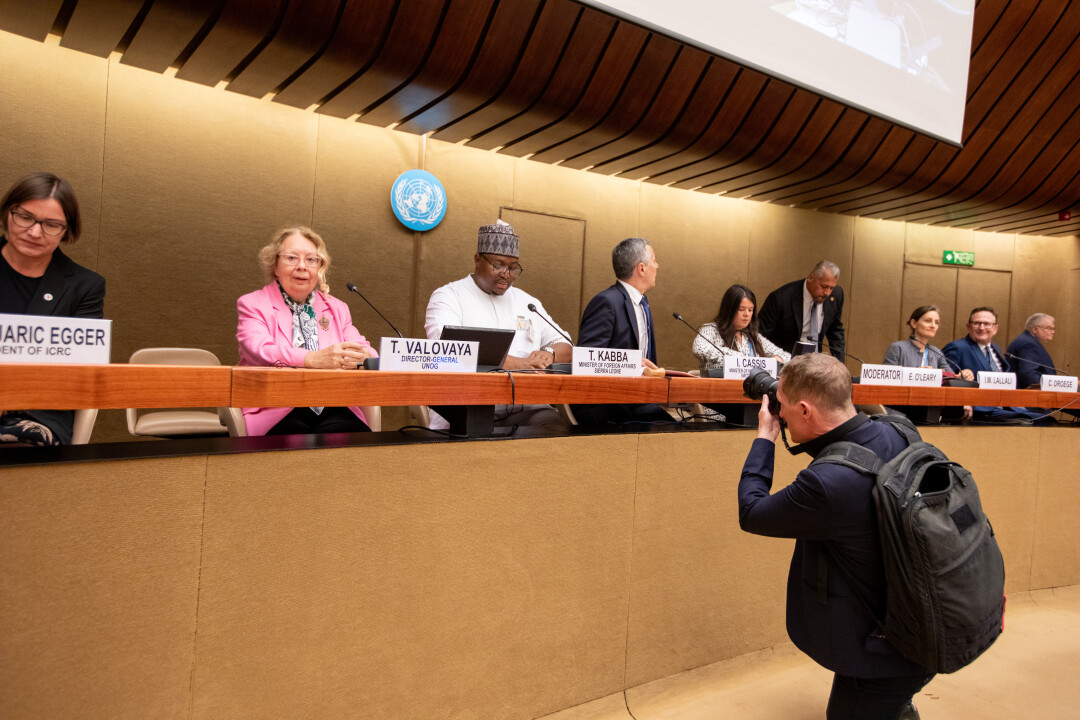
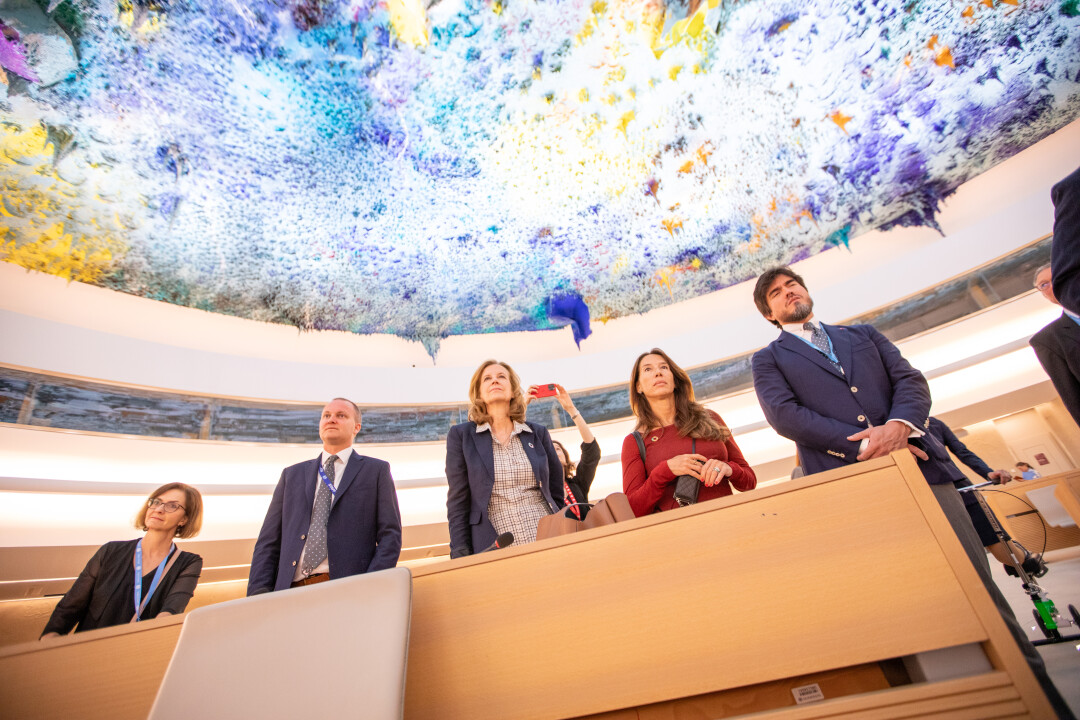
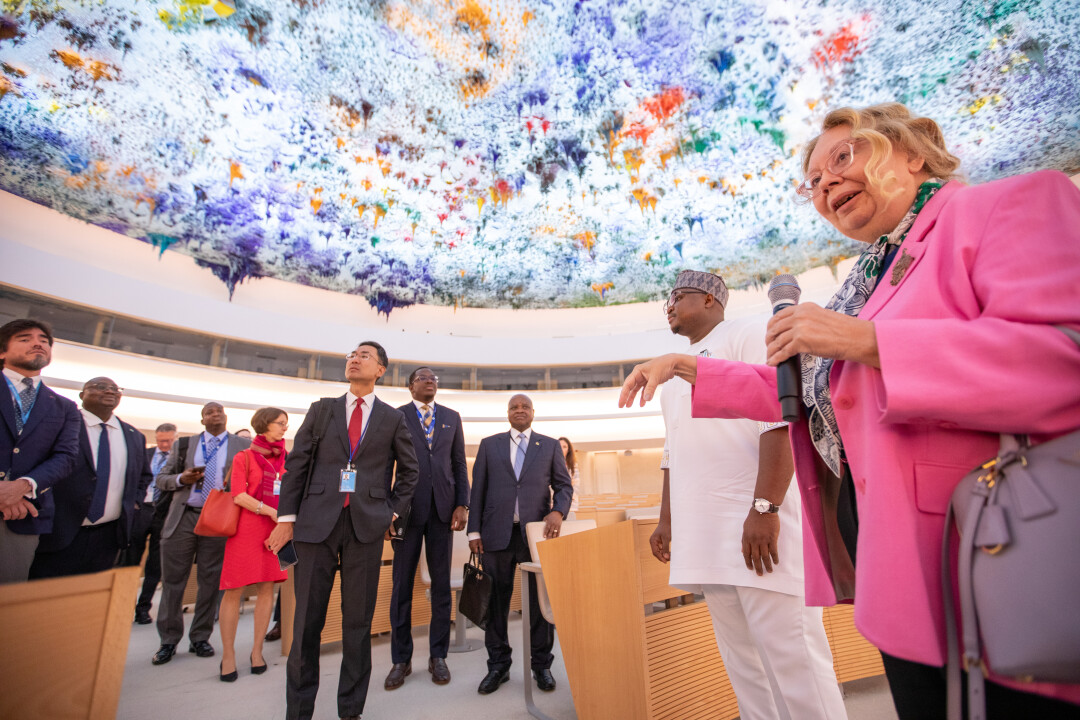
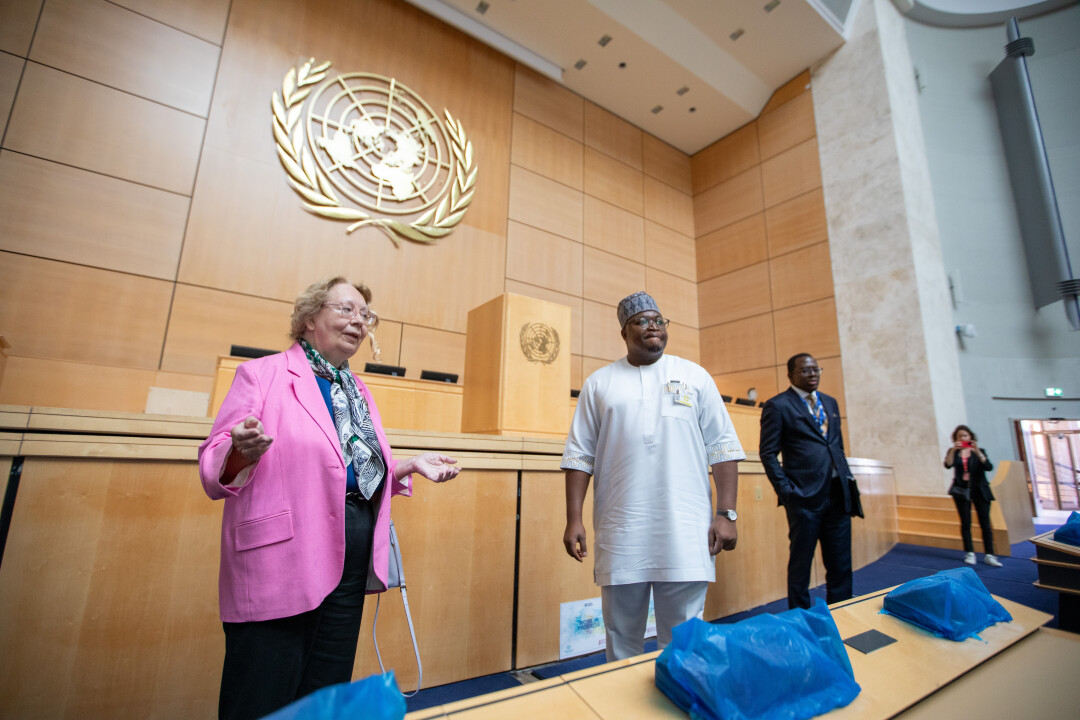
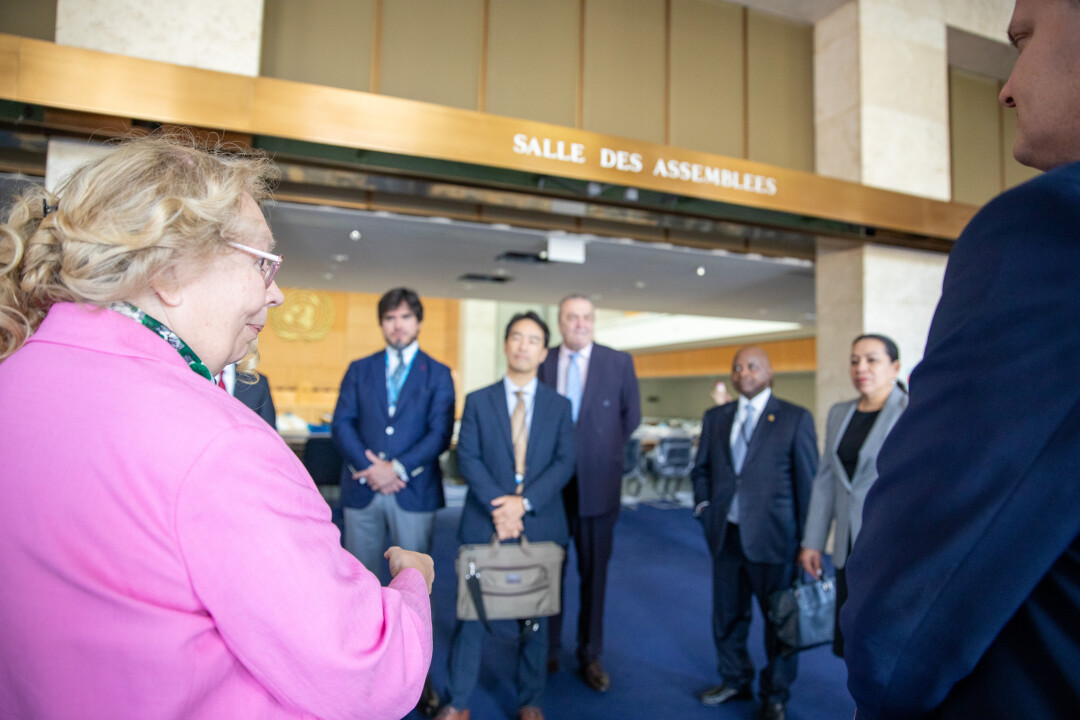
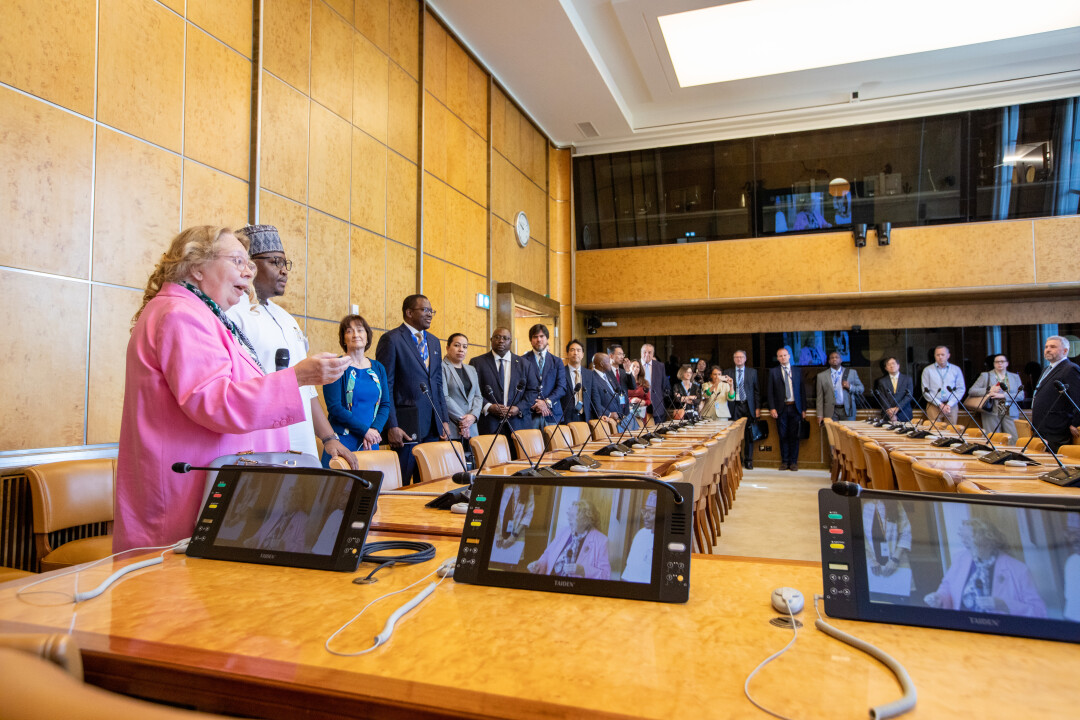
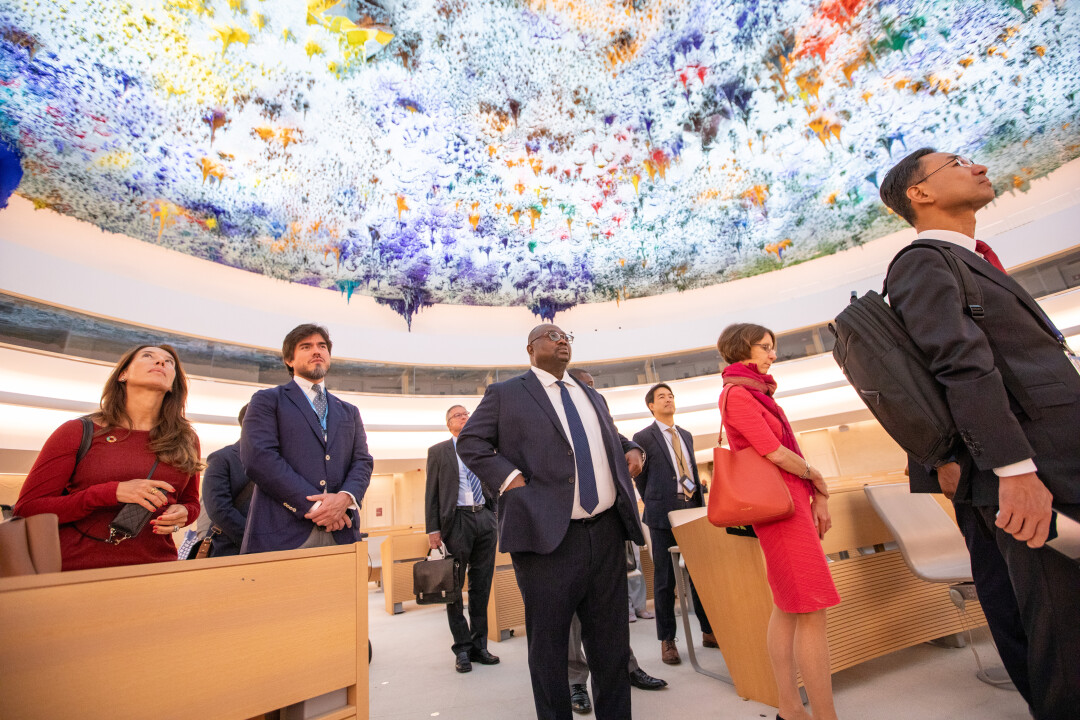
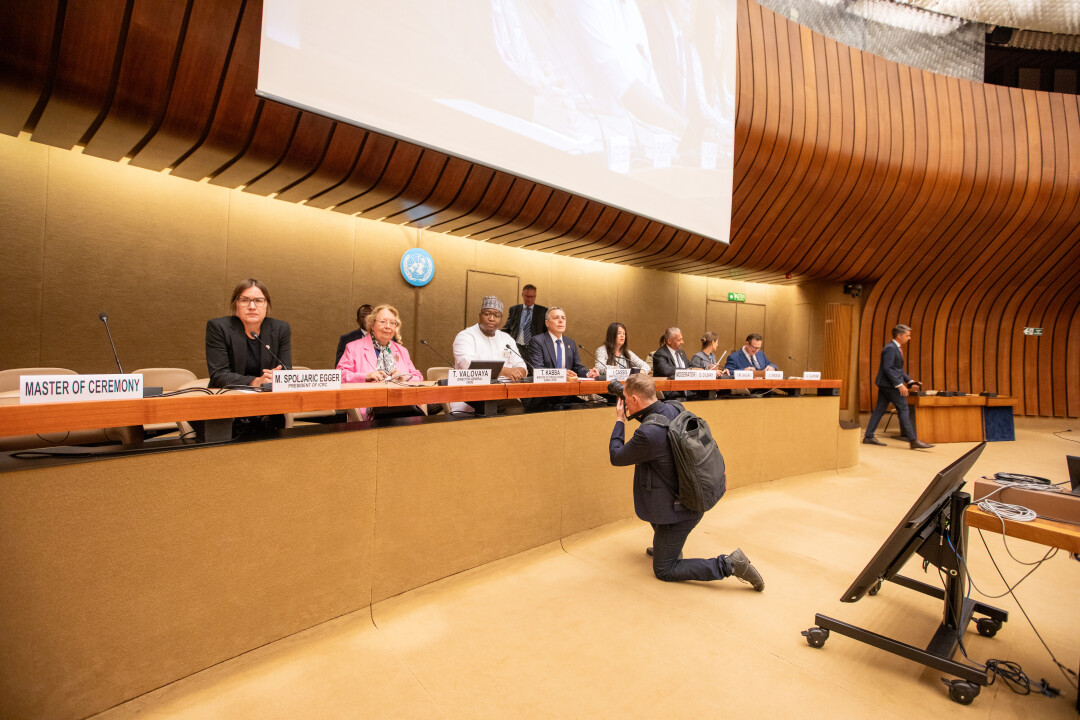
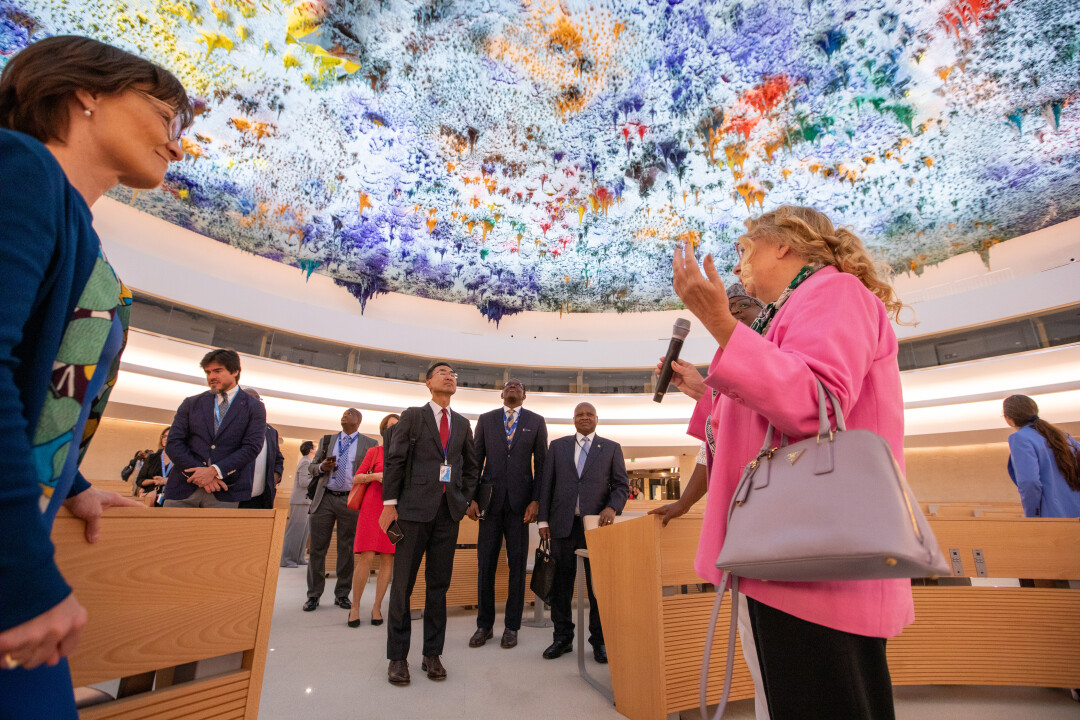
- Wide shot: UN Geneva Room XVIII where the Security Council Members are meeting in Geneva on the occasion of the “75 Years of Geneva Conventions: A Renewed Commitment to Upholding International Humanitarian Law.”
- SOUNDBITE (English) – Musa Timothy Kabba, Foreign Minister, Sierra Leone: “I stand here today as a former child soldier, forcefully recruited during the civil conflict that decimated over 50,000 of my compatriots. I need not dwell upon the trauma of those years, but I do need to acknowledge here today, in this birthplace of modern global humanitarianism, that it was the ICRC which profoundly helped me to overcome through several interventions, both physical, practical and psychological, from the trauma of my war experience and to be reabsorbed in normal society. I wouldn't be the person I am today without the critical support of the ICRC and the international community.”
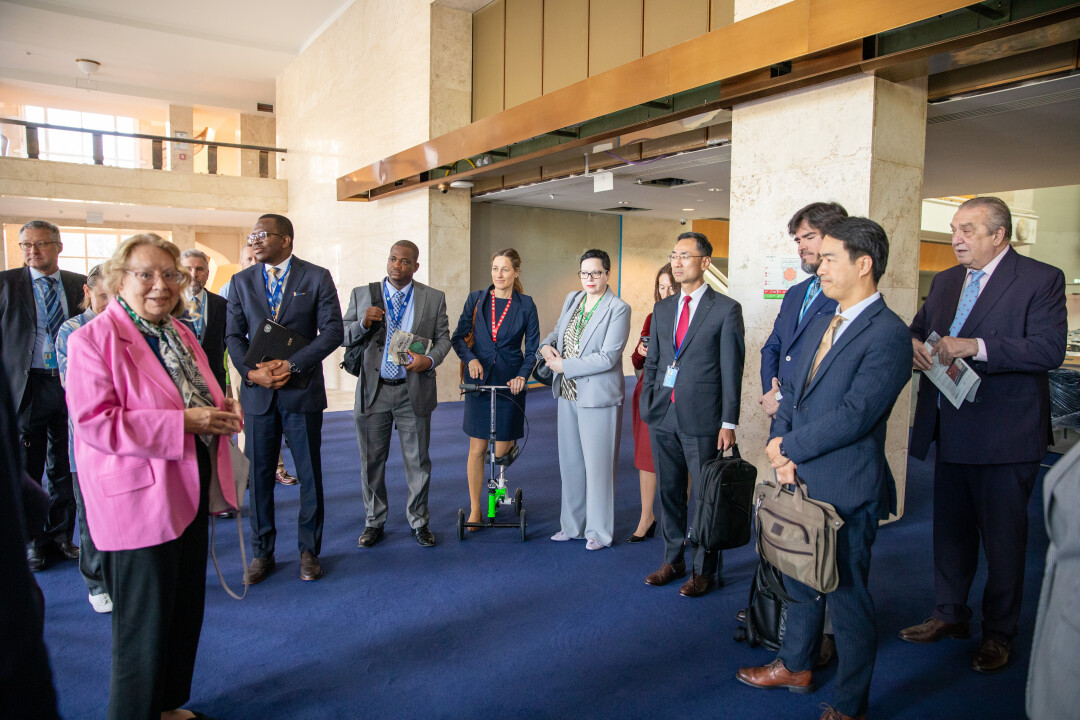
- Medium shot: delegates taking part in discussion organized by Switzerland and Sierra Leone on the occasion of the visit by Security Council Members to Geneva: “75 Years of Geneva Conventions: A Renewed Commitment to Upholding International Humanitarian Law.”
- SOUNDBITE (English) – Pedro Comissario Afonso, Permanent Representative of Mozambique to the UN in New York: “The Geneva Conventions served for us as a moral beacon and legal compass during and after the armed conflict in our country. They guided the actions not only of the parties involved in conflict, but also of the humanitarian organizations that work to tirelessly to alleviate the suffering of the Mozambican people.”
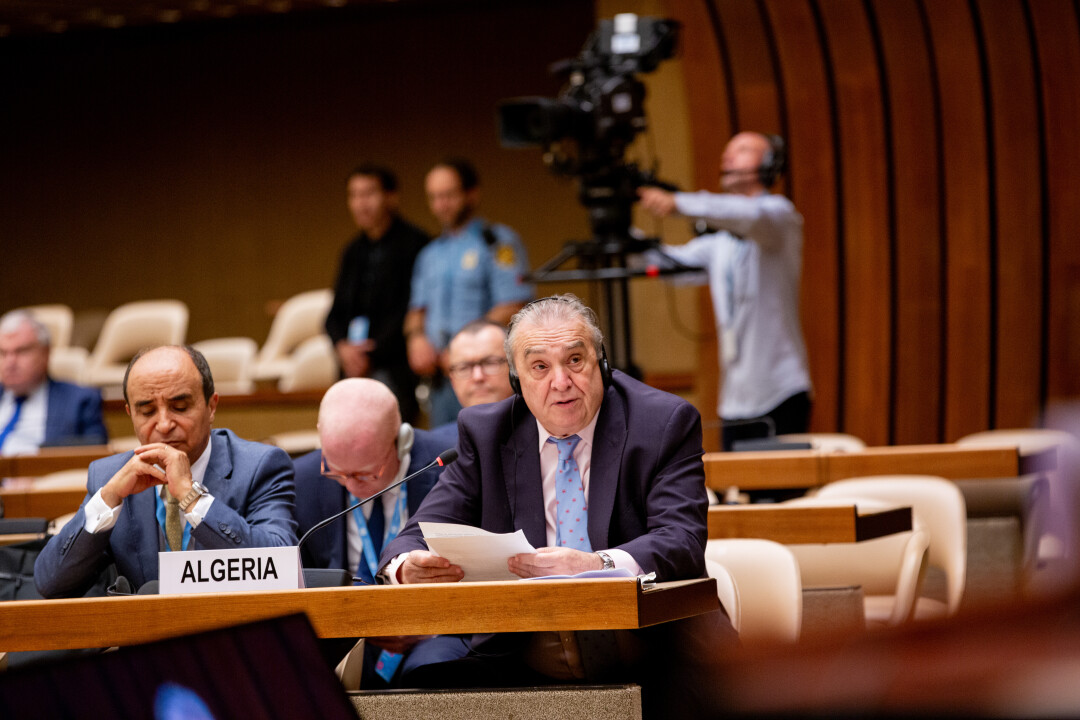
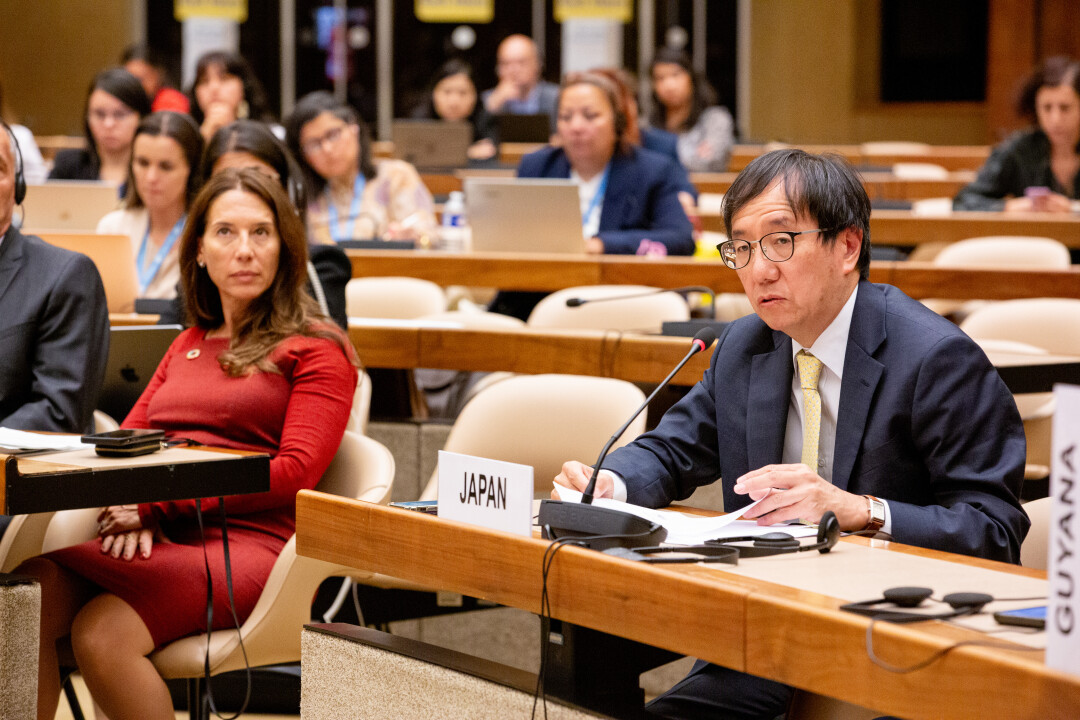
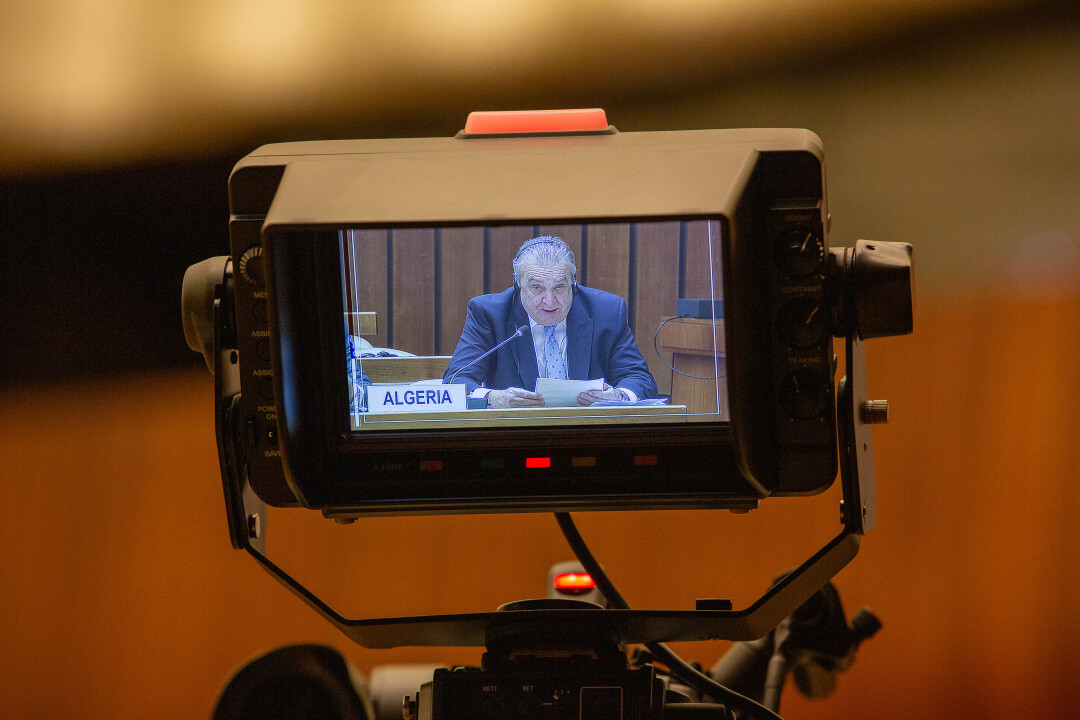
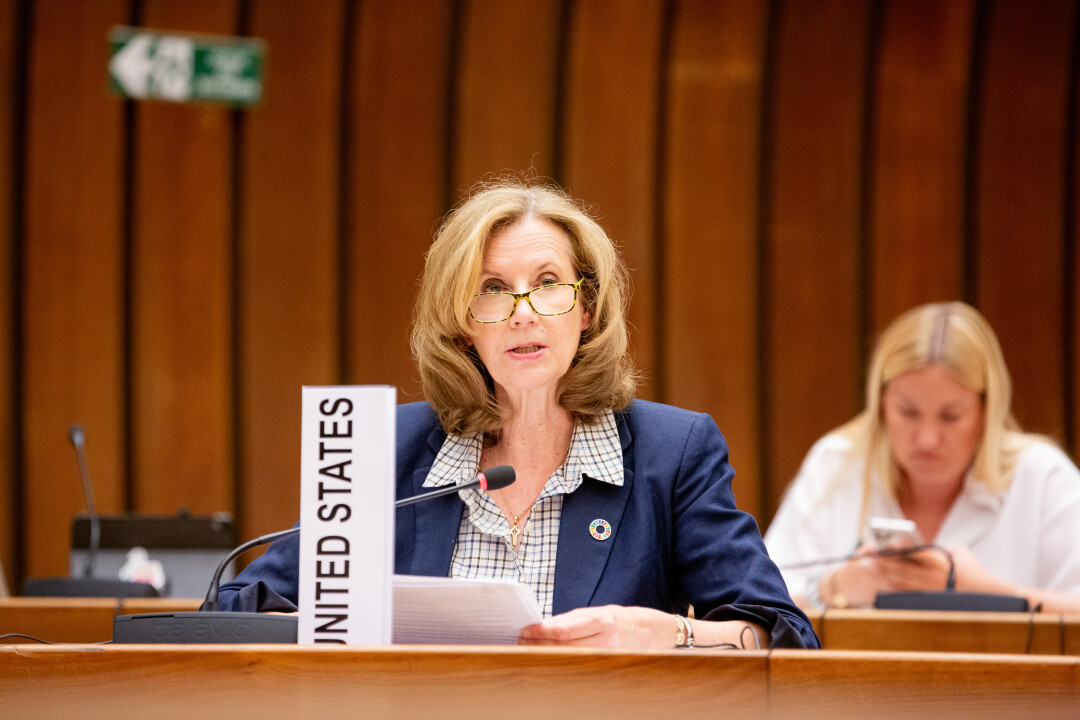
- Medium-wide, delegates seated in front of country name plates.
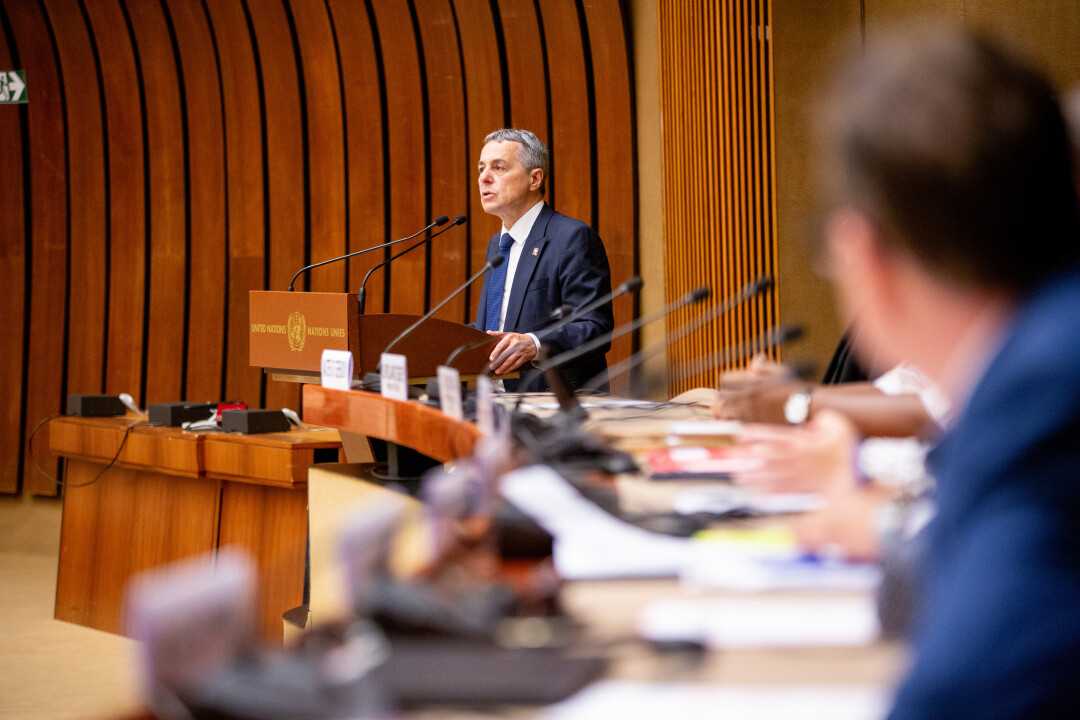
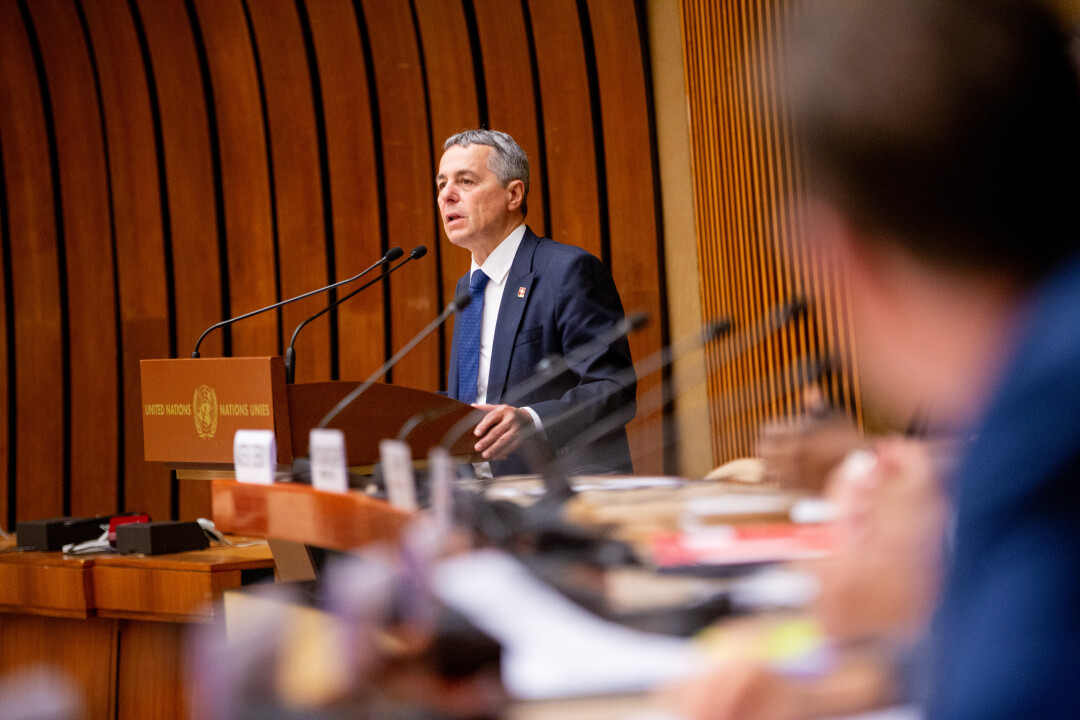
- SOUNDBITE (French) – Ignazio Cassis, Head of the Federal Department of Foreign Affairs of Switzerland: « Cette commémoration intervient dans un contexte international alarmant. Plus de 120 conflits armés sont en cours dans le monde. Il y a le Soudan, dont les pourparlers sur un cessez-le-feu se sont déroulés ces derniers jours près d'ici. Il y a aussi l'Ukraine, le Yémen et le Proche-Orient pour ne citer que quelques-uns des conflits actuels que ni le multilatéralisme, ni le droit international n'ont été capables d'éviter, et encore moins de résoudre."
- Medium-wide shot: delegates seated in front of country name plates.
- SOUNDBITE (French) – Ignazio Cassis, Head of the Federal Department of Foreign Affairs of Switzerland: «Le droit international humanitaire ne peut pas être simplement un droit inscrit sur le papier de notre bonne conscience, ni même un droit à la carte. Il doit être le droit à une action. Nos voix doivent être assez puissantes et convaincantes pour que son (leur) écho résonne jusqu’aux terrains de bataille.»
- Medium-wide shot: delegates and podium speakers.
- SOUNDBITE (English) – Mirjana Spoljaric Egger, President of the International Committee of the Red Cross: “States must affirm that the use of new technologies of warfare, artificial intelligence, cyber operations, information operations strictly adhere to IHL and more specifically, it is urgent that States develop a normative framework that imposes certain limits on autonomous weapons systems.”
- Medium shot: delegates from Switzerland.
- SOUNDBITE (English) – Tatiana Valovaya, Director-General, UN Geneva: “Today it's really very, very important once again to understand that even if the Conventions are violated, nevertheless, they are so important because they allow us to remind everybody that the wars have rules, even the wars have limits, and we really have to stick to the international law, to the international humanitarian law, and we have to develop this law.”
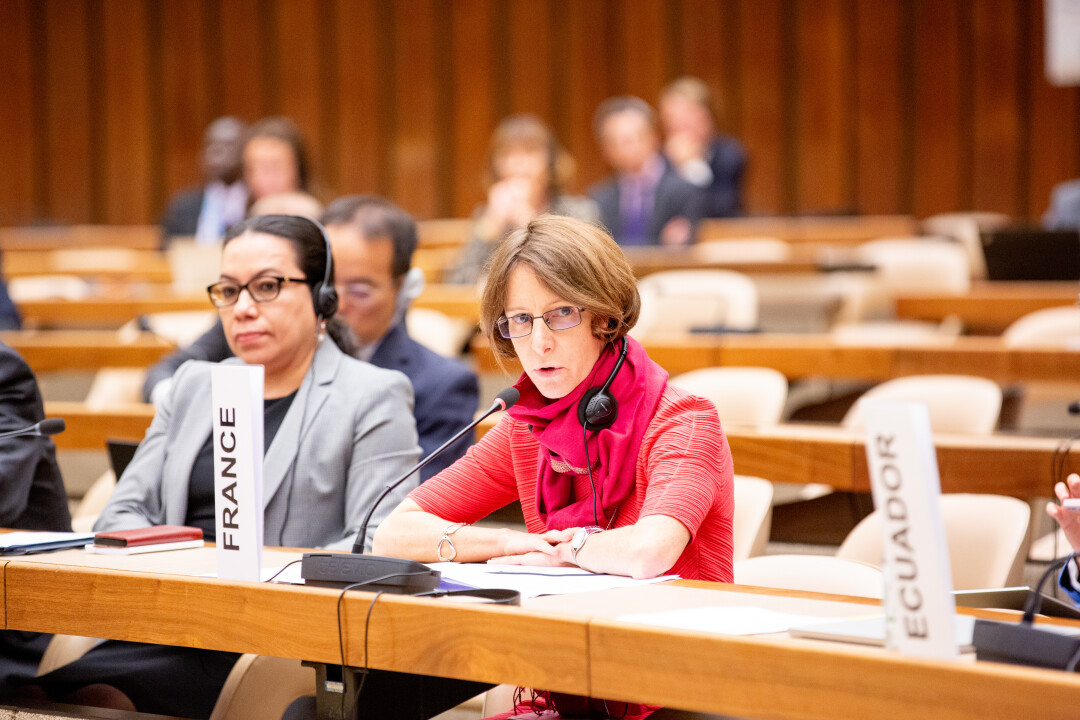
- Medium-wide shot: delegates from France and Sierra Leone.
- SOUNDBITE (English) – Andrew Clapham, Professor of International Law at the Geneva Graduate Institute: “Violations of the Geneva Conventions are not just technicalities to be dealt with by somebody else, by the International Criminal Court or the International Court of Justice, or by humanitarian workers or the Red Cross. Violations of the Geneva Convention should be part of the daily diet of State representatives working for peace and security; taking seriously reports about violations of the Geneva Conventions puts you on the path to peace and preventing conflicts.”
- Mediums shot of delegates listening, some with headsets.
- SOUNDBITE (English) – Cordula Droege, Chief Legal Officer and Head of the Legal Division of the International Committee of the Red Cross: “Every day, even in the world's harshest conflicts, IHL is actually being respected in countless instances. And these often unreported acts of compliance do save lives, preserve dignity and ensure humanitarian access. And over the decades there can be no doubt that the Geneva Conventions have saved millions of lives.”
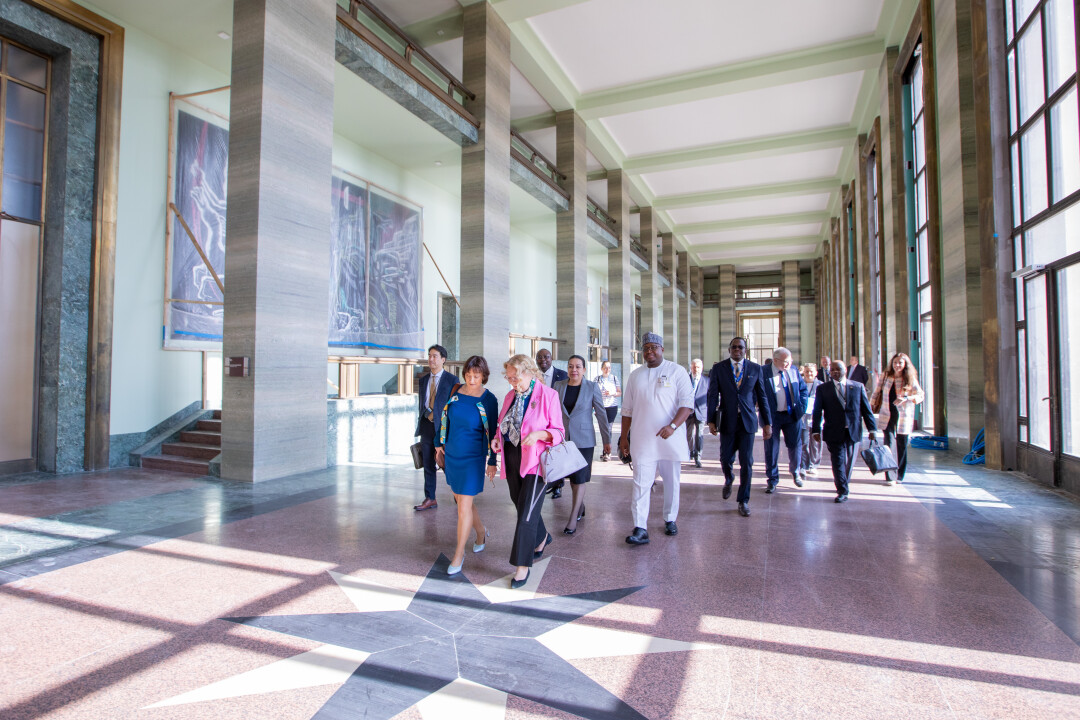
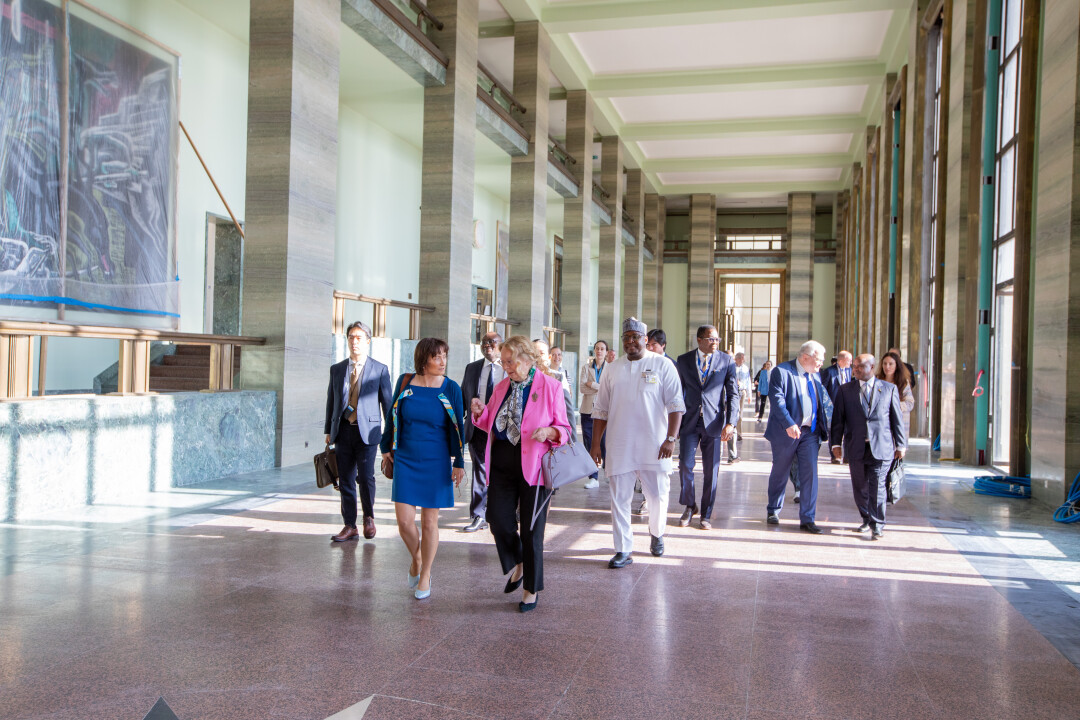
- Medium shot of participants.
- Medium shot of country delegates.
Similar Stories

2
17
1
2
Edited News , Press Conferences | OCHA , WMO
Two UN agencies teamed up on Wednesday to issue an appeal for immediate assistance to help communities already being impacted by the strongest El Niño on record.

3
16
2
2
B-roll , Conferences , Edited News | UNITED NATIONS , UNOG
Sixth Consultative Meeting on Enhancing Coordination of Peace Initiatives and Efforts for Sudan

1
1
1
Edited News | UNICEF , WHO , UNHCR
Yemen war continues to force families from homes amid hunger and disease
More than 250,000 people have now fled renewed fighting in Yemen, the UN said on Tuesday, citing particular concern for those sheltering in the southwestern city of Taiz and the wider governorate, where access is “essentially blocked”.

1
1
1
Edited News | UNICEF
A little over one year since a ceasefire agreement was announced between Hamas fighters and Israel, more than 340 children have been reported killed and hundreds more injured, the UN Children’s Fund, UNICEF, said on Friday.

1
1
1
Edited News | UNICEF , IFRC
Six weeks after Nepal’s deadly flooding disaster, communities are still struggling to rebuild their lives, but they will need sustained help as global warming increases the risk of another Himalayan catastrophe, the UN Children’s Fund (UNICEF) said on Friday.

1
1
1
Edited News | WHO
In suspected Russia plague death, testing and monitoring underway – WHO
The death of a lab worker in Russia’s Siberia region has sparked concerns about plague being the cause, the UN World Health Organization (WHO) said on Tuesday, adding that it was following the situation closely.

1
1
Edited News | OHCHR , UNOG
UN Human Rights Chief Volker Türk on Friday provided and oral update to the 63rd session of the Human rights Council on Ukraine.

1
1
1
Edited News | OHCHR , UNOG
UN Human Rights Chief Volker Türk on Friday provided and oral update to the 63rd session of the Human rights Council on the human rights situation in Haiti.

1
1
1
Edited News | WHO
Repeated delays in bringing lifesaving medicines, prosthetics and more from Israel into Gaza risk having devastating consequences on Palestinians who urgently need them in the wartorn enclave, the UN World Health Organization (WHO) said on Friday. “A truck full of non-priority supplies or the right supplies arriving too late, doesn't save lives. That's the question that actually matters," said Dr Reinhilde Van De Weerdt, WHO Representative in the OPT.

1
1
1
Edited News | WHO
DRC: Early access to care and oxygen decisive for Ebola patients’ survival – WHO
In the Democratic Republic of the Congo (DRC), health workers fighting the country’s largest-ever Ebola outbreak are struggling to overcome critical challenges to patient care, the UN World Health Organization (WHO) warned on Tuesday.

1
1
1
Edited News | OCHA , UN
Civilians in Iran are continuing to feel the consequences of months of conflict and military escalation, the UN’s top official in the country has said, as loss of life, damage to civilian infrastructure and mounting economic pressures leave many facing continued uncertainty.
1
1
1
Edited News | WHO , UNICEF
Aid agencies in Yemen highlighted the growing hunger emergency sparked by renewed fighting between Houthi opposition forces and Government troops, after mobile health clinics reported that hundreds of children displaced by the violence are suffering from the most deadly form of malnutrition.