

The United Nations Office at Geneva
Multimedia Newsroom
Poliovirus detected in Gaza sewage puts thousands at risk amid increasing ‘anarchy’
In Gaza, tests conducted by the Global Polio Laboratory Network have confirmed the presence of poliovirus in six sewage samples collected on 23 June from Khan Younis and Deir al Balah.
The latest health threat has been exacerbated by severe overcrowding caused by repeated forced displacement, scarce and contaminated water supplies, accumulated garbage and the limited access of humanitarian aid into Gaza, including hygiene supplies.
Polio is a very contagious viral disease that attacks the nervous system and can cause paralysis within hours, warned the UN World Health Organization (WHO). For the time being, however, “the virus has been isolated from the environment and there's no associated paralytic case or any cases that have been detected,” said WHO spokesperson Christian Lindmeier.
According to the UN health agency, the escalation of hostilities in the Strip has led to a rise in deaths and injuries, severe overcrowding in camps and the disruption of health, water, and sewage systems, all contributing to the spread of infectious diseases.
As part of the response efforts, the UN health agency is working with the local health authority in Gaza, the UN Children’s Fund (UNICEF), the UN agency for Palestine refugees (UNRWA) and partners to conduct risk assessments, determine the scope of poliovirus spread and decide on measures necessary to stop it, including prompt vaccination campaigns.
“The coverage rates in Gaza were optimal before the start of the ongoing war,” Mr. Lindmeier told journalists in Geneva. “Polio vaccination coverage primarily conducted through routine immunization was estimated at 89 per cent in 2023, according to the latest WHO-UNICEF routine immunization estimates,” he added.
UN agencies reiterated their call for an immediate halt to the fighting so that clean water could be brought in and sewage networks repaired.
The acute humanitarian crisis, desperation and scarcity is also affecting public order. The United Nations human rights office (OHCHR) warned that "anarchy" is spreading in the Gaza Strip, with looting, unlawful killings and shootings.
Just back from a visit to Gaza on Thursday, Ajith Sunghay, head of OHCHR for Gaza and the West Bank, said that there is no law enforcement in the Strip. “There is looting, some opportunistic, some in the north, more because they're hungry,” he explained. “Beyond that, you also have many so-called ‘family disputes’. You hear a lot of bullets flying. And this is not between only the (Israeli Defense Forces) IDF and the Palestinians. Within these communities there is chaos. This is the anarchy we talk about, and it's extremely dangerous as well. We want the police to be back on the street and to bring some order there.”
The UN human rights officer insisted that the absence of law enforcement has been caused by Israel's dismantling of local capacity to maintain public order and safety in Gaza.
UNICEF spokesperson James Elder emphasized the responsibility of Israel as the occupying power in Gaza to fulfil its obligations under international law: “This is the legal responsibility of Israel, not just to facilitate aid getting in, but then to facilitate the safe distribution of that aid. None of these things has been happening for nine months," he maintained.
Gaza is one of the most difficult operating environments of all time because there are inefficiencies on the ground. “What there are is disease on the ground, bombs from the sky and a deliberate, consistent willingness of authorities who have the legal and military power to prevent lifesaving aid going into Gaza,” Mr. Elder said.
Echoing that message, the WHO’s Christian Lindmeier pointed to the “evidence on the ground. Let journalists go into Gaza and let them see for themselves what's going on. Compare the evidence with the words and the rest speaks for itself.”
As pressure mounts on the Israeli government over a ceasefire deal, a large majority of the Knesset voted a resolution on Thursday against the establishment of a Palestinian state, west of the Jordan River. The UN Secretary General expressed his disappointment and reiterated his belief that ending the occupation and negotiating a two-State solution were key to a peaceful future for the people of Palestine and Israel.
This would involve Israelis living side by side with an independent, democratic, contiguous, viable and sovereign Palestinian State, António Guterres said, in peace and security within secure and recognized borders, based on the 1967 lines, with Jerusalem as the capital of both states.
Ends
Story: “Gaza: Polio alert and anarchy – WHO, OHCHR, UNICEF” – 19 July 2024
Speakers:
- Christian Lindmeier, WHO spokesperson
- Ajith Sunghay Head of OHCHR for the occupied Palestinian territory (speaking from Amman)
- James Elder, UNICEF spokesperson
TRT: 02’56”
SOURCE: UNTV CH
LANGUAGE: ENGLISH / NATS
ASPECT RATIO: 16:9
DATELINE: 19 July 2024 - GENEVA, SWITZERLAND
Geneva Press briefing
SHOTLIST
- Exterior medium shot: UN flag alley.
- Wide shot of the podium with speakers at the press conference room.
- SOUNDBITE (English) Christian Lindmeier, WHO spokesperson: “It's important to note that the virus has been isolated from the environment only, at this time, and there's no associated paralytic case or any cases that have been detected.”
- Medium shot of press room.
- SOUNDBITE (English) Christian Lindmeier, WHO spokesperson: “The coverage rates in Gaza were really optimal before the start of this ongoing war. Polio vaccination coverage is primarily conducted through routine immunization, and was estimated at 89 per cent in 2023, just according to the latest, WHO-UNICEF region routine immunization estimates.”
- Medium shot: journalists at the press conference room.
- SOUNDBITE (English) Ajith Sunghay, Head of OHCHR for the Occupied Palestinian Territory: “There is no law enforcement. The law enforcement has been disbanded as I mentioned. In this scenario, of course there is looting: some opportunistic, some in the North more because they're hungry, and what people have been seeing as self-distribution. So, it is a combination of these things. But beyond that you also have many so-called family disputes in middle Gaza itself.”
- Medium shot: journalists listening in the press conference room.
- SOUNDBITE (English) Ajith Sunghay, Head of OHCHR for the Occupied Palestinian Territory: “You hear a lot of bullets flying. And this is not between only IDF and the Palestinians. Within these communities there is chaos. There's no one enforcing any civic order. I will not call it as law and order because there is no law at this point in time there. So, this is the anarchy that we talk about, and it's extremely dangerous as well. We need to pay attention here. We want the police to be back on the street and to bring some order there.”
- Wide shot of the press conference room.
- SOUNDBITE (English) James Elder, UNICEF spokesperson: “This is the legal responsibility of Israel, not just to facilitate aid getting in, but then to facilitate the safe distribution of that aid. None of these things have been happening for nine months.”
- Medium shot of the press conference room.
- SOUNDBITE (English) James Elder, UNICEF spokesperson: “Those people on the ground, in one of the most difficult operating environments of all time, to think that this is somehow because there are inefficiencies on the ground. What there are is disease on the ground, bombs from the sky and a deliberate, consistent willingness of authorities who have the legal and military power to prevent lifesaving aid going into Gaza.”
- Medium shot of the press conference room and control room.
- SOUNDBITE (English) Christian Lindmeier, WHO spokesperson: “Look at the evidence on the ground. Let journalists go into Gaza and let them see for themselves what's going on. Compare the evidence with the words and the rest speaks for itself.”
- Various close shots of journalists listening in the press conference room.

Similar Stories
1
1
1
Edited News | OCHA , UNICEF , WFP
Aid agencies warned on Friday of the fast-developing humanitarian emergency inside Taiz City in Yemen, which has been encircled by de facto Houthi forces fighting government troops along the country’s west coast.

2
17
1
2
Edited News , Press Conferences , Images | OCHA , WMO
Two UN agencies teamed up on Wednesday to issue an appeal for immediate assistance to help communities already being impacted by the strongest El Niño on record.
3
16
2
2
Edited News , B-roll , Conferences , Images | UNITED NATIONS , UNOG
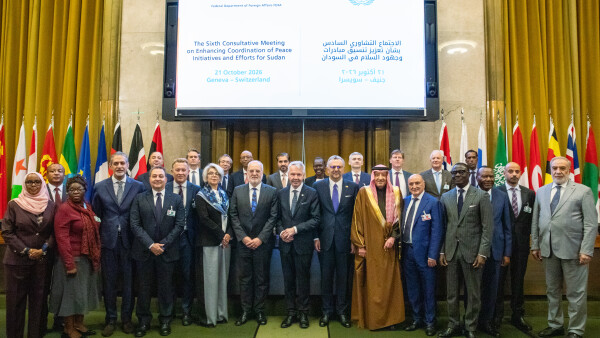
Sixth Consultative Meeting on Enhancing Coordination of Peace Initiatives and Efforts for Sudan
1
1
1
Edited News | UNICEF , WHO , UNHCR
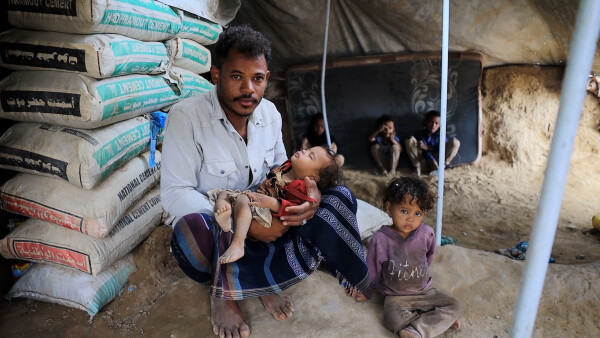
Yemen war continues to force families from homes amid hunger and disease
More than 250,000 people have now fled renewed fighting in Yemen, the UN said on Tuesday, citing particular concern for those sheltering in the southwestern city of Taiz and the wider governorate, where access is “essentially blocked”.

1
1
1
Edited News | UNICEF
A little over one year since a ceasefire agreement was announced between Hamas fighters and Israel, more than 340 children have been reported killed and hundreds more injured, the UN Children’s Fund, UNICEF, said on Friday.

1
1
1
Edited News | UNICEF , IFRC
Six weeks after Nepal’s deadly flooding disaster, communities are still struggling to rebuild their lives, but they will need sustained help as global warming increases the risk of another Himalayan catastrophe, the UN Children’s Fund (UNICEF) said on Friday.

1
1
1
Edited News | WHO
In suspected Russia plague death, testing and monitoring underway – WHO
The death of a lab worker in Russia’s Siberia region has sparked concerns about plague being the cause, the UN World Health Organization (WHO) said on Tuesday, adding that it was following the situation closely.

1
1
Edited News | OHCHR , UNOG
UN Human Rights Chief Volker Türk on Friday provided and oral update to the 63rd session of the Human rights Council on Ukraine.

1
1
1
Edited News | OHCHR , UNOG
UN Human Rights Chief Volker Türk on Friday provided and oral update to the 63rd session of the Human rights Council on the human rights situation in Haiti.

1
1
1
Edited News | WHO
Repeated delays in bringing lifesaving medicines, prosthetics and more from Israel into Gaza risk having devastating consequences on Palestinians who urgently need them in the wartorn enclave, the UN World Health Organization (WHO) said on Friday. “A truck full of non-priority supplies or the right supplies arriving too late, doesn't save lives. That's the question that actually matters," said Dr Reinhilde Van De Weerdt, WHO Representative in the OPT.

1
1
1
Edited News | WHO
DRC: Early access to care and oxygen decisive for Ebola patients’ survival – WHO
In the Democratic Republic of the Congo (DRC), health workers fighting the country’s largest-ever Ebola outbreak are struggling to overcome critical challenges to patient care, the UN World Health Organization (WHO) warned on Tuesday.

1
1
1
Edited News | OCHA , UN
Civilians in Iran are continuing to feel the consequences of months of conflict and military escalation, the UN’s top official in the country has said, as loss of life, damage to civilian infrastructure and mounting economic pressures leave many facing continued uncertainty.