

The United Nations Office at Geneva
Multimedia Newsroom
Press Conferences , Edited News | UNRWA
UNRWA Press conference: Update on the Occupied Palestinian Territory - 25 June 2024
Every day in Gaza 10 children lose one or both legs, says top UN aid official
There’s been no let-up in the terrible human cost of the war in Gaza where 10 children lose one or both legs every day, amid ongoing Israeli bombardment and renewed fears of famine, a top UN aid official said on Tuesday.
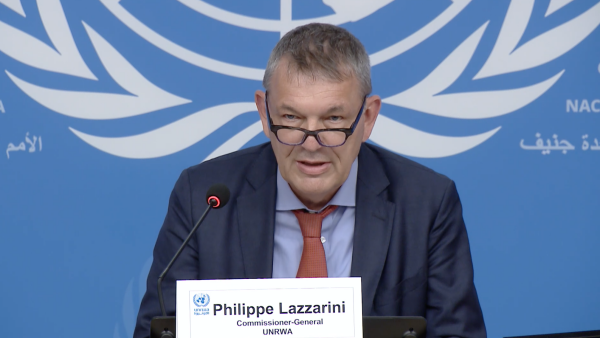
“Basically, we have every day 10 children who are losing one leg or two legs on average. This gives you an idea of the scope of the type of childhood, a child can have in Gaza,” said the head of the UN agency for Palestine refugees (UNRWA) Philippe Lazzarini.
In an update on the situation in the shattered enclave, the UNRWA Commissioner-General noted that some 4,000 children have been reported missing and 17,000 are unaccompanied after nearly nine months of intense hostilities. “Add this to the reported 14,000 children who have been killed since the beginning of the war.” he added, before condemning the latest reported attack on a school run by the UN agency in Gaza City.
“Last night, again, a school has been hit at the level of the Beach (Shati) camp, which is on the northern part of Gaza. And reportedly we have heard about 12 people killed, 22 would have been injured,” he told journalists.
In total, some 190 UNRWA premises have been “hit or damaged or targeted” since the beginning of the war, sparked by Hamas-led terror attacks and hostage-taking in Israel on 7 October. This number “is more than half the premises and the infrastructure that we have in the Gaza Strip,” Mr. Lazzarini said. “And as you know, these premises and these shelters are also used by the population to seek what remains of the possible protection. But more than 500 people so far have been killed while seeking the UN’s protection.”
Responding to the latest report from food insecurity experts at IPC - the leading international authority on hunger emergencies, that more than one in five households “go entire days without eating” – the UNRWA chief said: “You saw the latest IPC (report), one in five persons living in a catastrophic nutritional situation. The acute malnutrition impacts nearly the entire population in Gaza, more than 90 per cent.
“Between those being in emergency and catastrophic situation - and catastrophic means risk of famine is here at any time between now and September - we have in total more than one million people.”
Mr. Lazzarini also echoed growing concerns among humanitarians about ongoing aid obstacles that have prevented UN relief teams from reaching Gaza’s most vulnerable people. “We work with contractors and if they see that their trucks might be looted or torched and the drivers beaten up, they are going to think twice about making their trucks available and yes, this is exactly the problem we have.”
The UNRWA chief also insisted on the need for accountability for attacks on UN facilities and all humanitarian personnel, which contravene international humanitarian law.
“We cannot say that all the strikes came from the Israeli army - the vast majority did, but all of them? Certainly not - or I don't know - and that is the reason why I have asked several times that when it concerns UN facilities, UN personnel, UN facilities, UN operations or the humanitarian community in general, there is a need for a commission of inquiry once conditions are in place. We need to be sure about what happened.”
ends
STORY: Gaza update – Lazzarini UNRWA Occupied Palestinian Territory
SOURCE: UNTV CH
LENGTH: 3’3(”
LANGUAGE: ENGLISH / FRENCH / NATS
ASPECT RATIO: 16:9
RESTRICTIONS: NONE
DATELINE: 25 JUNE 2024 GENEVA, SWITZERLAND
SHOTLIST
1. Exterior medium-wide, UN Geneva flag alley.
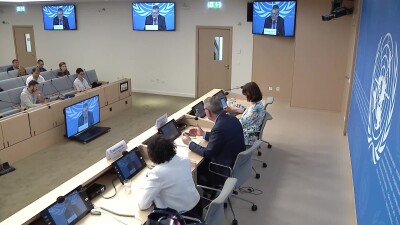
2. Wide, podium speakers and journalists.
3. SOUNDBITE (English) – Philippe Lazzarini, Commissioner-General, the United Nations Relief and Works Agency for Palestine Refugees (UNRWA): “The figures are quite staggering there, they are talking about 4,000 children missing and 17,000 being unaccompanied, so more than 20,000. And you add this to the reported 14,000 children who have been killed since the beginning of the war.”
4. Medium-wide of the Press room with journalists.
5. SOUNDBITE (English) – Philippe Lazzarini, Commissioner-General, the United Nations Relief and Works Agency for Palestine Refugees (UNRWA): “Basically, we have every day 10 children who are losing one leg or two legs on average. This gives you an idea of the scope of the type of childhood, a child can have in Gaza.”
6. Medium, photographer preparing to take shot.
7. SOUNDBITE (English) – Philippe Lazzarini, Commissioner-General, the United Nations Relief and Works Agency for Palestine Refugees (UNRWA): “You saw the latest IPC (food insecurity report), one in five persons living in a catastrophic nutritional situation. The acute malnutrition impacts, nearly the entire population in Gaza, more than 90 per cent. And between those being in emergency and catastrophic situation - and catastrophic means risk of famine is here at any time between now and September - we have in total more than one million people.”
8. Medium-wide, rear of podium, journalists and wider Press room.
9. SOUNDBITE (English) – Philippe Lazzarini, Commissioner-General, the United Nations Relief and Works Agency for Palestine Refugees (UNRWA): “Last night, again, a school has been hit at the level of the Beach (Shati) camp, which is on the northern part of Gaza. And reportedly we have heard about 12 people killed, 22 would have been injured.
10. Medium-wide, Press room.
11. SOUNDBITE (English) – Philippe Lazzarini, Commissioner-General, the United Nations Relief and Works Agency for Palestine Refugees (UNRWA): “This brings also the total of premises which have been hit or damaged or targeted since the beginning of the war to 190, which is more than half the premises and the infrastructure that we have in the Gaza Strip. And as you know, these premises and these shelters are also used by the population to seek what remains of the possible protection. But more than 500 people so far have been killed while seeking the UN’s protection.”
12. Medium, journalist taking video on mobile phone.
13. SOUNDBITE (French) – Philippe Lazzarini, Commissioner-General, the United Nations Relief and Works Agency for Palestine Refugees (UNRWA): « On travaille avec des contracteurs et si effectivement les contracteurs voient que le camion pouvait être à risque d’être saccagé ou brûlé et que les chauffeurs sont, comment dire, tabassés, ils vont hésiter à remettre leurs camions à disposition, et effectivement nous avons ce genre de problème. »
14. Wide, Press room.
15. SOUNDBITE (French) – Philippe Lazzarini, Commissioner-General, the United Nations Relief and Works Agency for Palestine Refugees (UNRWA): « On ne peut pas vous dire que toutes les frappes viennent de l’armée israélienne, en grande majorité oui, toutes, certainement pas ou je ne sais pas et c’est la raison pour laquelle j’ai demandé plusieurs fois que lorsqu’il s’agit des installations des Nations Unies, du personnel des Nations Unies, des installations des Nations Unies, des opérations des Nations Unies ou de la communauté humanitaire en générale, on a besoin d’une commission d’enquête une fois que les conditions seront en place. On doit déterminer ce qui s’est passé. »
16. Medium-wide rear shot, podium speakers, Press room.
17. Medium-wide, Press room.
Similar Stories
1
1
1
Press Conferences | WMO , UNHCR , WHO , ILO
WMO: Greenhouse Gas Bulletin; UNHCR: As attacks intensify UNHCR urges support for war ravaged Ukrainians; WHO: Clinical trials in DRC: vaccines and beyond; ILO: New global and regional estimates on domestic work, informality and working conditions

1
1
1
Edited News | OCHA , UNICEF , WFP
Aid agencies warned on Friday of the fast-developing humanitarian emergency inside Taiz City in Yemen, which has been encircled by de facto Houthi forces fighting government troops along the country’s west coast.
1
1
1
Press Conferences | UN WOMEN , WFP , WHO
UN WOMEN: Sudan Women and girls one year after the fall of El Fasher; increasing drone attacks across the country; WFP: DRC - Ebola spreads to eighth DRC province as WFP delivers food, builds treatment centres and keeps supplies moving; WHO - Update on Ebola (Bundibugyo Virus Disease)
1
12
1
1
Press Conferences , Images | UNOG
Closing Press Conference following the Sixth Consultative Meeting on Enhancing Coordination of Peace Initiatives and Efforts in Sudan

2
17
1
2
Edited News , Press Conferences , Images | OCHA , WMO
Two UN agencies teamed up on Wednesday to issue an appeal for immediate assistance to help communities already being impacted by the strongest El Niño on record.

3
16
2
2
Edited News , B-roll , Conferences , Images | UNITED NATIONS , UNOG
Sixth Consultative Meeting on Enhancing Coordination of Peace Initiatives and Efforts for Sudan
1
1
1
Press Conferences | CITES
Wildlife trade and conservation policy discussions at the 81st meeting of the CITES Standing Committee (SC81)

1
1
1
Edited News | UNICEF , WHO , UNHCR
Yemen war continues to force families from homes amid hunger and disease
More than 250,000 people have now fled renewed fighting in Yemen, the UN said on Tuesday, citing particular concern for those sheltering in the southwestern city of Taiz and the wider governorate, where access is “essentially blocked”.
1
1
1
Press Conferences | UNHCR , UNCTAD , WMO , OCHA , UNICEF , WHO
UNHCR Hungary’s 1956 Refugee Crisis: 70 Years On, UNCTAD World Investment Forum 2026, Doha, WMO Greenhouse Gas Bulletin and Climate Update for COP31, OCHA Afghanistan: Malnutrition, Girls’ Education and Recovery, UNICEF Yemen: Child Malnutrition and Unsafe Water in Taiz, WHO Inequalities in Noncommunicable Diseases and Risk Factors

1
1
1
Press Conferences | UNHCR
End of UNHCR's 77th Annual Executive Committee (ExCom) meeting week

1
1
1
Edited News | UNICEF
A little over one year since a ceasefire agreement was announced between Hamas fighters and Israel, more than 340 children have been reported killed and hundreds more injured, the UN Children’s Fund, UNICEF, said on Friday.

1
1
1
Press Conferences | UNICEF , IOM , UNHCR
UN Special Assistant to the Personal Envoy Office (SUDAN): Peace Initiatives and Efforts in Sudan; UNICEF: Dire situation of children in Gaza; IOM: Damaged Homes and Energy Attacks Risk Displacing Ukrainians for this winter; UNHCR: update on EXCOM week