

The United Nations Office at Geneva
Multimedia Newsroom
Edited News | OHCHR , UNOG
UN Secretary-General António Guterres and UN High Commissioner for Human Rights Volker Türk at the Human Rights Council
“The pain and the slaughter of so many people in the Middle East, Ukraine, Sudan, Myanmar, Haiti and so many other places around the world are unbearable. And when we discuss, in the coming weeks, country by country, we must remember their faces and their anguish,” Türk said.
“At a time of such atrocious violations, is it naïve to demand that all States uphold their human rights commitments? Or is it crucial – the most important, the most consequential, the most urgent task that any of us could possibly undertake? “
The High Commissioner noted how Member States and many partners came together at the December high-level event to commemorate 75 years of the Universal Declaration of Human Rights. It was, he said, an important moment of reflection on the successes and failures to implement human rights, and how we can do better in the future.
By the end of that two-day event, 153 Member States had issued concrete pledges, alongside civil society groups, UN bodies, businesses and others: over 770 pledges, in all. They ranged from commitments to increase women's leadership and employment equality, to tackling extreme poverty, ensuring transitional justice, and improving access to education, healthcare and social protections.
“Today, I am pleased to launch "Human Rights: A Path for Solutions", the distillation of our commemoration year, in the hope it will inform the Summit of the Future. It sets out eight messages to guide renewed action for peace; economies that work for people and planet; effective governance; and guardrails for digital and scientific progress. It broadens the way we think about rights, in ways that can transform societies and our global community,” Türk said.
The UN Human Rights Chief also flagged two overarching concerns that have potential impact on all countries.
“First, negotiations on treaties on pandemic prevention and on cybercrime, as well as on plastic pollution; and global discussions about the regulation of artificial intelligence – all these talks that are currently underway are not sufficiently taking into account human rights obligations, and the human rights harms that could be done,” he said.
The High Commissioner said he was disturbed by attempts to undermine the legitimacy and work of the United Nations and other institution, including via disinformation that targets UN humanitarian organizations, UN peacekeepers and the Un Human Rights Office.
“The UN has become a lightning rod for manipulative propaganda and a scapegoat for policy failures. This is profoundly destructive of the common good, and it callously betrays the many people whose lives rely on it,”Türk said.
The UN, he added, is uniquely equipped to enable States to discuss and resolve pressing global issues – and this convening power is particularly vital now, when the magnitude of conflict, planetary peril and digital transformation requires urgent solutions.
Also speaking on Monday, UN Secretary-General António Guterres said we urgently need a new commitment to all human rights – civil, cultural, economic, political and social – as they apply to peace and security, backed by serious efforts at implementation and accountability.
“States have the primary responsibility to protect and promote human rights. To support states in meeting their obligations, I am launching a system-wide United Nations Agenda for Protection, together with the High Commissioner for Human Rights,” he said.
“Under this Agenda, the United Nations, across the full spectrum of our work, will act as one to prevent human rights violations, and to identify and respond to them when they take place.
That is the Protection Pledge of all United Nations bodies: to do their utmost to protect people.”
END
In Geneva:
Ravina Shamdasani - + 41 22 917 9169 / ravina.shamdasani@un.org
Liz Throssell + 41 22 917 9296 / elizabeth.throssell@un.org
Jeremy Laurence - + 41 22 917 9383 / jeremy.laurence@un.org
Marta Hurtado - + 41 22 917 9466 / marta.hurtadogomez@un.org
Tag and share - Twitter: @UNHumanRights and Facebook: unitednationshumanrights
STORY: UN Secretary-General António Guterres and UN High Commissioner for Human Rights Volker Türk at the Human Rights Council
TRT: 03:33
SOURCE: UNTV/OHCHR
RESTRICTIONS: NONE
LANGUAGE: English/NATS
ASPECT RATIO: 16:9
DATELINE: 26 February 2024 GENEVA, SWITZERLAND
SHOTLIST
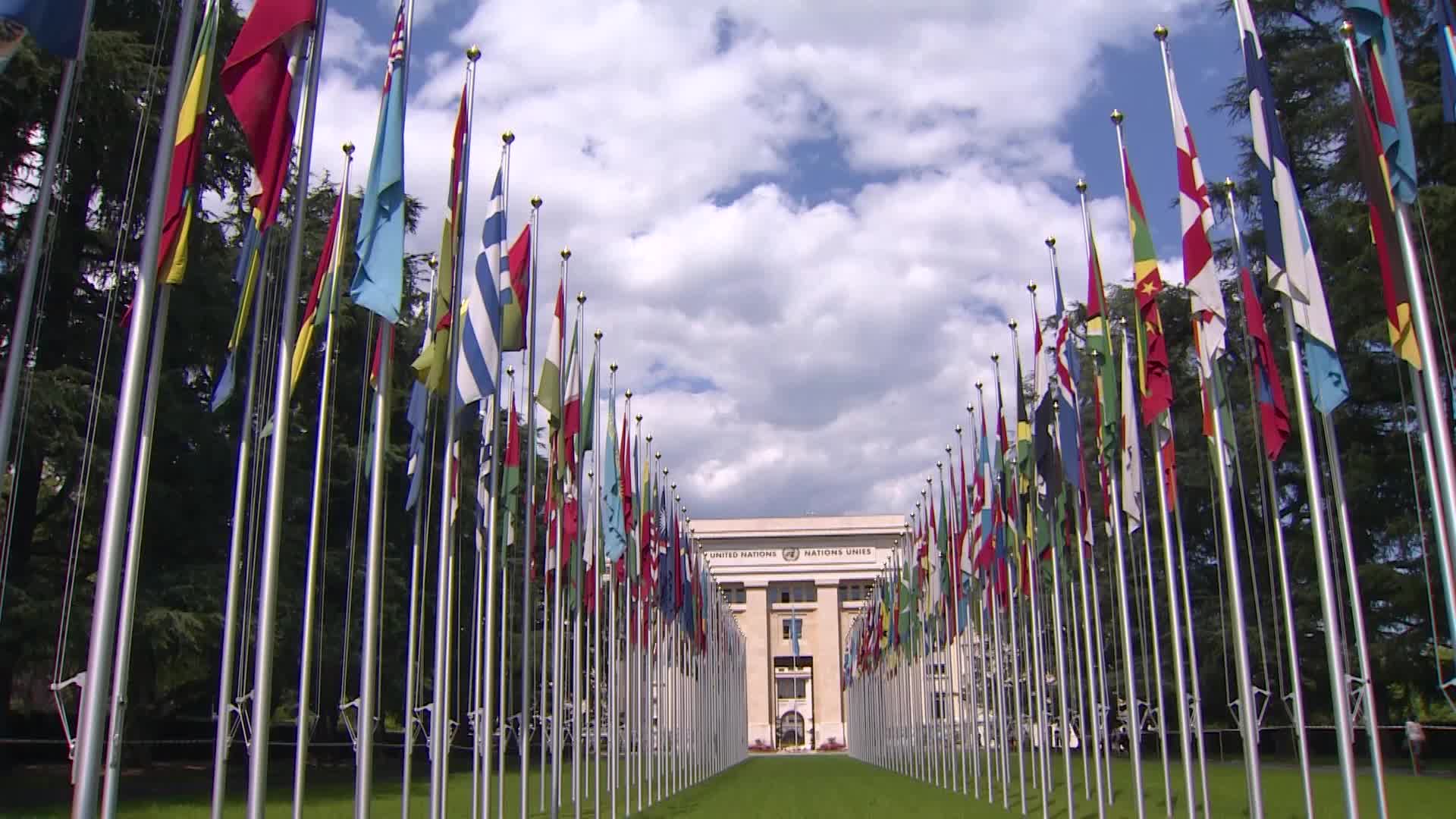
1. Exterior shot : Palais des Nations
2. Wide shot: room 20
3. Medium shot: Arrival UN Secretary-General Antonio Guterres
4. SOUNDBITE (English)— Volker Türk, UN High Commissioner for Human Rights: “The pain and the slaughter of so many people in the Middle East, Ukraine, Sudan, Myanmar, Haiti and so many other places around the world are unbearable. And when we discuss, in the coming weeks, country by country, we must remember their faces and their anguish.”
5. Cut aways: room 20
6. SOUNDBITE (English)— Volker Türk, UN High Commissioner for Human Rights: “At a time of such atrocious violations, is it naïve to demand that all States uphold their human rights commitments? Or is it crucial – the most important, the most consequential, the most urgent task that any of us could possibly undertake.”
7. Cut aways: room 20
8. SOUNDBITE (English)— Volker Türk, UN High Commissioner for Human Rights: “ Today, I am pleased to launch "Human Rights: A Path for Solutions", the distillation of our commemoration year, in the hope it will inform the Summit of the Future. It sets out eight messages to guide renewed action for peace; economies that work for people and planet; effective governance; and guardrails for digital and scientific progress. It broadens the way we think about rights, in ways that can transform societies and our global community.”
9. Cut aways: room 20
10. SOUNDBITE (English)— Volker Türk, UN High Commissioner for Human Rights: “First, negotiations on treaties on pandemic prevention and on cybercrime, as well as on plastic pollution; and global discussions about the regulation of artificial intelligence – all these talks that are currently underway are not sufficiently taking into account human rights obligations, and the human rights harms that could be done.”
11. Cut aways: room 20
12. SOUNDBITE (English)— Volker Türk, UN High Commissioner for Human Rights: “The UN has become a lightning rod for manipulative propaganda and a scapegoat for policy failures. This is profoundly destructive of the common good, and it callously betrays the many people whose lives rely on it.”
13. Cut aways: room 20
14. SOUNDBITE (English)— António Guterres, UN Secretary-General: “States have the primary responsibility to protect and promote human rights. To support states in meeting their obligations, I am launching a system-wide United Nations Agenda for Protection, together with the High Commissioner for Human Rights.”
15. Cut aways: room 20
16. SOUNDBITE (English)— António Guterres, UN Secretary-General “Under this Agenda, the United Nations, across the full spectrum of our work, will act as one to prevent human rights violations, and to identify and respond to them when they take place. That is the Protection Pledge of all United Nations bodies: to do their utmost to protect people.”
17. Cut aways: room 20
Similar Stories

1
1
1
Edited News | OCHA , UNICEF , WFP
Aid agencies warned on Friday of the fast-developing humanitarian emergency inside Taiz City in Yemen, which has been encircled by de facto Houthi forces fighting government troops along the country’s west coast.

2
17
1
2
Edited News , Press Conferences , Images | OCHA , WMO
Two UN agencies teamed up on Wednesday to issue an appeal for immediate assistance to help communities already being impacted by the strongest El Niño on record.

3
16
2
2
Edited News , B-roll , Conferences , Images | UNITED NATIONS , UNOG
Sixth Consultative Meeting on Enhancing Coordination of Peace Initiatives and Efforts for Sudan

1
1
1
Edited News | UNICEF , WHO , UNHCR
Yemen war continues to force families from homes amid hunger and disease
More than 250,000 people have now fled renewed fighting in Yemen, the UN said on Tuesday, citing particular concern for those sheltering in the southwestern city of Taiz and the wider governorate, where access is “essentially blocked”.

1
1
1
Edited News | UNICEF
A little over one year since a ceasefire agreement was announced between Hamas fighters and Israel, more than 340 children have been reported killed and hundreds more injured, the UN Children’s Fund, UNICEF, said on Friday.

1
1
1
Edited News | UNICEF , IFRC
Six weeks after Nepal’s deadly flooding disaster, communities are still struggling to rebuild their lives, but they will need sustained help as global warming increases the risk of another Himalayan catastrophe, the UN Children’s Fund (UNICEF) said on Friday.

1
1
1
Edited News | WHO
In suspected Russia plague death, testing and monitoring underway – WHO
The death of a lab worker in Russia’s Siberia region has sparked concerns about plague being the cause, the UN World Health Organization (WHO) said on Tuesday, adding that it was following the situation closely.

1
1
Edited News | OHCHR , UNOG
UN Human Rights Chief Volker Türk on Friday provided and oral update to the 63rd session of the Human rights Council on Ukraine.

1
1
1
Edited News | OHCHR , UNOG
UN Human Rights Chief Volker Türk on Friday provided and oral update to the 63rd session of the Human rights Council on the human rights situation in Haiti.

1
1
1
Edited News | WHO
Repeated delays in bringing lifesaving medicines, prosthetics and more from Israel into Gaza risk having devastating consequences on Palestinians who urgently need them in the wartorn enclave, the UN World Health Organization (WHO) said on Friday. “A truck full of non-priority supplies or the right supplies arriving too late, doesn't save lives. That's the question that actually matters," said Dr Reinhilde Van De Weerdt, WHO Representative in the OPT.

1
1
1
Edited News | WHO
DRC: Early access to care and oxygen decisive for Ebola patients’ survival – WHO
In the Democratic Republic of the Congo (DRC), health workers fighting the country’s largest-ever Ebola outbreak are struggling to overcome critical challenges to patient care, the UN World Health Organization (WHO) warned on Tuesday.

1
1
1
Edited News | OCHA , UN
Civilians in Iran are continuing to feel the consequences of months of conflict and military escalation, the UN’s top official in the country has said, as loss of life, damage to civilian infrastructure and mounting economic pressures leave many facing continued uncertainty.