

The United Nations Office at Geneva
Multimedia Newsroom
Press Conferences , Edited News | WMO
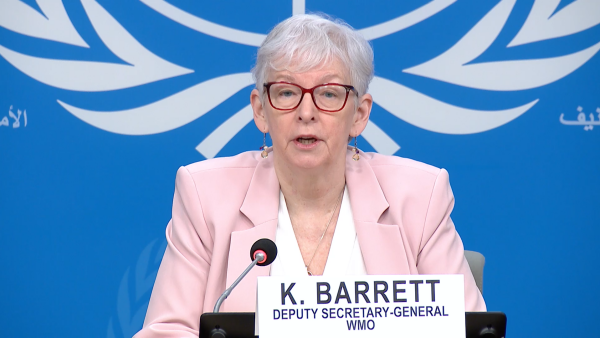
Conférence de presse de l'OMM : Rapport sur l'état du climat mondial 2025
Rapport sur l'État du Climat Mondial 2025
Orateurs :
- Ko Barrett, Secrétaire général adjoint de l'OMM
- John Kennedy, Responsable scientifique
- Claire Ransom, Responsable scientifique associée
HISTOIRE Mise à jour sur le climat – OMM – EMBARGO 23 MARS 04:00 GMT
TRT: 2:00”
SOURCE: UNTV CH
RESTRICTIONS: AUCUNE
LANGUE: ANGLAIS/NATS
FORMAT D'IMAGE: 16:9
DATE: 19 MARS 2026 GENÈVE, SUISSE EMBARGO 23 MARS 04:00 GMT
1. Plan large extérieur : Palais des Nations, Allée des drapeaux.
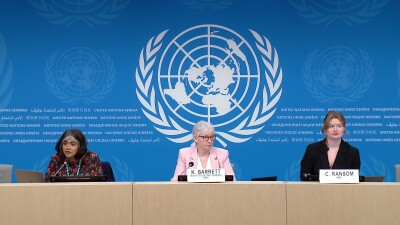
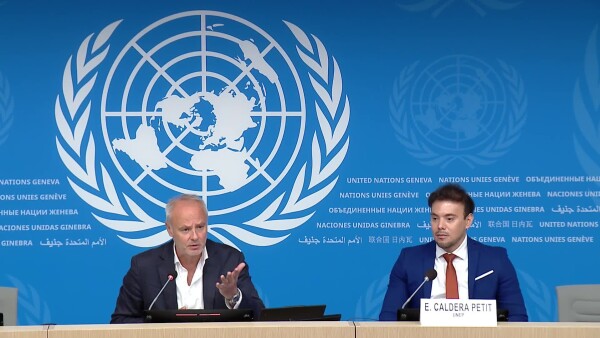
2. Plan moyen : Orateurs au podium de la conférence de presse.
3. EXTRAIT SONORE (Anglais) – Ko Barrett, Secrétaire générale adjointe, Organisation météorologique mondiale (OMM) : « Entre 2015 et 2025, nous avons connu les 11 années les plus chaudes jamais enregistrées. En 2025, nos glaciers continuent de reculer et la glace continue de fondre. L'océan qui se réchauffe et la fonte des glaces terrestres entraînent une augmentation à long terme du niveau moyen mondial de la mer. »
4. Plan moyen inversé : Orateurs au podium de la conférence de presse ; journalistes dans la salle de presse ; orateur sur les écrans.
5. EXTRAIT SONORE (Anglais) – John Kennedy, Responsable scientifique, Organisation météorologique mondiale (OMM) : « Le dioxyde de carbone, le méthane et le protoxyde d'azote ont atteint des niveaux records en 2024, qui est la dernière année pour laquelle nous avons des chiffres mondiaux consolidés. »
6. Plan moyen : Journalistes dans la salle de presse.
7. EXTRAIT SONORE (Anglais) – John Kennedy, Responsable scientifique, Organisation météorologique mondiale (OMM) : « C'était également la plus grande augmentation en une seule année jamais enregistrée, et les données provenant de sites individuels à travers le monde indiquent que les niveaux de ces gaz à effet de serre continuent d'augmenter en 2025. Maintenant, ces gaz à effet de serre, ainsi que les aérosols et d'autres éléments dans l'atmosphère, modifient l'équilibre énergétique de la planète. »
8. Plan moyen : Journaliste dans la salle de presse.
9. EXTRAIT SONORE (Anglais) – John Kennedy, Responsable scientifique, Organisation météorologique mondiale (OMM) : « Dans le climat actuel, il y a un déséquilibre. Nous avons la même quantité d'énergie entrante, mais il y a moins d'énergie sortante en raison des concentrations accrues de gaz à effet de serre. Et ce déséquilibre avec plus d'énergie entrant que sortant signifie que l'énergie s'accumule dans le système terrestre. »
10. Plan large : Orateur sur les écrans ; journalistes dans la salle de presse.
11. EXTRAIT SONORE (Anglais) – John Kennedy, Responsable scientifique, Organisation météorologique mondiale (OMM) : « La plus grande fraction de cette énergie absorbée va dans les océans, environ 90 pour cent de l'excès d'énergie dans le système climatique. Et cela est important car plus de trois milliards de personnes dépendent de ces ressources marines et côtières pour leur subsistance. Ils vivent de l'océan, et près de 11 pour cent de la population mondiale vivent sur des côtes basses directement exposées aux dangers côtiers, donc très vulnérables à des phénomènes comme la montée du niveau de la mer. »
12. Divers plans de journalistes dans la salle de presse.
Similar Stories

1
1
1
Edited News | UNICEF , IFRC
Six weeks after Nepal’s deadly flooding disaster, communities are still struggling to rebuild their lives, but they will need sustained help as global warming increases the risk of another Himalayan catastrophe, the UN Children’s Fund (UNICEF) said on Friday.
1
1
1
Statements , Press Conferences | OHCHR
1
1
1
Press Conferences | UNHCR , UNICEF , IFRC , OHCHR , UN WOMEN , IOM , OCHA , WHO
UNHCR – ExCom Meeting, UNICEF – Nepal Recovery, IFRC – Flash Floods, WHO – Mental Health, IOM – South Sudan Floods, OCHA – DRC Humanitarian aid, UNHCR – Sahel Displacement, UNICEF – Yemen Update, IOM – Gaza Shelter, UN Women – Gaza Women, OHCHR – Arrests and detentions of Syrians by Israeli force
2
1
2
Press Conferences | UNCTAD
Presentation of the Trade and Developement Report 2026
Embargoed until 9 October 2026 at 11 a.m. (Geneva Time)
UNCTAD: UNCTAD’s flagship report finds that governments increasingly use industrial, trade, financial and technology policies to pursue economic and national security objectives. Market access and the ability to move into higher-value activities now depend more heavily on technology, finance and geopolitics.
1
1
1
Press Conferences | UPU
Release of the State of the Postal Sector Report 2026

1
1
1
Edited News | WHO
In suspected Russia plague death, testing and monitoring underway – WHO
The death of a lab worker in Russia’s Siberia region has sparked concerns about plague being the cause, the UN World Health Organization (WHO) said on Tuesday, adding that it was following the situation closely.
1
1
1
Press Conferences | IOM , ITU , UNECE , UNICEF , WHO , WMO
UNICEF: Ebola, DRC - children orphans or separating them from parents and caregivers; IOM: Humanitarian needs in Djibouti amid arrivals from Yemen and increased migrant movements; WHO: Darfur, scale of health needs far exceeds available resources; WMO co-sponsored Global Heat Forum, Bangkok, monthly Global Seasonal Climate Update; UNECE: UN Forum of Mayors; ITU Plenipotentiary Conference 2026; WHO: child and adolescent obesity guidelines and new global roadmap to tackle pregnancy hypertension, a leading cause of maternal mortality

1
1
Edited News | OHCHR , UNOG
UN Human Rights Chief Volker Türk on Friday provided and oral update to the 63rd session of the Human rights Council on Ukraine.

1
1
1
Edited News | OHCHR , UNOG
UN Human Rights Chief Volker Türk on Friday provided and oral update to the 63rd session of the Human rights Council on the human rights situation in Haiti.

1
1
1
Edited News | WHO
Repeated delays in bringing lifesaving medicines, prosthetics and more from Israel into Gaza risk having devastating consequences on Palestinians who urgently need them in the wartorn enclave, the UN World Health Organization (WHO) said on Friday. “A truck full of non-priority supplies or the right supplies arriving too late, doesn't save lives. That's the question that actually matters," said Dr Reinhilde Van De Weerdt, WHO Representative in the OPT.
1
1
1
Press Conferences | OCHA , UN WOMEN , UNHCR , WFP , WHO , WTO , UNEP
OCHA – $160M CERF allocation to 12 underfunded crises; UNHCR – 5.8M refugee children remain out of school amid funding cuts; UN Women – Middle East escalation and food security among women/girls; WHO – Gaza supplies and overall situation; WFP – Yemen food insecurity and impact on global hunger ; UNEP - First International Conference of the Global Framework on Chemicals in Geneva | 16-20 November 2026

1
1
1
Edited News | WHO
DRC: Early access to care and oxygen decisive for Ebola patients’ survival – WHO
In the Democratic Republic of the Congo (DRC), health workers fighting the country’s largest-ever Ebola outbreak are struggling to overcome critical challenges to patient care, the UN World Health Organization (WHO) warned on Tuesday.