

The United Nations Office at Geneva
Multimedia Newsroom
Some 36 million people are expected to be food insecure in 2022 in West and Central Africa between June and August 2022, the World Food Programme (WFP) has warned today. This is a 24 percent increase compared to 2020.
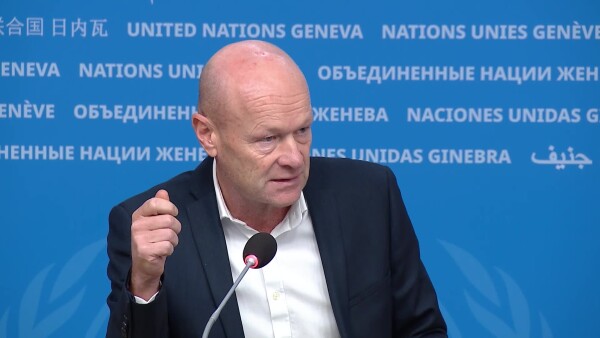
At a news briefing today at the United Nations in Geneva, Ollo Sib, Senior Research, Assessment and Monitoring Officer for West and Central Africa Region (WFP) said that “we are talking about 36 million people in West Africa and Cameron included who will need humanitarian assistance during the up-coming lean season. And if we add Central Africa, we are talking about 38 million people.”
Food insecurity is expanding in the region, the number of people in emergency keeps increasing.
According to WFP’s Ollo Sib “people are worried mainly for 3 reasons in this region: we see food insecurity expanded in the region and the raining season was not good at all, the harvest is bad in many locations, in many areas. There is not enough water and pasture for livestock.”
People are also worried about the high cost of food, in general 30-40 percent higher compared to the rest of the world as Mr. Sib witnessed from a recent trip to the Lake Chad region.
“I was talking to pastoralists a few months ago and they used to sell cattle to buy cereals, mainly millet, and this year with one cattle they managed to get maximum five bags of cereals. Last year, same time, same period, they were able to get seven bags of cereals.”
The persistence of insecurity, the institutional fragilities and the multiplication of inter-communal conflicts followed by displacement are hindering planting and harvesting.
“In the costal countries Côte d’Ivoire, Benin, Togo, people see the activities of armed groups coming towards them and people are worried”, said WFP’s Ollo Sib.
In addition to all these factors, people still have to deal with the long-term effects of Covid-19.
For Amadou Diop, Regional Food Security Advisor for Sahel and West Africa of the Food and Agriculture Organisation (FAO) stressed the gravity of the situation. He said that “the difficulties are very high: More than 70 million people are in such a situation in the region. Unfortunately, the situation is expected to significantly deteriorate during the next lean season between June and August 2022 and the population and the number of people which will experience a critical food insecurity situation would really reach 35.8 million people in the whole region. This is a figure we never reached before in that region. So that means that the situation is extremely critical.”
Given the current situation, anticipatory planning and early actions are required.
“The pastoral lean season is expected to be starting in three months. So, we need at the same time as early as 2022 to adequately invest in the preparation for the next agricultural season. And therefore, we believe that investing in people’s livelihoods is the key to prevent for the insecurity from worsening”, stressed Ollo Sib. “Climate and the conflict remain two major drivers of the poor harvest and poor production we are experiencing in the Sahel.”
-ends –
- Exterior wide shot, United Nations flags flying.
- Medium shot, inside the press conference room (B-128), showing speakers and participants.
- SOUNDBITE (English): Ollo Sib, Senior Research, Assessment and Monitoring Officer for West and Central Africa Region (WFP): “We are talking about 36 million people in West Africa and Cameron included, who will need humanitarian assistance during the up-coming lean season. And if we add Central Africa, we are talking about 38 million people.”
- Close shot, participants, masked and seated, taking notes of the briefing, a large TV-screen showing the speakers in the background.
- SOUNDBITE (English): Senior Research, Assessment and Monitoring Officer for West and Central Africa Region, Ollo Sib (WFP): “People are worried mainly for 3 reasons in this region: we see food insecurity expanded in the region and the raining season was not good at all, the harvest is bad in many locations, in many areas. There is not enough water and pasture for livestock.”
- Close shot, journalists taking notes.
- SOUNDBITE (English): Senior Research, Assessment and Monitoring Officer for West and Central Africa Region, Ollo Sib (WFP): “I was talking to pastoralists a few months ago and they used to sell cattle to buy cereals, mainly millet, and this year with one cattle they managed to get maximum five bags of cereals. Last year, same time, same period, they were able to get seven bags of cereals.”
- Medium shot, participants attending the press meeting.
- SOUNDBITE (English): Senior Research, Assessment and Monitoring Officer for West and Central Africa Region, Ollo Sib (WFP): “In the costal countries Côte d’Ivoire, Benin, Togo, people see the activities of armed groups coming towards them and people are worried.”
- Medium shot, a technician supervising the briefing on Zoom, while Mr. Sib is delivering his speech.
- SOUNDBITE (English): Amadou Diop, Regional Food Security Advisor for Sahel and West Africa (FAO): “The difficulties are very high. More than 70 million people are in such a situation in the region. Unfortunately, the situation is expected to significantly deteriorate during the next lean season between June and August 2022 and the population and the number of people which will experience a critical food insecurity situation would really reach 35.8 million people in the whole region. This is a figure we never reached before in that region. So that means that the situation is extremely critical.”
- Close shot, a journalist taking notes.
- SOUNDBITE (English): Amadou Diop, Regional Food Security Advisor for Sahel and West Africa (FAO): “The pastoral lean season is expected to be starting in three months. So, we need at the same time as early as 2022 to adequately invest in the preparation for the next agricultural season. And therefore, we believe that investing in people’s livelihoods is the key to prevent for the insecurity from worsening.”
- Close shot of a participant and a technician.
- SOUNDBITE (English): Senior Research, Assessment and Monitoring Officer for West and Central Africa Region, Ollo Sib: “Climate and the conflict remain two major drivers of the poor harvest and poor production we are experiencing in the Sahel.”
- Medium shot, speakers seated and masked listening to the briefing.
- Close shot, journalists taking notes.

Similar Stories
1
1
1
Edited News | OCHA , UNICEF , WFP
Aid agencies warned on Friday of the fast-developing humanitarian emergency inside Taiz City in Yemen, which has been encircled by de facto Houthi forces fighting government troops along the country’s west coast.

2
17
1
2
Edited News , Press Conferences , Images | OCHA , WMO
Two UN agencies teamed up on Wednesday to issue an appeal for immediate assistance to help communities already being impacted by the strongest El Niño on record.

3
16
2
2
Edited News , B-roll , Conferences , Images | UNITED NATIONS , UNOG
Sixth Consultative Meeting on Enhancing Coordination of Peace Initiatives and Efforts for Sudan

1
1
1
Edited News | UNICEF , WHO , UNHCR
Yemen war continues to force families from homes amid hunger and disease
More than 250,000 people have now fled renewed fighting in Yemen, the UN said on Tuesday, citing particular concern for those sheltering in the southwestern city of Taiz and the wider governorate, where access is “essentially blocked”.

1
1
1
Edited News | UNICEF
A little over one year since a ceasefire agreement was announced between Hamas fighters and Israel, more than 340 children have been reported killed and hundreds more injured, the UN Children’s Fund, UNICEF, said on Friday.

1
1
1
Edited News | UNICEF , IFRC
Six weeks after Nepal’s deadly flooding disaster, communities are still struggling to rebuild their lives, but they will need sustained help as global warming increases the risk of another Himalayan catastrophe, the UN Children’s Fund (UNICEF) said on Friday.

1
1
1
Edited News | WHO
In suspected Russia plague death, testing and monitoring underway – WHO
The death of a lab worker in Russia’s Siberia region has sparked concerns about plague being the cause, the UN World Health Organization (WHO) said on Tuesday, adding that it was following the situation closely.

1
1
Edited News | OHCHR , UNOG
UN Human Rights Chief Volker Türk on Friday provided and oral update to the 63rd session of the Human rights Council on Ukraine.

1
1
1
Edited News | OHCHR , UNOG
UN Human Rights Chief Volker Türk on Friday provided and oral update to the 63rd session of the Human rights Council on the human rights situation in Haiti.

1
1
1
Edited News | WHO
Repeated delays in bringing lifesaving medicines, prosthetics and more from Israel into Gaza risk having devastating consequences on Palestinians who urgently need them in the wartorn enclave, the UN World Health Organization (WHO) said on Friday. “A truck full of non-priority supplies or the right supplies arriving too late, doesn't save lives. That's the question that actually matters," said Dr Reinhilde Van De Weerdt, WHO Representative in the OPT.

1
1
1
Edited News | WHO
DRC: Early access to care and oxygen decisive for Ebola patients’ survival – WHO
In the Democratic Republic of the Congo (DRC), health workers fighting the country’s largest-ever Ebola outbreak are struggling to overcome critical challenges to patient care, the UN World Health Organization (WHO) warned on Tuesday.

1
1
1
Edited News | OCHA , UN
Civilians in Iran are continuing to feel the consequences of months of conflict and military escalation, the UN’s top official in the country has said, as loss of life, damage to civilian infrastructure and mounting economic pressures leave many facing continued uncertainty.