

The United Nations Office at Geneva
Multimedia Newsroom
STORYLINE
Sudan coup: Human Rights Council hears calls for return to democratic rule
International calls for the restoration of democratic government in Sudan continued on Friday, as the Human Rights Council met in special session in Geneva to discuss the recent coup by the Sudanese military against the Transitional Government.
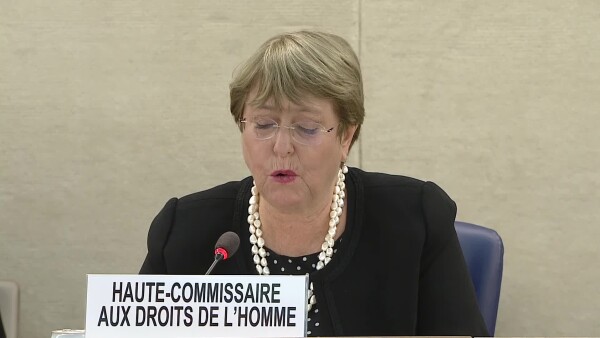
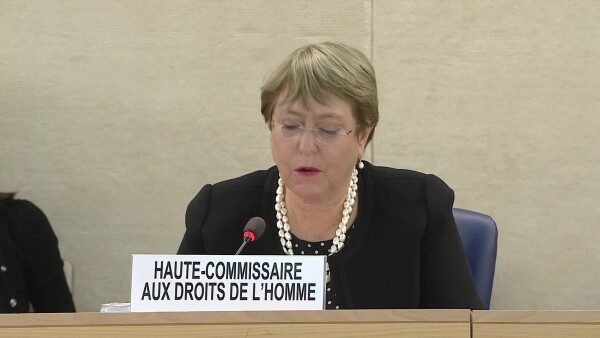
Leading condemnation for the 25 October takeover, UN High Commissioner for Human Rights, Michelle Bachelet, said that at least 13 civilians have been reportedly killed by military and security forces since then, and more than 300 injured.
Looking on as Ms. Bachelet spoke during the specially convened session, the Sudanese permanent representative and his deputy – who reportedly associate with different sides in the crisis - sat either side of an empty chair usually occupied by Sudan’s head of delegation. Neither individual commented during the debate that followed.
Deadly use of force
“This disproportionate and deadly use of force by the Sudan Armed Forces, the Rapid Support Forces, and other security forces – including military police and intelligence elements – must end immediately,” said Ms. Bachelet. “Those responsible for these and other human rights violations must be held fully accountable for their actions.”
Women targeted
The UN High Commissioner for Human Rights also cited disturbing reports of violence committed against women, including an early morning raid on a dormitory of female students near the military headquarters in the capital Khartoum, on the day of the coup.
“The students were terrorized and beaten, resulting in injuries,” Ms. Bachelet told the Council. The coup had betrayed “the courageous and inspiring revolution of 2019”, she insisted, in reference to the grassroots protest movement that led to the overthrow of President Omar Al-Bashir, who had ruled for three decades.
13 million people in need
The development came as UN aid teams reported that the blockade of Sudan’s main sea port was lifted on Wednesday, and that aid relief cargo and fuel has been transported to other parts of Sudan, where there are some 13 million people in need.
“Container clearing processing is set to resume on (Sunday) 7 November,” the Office for the Coordination for Humanitarian Affairs (OCHA) said. “Since the announcement (about the port reopening), humanitarian organisations have not reported issues with movement of commodities out of Port Sudan or within the field, interstate movements have not been hindered and field operations continue despite the limited fuel availability.”
OCHA also noted that the situation remained “calm but unpredictable” in the country.
Markets and shops were open across Sudan, along with banks, but support for humanitarian action was needed for “life-sustaining activities”, including people’s livelihoods, the UN humanitarian office insisted.
To support this vital work, UN Humanitarian Air Services (UNHAS) has resumed regular flights, after operating throughout last week. Some commercial airlines have also resumed their flights, OCHA said.
Contempt for democracy
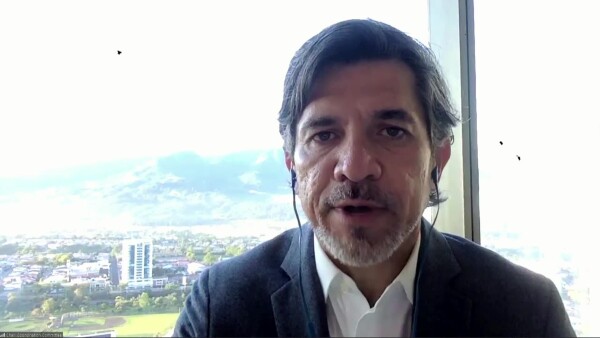
Echoing the UN rights chief’s condemnation of the coup, independent rights expert Victor Madrigal-Borloz told the Council that Sudan’s military leaders had shown “utter contempt for democracy” and efforts to restore democratic governance and human rights in the country.
Peaceful protesters had faced violent crackdowns by the military and its forces after calling for the reinstatement of the civilian government, added Mr. Madrigal-Borloz, who also highlighted reports that live ammunition had been used to disperse demonstrators.
He was speaking in his capacity as chair of the Special Procedures Coordinating Committee, which represents UN-appointed independent experts with mandates to report and advise on human rights from a thematic or country-specific perspective. They are non-paid and elected for three-year mandates that can be reconducted for another three years.
Arrested after UN meeting
In a separate statement on Friday, the UN Integrated Transition Assistance Mission in Sudan (UNITAMS) reported that members of Sudan’s Forces of Freedom and Change (FFC), which reportedly backed anti-Government protesters, had been detained after meeting with the UN Special Representative of the Secretary-General, Volker Perthes.
“It has been reported that Taha Osman Isahaq, Sharif Mohamed Osman and Hamza Farouk were arrested near UNITAMS HQ yesterday afternoon,” the mission said in a statement.
“We call upon the military leadership to cease arresting politicians and activists and to stop committing further human rights violations.”
Ahead of the adoption of a resolution urging Member States to condemn the coup and support a call for the immediate return to the civilian-led Transitional Government under Prime Minister Abdallah Hamdok, as well as release those who continue to be detained, Russia, China and Venezuela disassociated themselves from the initiative.
In the resolution on the situation of human rights in Sudan, adopted without a vote as orally revised, the Council condemned the military takeover and called for the immediate restoration of the civilian-led Transitional Government.
The Council also officially requested the High Commissioner for Human Rights to designate an Expert on Human Rights in Sudan to monitor the developing human rights situation until the restoration of its civilian-led government.
ends
Special Session on Sudan – Human Rights Council
SHOTLIST OF THE EDITED STORY
TRT: 2 mins 48s
SOURCE: UNTV CH
RESTRICTIONS: NONE
LANGUAGE: ENGLISH / NATS
ASPECT RATIO: 16:9
DATELINE: 5 November 2021 GENEVA, SWITZERLAND
- Exterior wide shot, Palais des Nations flag alley, nations’ flags flying.
- Wide zoom, podium speakers at the Human Rights Council in Geneva with Council President, Ambassador Nazhat Shameem Khan, banging gavel to declare special session open.
- SOUNDBITE (English) — UN High Commissioner for Human Rights, Michelle Bachelet: “As the Security Council called for last week and the Secretary-General reiterated yesterday, all those arrested and detained since the military takeover should be immediately released. This is also essential for commencing urgently needed dialogue and a swift return to civilian rule. Massive street protests since 25 October were in several instances met with excessive use of force, including use of live ammunition, as documented by the Joint UN Human Rights Office in Sudan, particularly in Khartoum and Omdurman. According to medical sources, at least 13 civilians have been killed by military and security forces since the 25 October, and more than 300 injured. This disproportionate and deadly use of force by the Sudan Armed Forces, the Rapid Support Forces, and other security forces – including military police and intelligence elements – must end immediately. Those responsible for these and other human rights violations must be held fully accountable for their actions.”
- Medium shot: Sudanese delegation sitting in Room XX, home of the Human Rights Council at UN Geneva.
- SOUNDBITE (English) — Victor Madrigal-Borloz, Chair of the Coordination Committee of Special Procedures: “We are deeply concerned about the deployment of the military in the streets and the consistent allegations of its use of unnecessary and disproportionate force. We are also concerned by the allegations of the curtailment of digital rights and freedom of expression through a blanket shutdown of mobile-based internet and the disruption of telecommunications across the country. Blanket internet shutdowns contravene international law and the scope of permissible restrictions of the rights to freedom of expression, peaceful assembly, and association. The peoples of Sudan can no longer access and share information and organise online, which is also vital for human rights monitoring.”
- SOUNDBITE (English) — Council President, Ambassador Nazhat Shameem Khan: “Are there any other delegations wishing to take the floor for explanations of votes before the vote? I see no requests for the floor; is there a request for a vote? I see none. May I take it that draft text L1 as orally revised may be adopted without a vote? It is so decided.”
- Wide shot, Human Rights Council delegates, seated.
Similar Stories

1
1
1
Edited News | OCHA , UNICEF , WFP
Aid agencies warned on Friday of the fast-developing humanitarian emergency inside Taiz City in Yemen, which has been encircled by de facto Houthi forces fighting government troops along the country’s west coast.

2
17
1
2
Edited News , Press Conferences , Images | OCHA , WMO
Two UN agencies teamed up on Wednesday to issue an appeal for immediate assistance to help communities already being impacted by the strongest El Niño on record.

3
16
2
2
Edited News , B-roll , Conferences , Images | UNITED NATIONS , UNOG
Sixth Consultative Meeting on Enhancing Coordination of Peace Initiatives and Efforts for Sudan

1
1
1
Edited News | UNICEF , WHO , UNHCR
Yemen war continues to force families from homes amid hunger and disease
More than 250,000 people have now fled renewed fighting in Yemen, the UN said on Tuesday, citing particular concern for those sheltering in the southwestern city of Taiz and the wider governorate, where access is “essentially blocked”.

1
1
1
Edited News | UNICEF
A little over one year since a ceasefire agreement was announced between Hamas fighters and Israel, more than 340 children have been reported killed and hundreds more injured, the UN Children’s Fund, UNICEF, said on Friday.

1
1
1
Edited News | UNICEF , IFRC
Six weeks after Nepal’s deadly flooding disaster, communities are still struggling to rebuild their lives, but they will need sustained help as global warming increases the risk of another Himalayan catastrophe, the UN Children’s Fund (UNICEF) said on Friday.

1
1
1
Statements , Press Conferences | OHCHR

1
1
1
Edited News | WHO
In suspected Russia plague death, testing and monitoring underway – WHO
The death of a lab worker in Russia’s Siberia region has sparked concerns about plague being the cause, the UN World Health Organization (WHO) said on Tuesday, adding that it was following the situation closely.

1
1
Edited News | OHCHR , UNOG
UN Human Rights Chief Volker Türk on Friday provided and oral update to the 63rd session of the Human rights Council on Ukraine.
2
1
2
Statements , Conferences | HRC , OHCHR
Interactive dialogue with the High Commissioner for Human Rights, Volker Türk on the oral update on Ukraine.

1
1
1
Edited News | OHCHR , UNOG
UN Human Rights Chief Volker Türk on Friday provided and oral update to the 63rd session of the Human rights Council on the human rights situation in Haiti.

1
1
1
Edited News | WHO
Repeated delays in bringing lifesaving medicines, prosthetics and more from Israel into Gaza risk having devastating consequences on Palestinians who urgently need them in the wartorn enclave, the UN World Health Organization (WHO) said on Friday. “A truck full of non-priority supplies or the right supplies arriving too late, doesn't save lives. That's the question that actually matters," said Dr Reinhilde Van De Weerdt, WHO Representative in the OPT.