

The United Nations Office at Geneva
Multimedia Newsroom
Edited News , Press Conferences | WMO
WMO - UNDRR Press Conference Atlas of Mortality Report - 01 September 2021
Climate and weather-related disasters surge five-fold over 50 years, but early warnings save lives - WMO report
Climate change and increasingly extreme weather events have caused a surge in natural disasters over the past 50 years disproportionately impacting poorer countries, the World Meteorological Organization (WMO) and UN Office for Disaster Risk Reduction (UNDRR) said on Wednesday.
According to the agencies' Atlas of Mortality and Economic Losses from Weather, Climate and Water Extremes, from 1970 to 2019, these natural hazards accounted for 50 per cent of all disasters, 45 per cent of all reported deaths and 74 per cent of all reported economic losses.
There were more than 11,000 reported disasters attributed to these hazards globally, with just over two million deaths and $3.64 trillion in losses. More than 91 per cent of the deaths occurred in developing countries.
But the news is not all bad. Thanks to improved early warning systems and disaster management, the number of deaths decreased almost threefold between 1970 and 2019; falling from 50,000 in the 1970s to less than 20,000 in the 2010s, the report explained.
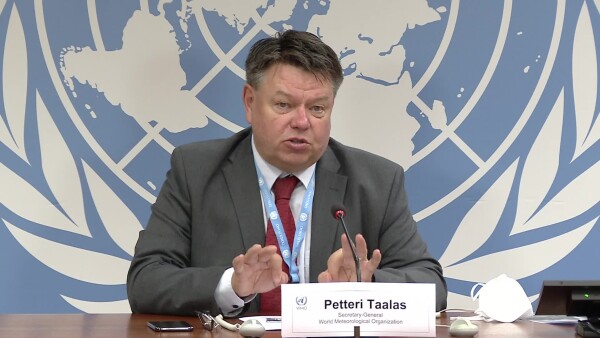
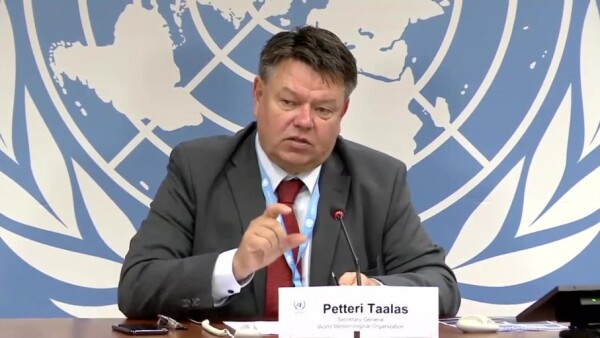
“We are going to see more climatic extremes because of climate change and these negative trends in climate will continue for the coming decades,” WMO Secretary-General Petteri Taalas said at the report launch, adding that “if we are successful with climate mitigation, we could stop this negative trend around the 2060s”.
According to the Atlas, from 1970 to 2019, weather, climate and water hazards accounted for 50 per cent of all disasters, 45 per cent of all reported deaths and 74 per cent of all reported economic losses. There were more than 11,000 reported disasters attributed to these hazards globally, with just over two million deaths and $3.64 trillion in losses.
More than 91 per cent of the deaths occurred in developing countries. Of the top 10 disasters, droughts proved to be the deadliest hazard during the period, causing 650,000 deaths, followed by storms that led to 577,232 deaths; floods, which took 58,700 lives, and extreme temperature events, during which 55,736 died.
However, the report found that “heatwaves have become a new thing, which was not observed in the past. This is a follow-up of climate change and warming of the planet” said Professor Taalas. Meanwhile, economic losses have increased sevenfold from the 1970s to the 2010s, from an average of $49 million to $383 million per day globally.
“We have seen more than a tripling of the damage during the past decade,” said Professor Taalas. Storms, the most prevalent cause of damage, resulted in the largest economic losses around the globe. “Number two is flooding,” the WMO chief said.
Three of the costliest 10 disasters, all hurricanes that occurred in 2017, accounted for 35 per cent of total economic disaster losses around the world from 1970 to 2019. In the United States, Hurricane Harvey caused $96.9 billion in damage, Maria in the Caribbean 69.4 billion, and Irma $58.2 billion in Cape Verde. “The “50-year trend is quite, quite alarming, said Mami Mizutori, Assistant Secretary-General and Special Representative of the Secretary-General for Disaster Risk Reduction, United Nations Office for Disaster Risk Reduction (UNDRR). COVID-19 and extreme weather events "attacking us at the same time” have created a “multi-hazard war world” which “demonstrates that we really need to invest more in disaster risk reduction in prevention”, she said.
Only half of the 193 members of WMO have multi-hazard early warning systems and there are severe gaps in weather and hydrological observing networks in Africa, some parts of Latin America and in Pacific and Caribbean island states, the report warned. “Developing countries are not so fortunate,” said Ms. Mizutori. “They lack resources both financially and in terms of human resources. They do not have the resources to invest in disaster-resilient infrastructure, multi-hazard warning systems or risk modelling. And this is the problem that we need to overcome”.
There must be greater investment in comprehensive disaster risk management to ensure that climate change adaptation is integrated in national and local disaster risk reduction strategies, the UNDRR chief said. The Atlas further recommends that countries should review their hazard exposure and vulnerability taking into consideration the changing climate to reflect that tropical cyclones may have different tracks, intensity and speed than in the past. It also calls for the development of integrated and proactive policies on slow-onset disasters such as drought.
ends
STORY: Atlas of Mortality report WMO - UNDRR
TRT: 3:31”
SOURCE: UNTV CH
RESTRICTIONS: NONE
LANGUAGE: ENGLISH
ASPECT RATIO: 16:9
DATELINE: 01 SEPT 2021, GENEVA, SWITZERLAND
SHOTLIST
1. Exterior wide shot, United Nations flag flying.
2. Wide shot, briefing room.
3. SOUNDBITE: (ENGLISH) Prof. Petteri Taalas, Secretary-General of the World Meteorological Organization: “Thanks to our early warning service improvement we have been able to have a decrease of the casualties at these kinds of events. But the bad news is that the economic losses have been growing very rapidly and this growth is supposed to continue. We are going to see more climatic extremes because of climate change and these negative trends in climate will continue for the coming decades anyhow, and if we are successful with that climate mitigation, we could stop this negative trend around the 2060s.”
4.Wide of panel at the briefing.
5. SOUNDBITE: (ENGLISH) Prof. Petteri Taalas, Secretary-General of the World Meteorological Organization: “The new feature for the past two decades, is that the heatwaves have become a new thing, which was not observed in the past. This is a follow-up of climate change and warming of the planet.”
6.Journalist at briefing.
7. SOUNDBITE: (ENGLISH), Prof. Petteri Taalas, Secretary-General of the World Meteorological Organization: “Economic losses and that trend is very, very clear. We have seen more than tripling of the damage during the past decade. And as I said, this is supposed to continue and there the storms have been the most expensive one, and especially these tropical storms, both typhoons and hurricanes and cyclones, have been the dominant one. Number two is flooding, flooding events.”
8. Mid of photographer.
9. SOUNDBITE: (ENGLISH), Mami Mizutori, Assistant Secretary-General and Special Representative of the Secretary-General for Disaster Risk Reduction, United Nations Office for Disaster Risk Reduction (UNDRR): “We are not, unfortunately, in a safe place and the report tells us that the 50-year trend is quite, quite alarming. To give you some statistics, 31 million people were displaced by disasters last year. Now, the number of people who are displaced by disaster is almost getting larger than the number of people displaced by conflict."
10.Mid of photographer and journalist at briefing.
11. SOUNDBITE: (ENGLISH), Mami Mizutori, Assistant Secretary-General and Special Representative of the Secretary-General for Disaster Risk Reduction, United Nations Office for Disaster Risk Reduction (UNDRR): “Now with COVID and extreme weather events attacking us at the same time, we live in this, what we call the-multi hazard war world. And it demonstrates that we really need to invest more in disaster risk reduction in prevention.”
12. Wide of photographers.
13. SOUNDBITE: (ENGLISH), Mami Mizutori, Assistant Secretary-General and Special Representative of the Secretary-General for Disaster Risk Reduction, United Nations Office for Disaster Risk Reduction (UNDRR): “Developing countries are not so fortunate. They lack resources both financially and in terms of human resources as well. They do not have the resources to invest in disaster-resilient infrastructure, multi-hazard warning systems or risk modelling. And this is the problem that we need to overcome.”
14. Wide of speaker, screen and journalist.
15. SOUNDBITE: (ENGLISH) Mami Mizutori, Assistant Secretary-General and Special Representative of the Secretary-General for Disaster Risk Reduction, United Nations Office for Disaster Risk Reduction (UNDRR: “Many countries have been actually suffering because of this multi-hazard reality since the beginning of COVID-19. There have been cyclones in India, Bangladesh, and the Pacific Islands. There has been an earthquake in Croatia. And each and every time we know that the authorities for a developed disaster risk management have been really struggling with this challenge of coping with multiple hazards.”
16. Mid of journalists.
17. Mid of cameraperson.
18. Close of journalist writing.
Similar Stories
1
1
1
Press Conferences | UNHCR
End of UNHCR's 77th Annual Executive Committee (ExCom) meeting week

1
1
1
Edited News | UNICEF
A little over one year since a ceasefire agreement was announced between Hamas fighters and Israel, more than 340 children have been reported killed and hundreds more injured, the UN Children’s Fund, UNICEF, said on Friday.
1
1
1
Press Conferences | UNICEF , IOM , UNHCR
UN Special Assistant to the Personal Envoy Office (SUDAN): Peace Initiatives and Efforts in Sudan; UNICEF: Dire situation of children in Gaza; IOM: Damaged Homes and Energy Attacks Risk Displacing Ukrainians for this winter; UNHCR: update on EXCOM week
1
1
1
Press Conferences | IOM , UNDRR
UN stresses importance of household preparedness for disaster risk reduction.

1
1
1
Edited News | UNICEF , IFRC
Six weeks after Nepal’s deadly flooding disaster, communities are still struggling to rebuild their lives, but they will need sustained help as global warming increases the risk of another Himalayan catastrophe, the UN Children’s Fund (UNICEF) said on Friday.
1
1
1
Statements , Press Conferences | OHCHR
1
1
1
Press Conferences | UNHCR , UNICEF , IFRC , OHCHR , UN WOMEN , IOM , OCHA , WHO
UNHCR – ExCom Meeting, UNICEF – Nepal Recovery, IFRC – Flash Floods, WHO – Mental Health, IOM – South Sudan Floods, OCHA – DRC Humanitarian aid, UNHCR – Sahel Displacement, UNICEF – Yemen Update, IOM – Gaza Shelter, UN Women – Gaza Women, OHCHR – Arrests and detentions of Syrians by Israeli force
2
1
2
Press Conferences | UNCTAD
Presentation of the Trade and Developement Report 2026
Embargoed until 9 October 2026 at 11 a.m. (Geneva Time)
UNCTAD: UNCTAD’s flagship report finds that governments increasingly use industrial, trade, financial and technology policies to pursue economic and national security objectives. Market access and the ability to move into higher-value activities now depend more heavily on technology, finance and geopolitics.
1
1
1
Press Conferences | UPU
Release of the State of the Postal Sector Report 2026

1
1
1
Edited News | WHO
In suspected Russia plague death, testing and monitoring underway – WHO
The death of a lab worker in Russia’s Siberia region has sparked concerns about plague being the cause, the UN World Health Organization (WHO) said on Tuesday, adding that it was following the situation closely.
1
1
1
Press Conferences | IOM , ITU , UNECE , UNICEF , WHO , WMO
UNICEF: Ebola, DRC - children orphans or separating them from parents and caregivers; IOM: Humanitarian needs in Djibouti amid arrivals from Yemen and increased migrant movements; WHO: Darfur, scale of health needs far exceeds available resources; WMO co-sponsored Global Heat Forum, Bangkok, monthly Global Seasonal Climate Update; UNECE: UN Forum of Mayors; ITU Plenipotentiary Conference 2026; WHO: child and adolescent obesity guidelines and new global roadmap to tackle pregnancy hypertension, a leading cause of maternal mortality

1
1
Edited News | OHCHR , UNOG
UN Human Rights Chief Volker Türk on Friday provided and oral update to the 63rd session of the Human rights Council on Ukraine.