

The United Nations Office at Geneva
Multimedia Newsroom
Press Conferences | OCHA , WHO , UNOG , UNITED NATIONS , WFP
UNOG Bi-weekly press briefing 06 August 2021
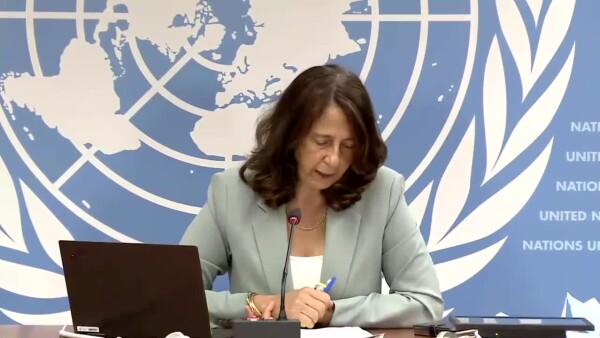
Alessandra Vellucci, Director of the United Nations Information Service, chaired the hybrid briefing, which was attended by spokespersons and representatives of the Office for the Coordination of Humanitarian Affairs, the World Food Programme, and the World Health Organization.
Food Situation in Myanmar
Stephen Anderson, World Food Programme Country Director in Myanmar, said that the people of Myanmar were going through the most difficult period in recent history. Poverty had predated the current turmoil, which had started with the 1 February military takeover, and was coupled with the COVID-19 crisis. The current third wave of the pandemic was creating a major havoc. Back in April, the WFP had estimated that 3.4 million more people nationwide could be pushed into food insecurity between May and October. In response to this situation, the World Food Programme had tripled its planned support to the country and commenced large-scale emergency food distributions for up to two million people in the poorest townships of Myanmar, starting in Yangon. At the same time, the WFP was stepping up its operations to reach the newly-displaced people affected by the clashes and insecurity in recent months, while it also continued to assist 360,000 most food-insecure people in the conflict affected areas in Rakhine, Kachin and Shan states, who had been needy even before the current crisis.
Mr. Anderson said that the main challenge at the moment was funding – there was a 70 percent funding gap, or USD 86 million, for the next six months. Sustained access to those in the greatest need of humanitarian assistance was also very much needed. Support from the international community was as needed as ever.
Responding to questions, Mr. Anderson explained that Myanmar was still in the state of emergency, and the WFP needed to receive clearances to move around the country, but the WFP was used to such conditions. WFP had come to the country initially to assist the Rohingya, about one million of whom were in Bangladesh. Some 600,000 Rohingya remained inside Myanmar, in the Rakhine State, and the WFP was assisting approximately 240,000 of them. Mr. Anderson said that during his mandate he had seen no signs of the WFP’s assistance being interfered with by the Myanmar military. Movement restrictions affected access to markets for many thousands of rural Rohingya, to whom the WFP was providing food assistance, including through school meal programmes.
The WFP press release on the funding gap can be found here.
Alessandra Vellucci, for the United Nations Information Service (UNIS), reminded about the recent statement of the Spokesman of the Secretary-General on Myanmar, in which he reiterated his call to ensure full and unimpeded humanitarian access to those in need.
Launch of Lebanon Emergency Response Plan
Jens Laerke, for the Office for the Coordination of Humanitarian Affairs (OCHA), said that the United Nations in Lebanon together with the non-governmental organizations were launching today a 12-month Emergency Response Plan of USD 378.5 million to deliver assistance to 1.1 million people, both Lebanese and migrants. Lebanon was in the middle of a complex and multifaceted crisis, an economic meltdown, and the COVID-19 pandemic. This plan would bring the most essential aid to children, women, and men who needed it the most. The plan was an instrument to deal with the most humanitarian needs but was not a solution to the crisis in Lebanon, whose root causes had to be addressed. Structural reforms were very much needed, said the UN in Lebanon. Najat Rochdi, the UN Humanitarian Coordinator for Lebanon was available for interviews, said Mr. Laerke.
In response to questions, Mr. Laerke explained that many of the millions pledged at a recent pledging conference were meant for humanitarian needs, but it was still not possible to say how much of that money would go to that purpose. Some USD 370 million had been pledged at the conference, which included both humanitarian and development aspects. The people who would benefit from the Emergency Response Plan were primarily those who needed help in the terms of water and sanitation, followed by those affected by food insecurity.
COVID-19
Answering several questions from the media, Tarik Jašarević, for the World Health Organization (WHO), reiterated that some 80 percent of all vaccine doses had been administered in middle and high-income countries. There had to be a more equitable distribution of vaccines around the world; and the need for booster doses was still under question. Certain groups with special medical conditions might need third doses of vaccines, but this was yet to be established. The goal remained to have at least 10 percent of the population in each country vaccinated by the end of September. WHO had been clear from the beginning that vaccination should not be a precondition for international travel, as this would further the existing inequalities given the current unequal vaccine availability. All vaccine donations should go through COVAX, stressed Mr. Jašarević. Vaccines worked, but all of us still needed to play our part in stopping the transmission.
Geneva announcements
Jens Laerke, for the Office for the Coordination of Humanitarian Affairs (OCHA), stated that today at 12 pm noon, there would be a hybrid briefing by the Under-Secretary-General for Humanitarian Affairs Martin Griffiths on his recent mission to Ethiopia
Alessandra Vellucci, for the UN Information Service (UNIS), informed that the Committee on the Elimination of Racial Discrimination (CERD) would open its 104th session on 9 August at 3 pm. During the session, the Committee would review the reports of Lebanon and Netherlands.
Today was the 76th anniversary of the bombing of Hiroshima, on the occasion which the Secretary-General had issued a video message. The only guarantee against the use of nuclear weapons was their total elimination. The United Nations continued to be fully committed to the goal of a nuclear-weapon-free world.
Ms. Vellucci finally informed that 9 August would be the Day of the World’s Indigenous Peoples, on which occasion the Secretary-General asked everyone to show true solidarity by working to end the grievous inequalities of indigenous peoples worldwide, to fully recognize the abuse they have endured, and to celebrate their knowledge and wisdom.
Similar Stories
1
1
1
Press Conferences | UPU
Release of the State of the Postal Sector Report 2026
1
1
1
Press Conferences | IOM , ITU , UNECE , UNICEF , WHO , WMO
UNICEF: Ebola, DRC - children orphans or separating them from parents and caregivers; IOM: Humanitarian needs in Djibouti amid arrivals from Yemen and increased migrant movements; WHO: Darfur, scale of health needs far exceeds available resources; WMO co-sponsored Global Heat Forum, Bangkok, monthly Global Seasonal Climate Update; UNECE: UN Forum of Mayors; ITU Plenipotentiary Conference 2026; WHO: child and adolescent obesity guidelines and new global roadmap to tackle pregnancy hypertension, a leading cause of maternal mortality
1
1
1
Press Conferences | OCHA , UN WOMEN , UNHCR , WFP , WHO , WTO , UNEP
OCHA – $160M CERF allocation to 12 underfunded crises; UNHCR – 5.8M refugee children remain out of school amid funding cuts; UN Women – Middle East escalation and food security among women/girls; WHO – Gaza supplies and overall situation; WFP – Yemen food insecurity and impact on global hunger ; UNEP - First International Conference of the Global Framework on Chemicals in Geneva | 16-20 November 2026
1
1
1
Press Conferences | UNHCR , WHO
Yemen's health system nears collapse amid conflict, causing rising casualties and medicine shortages.
1
1
1
Press Conferences | HRC
Update by the Expert Mechanism to Advance Racial Justice and Equality in Law Enforcement
1
1
1
Press Conferences | WIPO , WHO , UNICEF , UNHCR , IOM , WFP , FAO
WIPO Global Innovation Index 2026 launch and press conference, WHO Composition of influenza vaccines for the 2027 Southern Hemisphere flu season, UNICEF Yemen hunger and malnutrition; UNHCR Sudan displacement into Chad; IOM Ebola and population movements in DRC; WFP emergency food assistance in Nepal; and FAO food loss and waste.
2
1
2
Press Conferences | UNCTAD
Gaza reconstruction needs reach $71.5 billion as Palestinian economy and public finances face severe strain. Latest UNCTAD report documents the loss of decades of development gains, economic collapse in Gaza and tightening economic constraints in the West Bank.
The report identifies three immediate priorities: transferring withheld Palestinian revenues, safeguarding the banking system and aligning reconstruction support with the documented scale of damage and economic losses.
1
1
1
Press Conferences | HRC
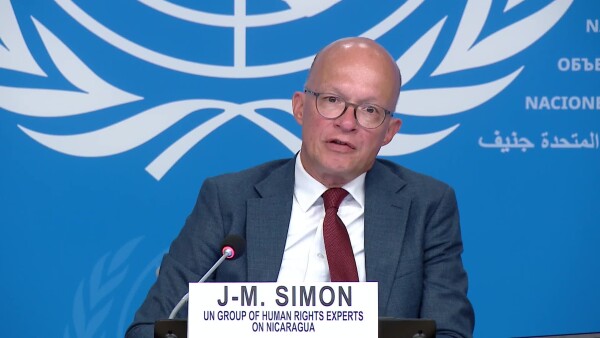
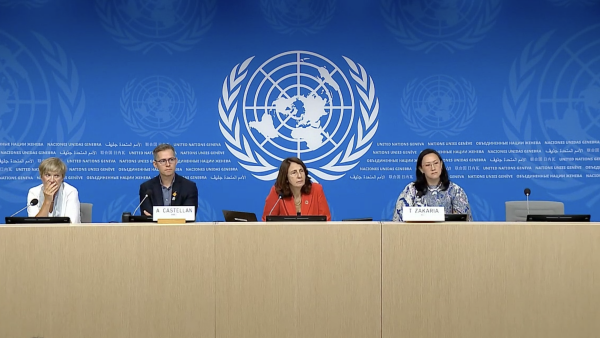
Press conference on the situation of human rights in Nicaragua by the UN Group of Human Rights Experts
1
1
1
Press Conferences | ITU , UNHCR , WHO , WMO
YEMEN - UNHCR: Escalating conflict in Yemen could fuel more displacement, refugee movement
CLIMATE - WHO / WMO: Health and Climate impact of El Niño
1
1
1
Press Conferences | HRC , OHCHR
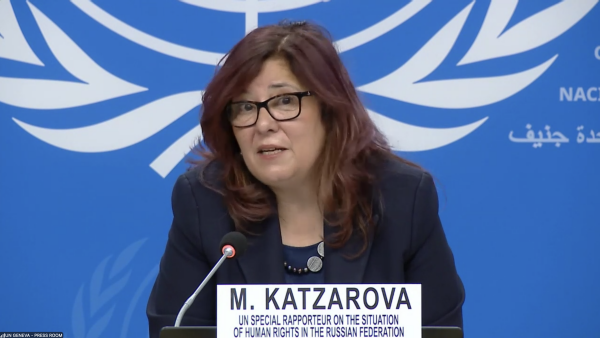
Mariana Katzarova discusses human rights in Russia as a UN Special Rapporteur.
1
1
1
Press Conferences | IOM , OHCHR , UN WOMEN , UNFPA , UNHCR , UNOPS , WHO
UN Geneva briefing: Yemen crisis worsens, urgent aid needed across multiple sectors.
1
1
1
Press Conferences | HRC
Press conference on the latest report of the Independent International Fact-Finding Mission on the Bolivarian Republic of Venezuela to the UN Human Rights Council