

The United Nations Office at Geneva
Multimedia Newsroom
Escalation of violence increases civilian suffering in Israel and Palestinian Territories - OCHA
As the escalating conflict between Israel and Palestinians takes an increasingly heavy toll on civilians, the UN Office for Coordination of Humanitarian Affairs (OCHA) expressed its deep concern for the effect the conflict is having on people’s access to water, sanitation, and health care, especially in Gaza.
“We are alarmed by the continued escalation of violence in the occupied Palestinian Territories and Israel,” UN OCHA Spokesperson Jeans Laerke said at a press briefing in Geneva today. “The casualty count continues to climb on both sides of the conflict and civilians are suffering,” Laerke added.
The situation appears especially dramatic in the Gaza strip, where fuel and medicines were already scarce, and where shortages affect an estimated two million Palestinians.
“We are in contact with all the relevant actors on the ground so that we can obtain two things: again, access in and out of the Gaza Strip – that’s through the Erez crossing point in the North which has been closed as of 10th of May – and for the goods that we need to get in, in particular fuel. So, these are negotiations that are ongoing”, Jens Laerke said.
OCHA reports that the North Gaza Seawater Desalination Plant is still not operational, affecting an estimated 250,000 people’s access to clean drinking water. Another 230,000 people from Gaza City and Khan Younis have limited access to piped water due to increasing power cuts and the damage to the networks.
“Extensive damage is reported to civilian properties in densely populated areas all over Gaza, with over 200 housing units destroyed or severely damaged”, Laerke reported. “Humanitarian partners working in shelter are supporting displaced families with non-food items and cash support”.
Laerke also said that “education partners inform us that 31 education facilities, including schools, vocational training centres and higher education facilities have been impacted since the start of the escalation.”
According to reports, hundreds of people, many from refugee camps in Gaza, are seeking refuge and shelter in schools run by United Nations Relief and Works Agency for Palestine Refugees in the Near East (UNRWA).
“UNRWA says that it has experienced in quickly turning its schools into shelters, but the challenge is the pandemic and the risk of people crowding and spreading the virus”, Laerke said. He added that “another major risk is the UNRWA has not yet been able to put in place necessary preparation in these schools-turned-shelters because of the restriction on staff movement in the past two days.”
Humanitarian workers continue to provide assistance on the ground, but the current insecurity limits the delivery of essential services, including needed response to the ongoing COVID-19 pandemic, as people are unable to safely access treatment and vaccination facilities.
“We continue to call for an immediate de-escalation of violence across the occupied Palestinian Territory and Israel, reminding the parties to the conflict of their obligation to protect civilians and allow access for humanitarian groups to safely provide assistance,” Laerke said.
- Exterior wide shot, Palais des Nations flag alley, nations’ flags flying.
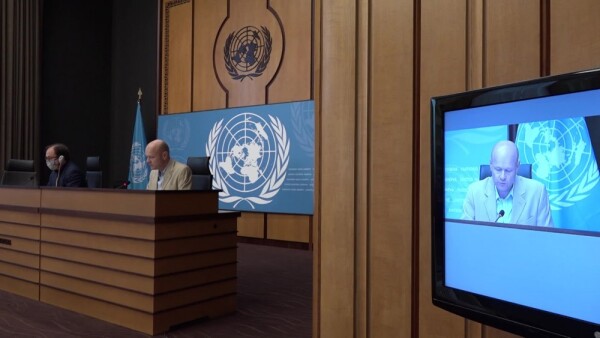
- Wide shot, podium with speakers in a near-empty Room XIV in line with COVID-19 distancing measures, Palais des Nations.
- SOUNDBITE (English) — Jens Laerke, Spokesperson for the UN Office for the Coordination of Humanitarian Affairs (OCHA): “We are alarmed by the continued escalation of violence in the occupied Palestinian Territory and Israel. The casualty count continues to climb on both sides of the conflict and civilians are suffering. In the Gaza Strip, home to an estimated 2 million Palestinians, hostilities are also having an impact on access to water, sanitation, healthcare and the COVID-19 response.”
- Medium shot, attendee with headphones, Room XIV, Palais des Nations.
- SOUNDBITE (English) — Jens Laerke, spokesperson for the UN Office for the Coordination of Humanitarian Affairs (OCHA): “We are in contact with all the relevant actors on the ground so that we can obtain two things: again, access in and out of the Gaza Strip – that’s through the Erez crossing point in the North which has been closed as of 10th of May – and for the goods that we need to get in, in particular fuel. So, these are negotiations that are ongoing.”
- Medium wide shot, attended typing on phone to rear, Room XIV, Palais des Nations.
- SOUNDBITE (English) — Jens Laerke, spokesperson for the UN Office for the Coordination of Humanitarian Affairs (OCHA): “Extensive damage is reported to civilian properties in densely populated areas all over Gaza, with over 200 housing units destroyed or severely damaged. Humanitarian partners working in shelter are supporting displaced families with non-food items and cash support. Education partners inform us that 31 education facilities, including schools, vocational training centres and higher education facilities have been impacted since the start of the escalation.”
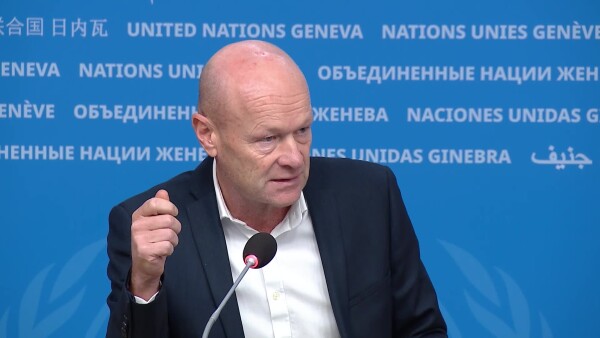
- Medium close-up shot, OCHA spokesperson Jens Laerke talking, Room XIV, Palais des Nations.
- SOUNDBITE (English) — Jens Laerke, spokesperson for the UN Office for the Coordination of Humanitarian Affairs (OCHA): “UNRWA says that it has experienced in quickly turning its schools into shelters, but the challenge is the pandemic and the risk of people crowding and spreading the virus. Another major risk is the UNRWA has not yet been able to put in place necessary preparation in these schools-turned-shelters because of the restriction on staff movement in the past two days.”
- Medium wide shot, attendee sitting in front of laptop, Room XIV, Palais des Nations
- SOUNDBITE (English) — Jens Laerke, spokesperson for the UN Office for the Coordination of Humanitarian Affairs (OCHA): “We continue to call for an immediate de-escalation of violence across the Occupied Palestinian Territory and Israel, reminding the parties to the conflict of their obligation to protect civilians and allow access for humanitarian groups to safely provide assistance.”
- Medium shot, TV broadcasting in foreground and podium with speakers to rear, Room XIV, Palais des Nations.
- Medium shot, attendee using listening device, Room XIV, Palais des Nations.
- Wide shot, UNTV camera in foreground and podium with speakers to rear, Room XIV, Palais des Nations.
Similar Stories
1
1
1
Edited News | OCHA , UNICEF , WFP
Aid agencies warned on Friday of the fast-developing humanitarian emergency inside Taiz City in Yemen, which has been encircled by de facto Houthi forces fighting government troops along the country’s west coast.

2
17
1
2
Edited News , Press Conferences , Images | OCHA , WMO
Two UN agencies teamed up on Wednesday to issue an appeal for immediate assistance to help communities already being impacted by the strongest El Niño on record.
3
16
2
2
Edited News , B-roll , Conferences , Images | UNITED NATIONS , UNOG
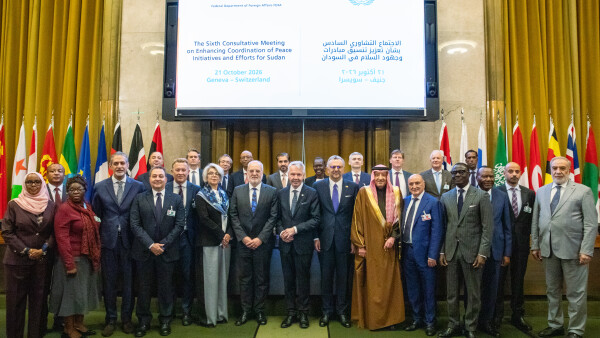
Sixth Consultative Meeting on Enhancing Coordination of Peace Initiatives and Efforts for Sudan

1
1
1
Edited News | UNICEF , WHO , UNHCR
Yemen war continues to force families from homes amid hunger and disease
More than 250,000 people have now fled renewed fighting in Yemen, the UN said on Tuesday, citing particular concern for those sheltering in the southwestern city of Taiz and the wider governorate, where access is “essentially blocked”.

1
1
1
Edited News | UNICEF
A little over one year since a ceasefire agreement was announced between Hamas fighters and Israel, more than 340 children have been reported killed and hundreds more injured, the UN Children’s Fund, UNICEF, said on Friday.

1
1
1
Edited News | UNICEF , IFRC
Six weeks after Nepal’s deadly flooding disaster, communities are still struggling to rebuild their lives, but they will need sustained help as global warming increases the risk of another Himalayan catastrophe, the UN Children’s Fund (UNICEF) said on Friday.

1
1
1
Edited News | WHO
In suspected Russia plague death, testing and monitoring underway – WHO
The death of a lab worker in Russia’s Siberia region has sparked concerns about plague being the cause, the UN World Health Organization (WHO) said on Tuesday, adding that it was following the situation closely.

1
1
Edited News | OHCHR , UNOG
UN Human Rights Chief Volker Türk on Friday provided and oral update to the 63rd session of the Human rights Council on Ukraine.

1
1
1
Edited News | OHCHR , UNOG
UN Human Rights Chief Volker Türk on Friday provided and oral update to the 63rd session of the Human rights Council on the human rights situation in Haiti.

1
1
1
Edited News | WHO
Repeated delays in bringing lifesaving medicines, prosthetics and more from Israel into Gaza risk having devastating consequences on Palestinians who urgently need them in the wartorn enclave, the UN World Health Organization (WHO) said on Friday. “A truck full of non-priority supplies or the right supplies arriving too late, doesn't save lives. That's the question that actually matters," said Dr Reinhilde Van De Weerdt, WHO Representative in the OPT.

1
1
1
Edited News | WHO
DRC: Early access to care and oxygen decisive for Ebola patients’ survival – WHO
In the Democratic Republic of the Congo (DRC), health workers fighting the country’s largest-ever Ebola outbreak are struggling to overcome critical challenges to patient care, the UN World Health Organization (WHO) warned on Tuesday.

1
1
1
Edited News | OCHA , UN
Civilians in Iran are continuing to feel the consequences of months of conflict and military escalation, the UN’s top official in the country has said, as loss of life, damage to civilian infrastructure and mounting economic pressures leave many facing continued uncertainty.