

The United Nations Office at Geneva
Multimedia Newsroom
Edited News | UNHCR
UNOG Bi-weekly press briefing: Search And Rescue Operations In Italy - UNHCR
“Italy: More than 450 migrants rescued in the Mediterranean disembark in Sicily signaling a sharp rise in sea arrivals in 2021 so far - UNHCR”
Following the latest rescue operations of migrants to Italy by Charity Ships in the Central Mediterranean, the UN Refugee Agency (UNHCR) warned today of mounting refugee and migrant deaths in the Central Mediterranean with a 170 per cent increase of sea arrivals in Italy in 2021 compared to the same period in 2020.
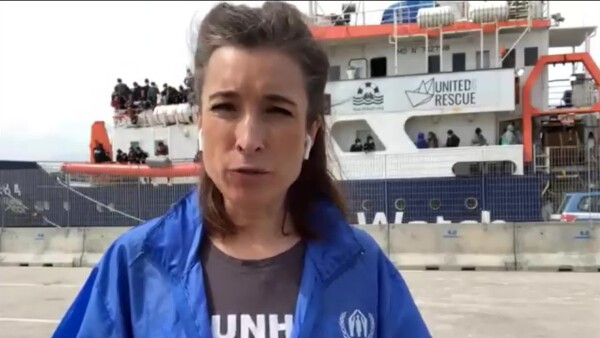
Speaking from the port of Trapani in Sicily, UNHCR’s spokesperson for Italy, Carlotta Sami, told journalists at a briefing at the United Nations in Geneva that “over 450 persons, among them 190 minors, are disembarking following rescue and six different operations by the NGO vessel ‘Sea Watch’.
She added that “since the very early hour of Saturday 1st of May, some 1,500 persons have disembarked in Italy following rescue by the Italian Coast Guard and Custom police or by international NGOs in the Central Mediterranean.”
The majority of arrivals departed from Libya onboard in flimsy, unseaworthy vessels.
UNHCR has witnessed a great number of children among the migrants - many of them are unaccompanied.
The majority of migrants originate from Mali, and the Sahel/West Africa, Eritrea and North Africa. Many are fleeing from war and conflicts, like in the Sahel, where indiscriminate attacks constantly lead to death and forced displacement, or they are fleeing persecution and being trafficked.
However, according to UNHCR’s global statistics, movements to Europe represent only a small part of the global refugees’ situation. Eighty per cent of people who flee stay within their region of origin.
“5.5 millions of refugees and IDPs are in the Sahel Countries so what we see here, in Italy, is just the tip of the iceberg”, said Carlotta Sami. “The latest disembarkation in any case brings the number of sea arrivals to Italy in 2021 to 10,400. This is more than a 170 per cent increase compared to 2020.”
UNHCR gathered testimonies during the past few days, including from children, who speak of imprisonment and brutalities inflicted with no respect for human life, while survivors often show severe mental health problems as a result of the traumas they have faced.
UNHCR commends Italy for keeping its ports open during the pandemic but appeals to other European countries to step up its efforts to strengthen the protection of persons travelling along this route and to provide safe alternatives to these dangerous and desperate journeys.
“Solidarity from the other EU members is urgently needed”, said UNHCR’s Carlotta Sami. “UNHCR is deeply concerned about the death toll. So far in 2021, at least 500 persons are known to have lost life trying to make the sea crossing in the Central Med.”
She added that “in 2020, there were 150 in this period of the year, so we have an increase of 200 per cent. Of course, the tragic loss of lives underscores once again the need to re-establish a system coordinated by States for search and rescue operations in the Central Mediterranean.”
For UNHCR, this tragic loss of life underscores once again the need to reestablish a system for search and rescue operations in the Central Mediterranean coordinated by States. The deteriorating situation in Libya will continue to force people to resort to desperate measures to seek safety.
Legal pathways such as humanitarian corridors, evacuations, resettlement and family reunification must be expanded.
- Exterior wide shot, Palais des Nations flag alley, nations’ flags flying, a cloudy day.
- Wide shot, podium with speakers in a near-empty Room XIV in line with COVID-19 distancing measures, Palais des Nations.
- SOUNDBITE (English) — Carlotta Sami, UNHCR Senior Spokesperson in Italy: “Over 450 persons, among them 190 minors, are disembarking following rescue and six different operations by the NGO vessel Sea Watch. Since the very early hour of Saturday 1st of May, some 1,500 persons have disembarked in Italy following rescue by the Italian Coast Guard and Custom police or by international NGOs in the Central Mediterranean.”
- Medium shot, attendee typing on laptop, Room XIV, Palais des Nations.
- SOUNDBITE (English) — Carlotta Sami, UNHCR Senior Spokesperson in Italy: “5.5 millions of refugees and IDPs are in the Sahel Countries so what we see here, in Italy, is just the tip of the iceberg. The latest disembarkation in any case brings the number of sea arrivals to Italy in 2021 to 10,400. This is more than a 170 per cent increase compared to 2020.”
- Medium shot, attendee typing on laptop to rear, side shot, Room XIV, Palais des Nations.
- SOUNDBITE (English) — Carlotta Sami, UNHCR Senior Spokesperson in Italy: “Solidarity from the other EU members is urgently needed. Also, UNHCR is deeply concerned about the death toll. So far in 2021, at least 500 persons are known to have lost life trying to make the sea crossing in the Central Med.”
- Medium shot, attendee using listening device Room XIV, Palais des Nations.
- SOUNDBITE (English) — Carlotta Sami, UNHCR Senior Spokesperson in Italy: “In 2020, there were 150 in this period of the year, so we have an increase of 200 per cent. Of course, the tragic loss of lives underscores once again the need to re-establish a system coordinated by States for search and rescue operations in the Central Mediterranean.”
- Wide shot, podium to rear and TV broadcasting in foreground, Room XIV, Palais des Nations
- Medium shot, attendees using listening devices, Room XIV, Palais des Nations.
- Medium shot, attendee sitting in front of laptop in foreground and TV broadcasting to rear, Room XIV, Palais des Nations.
Similar Stories
1
1
1
Edited News | OCHA , UNICEF , WFP
Aid agencies warned on Friday of the fast-developing humanitarian emergency inside Taiz City in Yemen, which has been encircled by de facto Houthi forces fighting government troops along the country’s west coast.

2
17
1
2
Edited News , Press Conferences , Images | OCHA , WMO
Two UN agencies teamed up on Wednesday to issue an appeal for immediate assistance to help communities already being impacted by the strongest El Niño on record.
3
16
2
2
Edited News , B-roll , Conferences , Images | UNITED NATIONS , UNOG
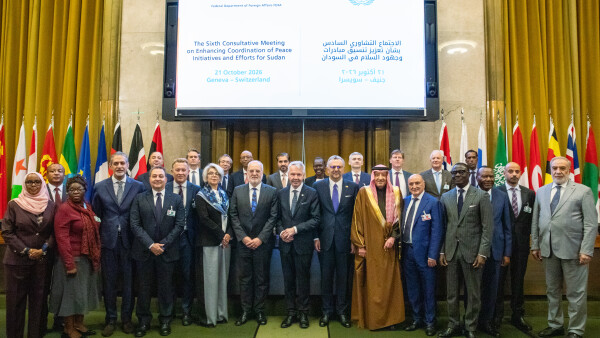
Sixth Consultative Meeting on Enhancing Coordination of Peace Initiatives and Efforts for Sudan
1
1
1
Edited News | UNICEF , WHO , UNHCR
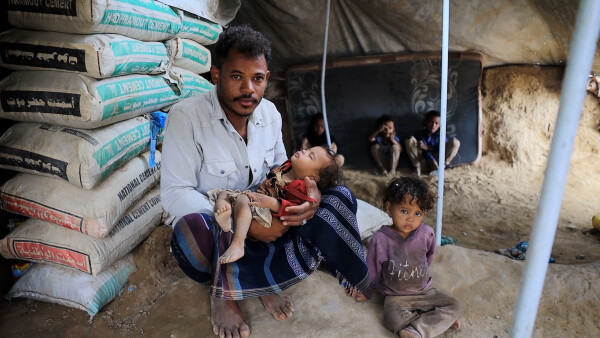
Yemen war continues to force families from homes amid hunger and disease
More than 250,000 people have now fled renewed fighting in Yemen, the UN said on Tuesday, citing particular concern for those sheltering in the southwestern city of Taiz and the wider governorate, where access is “essentially blocked”.

1
1
1
Edited News | UNICEF
A little over one year since a ceasefire agreement was announced between Hamas fighters and Israel, more than 340 children have been reported killed and hundreds more injured, the UN Children’s Fund, UNICEF, said on Friday.

1
1
1
Edited News | UNICEF , IFRC
Six weeks after Nepal’s deadly flooding disaster, communities are still struggling to rebuild their lives, but they will need sustained help as global warming increases the risk of another Himalayan catastrophe, the UN Children’s Fund (UNICEF) said on Friday.

1
1
1
Edited News | WHO
In suspected Russia plague death, testing and monitoring underway – WHO
The death of a lab worker in Russia’s Siberia region has sparked concerns about plague being the cause, the UN World Health Organization (WHO) said on Tuesday, adding that it was following the situation closely.

1
1
Edited News | OHCHR , UNOG
UN Human Rights Chief Volker Türk on Friday provided and oral update to the 63rd session of the Human rights Council on Ukraine.

1
1
1
Edited News | OHCHR , UNOG
UN Human Rights Chief Volker Türk on Friday provided and oral update to the 63rd session of the Human rights Council on the human rights situation in Haiti.

1
1
1
Edited News | WHO
Repeated delays in bringing lifesaving medicines, prosthetics and more from Israel into Gaza risk having devastating consequences on Palestinians who urgently need them in the wartorn enclave, the UN World Health Organization (WHO) said on Friday. “A truck full of non-priority supplies or the right supplies arriving too late, doesn't save lives. That's the question that actually matters," said Dr Reinhilde Van De Weerdt, WHO Representative in the OPT.

1
1
1
Edited News | WHO
DRC: Early access to care and oxygen decisive for Ebola patients’ survival – WHO
In the Democratic Republic of the Congo (DRC), health workers fighting the country’s largest-ever Ebola outbreak are struggling to overcome critical challenges to patient care, the UN World Health Organization (WHO) warned on Tuesday.

1
1
1
Edited News | OCHA , UN
Civilians in Iran are continuing to feel the consequences of months of conflict and military escalation, the UN’s top official in the country has said, as loss of life, damage to civilian infrastructure and mounting economic pressures leave many facing continued uncertainty.