

The United Nations Office at Geneva
Multimedia Newsroom
UN humanitarians reported on Friday that aid teams have reached two camps for Eritrean refugees in Ethiopia's war-torn Tigray region for the first time since fighting began in November, only to find them destroyed and the former occupants “scattered”.
UN refugee agency (UNCHR) spokesperson Boris Cheshirkov told reporters in Geneva that all the humanitarian facilities at the Shimelba and Hitsats refugee camps in the northern Ethiopian region were “looted and vandalised”.
The mission, conducted jointly by UNHCR and the UN humanitarian coordination wing OCHA, found that most shelters in the Hitsats camp, as well as the UN offices and the staff guest house had been "burned to the ground”.
This confirmed what satellite imagery and accounts from refugees had already indicated, Mr. Cheshirkov added, although he did not have information about who was responsible.
The joint mission had also managed to visit Shiraro town, where refugees were believed to be scattered and "in urgent need of safety and support”.
A subsequent mission will aim to identify the numbers living in the area and determine whether UNHCR and the Ethiopian Agency for Refugees and Returnee Affairs (ARRA) could deliver aid there and work out plans for voluntary relocation.
“UNHCR is deeply concerned for the well-being of the Eritrean refugees who had been residing there, all of whom have fled the camps,” Mr. Cheshirkov added.
Around 20,000 refugees had been living in the two camps prior to the crisis erupting last November, when Ethiopian Prime Minister Abiy Ahmed launched a military campaign in Tigray after accusing the region's governing party, the Tigray People's Liberation Front (TPLF), of attacks on army camps.
The latest developments come amid ongoing calls from senior UN officials to end the fighting, as well as an announcement on Thursday by the Office of the High Commissioner for Human Rights that it is launching a probe into alleged serious abuses and rights violations by all parties to the conflict.
President Abiy took to Twitter on Friday to say that the Eritrean Government had agreed to pull its troops out of Tigray. Ethiopian forces will take over guarding the border areas “effective immediately”, he said.
Mr. Cheshirkov said that more than 7,000 former residents of the two camps have either “made their own way or were assisted by Ethiopian authorities to reach the other two Eritrean refugee camps, Mai Aini and Adi Harush”.
He added that UNHCR had also been in contact with more than 2,000 refugees from Hitsats and Shimelba in Shire, Mekelle, Afar, and Addis Ababa.
“All of the displaced people in Shiraro and Shimelba are in dire need of urgent life-saving assistance, including food, shelter, health care, water and sanitation”. he said.
In a statement, the UN refugee agency reiterated its urgent call for "the free and safe movement of affected people in search of safety and assistance” to be enabled by all parties, including movement "across international and within national borders, regardless of their ethnic identification".
Mr. Cheshirkov added that the agency is planning further missions and “have already started to deploy more staff in the Tigray region”.
To do so, the UNHCR spokesperson noted that “the funding needs are mounting so we do appeal for more support on this situation, both inside Ethiopia but also for those who are now in Sudan”.
1. Exterior wide shot, Wide of Palais des Nations.
2. Wide shot of podium at the Assembly Hall, Palais des Nations from behind a camera.
3. SOUNDBITE (English) Boris Cheshirkov, UNHCR spokesperson: “UNHCR, the UN Refugee Agency, has gained access to the Shimelba and Hitsats refugee camps in Ethiopia’s northern Tigray region for the first time since November 2020, amid ongoing security concerns. During a joint mission to the area with the United Nations Office for the Coordination of Humanitarian Affairs, OCHA, we found both camps completely destroyed, and all the humanitarian facilities looted and vandalized.”
4. Close of taped-off chairs in briefing room
5. SOUNDBITE (English) Boris Cheshirkov, UNHCR spokesperson: “Most of the shelters in an area known as Zone A, as well as UNHCR’s offices and staff guesthouse, were found burned to the ground. The mission confirmed what satellite imagery and accounts from refugees had indicated at the beginning of this year. UNHCR is deeply concerned for the well-being of the Eritrean refugees who had been residing there, all of whom have fled the camps.”
6.Medium-wide shot, journalist in Assembly Hall, Palais des Nations.
7. SOUNDBITE (English) Boris Cheshirkov, UNHCR spokesperson: “The joint mission was also able to visit Shiraro town; refugees are understood to be scattered in the area and in urgent need of safety and support. A subsequent mission will seek to identify the numbers living there and assess the possibility for UNHCR and Ethiopia’s Agency for Refugees and Returnee Affairs, ARRA, to deliver assistance and plan for voluntary relocation.”
8.Medium-wide shot, journalist watching briefing on screens in Assembly Hall, Palais des Nations.
9. SOUNDBITE (English) Boris Cheshirkov, UNHCR spokesperson: “Of some 20,000 refugees that lived in the two northern camps of Hitsats and Shimelba prior the crisis, more than 7,000 have either made their own way or were assisted by Ethiopian authorities to reach the other two Eritrean refugee camps, Mai Aini and Adi Harush. In addition, we have so far been in contact with more than 1,000 refugees from Hitsats and Shimelba in Shire, Mekelle, Afar, and Addis Ababa.”
10. Medium-wide shot of journalist looking at his phone in briefing at the Assembly Hall, Palais des Nations.
11. SOUNDBITE (English) Boris Cheshirkov, UNHCR spokesperson: “All of the displaced people in Shiraro and Shimelba are in dire need of urgent life-saving assistance, including food, shelter, health care, water and sanitation. UNHCR reiterates the joint UN call for all parties to urgently enable the free and safe movement of affected people in search of safety and assistance, including across international and within national borders, regardless of their ethnic identification.”
12. Close shot of journalist using laptop in briefing at the Assembly Hall, Palais des Nations.
13. SOUNDBITE (English) Boris Cheshirkov, UNHCR spokesperson: “Now we’ve had this joint mission with OCHA and we are planning further we have already started to deploy more staff in the Tigray region, we have been able to scale up our support and we have nearly already 80 staff there and we’re trying to build on the response, of course, we also need funds and the funding needs are mounting so we do appeal for more support on this situation, both inside Ethiopia but also for those who are now in Sudan.”
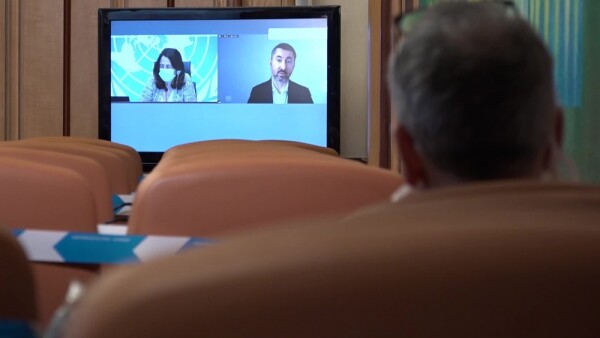
14. Mid-shot of conference with speakers on screens.
15. Mid of reporter typing.
16. Mid of reporter typing mobile phone.
Similar Stories

1
1
1
Edited News | UNICEF , WHO , UNHCR
Yemen war continues to force families from homes amid hunger and disease
More than 250,000 people have now fled renewed fighting in Yemen, the UN said on Tuesday, citing particular concern for those sheltering in the southwestern city of Taiz and the wider governorate, where access is “essentially blocked”.

1
1
1
Edited News | UNICEF
A little over one year since a ceasefire agreement was announced between Hamas fighters and Israel, more than 340 children have been reported killed and hundreds more injured, the UN Children’s Fund, UNICEF, said on Friday.

1
1
1
Edited News | UNICEF , IFRC
Six weeks after Nepal’s deadly flooding disaster, communities are still struggling to rebuild their lives, but they will need sustained help as global warming increases the risk of another Himalayan catastrophe, the UN Children’s Fund (UNICEF) said on Friday.

1
1
1
Edited News | WHO
In suspected Russia plague death, testing and monitoring underway – WHO
The death of a lab worker in Russia’s Siberia region has sparked concerns about plague being the cause, the UN World Health Organization (WHO) said on Tuesday, adding that it was following the situation closely.

1
1
Edited News | OHCHR , UNOG
UN Human Rights Chief Volker Türk on Friday provided and oral update to the 63rd session of the Human rights Council on Ukraine.

1
1
1
Edited News | OHCHR , UNOG
UN Human Rights Chief Volker Türk on Friday provided and oral update to the 63rd session of the Human rights Council on the human rights situation in Haiti.

1
1
1
Edited News | WHO
Repeated delays in bringing lifesaving medicines, prosthetics and more from Israel into Gaza risk having devastating consequences on Palestinians who urgently need them in the wartorn enclave, the UN World Health Organization (WHO) said on Friday. “A truck full of non-priority supplies or the right supplies arriving too late, doesn't save lives. That's the question that actually matters," said Dr Reinhilde Van De Weerdt, WHO Representative in the OPT.

1
1
1
Edited News | WHO
DRC: Early access to care and oxygen decisive for Ebola patients’ survival – WHO
In the Democratic Republic of the Congo (DRC), health workers fighting the country’s largest-ever Ebola outbreak are struggling to overcome critical challenges to patient care, the UN World Health Organization (WHO) warned on Tuesday.

1
1
1
Edited News | OCHA , UN
Civilians in Iran are continuing to feel the consequences of months of conflict and military escalation, the UN’s top official in the country has said, as loss of life, damage to civilian infrastructure and mounting economic pressures leave many facing continued uncertainty.
1
1
1
Edited News | WHO , UNICEF
Aid agencies in Yemen highlighted the growing hunger emergency sparked by renewed fighting between Houthi opposition forces and Government troops, after mobile health clinics reported that hundreds of children displaced by the violence are suffering from the most deadly form of malnutrition.
1
1
1
Edited News | UNHCR
Displacement on the rise in Yemen as fighting continues - UNHCR
As hostilities worsen in Yemen, more people have been fleeing their homes, further intensifying the humanitarian crisis within the region, the UN Refugee Agency (UNHCR) warned on Tuesday.
1
1
1
Edited News | IOM , OHCHR , UNFPA , UNOG , UNHCR , WHO
Yemen’s humanitarian crisis growing by the hour amid spike in displacement
Yemenis displaced by renewed fighting have described fleeing for their lives amid shelling and gunfire, aid agencies reported on Friday, while highlighting the dramatic increase in humanitarian needs in the country and in Djibouti, where thousands have sought shelter.