

The United Nations Office at Geneva
Multimedia Newsroom
Edited News | IOM , OHCHR , UNFPA , UNOG , UNHCR , WHO
Yemen escalation - IOM, OHCHR, UNFPA, UNOG, UNHCR, WHO
Yemenis displaced by renewed fighting have described fleeing for their lives amid shelling and gunfire, aid agencies reported on Friday, while highlighting the dramatic increase in humanitarian needs in the country and in Djibouti, where thousands have sought shelter.
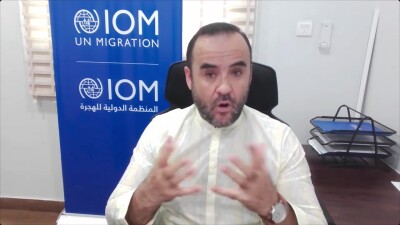
“Our resources are very, very, very limited and our stocks will be depleted very soon,” said Abdusattor Esoev, Chief of Mission in Yemen for the UN migration agency, IOM.
In just two weeks since clashes erupted between Saudi-backed Yemeni Government forces and Iran-backed Houthi militia, more than 112,000 people have been displaced across Aden, Hudaydah, Abyan and Taiz.
Years of conflict, economic collapse and environmental disaster have already displaced nearly 4.8 million Yemenis, according to the UN refugee agency, UNHCR.
The rapidly escalating hostilities along Yemen’s western coast have also forced more than 3,000 people to embark on dangerous boat journeys across the Bab el-Mandeb Strait to safety in Djibouti, where host communities risk being overwhelmed.
Saving lives
“Yemen civilians are already bearing the consequences of renewed full-scale hostilities and we urge all parties and those with influence over them to act immediately to de-escalate, protect civilians, and facilitate humanitarian access. Preventing further loss of life must take precedence,” said Shabia Mantoo, spokesperson for the UN human rights office, OHCHR.
Also speaking at a media briefing in Geneva, Alessandra Vellucci, Director of the UN Information Service in Geneva, warned that the delivery of UN humanitarian assistance in Houthi-controlled areas had become “untenable”, with UN personnel detained and the global body’s premises occupied by representatives of the Yemeni opposition forces.
Locked up
“As of today, 73 UN personnel remain arbitrarily detained by the Houthi de facto authorities, some of them since 2021. In addition, five former UN personnel and dozens of personnel from non-governmental organizations, civil society organizations, and diplomatic missions remain detained,” Ms. Vellucci continued.
Echoing concerns about the humanitarian crisis, IOM chief of mission in Yemen Mr. Esoev urged the international community “to come to Yemen’s aid” with urgently needed support including food, shelter, health, water and sanitation for all those uprooted by the violence.
Give me shelter
He recounted the testimony of one woman with four small children who had been displaced in Taiz, where she gave birth to a baby in the open, “without shelter, medical care and any other assistance”.
For protection, her family found a torn piece of plastic tarpaulin “barely covering their heads. These are the real cases that we are seeing in the field,” the IOM official said.
Before the latest escalation in Yemen, nearly half of the country’s 41 million people needed aid, with one in two people in Government-controlled areas in the grip of high levels of hunger, according to UN-backed food insecurity experts, the Integrated Food Security Phase Classification (IPC) platform.
Also briefing from Yemen, the UN sexual and reproductive health agency, UNFPA, highlighted growing concerns for the many women-led households where mothers are the sole breadwinners, such as Aziza, in Ras Al-Arah.
“She came from Mocha with her four daughters and she's one of those who had to run away under the shelling, got burned because of the shelling, and did not stop running until she could reach a safe place,” said Francesco Galtieri, Country Representative, UNFPA.
“She told to us that she's exhausted, and she really hopes that beyond having kept their lives, there will be something else they can build.”
The emergency has increased health needs across Yemen where the UN World Health Organization (WHO) stressed that the country is already facing “multiple concurrent health risks”, including cholera, measles, dengue, diphtheria, malnutrition and trauma injuries.
In an assessment carried out before the escalation in fighting, “already out of more than 5,000 health service delivery units, only 60 were fully functioning,” WHO spokesperson Tarik Jasarevic told journalists in Geneva.
Dangerous crossing
In addition to those displaced in Yemen, thousands more have sought safety in Djibouti, by crossing the Bab el-Mandeb Strait. Most arrivals have been reported in Obock, Khor Angar, Moulhoule and Godoria.
“At the reception centres, the new arrivals recount fleeing sudden bombardment, shelling, gunfire and having to fear for their lives; mothers quickly gathering their children and whatever they can,” said Sandrine Desamours, Representative in Djibouti, for the UN refugee agency, UNHCR. “We saw them arrive with very little, some arriving without their family members. And others are also arriving for the second time, having already fled Yemen during the 2015 crisis.”
The UN refugee agency official noted that many of the men who have arrived had left family members in Yemen but were “hoping to be able to go back to Yemen to retrieve them. Unfortunately…there is a shortage of fuel in Yemen and they are not able to return.”
In some cases, the Djibouti Coast Guard has given fuel to some boats left stranded in the open seas and tugged others to safety. “We are discussing with the Government various ways that we can provide assistance so that people can reach the shores and are able to be provided with protection, peace, safety, and assistance,” Ms. Desamours continued.
IOM Chief of Mission in Djibouti, Alexandre Coissac, explained that the 3,000 refugee arrivals from Yemen represented a significant challenge to “a generous country that is already hosting a large number of refugees”.
Story: Yemen escalation – IOM, OHCHR, UNFPA, UNOG, UNHCR, WHO
SOURCE: UNTV CH
RESTRICTIONS: NONE
LANGUAGE: ENGLISH / NATS
ASPECT RATIO: 16:9 & 9:16
Duration: 3’57”
DATELINE: 18 September 2026 - GENEVA, SWITZERLAND & DJIBOUTI, September 2026
Speakers:
- Alessandra Vellucci, Director, UN Information Service, Geneva
- Shabia Mantoo, spokesperson, OHCHR
- Abdusattor Esoev, Chief of Mission, IOM Yemen
- Francesco Galtieri, Country Representative, UNFPA
- Tarik Jasarevic, spokesperson, WHO
- Sandrine Desamours, Representative in Djibouti, UNHCR
SHOTLIST
- Exterior medium shot, UN flag alley, UN Geneva.
- Wide, Press Room, podium speakers, journalists.
- SOUNDBITE (English) - Shabia Mantoo, spokesperson, OHCHR: “Yemen civilians are already bearing the consequences of renewed full-scale hostilities and we urge all parties and those with influence over them to act immediately to de-escalate, protect civilians and facilitate humanitarian access. Preventing further loss of life must take precedence.”
- Wide, Press Room, remote speaker.
- SOUNDBITE (English) - Abdusattor Esoev, Chief of Mission, IOM Yemen: “Our resources are very, very, very limited and our stocks will be depleted very soon. So therefore, we call on international communities to come to Yemen’s aid and provide IOM and with other partners with the urgent support to meet the need of these people, which includes food, shelter, health, water, sanitation of this displaced population.”
- Wide, Press Room, video journalist, reporters, podium speakers.
- SOUNDBITE (English) – Abdusattor Esoev, Chief of Mission, IOM Yemen: “My colleagues the other day have told me a very heartbreaking story that I wanted to share with you here...the story of a woman with four small children who has been displaced in Taiz and shortly after being displaced and arriving to the district where she was displaced, she gave birth to a baby in the open area without shelter, medical care and any other assistance. This family managed only to find a torn piece of plastic tarpaulin basically in order to just barely covering their heads.”
- Medium, video journalist.
- SOUNDBITE (English) – Francesco Galtieri, Country Representative, UNFPA: “She came from Mocha with her four daughters and she’s one of those who had to run away under the shelling, got burned because of the shelling and did not stop running until she could reach a safe place. And she told to us that she’s exhausted and she really hopes that beyond having kept their lives, there will be something else they can build.”
- Wide, Press Room
- SOUNDBITE (English) – Tarik Jasarevic, spokesperson, WHO: “We have done assessment recently before the escalation and already there out of more than 5,000 health service delivery units that have been assessed, only 60 were fully functioning.”
- Medium, podium speakers.
- SOUNDBITE (English) - Sandrine Desamours, Representative in Djibouti, UNHCR: “At the reception centres, the new arrivals recount fleeing sudden bombardment, shelling, gunfire and having to fear for their lives; mothers quickly gathering their children and whatever they can. We saw them arrive with very little, some arriving without their family members. And others are also arriving for the second time, having already fled Yemen during the 2015 crisis.”
- Wide, podium speakers.
- SOUNDBITE (English) - Alessandra Vellucci, Director, UN Information Service, Geneva: “As of today, 73 UN personnel remain arbitrarily detained by the Houthi de facto authorities, some of them since 2021. In addition, five former UN personnel and dozens of personnel from non-governmental organizations, civil society organizations and diplomatic missions remain detained. We reiterate our call on the Houthi de facto authorities for immediate and unconditional release of all arbitrarily detained personnel. We will continue to work tirelessly and through all available channels to secure their safe and immediate release.”
- Wide pan, showing women and children arrivals from Yemen in Djibouti, please credit UNHCR.
- Wide pan, showing women and children arrivals from Yemen in Djibouti, please credit UNHCR.
- Wide pan, showing women and children arrivals from Yemen in Djibouti, please credit UNHCR.
Similar Stories

2
17
1
2
Edited News , Press Conferences | OCHA , WMO
Two UN agencies teamed up on Wednesday to issue an appeal for immediate assistance to help communities already being impacted by the strongest El Niño on record.

3
16
2
2
B-roll , Conferences , Edited News | UNITED NATIONS , UNOG
Sixth Consultative Meeting on Enhancing Coordination of Peace Initiatives and Efforts for Sudan

1
1
1
Edited News | UNICEF , WHO , UNHCR
Yemen war continues to force families from homes amid hunger and disease
More than 250,000 people have now fled renewed fighting in Yemen, the UN said on Tuesday, citing particular concern for those sheltering in the southwestern city of Taiz and the wider governorate, where access is “essentially blocked”.

1
1
1
Edited News | UNICEF
A little over one year since a ceasefire agreement was announced between Hamas fighters and Israel, more than 340 children have been reported killed and hundreds more injured, the UN Children’s Fund, UNICEF, said on Friday.

1
1
1
Edited News | UNICEF , IFRC
Six weeks after Nepal’s deadly flooding disaster, communities are still struggling to rebuild their lives, but they will need sustained help as global warming increases the risk of another Himalayan catastrophe, the UN Children’s Fund (UNICEF) said on Friday.

1
1
1
Edited News | WHO
In suspected Russia plague death, testing and monitoring underway – WHO
The death of a lab worker in Russia’s Siberia region has sparked concerns about plague being the cause, the UN World Health Organization (WHO) said on Tuesday, adding that it was following the situation closely.

1
1
Edited News | OHCHR , UNOG
UN Human Rights Chief Volker Türk on Friday provided and oral update to the 63rd session of the Human rights Council on Ukraine.

1
1
1
Edited News | OHCHR , UNOG
UN Human Rights Chief Volker Türk on Friday provided and oral update to the 63rd session of the Human rights Council on the human rights situation in Haiti.

1
1
1
Edited News | WHO
Repeated delays in bringing lifesaving medicines, prosthetics and more from Israel into Gaza risk having devastating consequences on Palestinians who urgently need them in the wartorn enclave, the UN World Health Organization (WHO) said on Friday. “A truck full of non-priority supplies or the right supplies arriving too late, doesn't save lives. That's the question that actually matters," said Dr Reinhilde Van De Weerdt, WHO Representative in the OPT.

1
1
1
Edited News | WHO
DRC: Early access to care and oxygen decisive for Ebola patients’ survival – WHO
In the Democratic Republic of the Congo (DRC), health workers fighting the country’s largest-ever Ebola outbreak are struggling to overcome critical challenges to patient care, the UN World Health Organization (WHO) warned on Tuesday.

1
1
1
Edited News | OCHA , UN
Civilians in Iran are continuing to feel the consequences of months of conflict and military escalation, the UN’s top official in the country has said, as loss of life, damage to civilian infrastructure and mounting economic pressures leave many facing continued uncertainty.
1
1
1
Edited News | WHO , UNICEF
Aid agencies in Yemen highlighted the growing hunger emergency sparked by renewed fighting between Houthi opposition forces and Government troops, after mobile health clinics reported that hundreds of children displaced by the violence are suffering from the most deadly form of malnutrition.