

The United Nations Office at Geneva
Multimedia Newsroom
World AIDS Day update
25 November 2025 – The global response to HIV has suffered its most significant setback in decades, warns a new UNAIDS report released today ahead of World AIDS Day 2025. ‘Overcoming disruption, transforming the AIDS response’ details the far-reaching consequences of international funding reductions and lack of global solidarity which sent shockwaves through low- and middle-income countries heavily affected by HIV.
Abrupt reductions in international HIV assistance in 2025 have deepened existing funding shortfalls. The OECD estimates that external health assistance is projected to drop by 30–40% in 2025 compared with 2023, causing immediate and even more severe disruption to health services in low- and middle-income countries.
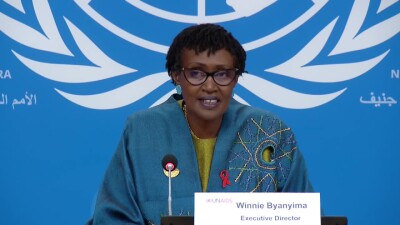
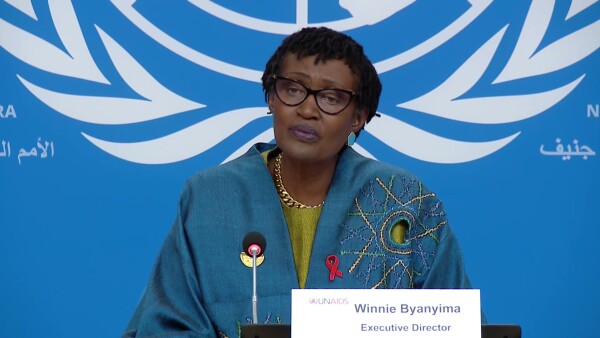
“The funding crisis has exposed the fragility of the progress we fought so hard to achieve,” said Winnie Byanyima, Executive Director of UNAIDS. “Behind every data point in this report are people—babies and children missed for HIV screening or early HIV diagnosis, young women cut off from prevention support, and communities suddenly left without services and care. We cannot abandon them. We must overcome this disruption and transform the AIDS response.”
A failure to reach the 2030 global HIV targets of the next Global AIDS Strategy could result in an additional 3.3 million new HIV infections between 2025 and 2030.
Today, 40.8 million people are living with HIV worldwide, 1.3 million new infections occurred in 2024, and 9.2 million people are still not accessing treatment.
This World AIDS Day, UNAIDS is calling on global leaders to:
- Reaffirm global solidarity, multilateralism and the collective commitment to fight and end AIDS together.
- Maintain funding for the response
- Invest in innovation, including affordable long-acting prevention and treatment options.
- Uphold human rights. Empower communities.
“This is our moment to choose,” Ms. Byanyima urged. “We can allow these shocks to undo decades of hard-won gains, or we can unite behind the shared vision of ending AIDS. Millions of lives depend on the choices we make today.”
NOTE TO EDITORS/PRODUCERS:
No embargo. Please use the images in the context described. Unless indicated, the HIV status, sexual orientation, or any other characteristic of people in the images are unknown and should not be described inappropriately. If in doubt, contact UNAIDS: Sectorc@unaids.org
Geneva, Switzerland (shot 25 November 2025)
Courtesy: UNTV Geneva
- Exterior UNOG
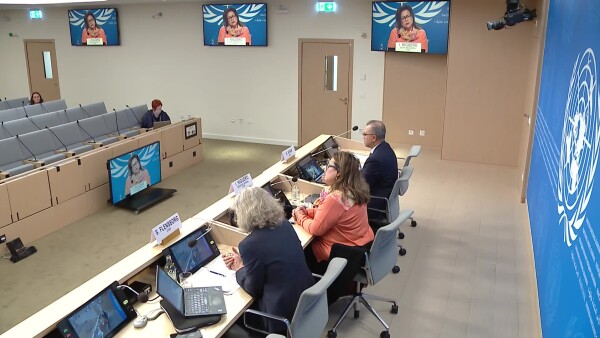
- Interior press room, two principals and moderator on panel
- Room shot, two photographers while Winnie is speaking
- Reuters camerawoman wide shot from press conference room
- CU of camera woman
- Panel shot from above
- Winnie Byanyima holding up cover of UNAIDS World AIDS Day report
SOUNDBITES (all in English)
SOUNDBITE (English) – Winnie Byanyima, UNAIDS Executive Director: “The global response to HIV has suffered its most significant setback in decades that is what we are clearly saying in our World AIDS Day report.”
SOUNDBITE (English) – Winnie Byanyima, UNAIDS Executive Director: “Across 13 countries, the number of people newly initiated on HIV treatment has declined compared to last year. Stockouts of HIV test kits and medicines have been reported in countries including Ethiopia and the Democratic Republic of Congo. Prevention services—already under strain before the crisis—were the hardest hit. 450,000 women in sub-Saharan Africa lost access to what we call mother mentors these are women who connect them to services ; 24% of providers reported interruptions in early infant diagnosis. Nigeria saw a 55% drop in condom distribution. Community-led organizations—the backbone of the HIV response—reported widespread closures, with more than 60% of women-led organizations suspending essential programmes. In other words: the funding crisis exposed the fragility of the progress we fought so hard to achieve.”
SOUNDBITE (English) – Winnie Byanyima, UNAIDS Executive Director: “Today, this is our call to action, 40.8 million- almost 41 million- people are living with HIV worldwide, 1.3 million new infections occurred last year, and 9.2 million people are still not receiving treatment, AIDS is not over.”
SOUNDBITE (English) – Dr Byrone Chingombe, Technical Director at the Centre for Sexual Health and HIV/AIDS Research CeSHHAR , Zimbabwe: “Let me start by saying that 2025 has been a very hard year personally, and professionally, just to give you some context – in Zimbabwe the bulk of the funding for HIV programs comes from external donors.”
SOUNDBITE (English) – Dr Byrone Chingombe, Technical Director at the Centre for Sexual Health and HIV/AIDS Research CeSHHAR “That caused panic, confusion, misinformation across all strata of society in our programming. when the cuts happened. The trouble is within facilities, the tablets wre on the shelves (HIV treatment) but the service providers meant to distribute them had been laid off, that caused treatment disruption and adherence for treatment and prevention and importantly that disrupted trust among our communities.”
END
World AIDS Day 2025: Overcoming disruption, transforming the AIDS response
Speakers:
- Winnie Byanyima, Executive Director
- Byrone Chingombe, Technical Director, Centre for Sexual Health and HIV/AIDS Research (from Harare, Zimbabwe)
- Angeli Achrekar, UNAIDS Deputy Executive Director
Similar Stories

1
1
1
Edited News | OCHA , UNICEF , WFP
Aid agencies warned on Friday of the fast-developing humanitarian emergency inside Taiz City in Yemen, which has been encircled by de facto Houthi forces fighting government troops along the country’s west coast.
1
1
1
Press Conferences | UN WOMEN , WFP , WHO
UN WOMEN: Sudan Women and girls one year after the fall of El Fasher; increasing drone attacks across the country; WFP: DRC - Ebola spreads to eighth DRC province as WFP delivers food, builds treatment centres and keeps supplies moving; WHO - Update on Ebola (Bundibugyo Virus Disease)
1
12
1
1
Press Conferences , Images | UNOG
Closing Press Conference following the Sixth Consultative Meeting on Enhancing Coordination of Peace Initiatives and Efforts in Sudan

2
17
1
2
Edited News , Press Conferences , Images | OCHA , WMO
Two UN agencies teamed up on Wednesday to issue an appeal for immediate assistance to help communities already being impacted by the strongest El Niño on record.

3
16
2
2
Edited News , B-roll , Conferences , Images | UNITED NATIONS , UNOG
Sixth Consultative Meeting on Enhancing Coordination of Peace Initiatives and Efforts for Sudan
1
1
1
Press Conferences | CITES
Wildlife trade and conservation policy discussions at the 81st meeting of the CITES Standing Committee (SC81)

1
1
1
Edited News | UNICEF , WHO , UNHCR
Yemen war continues to force families from homes amid hunger and disease
More than 250,000 people have now fled renewed fighting in Yemen, the UN said on Tuesday, citing particular concern for those sheltering in the southwestern city of Taiz and the wider governorate, where access is “essentially blocked”.
1
1
1
Press Conferences | UNHCR , UNCTAD , WMO , OCHA , UNICEF , WHO
UNHCR Hungary’s 1956 Refugee Crisis: 70 Years On, UNCTAD World Investment Forum 2026, Doha, WMO Greenhouse Gas Bulletin and Climate Update for COP31, OCHA Afghanistan: Malnutrition, Girls’ Education and Recovery, UNICEF Yemen: Child Malnutrition and Unsafe Water in Taiz, WHO Inequalities in Noncommunicable Diseases and Risk Factors

1
1
1
Press Conferences | UNHCR
End of UNHCR's 77th Annual Executive Committee (ExCom) meeting week

1
1
1
Edited News | UNICEF
A little over one year since a ceasefire agreement was announced between Hamas fighters and Israel, more than 340 children have been reported killed and hundreds more injured, the UN Children’s Fund, UNICEF, said on Friday.

1
1
1
Press Conferences | UNICEF , IOM , UNHCR
UN Special Assistant to the Personal Envoy Office (SUDAN): Peace Initiatives and Efforts in Sudan; UNICEF: Dire situation of children in Gaza; IOM: Damaged Homes and Energy Attacks Risk Displacing Ukrainians for this winter; UNHCR: update on EXCOM week

1
1
1
Press Conferences | IOM , UNDRR
UN stresses importance of household preparedness for disaster risk reduction.