

The United Nations Office at Geneva
Multimedia Newsroom
Press Conferences | FAO , HRC , UNCTAD , UNICEF , WHO
UN Geneva Press Briefing - 20 September 2024
UN GENEVA PRESS BRIEFING
20 September 2024
Alessandra Vellucci, Director of the United Nations Information Service (UNIS) in Geneva, chaired the hybrid briefing, which was attended by spokespersons and representatives from the United Nations Children's Fund, United Nations Trade and Development, the Food and Agriculture Organization, and the United Nations Human Rights Council.
Human Rights Council Update
Pascal Sim for the United Nations Human Rights Council (HRC) said the United Nations Human Rights Council would this afternoon begin its consideration of item four of its agenda, which was human rights situations that required the Council's attention, discussing the report of the Independent International Fact-Finding Mission on the Bolivarian Republic of Venezuela, which was presented at a press conference last Tuesday. Members of the Fact-Finding Mission would address the Council in Spanish. This would be followed by a dialogue with the Independent International Commission of Inquiry on the Syrian Arab Republic, which would also present its latest report.
On Monday, 23 September, the Council would hear for the first time from the new Group of Independent Experts on the Human Rights Situation in Belarus, which would present an oral update. Their first report would be presented at the fifty-eighth session in February and March 2025. Also on Monday, the Council would hear a presentation of the report of the Special Rapporteur on Burundi, an oral update from the Independent International Commission of Inquiry on Ukraine, and the presentation of a report by the High Commissioner for Human Rights Volker Türk on the human rights situation in Myanmar.
On Tuesday, Mariana Katzarova, Special Rapporteur on the situation of human rights in the Russian Federation, would present her report at the Council. She would hold a hybrid press conference to discuss the report on Monday at 1 p.m.
The President of the Council had appointed Reed Bródy of Hungary as a new member of the Group of Human Rights Experts on Nicaragua. Mr. Bródy had worked for 40 years on the forefront of the human rights movement, playing a facilitating role in democratic transitions, building and helping others build strong non-governmental organizations, creating United Nations mechanisms to fight abuse, and uncovering atrocities and bringing their perpetrators to justice. Mr. Sim congratulated Mr. Bródy on his appointment.
In response to questions, Mr. Sim said the Commission of Inquiry on Ukraine would present its oral update on Monday at 3 p.m. It had not prepared a report and would not hold a press conference but would issue a press release.
Children in Burundi Bearing the Brunt of the Mpox Outbreak
Dr. Paul Ngwakum, Regional Health Advisor for Eastern and Southern Africa, United Nations Children's Fund (UNICEF), said children in Burundi were bearing the brunt of the mpox outbreak, with alarming rates of infection and severe health impacts. Of the nearly 600 reported cases, two-thirds were in persons under 19. The situation had escalated rapidly, with a more than 40 per cent increase in cases over the past three weeks.
Dr. Ngwakum said that during his visit to Burundi, he had spoken with families, teachers and health workers who were navigating the dual challenges of treating children and protecting children from mpox, while ensuring their education continued. The fears expressed by parents and the resilience of communities in the face of this public health crisis were striking. They highlighted the critical need for support to keep children safe and learning.
UNICEF, working alongside the World Health Organization (WHO), Africa Centres for Disease Control and Prevention (CDC), and other partners, was leading the response in key areas, including risk communication, which was so important as there was a large amount of online misinformation – together with infection prevention, and mental health support for parents and frontline workers. Affected families were subjected to stigma and myths and were also fearful of a repeat of previous serious health outbreaks such as Ebola and COVID-19. UNICEF was playing an important role to dispel myths and calm fears.
Of particular concern was the rise of mpox among children under five years of age, representing 30 per cent of the reported cases, and thus underscoring the urgent need for targeted interventions as schools reopened on 16 September in Burundi. UNICEF was supporting the Ministry of Education to implement health measures in schools, train staff to recognise early symptoms of mpox and reinforce hand hygiene. It aimed to ensure that all children could safely return to school and minimise educational disruptions.
But UNICEF did not have all the answers. No one did. This was a rapidly evolving situation, with a new, infectious strain, and we were learning more every day about different modes of transmission. At it obtained more information, it was updating its messaging and response.
Dr. Ngwakum said that even amid this grim situation, there was an opportunity in Burundi: there had been no deaths from mpox, and there was an opportunity to end this outbreak in a short time period. The geographical area was still limited, and with a concerted effort from all partners, we could limit the spread, contain the virus and potentially end the outbreak with no lives lost. There was a lot of trouble around the world, far from Burundi. We could not solve those complex conflicts overnight. But there was a chance in Burundi to show that we could end this dangerous and threatening outbreak in a relatively short time, if we acted swiftly.
UNICEF was urgently appealing for 58.8 million United States dollars to scale up its response across six African countries, including Burundi, where children were most affected. These funds were essential to stop the transmission of mpox, protect children and maintain critical services like education and healthcare. UNICEF’s commitment extended beyond immediate response measures. It was equipping frontline workers and local communities with the tools necessary to manage this outbreak while also focusing on long-term resilience.
Its response also included supporting vaccination efforts, enhancing infection control, and providing mental health services, all while combating stigma and supporting families in isolation centres.
In response to questions, Dr. Ngwakum said that of the mpox cases in Burundi, more than a third were persons under 19, and 30 per cent were children under five. These were children with low immunity who could be suffering from diseases such as HIV, pneumonia, malaria and diarrhoea. Urgent medical responses were needed to keep them from dying. Mpox infection prevented children from attending school and accessing essential services, vaccines and nutrition.
Mpox was an evolving disease, and research was needed to understand why there were deaths resulting from it in the Democratic Republic of the Congo. Mpox did not become a severe disease unless the person who contracted it had other underlying health conditions.
There were systems put in place during the COVID-19 outbreak that supported children’s learning during isolation. Teachers and children needed to be educated on how to keep safe from mpox, including handwashing and avoiding bodily contact.
The most important step was to break the transmission chain. UNICEF was providing risk communication in communities, educating the population on how to stay safe, and putting in place infrastructure to create a safe environment. It was working to provide soap for hand washing and mental health support.
Burundi had the second highest number of cases in the region after the Democratic Republic of the Congo. Mpox had two clades, which each had subclades. There had been an upsurge in Clade I cases in the region, which was the more dangerous clade that had led to more deaths.
Mpox caused significant scarring, which was scary for observers. It was also still believed by some to be solely a sexually transmitted disease. These factors were influencing the stigmatisation of those infected.
It was difficult to make firm statements regarding when the outbreak could be brought under control. If UNICEF had all the resources it needed and the population had the tools needed for prevention, the outbreak could potentially be stopped within a few weeks.
Progress had been made in procuring vaccines. A number would be delivered in 2024 and more were coming in 2025. Vaccines available now unfortunately could not be used on children, but there were other tools to prevent the outbreak. In future, hopefully a vaccine could be developed that could be used on children.
Margaret Harris for the World Health Organization (WHO) said WHO would release an update on mpox cases this afternoon. From 1 January to 8 September 2024, there was a total of 25,093 suspected mpox cases, including both tested and untested cases, and 723 deaths among suspected cases, were reported in Africa. The three countries reporting the most suspected mpox cases in 2024 were the Democratic Republic of the Congo, with 21 835 suspected cases and 717 deaths; Burundi, with 1,489 suspected cases and no deaths; and Nigeria, with 935 suspected cases and no deaths.
Vaccination would be a crucial tool for breaking the chain of transmission. The virus was spread by close personal contact. It was difficult to avoid transmission for persons living in conditions with no access to sanitation. Many children who had died in the Democratic Republic of the Congo were severely malnourished and could have had other diseases. These populations could not respond immunologically to another threat. Sadly, a considerable percentage of the persons who had died in the Democratic Republic of the Congo were children.
Across nine countries in Africa, WHO had trained more than 1,600 health workers, and tomorrow, more than three tonnes of supplies were expected to arrive in the Democratic Republic of Congo and Burundi. The supplies would help respond to the critical fuel shortage to ensure that that partners and the government could conduct their daily responses.
Impacts of La Niña on Food Security
Dominique Burgeon, Geneva Office Director, Food and Agriculture Organization (FAO), said FAO had previously reported that around 282 million people around the world were facing acute hunger. This number could rise due to La Niña, a recurring climate phenomenon that brought unusually cool ocean temperatures in the Pacific, which often led to a surge in extreme weather events such as droughts, floods, cyclones, and excessive rainfall.
Forecast issued in September suggested that there was a 71 per cent chance of La Niña onset in September to November 2024, which was expected to persist through January to March 2025.
This La Niña came on the back of the 2023–2024 El Niño event, one of the strongest on record. Southern Africa experienced devastating droughts, and the Horn of Africa saw severe flooding after years of drought. El Niño affected over 60 million people worldwide, causing extreme weather events such as droughts, heatwaves and floods. It was one of the main drivers of food insecurity over the past month.
As affected regions still grappled with the fallout, the impending La Niña threatened to compound already critical vulnerabilities. Climate change was driving an increase in the frequency and intensity of extreme events such as those associated with La Niña. The series of recent floods and typhoons across Africa, Asia and Europe were a stark reminder of how global this problem was. Countries like Myanmar, Vietnam and Nigeria had faced devastating floods and typhoons. These disasters showed how vulnerable many regions were when extreme weather struck, with people losing their homes, livelihoods and sometimes their life.
Agrifood systems, which were highly sensitive to climate shifts, could face prolonged impacts such as the degradation of soil and water resources. Disrupted planting seasons, reduced crop yields, and the loss of livestock would make it difficult for farmers to maintain production and push millions more into acute food insecurity and poverty.
When already poor farmers lost their crops and herders lost their livestock in an extreme event weather event, it was very difficult for them to recover. It was critical to protect their assets and livelihoods.
We could not let this cycle continue. We could not afford to wait until it was too late. It was time to manage disasters differently.
Since the big El Niño event in 2015 and 2016, FAO and partners had been making significant advances in a more proactive approach to disasters, using early warnings and establishing flexible funding mechanisms to enable anticipatory action. Evidence from regions that adopted these anticipatory measures showed cost effectiveness, reduced losses and better food security outcomes.
Thanks to this progress and the generous financial support of partners, FAO was able to act early in the face of the recent El Niño, protecting 1.7 million vulnerable farmers ahead of hazards in 24 countries, safeguarding their livelihoods and enabling them to continue producing food despite shocks.
To replicate this proactive approach, FAO had launched a La Niña Anticipatory Action and Response Plan, which aimed to help 10.5 million people who were most at risk in Asia, Africa, Latin America and the Caribbean. This plan required USD 318 million in funding to provide urgent, targeted support to mitigate the severe impacts of La Niña-induced weather extremes such as droughts, floods and cyclones.
Activities proposed included providing stress-tolerant seeds to boost local food production; animal health support and feed to livestock owners; equipment to protect key assets of small-scale fishers; and cash-based transfers, among others.
This was an opportunity to make a real difference. By acting now—before the next disaster hits—we could save lives and protect communities from falling deeper into hunger and poverty. We owed it to the people to act in advance. Doing so was also more cost effective.
Summit of the Future
Alessandra Vellucci, Director of the United Nations Information Service (UNIS) in Geneva, said that the Summit of the Future was a high-level event taking place at the UN Headquarters on 22 and 23 September, bringing world leaders together to forge a new international consensus on how we deliver a better present and safeguard the future. This once-in-a-generation opportunity served as a moment to mend eroded trust and demonstrate that international cooperation could effectively achieve agreed goals and tackle emerging threats and opportunities.
To generate additional opportunities for the engagement of all actors, the United Nations Secretary-General António Guterres was convening Summit of the Future Action Days today and tomorrow, 20 and 21 September 2024, at United Nations Headquarters in New York.
Bringing together representatives from Member States, civil society, private sector, academia, local and regional authorities, youth and many more, the Action Days would provide an opportunity for broad engagement and inclusion. They would kick off on Friday with a dedicated youth-led afternoon, including a high-level dialogue with the Secretary-General at 2 p.m. New York time (8 p.m. Geneva time).
The Saturday programme would focus on three priority themes: digital and technology, peace and security, and sustainable development and financing. In addition to the three themes, there would also be a dedicated focus throughout the day on future generations. Confirmed participants included Heads of State and Government, Ministers, senior United Nations officials including the Secretary General, Nobel Laureates and representatives from the private sector, civil society and other actors.
On September 20, 2024, the Beyond Lab, part of the Office of the Director-General of the United Nations Office at Geneva, in collaboration with UN Trade and Development (UNCTAD) and Rethinking Economics International, would organize an official side-event of the Summit of the Future Action Days on “Moving Beyond GDP: A Youth Perspective on Measuring What We Value”. This intergenerational dialogue would bring together youth voices and policymakers to discuss how we could re-align our economies with human and planetary priorities by moving beyond gross domestic product (GDP), emphasising young people's role and perspectives. More information is available here.
The Summit would then start on Sunday, 22 September. There would be a pre-opening at 8:30 a.m. New York time (2:30 p.m. Geneva time). Member States were expected to adopt the outcome document of the summit, the “Pact for the Future” at 9 a.m. New York time (3 p.m. Geneva time), which had been the subject of intense intergovernmental negotiations. The Pact had two annexes, the Global Digital Compact and the Declaration on Future Generations. Statements would be made by the President of the General Assembly, the Secretary-General, and two youth representatives at the adoption.
Interactive dialogues and plenary sessions would be held over two days of the Summit. It would close on Monday, 23 September at 8:30 p.m. New York time (24 September at 2:30 a.m. Geneva time).
The Action Day and the Summit events would be broadcast on UN Web TV. A press kits for the Summit can be downloaded here.
The Secretary-General said in a press conference that the Summit was a once-in-a-generation opportunity to change how we do multilateralism. We could not create a future fit for our grandchildren with systems built for our grandparents. He said the Summit was an essential first step towards making global institutions more legitimate, effective and fit for the world of today and tomorrow. It could not fail, he said, urging Member States to seize this opportunity.
The Secretary-General had also issued an Op-Ed on the Summit.
Marcelo Risi for United Nations Trade and Development (UNCTAD) said UNCTAD Secretary-General Rebeca Grynspan would be actively involved in discussions at the Summit of the Future on two topics. The first was “a sustainable future.” She had been very vocal about international financial architecture and debt reform and approaching debt as a development crisis. The second was the “digital economy”. UNCTAD had recently released a report on the digital economy addressing its environmental aspects and issues concerning governance. In this regard, the High-level Advisory Board on Artificial Intelligence issued this week its final report in New York.
Ms. Grynspan would be participating in various side events in Headquarters over the weekend, including the SDG Action Zone. She would open the G20 ministerial meeting, reinforcing the call for the reform of the international financial architecture; engage with key constituencies regarding least developed and landlocked countries; and participate in various bilateral meetings. Mr. Risi invited interested parties to follow UNCTAD on its social media channels to stay up to date.
Announcements
Alessandra Vellucci, Director of the United Nations Information Service (UNIS) in Geneva, said the Committee on Economic, Social and Cultural Rights would conclude its seventy-sixth session next Friday, 27 September at 5:30 p.m., and issue its concluding observations on the seven countries reviewed: Iceland, Poland, Honduras, Kyrgyzstan, Albania, Cyprus and Malawi.
The Committee on Enforced Disappearances would open next Monday at 10 a.m. its twenty-seventh session at Palais Wilson, during which it would review the reports of Ukraine, Morocco and Norway.
The Secretary-General’s annual report on the work of the organization was published yesterday. The report was available in six official languages and in two accessibility formats, in line with the United Nations’ Disability and Inclusion Strategy. This year’s theme of “Resolve” was connected to last year’s theme “Determined”, with further emphasis on action. It presented a dual meaning of the Organization having resolve, and the United Nations working to resolve global challenges. The report was available online, and Ms. Vellucci encouraged all to read it.
21 September was the International Day of Peace. This year, the day was the twenty-fifth anniversary of the General Assembly’s adoption of the Declaration and Programme of Action on a Culture of Peace. In that declaration, the UN’s most inclusive body recognised that peace was not only the absence of conflict, but also required a positive, dynamic, participatory process where dialogue was encouraged and conflicts were solved in a spirit of mutual understanding and cooperation. If there was one thing we needed today, it was peace. This would be an objective of discussions at the Summit of the Future.
The United Nations Special Envoy for Syria, Mr. Geir O Pedersen, would brief the Security Council today at 10 a.m. New York time (4 p.m. Geneva time). His remarks would be distributed when he concluded.
Similar Stories
1
1
1
Press Conferences | IOM , ITU , UNECE , UNICEF , WHO , WMO
UNICEF: Ebola, DRC - children orphans or separating them from parents and caregivers; IOM: Humanitarian needs in Djibouti amid arrivals from Yemen and increased migrant movements; WHO: Darfur, scale of health needs far exceeds available resources; WMO co-sponsored Global Heat Forum, Bangkok, monthly Global Seasonal Climate Update; UNECE: UN Forum of Mayors; ITU Plenipotentiary Conference 2026; WHO: child and adolescent obesity guidelines and new global roadmap to tackle pregnancy hypertension, a leading cause of maternal mortality
1
1
1
Press Conferences | OCHA , UN WOMEN , UNHCR , WFP , WHO , WTO , UNEP
OCHA – $160M CERF allocation to 12 underfunded crises; UNHCR – 5.8M refugee children remain out of school amid funding cuts; UN Women – Middle East escalation and food security among women/girls; WHO – Gaza supplies and overall situation; WFP – Yemen food insecurity and impact on global hunger ; UNEP - First International Conference of the Global Framework on Chemicals in Geneva | 16-20 November 2026
1
1
1
Press Conferences | UNHCR , WHO
Yemen's health system nears collapse amid conflict, causing rising casualties and medicine shortages.
1
1
1
Press Conferences | HRC
Update by the Expert Mechanism to Advance Racial Justice and Equality in Law Enforcement
1
1
1
Press Conferences | WIPO , WHO , UNICEF , UNHCR , IOM , WFP , FAO
WIPO Global Innovation Index 2026 launch and press conference, WHO Composition of influenza vaccines for the 2027 Southern Hemisphere flu season, UNICEF Yemen hunger and malnutrition; UNHCR Sudan displacement into Chad; IOM Ebola and population movements in DRC; WFP emergency food assistance in Nepal; and FAO food loss and waste.
2
1
2
Press Conferences | UNCTAD
Gaza reconstruction needs reach $71.5 billion as Palestinian economy and public finances face severe strain. Latest UNCTAD report documents the loss of decades of development gains, economic collapse in Gaza and tightening economic constraints in the West Bank.
The report identifies three immediate priorities: transferring withheld Palestinian revenues, safeguarding the banking system and aligning reconstruction support with the documented scale of damage and economic losses.
1
1
1
Press Conferences | HRC
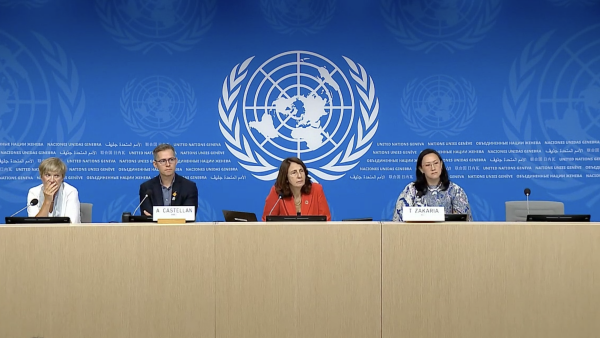
Press conference on the situation of human rights in Nicaragua by the UN Group of Human Rights Experts
1
1
1
Press Conferences | ITU , UNHCR , WHO , WMO
YEMEN - UNHCR: Escalating conflict in Yemen could fuel more displacement, refugee movement
CLIMATE - WHO / WMO: Health and Climate impact of El Niño
1
1
1
Press Conferences | HRC , OHCHR
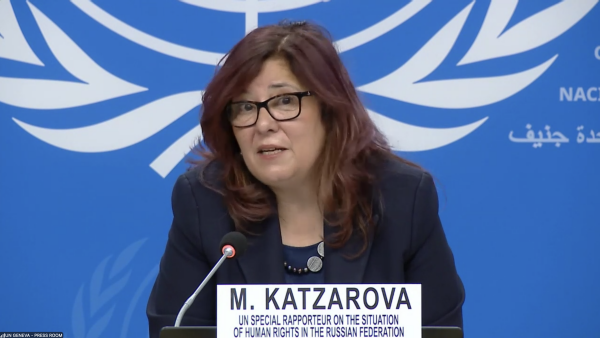
Mariana Katzarova discusses human rights in Russia as a UN Special Rapporteur.
1
1
1
Press Conferences | IOM , OHCHR , UN WOMEN , UNFPA , UNHCR , UNOPS , WHO
UN Geneva briefing: Yemen crisis worsens, urgent aid needed across multiple sectors.
1
1
1
Press Conferences | HRC
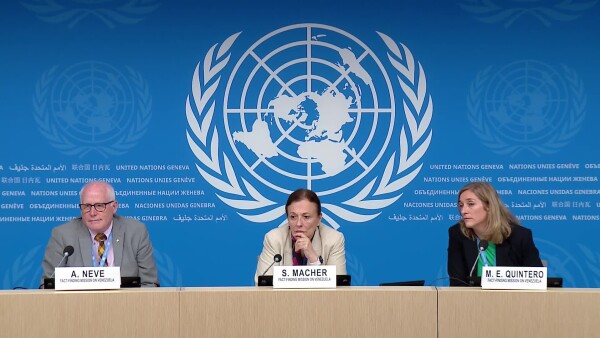
Press conference on the latest report of the Independent International Fact-Finding Mission on the Bolivarian Republic of Venezuela to the UN Human Rights Council
1
1
1
Press Conferences | OHCHR
Victims Still Waiting: A Global Briefing on Transitional Justice Around the World