

The United Nations Office at Geneva
Multimedia Newsroom
Sudan: as millions face famine, humanitarians plead for aid access
Famine in Sudan is “imminent” if aid agencies continue to be prevented from providing relief, UN humanitarians warned on Friday.
In a bleak assessment of the dire situation in Sudan where conflict is in its second year, the heads of 19 global humanitarian organizations issued an alert that further obstacles to providing aid “rapidly and at scale” will mean that “more people will die”.
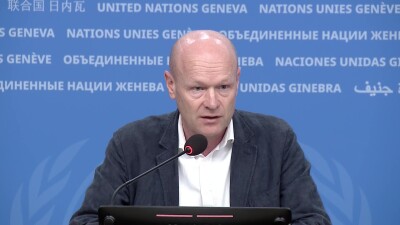
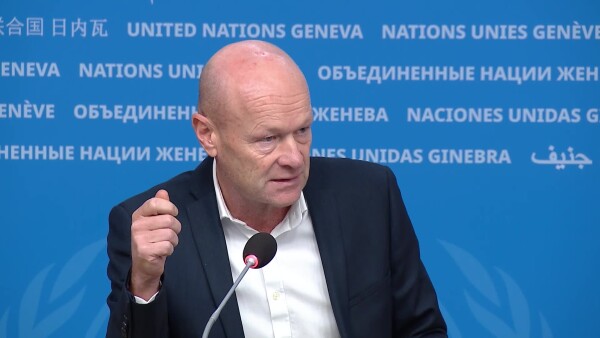
UN aid coordination office OCHA spokesperson Jens Laerke told reporters in Geneva that famine is “likely to take hold in large parts of the country, more people will flee to neighbouring countries, children will succumb to disease and malnutrition and women and girls will face even greater suffering and dangers”.
Some 18 million people in the country are already acutely hungry and 3.6 million children are acutely malnourished, the OCHA spokesperson said.
These children are in grave danger, Mr. Laerke insisted, as “they are 10 to 11 times more likely to die” than youngsters who have enough to eat.
Despite soaring needs, aid workers continue to face “systematic obstructions and deliberate denials of access by parties to the conflict”, according to the humanitarian agencies’ joint statement.
Mr. Laerke highlighted that “movements across conflict lines to parts of Khartoum, Darfur, Aj Jazirah and Kordofan have been cut off since mid-December” and that in March and April of this year, nearly 860,000 people were denied humanitarian aid in these areas.
Conditions for aid delivery are “very poor and dangerous,” he added, underscoring that aid workers are being killed, injured and harassed, while humanitarian supplies have been looted.
In addition, the closure in February of the Adré border crossing from Chad to western Darfur has reduced aid delivery in Darfur to a “trickle”.
In a more positive development last week, UN World Food Programme (WFP) trucks managed to enter Sudan from Chad through the Tine border crossing. The agency reported that 1,200 metric tonnes of food supplies for some 116,000 people are being transported across the Darfur region.
On Friday WFP Sudan’s Leni Kinzli confirmed that the convoys destined for Central Darfur (Umshalaya and Rongatas) have reached their final destinations, while the convoy headed to 12 destinations in South Darfur, including displacement camps in Nyala, is still in transit.
Meanwhile, Mr. Laerke warned that in North Darfur’s capital El Fasher, where fighting between the Sudanese army (SAF) and the rival Rapid Support Forces (RSF) recently intensified, some 800,000 civilians are bracing for an “imminent, large-scale attack”.
On Thursday, the UN’s top aid official in the country Clementine Nkweta-Salami said that medical facilities, displacement camps and critical civilian infrastructure in El Fasher have been targeted by parties to the conflict, while parts of the city have been left without electricity and water.
In their statement the heads of humanitarian agencies called on the warring parties to protect civilians, facilitate humanitarian access and adopt a nationwide ceasefire.
Referring to Sudan’s two main warring parties, the SAF and RSF, Mr. Laerke said: “We want these generals to find a way to solve their differences not by violence that kills maims, rapes hundreds of thousands of people in Sudan, but do it in another way”.
Concerned about low levels of funding for the crisis, humanitarians also called on donors to urgently disburse pledges made at the International Humanitarian Conference for Sudan and its Neighbours in Paris on 15 April.
Nearly five months into the year, the humanitarian appeal for Sudan for a total of $2.7 billion remains only 16 per cent funded.
- ends -
STORY: Sudan risk of famine - OCHA
TRT: 2:01”
SOURCE: UNTV CH
RESTRICTIONS: NONE
LANGUAGE: ENGLISH / NATS
ASPECT RATIO: 16:9
DATELINE: 31 MAY 2024 GENEVA, SWITZERLAND
1. Exterior medium shot: UN flag alley.
2. Wide shot: speakers at the podium of the press conference.
3. SOUNDBITE (English) – Jens Laerke, spokesperson, UN Office for the Coordination of Humanitarian Affairs (OCHA): “Nineteen global humanitarian organizations, including 12 UN agencies, today warned that if they continue to be prevented from providing aid in Sudan rapidly and at scale, a famine will likely take hold in large parts of the country. More people will flee to neighbouring countries, children will succumb to disease and malnutrition and women and girls will face even greater suffering and dangers.”
4. Wide lateral shot: Speakers at podium from behind; journalists in the Press room.
5. SOUNDBITE (English) – Jens Laerke, spokesperson, UN Office for the Coordination of Humanitarian Affairs (OCHA): “Movements across conflict lines to parts of Khartoum, Darfur, Aj Jazirah and Kordofan have been cut off since mid-December. In March and April of this year, nearly 860,000 people were denied humanitarian aid in these areas.”
6. Wide lateral shot: Speakers at podium from behind; journalists in the Press room.
7. SOUNDBITE (English) – Jens Laerke, spokesperson, UN Office for the Coordination of Humanitarian Affairs (OCHA): “The closure in February of the Adré border crossing from Chad to western Darfur has reduced aid delivery in Darfur to a trickle.”
8. Medium shot: Journalists in the Press room.
9. SOUNDBITE (English) – Jens Laerke, spokesperson, UN Office for the Coordination of Humanitarian Affairs (OCHA): “We have 18 million people who are acutely hungry and as I mentioned, 3.6 million children who are acutely malnourished. And acute malnourishment is really dangerous, in the sense that, I think the number is that they are 10 to 11 times more likely to die than children who are not acutely malnourished.”
10. Wide lateral shot: Speaker on screen in the Press room; journalists in the Press room.
11. SOUNDBITE (English) Jens Laerke, spokesperson, UN Office for the Coordination of Humanitarian Affairs (OCHA): “We, of course, want these generals to find a way to solve their differences not by violence that kills maims, rapes, whatnot, hundreds of thousands of people in Sudan, but do it in another way.”
12. Medium shot: Camerapersons in the Press room.
13. Medium shot: Journalists in the Press room.
14. Close shot: Press conference participant in the Press room.
B-roll downloadable from the UN World Food Programme (WFP) here (3 separate clips): https://drive.google.com/drive/folders/1OGLARX7opkb6ymnyqE6MiGLKq5ZljjQj?usp=sharing
B-roll shows trucks with WFP food aid at Tine/Chad border crossing into Sudan as referenced by WFP on X, 23 May 2024.
RESTRICTIONS: PLEASE CREDIT WFP FOOTAGE ON SCREEN
Similar Stories
1
1
1
Edited News | OCHA , UNICEF , WFP
Aid agencies warned on Friday of the fast-developing humanitarian emergency inside Taiz City in Yemen, which has been encircled by de facto Houthi forces fighting government troops along the country’s west coast.

2
17
1
2
Edited News , Press Conferences , Images | OCHA , WMO
Two UN agencies teamed up on Wednesday to issue an appeal for immediate assistance to help communities already being impacted by the strongest El Niño on record.
3
16
2
2
Edited News , B-roll , Conferences , Images | UNITED NATIONS , UNOG
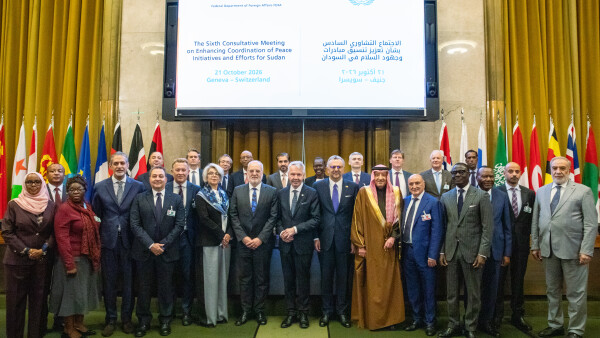
Sixth Consultative Meeting on Enhancing Coordination of Peace Initiatives and Efforts for Sudan
1
1
1
Edited News | UNICEF , WHO , UNHCR
Yemen war continues to force families from homes amid hunger and disease
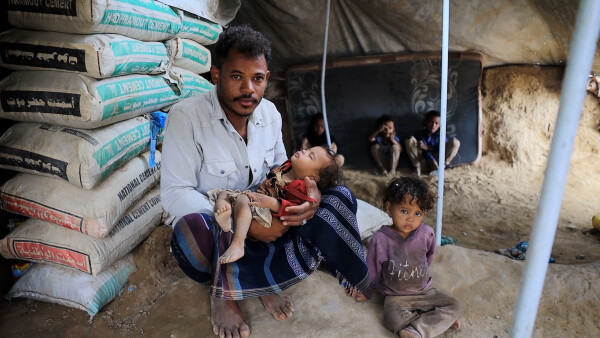
More than 250,000 people have now fled renewed fighting in Yemen, the UN said on Tuesday, citing particular concern for those sheltering in the southwestern city of Taiz and the wider governorate, where access is “essentially blocked”.

1
1
1
Edited News | UNICEF
A little over one year since a ceasefire agreement was announced between Hamas fighters and Israel, more than 340 children have been reported killed and hundreds more injured, the UN Children’s Fund, UNICEF, said on Friday.

1
1
1
Edited News | UNICEF , IFRC
Six weeks after Nepal’s deadly flooding disaster, communities are still struggling to rebuild their lives, but they will need sustained help as global warming increases the risk of another Himalayan catastrophe, the UN Children’s Fund (UNICEF) said on Friday.

1
1
1
Edited News | WHO
In suspected Russia plague death, testing and monitoring underway – WHO
The death of a lab worker in Russia’s Siberia region has sparked concerns about plague being the cause, the UN World Health Organization (WHO) said on Tuesday, adding that it was following the situation closely.

1
1
Edited News | OHCHR , UNOG
UN Human Rights Chief Volker Türk on Friday provided and oral update to the 63rd session of the Human rights Council on Ukraine.

1
1
1
Edited News | OHCHR , UNOG
UN Human Rights Chief Volker Türk on Friday provided and oral update to the 63rd session of the Human rights Council on the human rights situation in Haiti.

1
1
1
Edited News | WHO
Repeated delays in bringing lifesaving medicines, prosthetics and more from Israel into Gaza risk having devastating consequences on Palestinians who urgently need them in the wartorn enclave, the UN World Health Organization (WHO) said on Friday. “A truck full of non-priority supplies or the right supplies arriving too late, doesn't save lives. That's the question that actually matters," said Dr Reinhilde Van De Weerdt, WHO Representative in the OPT.

1
1
1
Edited News | WHO
DRC: Early access to care and oxygen decisive for Ebola patients’ survival – WHO
In the Democratic Republic of the Congo (DRC), health workers fighting the country’s largest-ever Ebola outbreak are struggling to overcome critical challenges to patient care, the UN World Health Organization (WHO) warned on Tuesday.

1
1
1
Edited News | OCHA , UN
Civilians in Iran are continuing to feel the consequences of months of conflict and military escalation, the UN’s top official in the country has said, as loss of life, damage to civilian infrastructure and mounting economic pressures leave many facing continued uncertainty.