

The United Nations Office at Geneva
Multimedia Newsroom
PRESS BRIEFING BY THE UNITED NATIONS INFORMATION SERVICE
11 August 2023
Food situation in Sudan
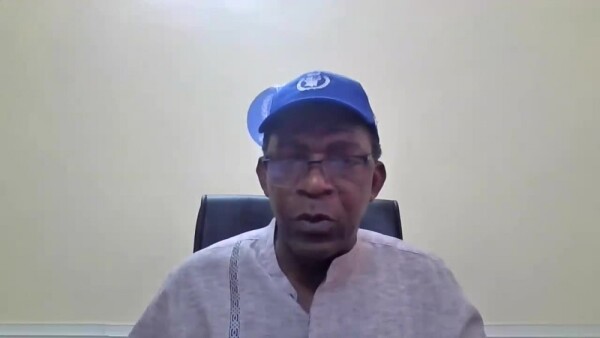
Adam Yao, Deputy Representative of the Food and Agriculture Organization (FAO) to Sudan, speaking from Port Sudan, stated that the food security situation in the country was deeply alarming. According to the latest food security report (IPC), between July and September 2023, the number of food-insecure people would double, compared to the last analysis conducted in May 2022. That meant that 20.3 million people across Sudan – over 42 per cent of the population – now faced high levels of acute food insecurity, making the Sudan one of the most food insecure countries on the planet. States like Khartoum, South and West Kordofan, and parts of Darfur were the hardest hit, with over half their populations facing acute hunger. Families were facing unimaginable suffering, some of which Mr. Yao had witnessed himself.
With thanks to coordinated collaboration on-the-ground led by OCHA, FAO had nearly completed its ambitious goal of distributing emergency crop seed to an estimated one million farmers. With over 650,000 farmers reached, the 2023 November harvest was well positioned to meet the cereal needs of millions of people across the Sudan. Beyond the current campaign targeting cereal production, FAO would target 1.3 million pastoralists with livestock services and inputs to strengthen the nutrition and food security of 6.5 million people.
Mr. Yao stressed that the ongoing campaign and its success to date was a testament to FAO’s commitment to delivering urgent livelihoods assistance, despite the increasingly complex security situation. The success of the campaign was a reminder of the importance of agriculture as a cost-efficient frontline humanitarian intervention to reduce vulnerability and strengthen food and nutrition security. It also underscored the importance of localization.
Latest IPC report is available here.
Eddie Rowe, Country Director of the World Food Programme (WFP) for Sudan, also speaking from Port Sudan, said that the fears about record levels of hunger had just been confirmed. Back in April, WFP had forecast that hunger would affect 19 million people across the country, and now that grim prediction had turned into a harsh reality. Around 42 per cent of Sudan’s population had now been pushed into hunger; 6.3 million of those were classified as experiencing IPC 3 or 4 categories of hunger, just one step away from famine. Since mid-April, the conflict had continued to spread, and its dynamics had become more complex, said Mr. Rowe.
Getting food supplies to people in need was becoming increasingly complex; yet, the previous week the WFP had managed to reach West Darfur for the first time and assist over 15,000 people. It was hoped that the route from Chat into West Darfur would become a regular corridor. The situation in the Darfurs was catastrophic; it was mostly women and children who were acutely vulnerable and were too scared to flee; their husbands and fathers had often been killed, injured, or gone missing. Since the conflict started, 1.6 million people across Sudan had received WFP’s assistance. Roughly 150,000 people at the outskirts of Khartoum were currently receiving aid, but the situation and access remained challenging, he informed.
Responding to questions from the media, Mr. Rowe said that he had seen complex humanitarian situations around the globe over his long career, but the current situation in Sudan was as complex as anything he had experienced. The major challenge was lack of access to certain communities, stressed Mr. Rowe. Mr. Yao said that FAO was supporting small farmers across the country, whose production was essential for feeding Sudanese people. Most deaths that were being reported were due to conflict, said Mr. Rowe. As of now, there were no reports of deaths from starvation. Water had always been a challenging issue in Khartoum, said Mr. Rowe; severe damage to infrastructure was likely to have made access to clean, potable water even more difficult.
Response to climate-related natural disasters in Europe
Andreas Weissenberg, Regional Head of Health, Disasters, Climate & Crises at the International Federation of Red Cross and Red Crescent Societies (IFRC), speaking from Budapest, said that the multiple disasters unfolding across Europe due to extreme weather were clear examples of extreme weather due to climate change – more violent, more frequent, more unpredictable.
Storm Hans, for example, had brought high winds, intense rain, and landslides to the Nordic region, particularly Norway, taking down power lines, cutting roads and bridges and stopping public transport in hard-hit areas. In Norway, more than 5,000 people had been evacuated. Norwegian Red Cross reported that this was a situation not encountered before, with a myriad of simultaneous local emergencies. They had 400 volunteers from 40 local branches responding. On the other hand, the situation was similar in Slovenia where a weather system had brought torrential rains and affected two-thirds of the country, forcing thousands of people out their homes. The floods had killed people and destroyed bridges, roads and houses, causing an estimated 500 million euros of damage, in the worst disaster in Slovenia since independence in 1991.
In Georgia, 20 people had been killed the previous week in a landslide in the northwest of the country. Georgian Red Cross had mobilized teams to provide first aid and psychosocial support to people affected. In Portugal, the extreme heat had led to wildfires in the southern and central parts of the country. More than 1,400 people from villages and tourists had been evacuated as 70,000 hectares – 70 km2 – had been burned out.
Key questions that needed to be asked, said Mr. Weissenberg, were how Europe could adapt better and what more could be done at both policy and grassroots levels. Red Cross and Red Crescent societies across Europe were working with communities to prepare for and reduce risks of extreme weather events, which included developing anticipatory action plans for emergencies, conducting community awareness sessions informing people of potential risks, establishing telephone helplines for people in need and mobilizing our volunteers’ network to provide care for the most vulnerable.
WHO
Responding to questions, Christian Lindmeier, for the World Health Organization (WHO), confirmed that Dr. Tedros had indeed said that he would not be running to be the next Secretary-General of the United Nations. Mr. Lindmeier also emphasized that the WHO had taken strong steps to prevent, combat, and address sexual harassment and abuse.
On another question, Mr. Lindmeier said that there were numerous variants of COVID-19 spreading around the world. On 9 August, EG.5 had been designated as a variant of interest, which meant that there were currently three variants of interest meriting special monitoring.
For the first time in months, there had been a reported increase in COVID-19 cases.
Surveillance was important, stressed Mr. Lindmeier, and the countries were encouraged to do more surveillance and reporting.
Announcements
Daniel Johnson, for the United Nations Information Service (UNIS), informed that on 16 August 2023 at 10:30 a.m., United Nations Conference on Trade and Development (UNCTAD) would hold a press conference to present its Economic Development in Africa Report 2023. Speakers would be Junior Davis, Chef, and Anja Slany, Economist, at the Policy Analysis and Research Branch, Division on Africa, LDCs and Special Programmes, UNCTAD.
The Committee on the Elimination of Racial Discrimination would conclude this afternoon the review of the report of Uruguay.
The Committee on the Rights of Persons with Disabilities would open on 14 August, at 10 a.m., its 29th session, during which it would review the reports of Malawi, Andorra, Mongolia, Austria, Israel, Mauritania, Germany and Paraguay. The Committee would also hold public meetings devoted to the follow-up of inquiries concerning Hungary and the UK.
Similar Stories
1
1
1
Press Conferences | UN WOMEN , WFP , WHO
UN WOMEN: Sudan Women and girls one year after the fall of El Fasher; increasing drone attacks across the country; WFP: DRC - Ebola spreads to eighth DRC province as WFP delivers food, builds treatment centres and keeps supplies moving; WHO - Update on Ebola (Bundibugyo Virus Disease)
1
12
1
1
Press Conferences , Images | UNOG
Closing Press Conference following the Sixth Consultative Meeting on Enhancing Coordination of Peace Initiatives and Efforts in Sudan

2
17
1
2
Edited News , Press Conferences , Images | OCHA , WMO
Two UN agencies teamed up on Wednesday to issue an appeal for immediate assistance to help communities already being impacted by the strongest El Niño on record.
1
1
1
Press Conferences | CITES
Wildlife trade and conservation policy discussions at the 81st meeting of the CITES Standing Committee (SC81)
1
1
1
Press Conferences | UNHCR , UNCTAD , WMO , OCHA , UNICEF , WHO
UNHCR Hungary’s 1956 Refugee Crisis: 70 Years On, UNCTAD World Investment Forum 2026, Doha, WMO Greenhouse Gas Bulletin and Climate Update for COP31, OCHA Afghanistan: Malnutrition, Girls’ Education and Recovery, UNICEF Yemen: Child Malnutrition and Unsafe Water in Taiz, WHO Inequalities in Noncommunicable Diseases and Risk Factors
1
1
1
Press Conferences | UNHCR
End of UNHCR's 77th Annual Executive Committee (ExCom) meeting week
1
1
1
Press Conferences | UNICEF , IOM , UNHCR
UN Special Assistant to the Personal Envoy Office (SUDAN): Peace Initiatives and Efforts in Sudan; UNICEF: Dire situation of children in Gaza; IOM: Damaged Homes and Energy Attacks Risk Displacing Ukrainians for this winter; UNHCR: update on EXCOM week
1
1
1
Press Conferences | IOM , UNDRR
UN stresses importance of household preparedness for disaster risk reduction.

1
1
1
Statements , Press Conferences | OHCHR
1
1
1
Press Conferences | UNHCR , UNICEF , IFRC , OHCHR , UN WOMEN , IOM , OCHA , WHO
UNHCR – ExCom Meeting, UNICEF – Nepal Recovery, IFRC – Flash Floods, WHO – Mental Health, IOM – South Sudan Floods, OCHA – DRC Humanitarian aid, UNHCR – Sahel Displacement, UNICEF – Yemen Update, IOM – Gaza Shelter, UN Women – Gaza Women, OHCHR – Arrests and detentions of Syrians by Israeli force
2
1
2
Press Conferences | UNCTAD
Presentation of the Trade and Developement Report 2026
Embargoed until 9 October 2026 at 11 a.m. (Geneva Time)
UNCTAD: UNCTAD’s flagship report finds that governments increasingly use industrial, trade, financial and technology policies to pursue economic and national security objectives. Market access and the ability to move into higher-value activities now depend more heavily on technology, finance and geopolitics.
1
1
1
Press Conferences | UPU
Release of the State of the Postal Sector Report 2026