

The United Nations Office at Geneva
Multimedia Newsroom
Edited News | UNHCR , UNITED NATIONS , WFP
Bi-Weekly Press Briefing: Appeal For Refugees In Chad WFP - UNHCR
Chad: aid for displaced desperately needed to avoid hunger
A dire lack of humanitarian funding has left hundreds of thousands of refugees and internally displaced people in Chad facing hunger in the coming months, UN agencies said on Friday.
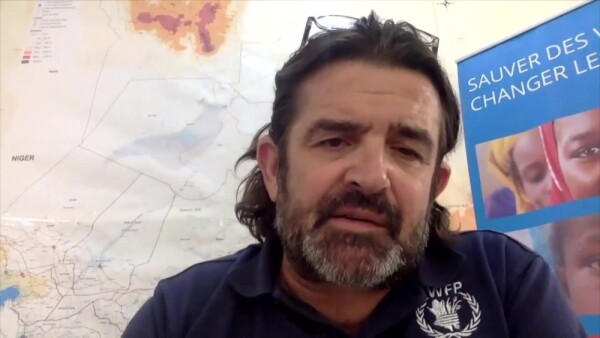
Speaking from Ndjamena, Pierre Honnorat, director of the UN World Food Programme (WFP) in Chad, said that as the country moves into the lean season in-between harvests, food assistance could grind to a complete halt.
“Chad is surrounded by countries with crises and hosting some 600,000 refugees from Sudan, Niger, Cameroon and Central African Republic. It’s one of the biggest caseloads in Africa. And the number kept rising with the recent conflict in the communities in Sudan,” Mr. Honnorat told reporters in Geneva.
An additional 300,000 people in need of aid are internally displaced Chadians.
WFP said that after fleeing conflict and violence, refugees, internally displaced people and their host communities face growing food insecurity and malnutrition, high food prices and the destructive effects of climate change. In the second half of 2022, the country saw the most devastating floods in 30 years.
Mr. Honnorat flagged that last year, some 90 per cent of refugees in Chad did not receive adequate food assistance and rations had to be cut in half.
He warned that “2023 is another very difficult year, whereby we have absolutely no funding from May onwards for the refugees and the displaced people.”
WFP has already reduced its support in April and will only be able to serve just over 270,000 refugees this month.
To avoid food assistance coming to a complete halt and to “put food on the table of all crisis-affected populations” in Chad, WFP urgently needs additional funding of $142.7 million for the coming six months.
Mr. Honnorat called on donors to help the government of Chad “in their efforts to host so many refugees with so many crises at the same time” while emphasizing the upcoming “very difficult” lean season. WFP projects that nearly 1.9 million people will be in severe food insecurity from June to August 2023, while more than 1.3 million children will suffer from acute malnutrition.
According to the UN agency, other disastrous impacts of the crisis could include a rise in child labour, under-aged marriage and recruitment into armed groups.
Echoing the call for urgent action, Matthew Saltmarsh from UN refugee agency (UNHCR) also appealed to the international community to help tackle the crisis.
“For our part of the appeal, we're looking to raise $172.5 million to provide protection and relief assistance to the one million forcibly displaced people and their hosts”, he said, adding that UNHCR’s appeal was, for now, only 15 per cent funded.
Speaking about longer-term solutions to the crisis, including development interventions, Mr. Honnorat highlighted a new project which WFP was running together with UNHCR and the Chadian agriculture ministry, to promote empowerment and self-reliance among the displaced by enabling them to become farmers and live off the land.
“We have just rehabilitated 1,600 hectares of land, which have already produced 2,900 tonnes of food”, he said, stressing that the return on investment of the operation is “fantastic” and that most importantly, 16 villages now no longer require assistance.
Mr. Honnorat went on to underscore that in his 33 years at WFP, he had rarely seen development projects as “solid” as in Chad and praised the efforts of the government in favour of the refugees, including ongoing work on a new asylum law, which should be finalized soon.
STORY: Appeal for Refugees in Chad - WFP - UNHCR
TRT: 2’31”
SOURCE: UNTV CH
LANGUAGE: ENGLISH, FRENCH, NATS
ASPECT RATIO: 16:9
RELEASE DATE: 14 April 2023
FORMAT: HYBRID PRESS BRIEFING
DATELINE: GENEVA, SWITZERLAND
SHOTLIST
- Exterior wide shot: UN flag alley UN Geneva.
- Cutaway: wide shot, speakers behind podium at the press conference, UN Geneva.
- SOUNDBITE (ENGLISH) Pierre Honnorat, WFP Country Director, Chad: “Chad is surrounded by countries with crises and hosting some 600,000 refugees from Sudan, Niger, Cameroon and Centrafrique [Central African Republic]. It’s one of the biggest caseloads in Africa. And the number kept rising with the recent conflict in the communities in Sudan.”
- Cutaway: close-up lateral shot, journalists at the press conference, UN Geneva.
- SOUNDBITE (ENGLISH) Pierre Honnorat, WFP Country Director, Chad: “2023 is another very difficult year whereby we have absolutely no funding from May onwards for the refugees and the displaced people.”
- Cutaway: medium lateral shot, speaker behind podium, journalists at the press conference, UN Geneva.
- SOUNDBITE (ENGLISH) Pierre Honnorat, WFP Country Director, Chad: “Today, an appeal to help the government of Chad to support them in their efforts to host so many refugees with so many crises at the same time, in the current context. And again, I was mentioning the upcoming very difficult lean season that we are looking at and the urgent need for WFP for the next six months of the $140 million.”
- Cutaway: medium lateral shot, journalists at the press conference, UN Geneva.
- SOUNDBITE (ENGLISH) Matthew Saltmarsh, spokesperson, UNHCR: “For our part of the appeal we're looking to raise $172.5 million to provide protection and relief assistance to the one million forcibly displaced people and their hosts that we've heard about so far. For our part, that is just 15 per cent funded, so we desperately need money for that country and for that situation.”
- Cutaway: close-up, journalists typing at the press conference, UN Geneva.
- SOUNDBITE (FRENCH) Pierre Honnorat, WFP Country Director, Chad: “On vient de réhabiliter 1,600 hectares de terres qui ont déjà produit 2,900 tonnes de vivres. Ça, c’est dans la région des Lacs. On avait investi $2.2 millions et rien que ces 2,900 tonnes sont équivalentes à $1 million. C’est-à-dire qu’on a un retour sur investissement qui est fantastique, mais on a surtout des populations qui n’ont plus besoin d’aide. Ce sont 16 villages qui travaillent sur ces 1,600 hectares, qui n’ont plus besoin d’aide.”
- Various cutaways of journalists and speakers in the press conference room.
Similar Stories

1
1
1
Edited News | OCHA , UNICEF , WFP
Aid agencies warned on Friday of the fast-developing humanitarian emergency inside Taiz City in Yemen, which has been encircled by de facto Houthi forces fighting government troops along the country’s west coast.

2
17
1
2
Edited News , Press Conferences , Images | OCHA , WMO
Two UN agencies teamed up on Wednesday to issue an appeal for immediate assistance to help communities already being impacted by the strongest El Niño on record.

3
16
2
2
Edited News , B-roll , Conferences , Images | UNITED NATIONS , UNOG
Sixth Consultative Meeting on Enhancing Coordination of Peace Initiatives and Efforts for Sudan

1
1
1
Edited News | UNICEF , WHO , UNHCR
Yemen war continues to force families from homes amid hunger and disease
More than 250,000 people have now fled renewed fighting in Yemen, the UN said on Tuesday, citing particular concern for those sheltering in the southwestern city of Taiz and the wider governorate, where access is “essentially blocked”.

1
1
1
Edited News | UNICEF
A little over one year since a ceasefire agreement was announced between Hamas fighters and Israel, more than 340 children have been reported killed and hundreds more injured, the UN Children’s Fund, UNICEF, said on Friday.

1
1
1
Edited News | UNICEF , IFRC
Six weeks after Nepal’s deadly flooding disaster, communities are still struggling to rebuild their lives, but they will need sustained help as global warming increases the risk of another Himalayan catastrophe, the UN Children’s Fund (UNICEF) said on Friday.

1
1
1
Edited News | WHO
In suspected Russia plague death, testing and monitoring underway – WHO
The death of a lab worker in Russia’s Siberia region has sparked concerns about plague being the cause, the UN World Health Organization (WHO) said on Tuesday, adding that it was following the situation closely.

1
1
Edited News | OHCHR , UNOG
UN Human Rights Chief Volker Türk on Friday provided and oral update to the 63rd session of the Human rights Council on Ukraine.

1
1
1
Edited News | OHCHR , UNOG
UN Human Rights Chief Volker Türk on Friday provided and oral update to the 63rd session of the Human rights Council on the human rights situation in Haiti.

1
1
1
Edited News | WHO
Repeated delays in bringing lifesaving medicines, prosthetics and more from Israel into Gaza risk having devastating consequences on Palestinians who urgently need them in the wartorn enclave, the UN World Health Organization (WHO) said on Friday. “A truck full of non-priority supplies or the right supplies arriving too late, doesn't save lives. That's the question that actually matters," said Dr Reinhilde Van De Weerdt, WHO Representative in the OPT.

1
1
1
Edited News | WHO
DRC: Early access to care and oxygen decisive for Ebola patients’ survival – WHO
In the Democratic Republic of the Congo (DRC), health workers fighting the country’s largest-ever Ebola outbreak are struggling to overcome critical challenges to patient care, the UN World Health Organization (WHO) warned on Tuesday.

1
1
1
Edited News | OCHA , UN
Civilians in Iran are continuing to feel the consequences of months of conflict and military escalation, the UN’s top official in the country has said, as loss of life, damage to civilian infrastructure and mounting economic pressures leave many facing continued uncertainty.