

The United Nations Office at Geneva
Multimedia Newsroom
Edited News | UNHCR , UNICEF
Bi-Weekly Press Briefing: Somalia Famine UNICEF - UNHCR - Danish Refugee Council
“Unprecedented numbers” of children in Somalia are facing a “malnutrition crisis’ the United Nations Children’s Fund (UNICEF) warned on Tuesday. 1.5 million children, nearly half of the under-five population, are likely to have acute malnutrition. Of these 385,000 will need treatment for severe acute malnutrition, UNICEF Somalia Representative, Wafaa Saeed, told reporters in Geneva.
The alert comes after UN relief chief Martin Griffiths on Monday said that “famine is at the door,” in areas of the Bay Region of Somalia, which is “predicted to suffer a fifth consecutive failed rainy season”.
According to Ms. Saeed, the Bay is not the only region facing a humanitarian crisis: “74 districts across Somalia are affected, out of which we have prioritised 12 as needing urgent, urgent support” she said.
The UNICEF official highlighted that water and sanitation are just as important as food for children and families facing famine and food insecurity. “This is a water crisis,” she said. “4.5 million people need emergency water supply, and the figure is expected to rise as the drought worsens”.
According to Ms. Saeed, in some areas, water prices have climbed up by between 55 to 85 per cent since January 2022. “No matter how much food a malnourished child eats, he or she will not get better if the water they are drinking is not safe” she warned.
According to the UNICEF Somalia spokesperson, some 730 children are reported to have died in food and nutrition centres across the country between January and July this year. ”But the numbers could be more as many deaths go unreported, she warned.
Audrey Crawford, Country Director Somalia, Danish Refugee Council (DRC) highlighted the difficulties in knowing what the real picture is in terms of deaths. She explained that the organization has been “asked to monitor graveyards,” as the data is not there to collect the evidence. “We are going to be witnessing the death of children on an unimaginable scale in the last months of 2022 if we don't act fast,” she said.
“Over a million people have been displaced internally this year so far,” said the DRC spokesperson. Echoing the concerns of UNICEF, Ms. Crawford described how people had “walked for up to ten days in search of food and water, arriving with literally nothing, in a deteriorated state with malnourished children or children who have died”.
“Many of the mothers I talked to had buried children in the previous days, either from contracting diarrhoea or measles in the overly congested camps or along the way from malnutrition,” she continued.
Ms. Saeed warned that high levels of severe acute malnutrition in children combined with deadly outbreaks of disease will have “tragic consequences,” with child mortality rising dramatically. Disease outbreaks spiked between January and July, with at least 8,400 suspected acute watery diarrhoea (AWD), cholera cases and around 13,000 suspected measles cases (78 per cent of cases in children under 5).
According to UN Refugee Agency (UNHCR) spokesperson, Shabia Mantoo, as the drought worsens, women and girls are being forced to trek “longer and longer distances to access water and shelter”. This is “heightening their exposure to gender-based violence… sexual exploitation and abuse,” she said, adding that “many children have also been forced to drop out of school to help their families earn a daily income and search for water and pasture, further increasing the risks are forced marriage or family separation.” Underscoring this concern, Ms. Saeed said “around 3 million children of school age have been impacted by the drought”. Of these “900,000 are at risk of dropping out, half of which are girls.. And from previous experience of 2017, 90 per cent of the children who drop out of school never go back,” she warned.
Ms. Mantoo also pointed out that there has been an increase in the number of children who are unaccompanied or separated from their families, “which puts them at protection risk”. Since January, their numbers have increased by 81 per cent compared to last year, according to UNICEF.
Somalia is now suffering its third drought in a decade. The first drought, in 2011, killed an estimated 260,000 people, many of them children. Ms. Saeed explained that the worst effects of the second drought in 2017 “were mitigated because early warning systems kicked in, donors channelled aid quickly, government institutions were more solid, and there were more operational organizations on the ground”.
But she warned that the response to the appeal this time has been slower. By July, “only 65 per cent of our total drought appeal of $112 million was funded and less than a third of the UN appeal of $1 billion”. As of July, 223,000 children with severe acute malnutrition had been treated (58 per cent of the 2022 target) and 1 million people have been reached with sustainable water (30 per cent of the 2022 target). Another 1.3 million people (25 per cent of the target) were reached with a temporary water supply and 1.2 million children had been vaccinated in response to the worsening measles outbreak.
In an urgent call for donors to step up and fully fund the UN’s Humanitarian Response Plan, the UNICEF spokesperson stressed that it is “possible to avert famine”. “If we scale up significantly we can stop a repeat 2011. We urgently need donors. We can save lives, but to prevent famine we need long-term investment to help families build resilience to the effects of climate change”.
STORY: SOMALIA FAMINE - UNICEF, UNHCR, DANISH REFUGEE COUNCIL
TRT: 03:07”
SOURCE: UNTV CH
RESTRICTIONS: NONE
LANGUAGE: ENGLISH /NATS
ASPECT RATIO: 16:9
DATELINE: 6 August 2022, GENEVA, SWITZERLAND
SHOTLIST
1. Exterior wide shot, United Nations flag flying.
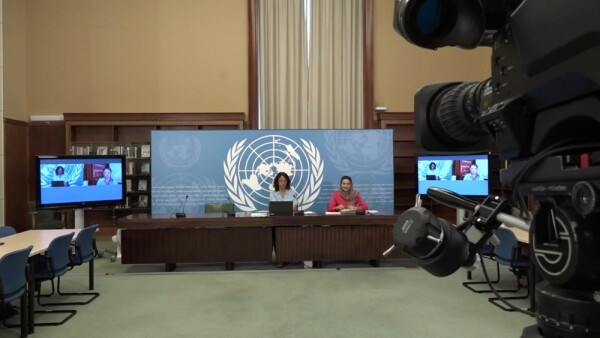
2. Wide shot, speaker at briefing.
3. SOUNDBITE: (ENGLISH) Wafaa Saeed Abdelatef, UNICEF Representative in Somalia: “Malnutrition has reached unprecedented levels. We have 1.5 million children, this is nearly half of the children under five, likely to have acute malnutrition. And of them, 350,000 will need treatment for severe acute malnutrition.”
4. Mid-shot of attendees at press briefing.
5. SOUNDBITE: (ENGLISH) Wafaa Saeed Abdelatef, UNICEF Representative in Somalia: “Because of the drought, many water sources have dried up. Many wells have also dried up because of overuse. And we have around 4.5 million people who need emergency water supply. And as we are expecting a fifth fell rainy season, this figure is expected to rise as the drought becomes worse and more severe.”
6. Screen showing speaker and panellist at press briefing.
7. SOUNDBITE: (ENGLISH) Wafaa Saeed Abdelatef, UNICEF Representative in Somalia: “We are treating children, but a child, no matter how much food a malnourished child eats, if he or she doesn't get clean water, then they will not be able to recover.”
8. Mid-shot of attendees at briefing.
9. SOUNDBITE: (ENGLISH) Wafaa Saeed Abdelatef, UNICEF Representative in Somalia: “Around 730 children are reported to have died in nutrition sites across the country. And to put it into perspective, this is less than 1 per cent of the children who were admitted and cured and discharged.”
10. Close-shot of attendees typing.
11. SOUNDBITE: (ENGLISH) Wafaa Saeed Abdelatef, UNICEF Representative in Somalia: “We have around 3 million children that are of school age who have been impacted by the drought. And of these 900,000 are at risk of dropping out. And from previous experience of 2017, 90 per cent of the children who drop out of school, they never go back.”
12. Mid-shot of attendees at briefing.
13. SOUNDBITE: (ENGLISH) Wafaa Saeed Abdelatef, UNICEF Representative in Somalia: “We are seeing also an increase of the number of children who are unaccompanied or separated from their families, which puts them at protection risk. And this number of children has increased by 80 per cent just this year.”
14. Mid shot of attendee at briefing with panellists in the background.
15. SOUNDBITE: (ENGLISH) Shabia Mantoo, UNHCR Spokesperson: “Women and girls are being forced to trek longer and longer distances to access water and shelter, heightening their exposure to gender-based violence. As the drought worsens, protection concerns are growing with heightened risks of gender-based violence and sexual exploitation and abuse. Many children have also been forced to drop out of school to help their families earn a daily income and search for water and pasture, further increasing the risks are forced marriage or family separation. ”
16. Wide shot of press briefing.
17. SOUNDBITE: (ENGLISH) Audrey Crawford, Country Director Somalia, Danish Refugee Council: Over a million people have been displaced internally this year so far. Most of them have walked for up to ten days in search of food and water, arriving with literally nothing in a deteriorated state with malnourished children or children who have died. Many of the mothers I have talked to had buried children in the previous days, either from contracting diarrhoea or measles in the overly congested camps or along the way from malnutrition.”
18. Close shot of attendee typing.
19. Close shot of attendee listening to briefing
20. Close shot of attendees listening to briefing
Similar Stories

1
1
1
Edited News | UNICEF
A little over one year since a ceasefire agreement was announced between Hamas fighters and Israel, more than 340 children have been reported killed and hundreds more injured, the UN Children’s Fund, UNICEF, said on Friday.

1
1
1
Edited News | UNICEF , IFRC
Six weeks after Nepal’s deadly flooding disaster, communities are still struggling to rebuild their lives, but they will need sustained help as global warming increases the risk of another Himalayan catastrophe, the UN Children’s Fund (UNICEF) said on Friday.

1
1
1
Edited News | WHO
In suspected Russia plague death, testing and monitoring underway – WHO
The death of a lab worker in Russia’s Siberia region has sparked concerns about plague being the cause, the UN World Health Organization (WHO) said on Tuesday, adding that it was following the situation closely.

1
1
Edited News | OHCHR , UNOG
UN Human Rights Chief Volker Türk on Friday provided and oral update to the 63rd session of the Human rights Council on Ukraine.

1
1
1
Edited News | OHCHR , UNOG
UN Human Rights Chief Volker Türk on Friday provided and oral update to the 63rd session of the Human rights Council on the human rights situation in Haiti.

1
1
1
Edited News | WHO
Repeated delays in bringing lifesaving medicines, prosthetics and more from Israel into Gaza risk having devastating consequences on Palestinians who urgently need them in the wartorn enclave, the UN World Health Organization (WHO) said on Friday. “A truck full of non-priority supplies or the right supplies arriving too late, doesn't save lives. That's the question that actually matters," said Dr Reinhilde Van De Weerdt, WHO Representative in the OPT.

1
1
1
Edited News | WHO
DRC: Early access to care and oxygen decisive for Ebola patients’ survival – WHO
In the Democratic Republic of the Congo (DRC), health workers fighting the country’s largest-ever Ebola outbreak are struggling to overcome critical challenges to patient care, the UN World Health Organization (WHO) warned on Tuesday.

1
1
1
Edited News | OCHA , UN
Civilians in Iran are continuing to feel the consequences of months of conflict and military escalation, the UN’s top official in the country has said, as loss of life, damage to civilian infrastructure and mounting economic pressures leave many facing continued uncertainty.
1
1
1
Edited News | WHO , UNICEF
Aid agencies in Yemen highlighted the growing hunger emergency sparked by renewed fighting between Houthi opposition forces and Government troops, after mobile health clinics reported that hundreds of children displaced by the violence are suffering from the most deadly form of malnutrition.
1
1
1
Edited News | UNHCR
Displacement on the rise in Yemen as fighting continues - UNHCR
As hostilities worsen in Yemen, more people have been fleeing their homes, further intensifying the humanitarian crisis within the region, the UN Refugee Agency (UNHCR) warned on Tuesday.
1
1
1
Edited News | IOM , OHCHR , UNFPA , UNOG , UNHCR , WHO
Yemen’s humanitarian crisis growing by the hour amid spike in displacement
Yemenis displaced by renewed fighting have described fleeing for their lives amid shelling and gunfire, aid agencies reported on Friday, while highlighting the dramatic increase in humanitarian needs in the country and in Djibouti, where thousands have sought shelter.
1
1
1
Edited News | OHCHR , UNOG
The UN Human Rights Office issued on Friday a report documenting a shocking pattern of sexual violence amid Russia’s full-scale armed attack on Ukraine.