

The United Nations Office at Geneva
Multimedia Newsroom
Edited News , Press Conferences | WMO
WMO Press Conference - Global State of the Climate Report 2021 - 18 May 2022
Latest climate data from 2021 shows records broken in several key indicators
Records in four out of seven key climate indicators were broken last year, UN climate scientists said on Wednesday, as the UN Secretary-General renewed his call for governments everywhere to end their reliance on fossil fuels “before we incinerate our only home”.
The four indicators in which records were set in 2021 – greenhouse gas concentrations, sea level rise, ocean heat and ocean acidification – “are another clear sign that human activities are causing planetary-scale changes on land, in the ocean, and in the atmosphere, with harmful and long-lasting ramifications for sustainable development and ecosystems”, the World Meteorological Organization (WMO) said.
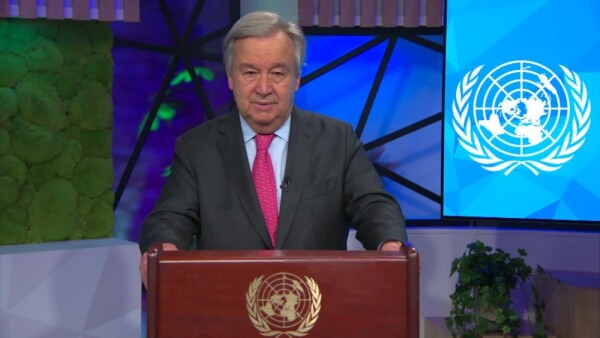
Echoing the UN agency’s concerns, which are contained in its flagship climate report released annually in the spring, UN Secretary-General António Guterres told the WMO press conference in Geneva via video message that “sea level rise, ocean heat, greenhouse gas concentrations and ocean acidification, set alarming new records in 2021”.
He added: “I will give you the bottom line: the global energy system is broken and bringing us ever closer to climate catastrophe…We must end fossil fuel pollution and accelerate the renewable energy transition before we incinerate our only home.”
The latest WMO data also indicates that the world’s most vulnerable countries and communities have borne the brunt of galloping climate change, said Selwin Hart, Special Adviser to the Secretary-General on Climate Action and Just Transition: “These impacts are unevenly distributed and if you’re living in Central America, South America, Central, East or West Africa, South Asia or in a Small Island Developing State, you’re 15 times more likely to die from climate-related impact or a climate-related weather extreme.”
Highlighting some of the most worrying climate data from last year, WMO Secretary-General Petteri Taalas noted that surface temperature records had reached an “all-time high” in Europe, with 48.8 degrees Celsius recorded in Sicily last summer, and also in western Canada, which recorded 49.6C, while Spain and Turkey saw similarly sweltering temperatures.
Records were also smashed in main greenhouse gas concentrations in 2021, Professor Taalas continued, referring to carbon dioxide, methane and nitrous oxide. Carbon dioxide concentrations were particularly striking, he added: “We haven’t seen any improvement despite of the lockdowns caused by COVID in 2020, so the concentrations continue growing.”
Ocean temperatures also saw records broken, which is worrying because “we now have right now a record amount of heat stored in the oceans and 90 per cent of the excess heat that we have produced to the planet, they are stored in ocean”, the WMO chief continued.
He added: “We have broken record in the sea level rise; it used to be about two millimetres a year 20 years ago but recently we have seen 4.5 millimetres per year, sea level rise which is a record so far.”
Amid growing concerns over rising global hunger linked to the COVID-19 pandemic’s socio-economic impact, and the ongoing war in Ukraine prompted by the Russian invasion on 24 February, Professor Taalas explained that climate factors had also contributed to the fact that an estimated 800 million people went hungry last year, “and 300 million of them are living in Africa”.
The WMO chief added: “So we have more people suffering of hunger, this component coming from climate change, there’s a component coming from this COVID crisis, and there’s a high risk now because of the war in Ukraine that we will see major hunger problems.”
It is not just developing countries that have been impacted by the planet’s climate crisis, Professor Taalas explained: “Last year we saw several disasters, the most expensive disaster was Hurricane Aida which was hitting United States, with $75 billion losses, we also saw this in China, India, Germany and Belgium were related to flooding events, so those are also possible in developed countries.”
According to WMO’s report, the past seven years have been the warmest seven years on record. Last year was “only” one of the seven warmest because of a La Niña event at the start and end of the year, which provided a temporary cooling effect, with the average global temperature about 1.1C above the pre-industrial level.
Regardless of this temporary reprieve, scientists are no doubt that the long-term trend is for rising temperatures, whose impact can already be seen on coral bleaching and other less visible areas.
“The problem is that not only the climate is changing but also the ecosystems associated with the earth system are also completely changing,” said Omar Baddour, Head, Climate Monitoring Division, WMO. “For instance the biological life in the oceans, species are being extinct because of this warming of the ocean and acidification.”
ends
STORY: State Of Climate Report
TRT: 4 mins 26s
SOURCE: UNTV CH
RESTRICTIONS: NONE
LANGUAGE: ENGLISH / NATS
ASPECT RATIO: 16:9
DATELINE: 18 May 2021 GENEVA, SWITZERLAND
SHOTLIST
- Exterior medium shot, United Nations flag flying, a sunny day.
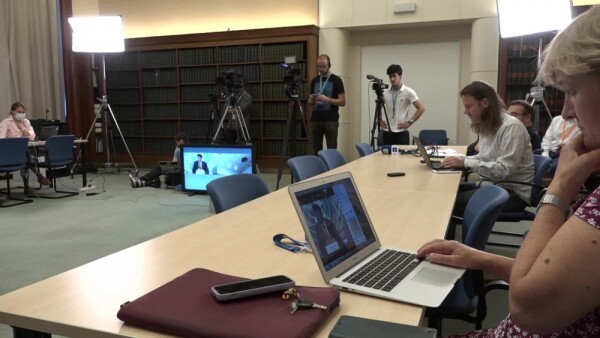
- Wide shot, press conference room, podium speakers and external participant shown on TV screens either side of dais.
- SOUNDBITE (English): UN Secretary-General António Guterres: “Sea level rise, ocean heat, greenhouse gas concentrations and ocean acidification, set alarming new records in 2021.”
- Close-up, TV camera lens, blurred, with TV screen showing Mr. Guterres delivering remote message to rear.
- SOUNDBITE (English): UN Secretary-General António Guterres: “I will give you the bottom line. The global energy system is broken and bringing us ever closer to climate catastrophe.”
- Medium shot, participants watching laptop screen while Mr. Guterres delivers message.
- SOUNDBITE (English): UN Secretary-General António Guterres: “We must end fossil fuel pollution and accelerate the renewable energy transition before we incinerate our only home.”
- Close-up, TV camera viewfinder showing Selwin Hart, Special Adviser to the Secretary-General on Climate Action and Just Transition, and on TV screen to rear.
- SOUNDBITE (English): Selwin Hart, Special Adviser to the Secretary-General on Climate Action and Just Transition: “These impacts are unevenly distributed and if you’re living in Central America, South America, Central, East or West Africa, South Asia or in a Small Island Developing State, you’re 15 times more likely to die from climate-related impact or a climate-related weather extreme.”
- Medium shot, participants at press conference.
- SOUNDBITE (English): Prof. Petteri Taalas, WMO Secretary-General: “We have broken temperature records regionally, for example, we broke the European all-time high, 48.8 degrees in Sicily last summer, and also in Canada they broke all time high, 49.6 degrees in western Canada, and such records were broken also in Spain and Turkey.”
- Medium shot, TV camera operators standing by mounted TV cameras.
- SOUNDBITE (English): Prof. Petteri Taalas, WMO Secretary-General: “We have broken record in ocean heat, which is more conservative than the atmospheric temperatures which are varying according to these ocean temperatures, so we now have right now a record amount of heat stored in the oceans and 90 per cent of the excess heat that we have produced to the planet, they are stored in ocean.”
- Close-up, TV camera viewfinder showing Prof. Taalas speaking on podium, and to rear.
- SOUNDBITE (English): Prof. Petteri Taalas, WMO Secretary-General: “And then we have broken records in main greenhouse gases, carbon dioxide, methane and nitrous oxide and especially the record in carbon dioxide is striking; we haven’t seen any improvement despite of the lockdowns caused by COVID in 2020, so the concentrations continue growing.”
- Medium shot, participants, TV journalists and light panel.
- SOUNDBITE (English): Prof. Petteri Taalas, WMO Secretary-General: “We have broken record in the sea level rise; it used to be about two millimetres a year 20 years ago but recently we have seen 4.5 millimetres per year, sea level rise which is a record so far.”
- Medium shot, photographer wearing mask, holds camera lens.
- SOUNDBITE (English): Prof. Petteri Taalas, WMO Secretary-General: “And then we have seen an increase in the food insecurity, so we have more people suffering of hunger, this component coming from climate change, there’s a component coming from this COVID crisis, and there’s a high risk now because of the war in Ukraine that we will see major hunger problems.”
- Close-up, showing part of TV camera operator’s head, TV camera and podium speakers to rear.
- SOUNDBITE (English): Prof. Petteri Taalas, WMO Secretary-General: “Last year we saw several disasters, the most expensive disaster was Hurricane Aida which was hitting United States, with $75 billion losses, we also saw this in China, India, Germany and Belgium were related to flooding events, so those are also possible in developed countries.”
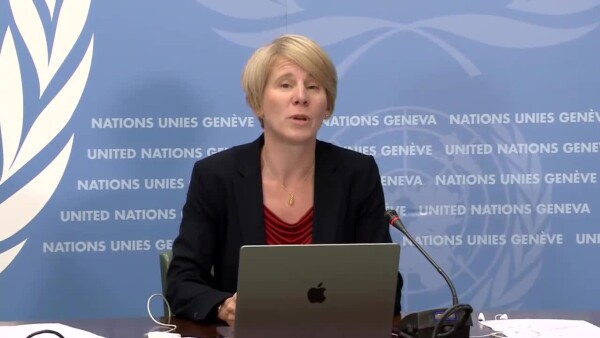
- Medium shot, podium speakers, side shot.
- SOUNDBITE (English): Omar Baddour, Head, Climate Monitoring Division, WMO: “The problem is that not only the climate is changing but also the ecosystems associated with the earth system are also completely changing; for instance the biological life in the oceans, species are being extinct because of this warming of the ocean and acidification.”
- Medium shot, participants, seated.
- Close-up, showing journalists’ hands typing on laptop in foreground and to rear.
- Close-up: laptop showing Prof. Taalas in focus, photographer who is looking at the image is blurred.
Similar Stories
1
1
1
Edited News | UNICEF , IFRC
Six weeks after Nepal’s deadly flooding disaster, communities are still struggling to rebuild their lives, but they will need sustained help as global warming increases the risk of another Himalayan catastrophe, the UN Children’s Fund (UNICEF) said on Friday.
1
1
1
Statements , Press Conferences | OHCHR
1
1
1
Press Conferences | UNHCR , UNICEF , IFRC , OHCHR , UN WOMEN , IOM , OCHA , WHO
UNHCR – ExCom Meeting, UNICEF – Nepal Recovery, IFRC – Flash Floods, WHO – Mental Health, IOM – South Sudan Floods, OCHA – DRC Humanitarian aid, UNHCR – Sahel Displacement, UNICEF – Yemen Update, IOM – Gaza Shelter, UN Women – Gaza Women, OHCHR – Arrests and detentions of Syrians by Israeli force
2
1
2
Press Conferences | UNCTAD
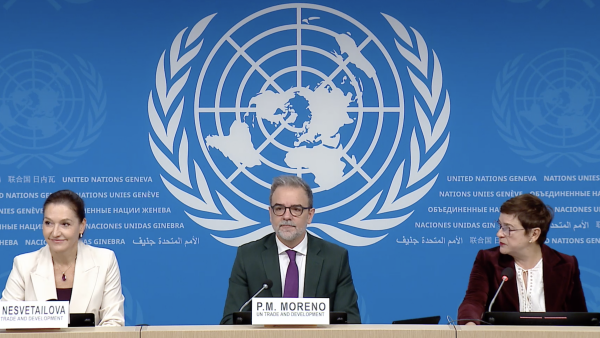
Presentation of the Trade and Developement Report 2026
Embargoed until 9 October 2026 at 11 a.m. (Geneva Time)
UNCTAD: UNCTAD’s flagship report finds that governments increasingly use industrial, trade, financial and technology policies to pursue economic and national security objectives. Market access and the ability to move into higher-value activities now depend more heavily on technology, finance and geopolitics.
1
1
1
Press Conferences | UPU
Release of the State of the Postal Sector Report 2026

1
1
1
Edited News | WHO
In suspected Russia plague death, testing and monitoring underway – WHO
The death of a lab worker in Russia’s Siberia region has sparked concerns about plague being the cause, the UN World Health Organization (WHO) said on Tuesday, adding that it was following the situation closely.
1
1
1
Press Conferences | IOM , ITU , UNECE , UNICEF , WHO , WMO
UNICEF: Ebola, DRC - children orphans or separating them from parents and caregivers; IOM: Humanitarian needs in Djibouti amid arrivals from Yemen and increased migrant movements; WHO: Darfur, scale of health needs far exceeds available resources; WMO co-sponsored Global Heat Forum, Bangkok, monthly Global Seasonal Climate Update; UNECE: UN Forum of Mayors; ITU Plenipotentiary Conference 2026; WHO: child and adolescent obesity guidelines and new global roadmap to tackle pregnancy hypertension, a leading cause of maternal mortality
1
1
Edited News | OHCHR , UNOG
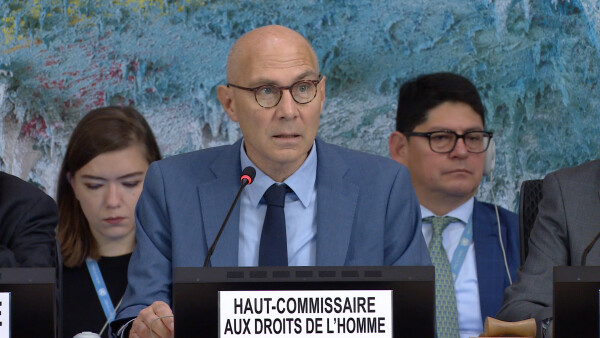
UN Human Rights Chief Volker Türk on Friday provided and oral update to the 63rd session of the Human rights Council on Ukraine.
1
1
1
Edited News | OHCHR , UNOG
UN Human Rights Chief Volker Türk on Friday provided and oral update to the 63rd session of the Human rights Council on the human rights situation in Haiti.
1
1
1
Edited News | WHO
Repeated delays in bringing lifesaving medicines, prosthetics and more from Israel into Gaza risk having devastating consequences on Palestinians who urgently need them in the wartorn enclave, the UN World Health Organization (WHO) said on Friday. “A truck full of non-priority supplies or the right supplies arriving too late, doesn't save lives. That's the question that actually matters," said Dr Reinhilde Van De Weerdt, WHO Representative in the OPT.
1
1
1
Press Conferences | OCHA , UN WOMEN , UNHCR , WFP , WHO , WTO , UNEP
OCHA – $160M CERF allocation to 12 underfunded crises; UNHCR – 5.8M refugee children remain out of school amid funding cuts; UN Women – Middle East escalation and food security among women/girls; WHO – Gaza supplies and overall situation; WFP – Yemen food insecurity and impact on global hunger ; UNEP - First International Conference of the Global Framework on Chemicals in Geneva | 16-20 November 2026
1
1
1
Edited News | WHO
DRC: Early access to care and oxygen decisive for Ebola patients’ survival – WHO
In the Democratic Republic of the Congo (DRC), health workers fighting the country’s largest-ever Ebola outbreak are struggling to overcome critical challenges to patient care, the UN World Health Organization (WHO) warned on Tuesday.