

The United Nations Office at Geneva
Multimedia Newsroom
Edited News | OHCHR , UNICEF , UNHCR , WHO
Ukraine Update OHCHR – UNHCR – UNICEF – WHO 25 February 2022
Ukraine crisis: terrified families seek shelter underground in capital, needs rise
Amid reported deadly missile attacks linked to Russia’s so-called “special military operation” in Ukraine, including the capital Kiev and other cities, terrified families have been forced to seek shelter underground, the UN said on Friday, adding that at least 100,000 have been likely displaced by the violence.
“There have been major attacks in Kiev that have created greater fear and panic among the population, with families really scared, moving alongside their children into subways and shelters, and this is clearly a terrifying moment for children across the country,” said Afshan Khan, UN Children’s Fund (UNICEF) Regional Director, Europe and Central Asia, speaking in Geneva.
The development follows renewed condemnation for the Russian move by UN Secretary-General António Guterres, who on Thursday appealed for peace and allocated $20 million from the Central Emergency Response Fund to meet urgent needs.
The use of force by one country against another is “the repudiation of the principles that every country has committed to uphold”, which applied to the military offensive in Ukraine, Mr. Guterres insisted. “It is wrong. It is against the Charter. It is unacceptable. But it is not irreversible.”
Two days since Russia launched military operations inside Ukraine, the UN rights office, OHCHR, confirmed that well over 100 civilians have already been killed and injured.
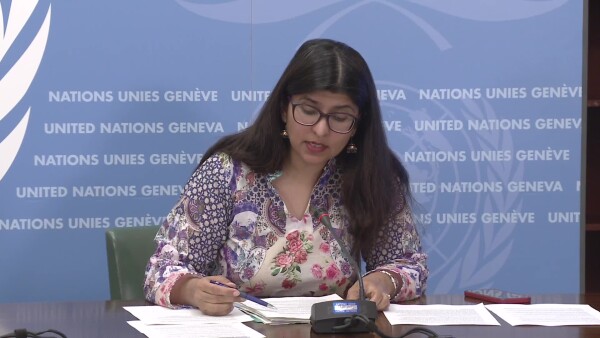
“We’ve received reports of at least 127 civilian casualties; this includes 25 killed and 102 injured in Ukraine, caused by shelling and airstrikes…this is very likely to be an underestimate,” said Ravina Shamdasani, OHCHR spokesperson.
Communities are already in need of aid relief, too, UN humanitarians warned.
“When we look at shortages, we’re talking about fuel which has been well reported in the media, we’re talking about cash, because often in humanitarian situations, cash assistance would be our first support to families, so obviously there’s been a drawdown on banks,” said UNICEF’s Ms. Khan.
Echoing that message and in an appeal for guaranteed humanitarian access to the most vulnerable individuals, the World Health Organization (WHO) highlighted concerns that medical teams could be overwhelmed by the number of people injured.
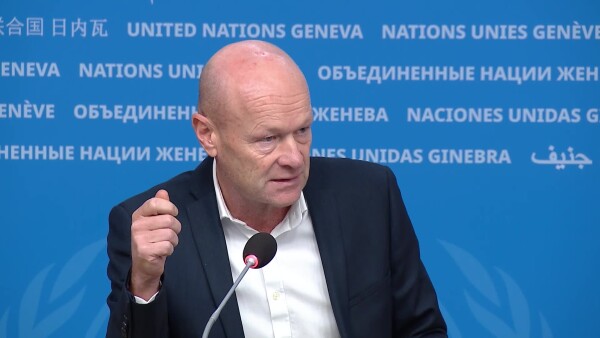
“We don’t have reports yet from the hospitals when we look to particular injuries and the details of medical,” said Dr Jarno Habicht, WHO Representative in Ukraine. “But what is important and where our focus has been now, is that the prepositioned medical kits, we will run out of them soon; so what is important currently and our discussion with the authorities and all the partners is how to ensure new supplies to come and ensure that also there are humanitarian corridors from the neighbouring countries available.”
UN agencies have been active in Ukraine for many years, in particular since Russia’s annexation of Crimea in 2014, a move in large part rejected by the international community. Immediate priorities include assessing what already vulnerable communities need in eastern regions of Donetsk, Luhansk and other oblasts.
“We are still trying to monitor what the situation is vis-à-vis civilian infrastructure,” said UNICEF’s Ms. Khan. “As you know, there has been hits of critical infrastructure in the east, particularly in Donbass for some years and they have been cut off, hence the UNICEF water trucking (operations). In the current scenario we are still trying to see which civilian infrastructure has been hit (and) where.”
The expected forced mass displacement of families has also begun, the UN Refugee Agency (UNHCR) confirmed.
“There are more than 100,000 who we estimate have lost their homes and are displaced inside country and we are also aware of several thousand who have crossed international borders in the region, and we’ve seen those really just happening since the onset of the situation,” said spokesperson Shabia Mantoo.
“We’re seeing these reports and we’ve seen for instance yesterday that there were about 5,000 refugee arrivals in Moldova already, but the other movements are being reported in Poland, Romania, Slovakia and the Russian Federation.”
While the UN rights office warned that Ukraine’s people were “terrified of further escalation”, spokesperson Ravina Shamdasani underscored concerns inside Russia, over the alleged mistreatment of protesters.
“Reportedly more than 1,800 were arrested (in Russia), because it’s impossible at this point to know to know exactly how many people there were,” Ms. Shamdasani said. “It is unclear whether they some of them have now been released. What we understand is that among those who were arrested were also some journalists, and they were arrested in over 50 cities across Russia.”
ends
STORY: Ukraine Update – OHCHR, UNHCR, UNICEF, WHO
TRT: 3 mins 31s
SOURCE: UNTV CH
RESTRICTIONS: NONE
LANGUAGE: ENGLISH / NATS
ASPECT RATIO: 16:9
DATELINE: 25 February 2022 GENEVA, SWITZERLAND
SHOTLIST
- Exterior wide shot, United Nations Palais des Nations, flag alley.
- Wide shot, UN press room, Palais des Nations.
- SOUNDBITE (English): Ravina Shamdasani, spokesperson for the Office of the High Commissioner for Human Rights (OHCHR): “We’ve received reports of at least 127 civilian casualties; this includes 25 killed and 102 injured in Ukraine, caused by shelling and airstrikes. And as I said, this is very likely to be an underestimate.”
- Medium shot, showing speakers and participants in profile, next to large-screen TV broadcasting the press briefing on Zoom.
- Medium shot, journalists attending the meeting and speakers.
- SOUNDBITE (English): Afshan Khan, Regional Director, Europe and Central Asia, UN Children’s Fund (UNICEF): “When we look at shortages, we’re talking about fuel which has been well reported in the media, we’re talking about cash, because often in humanitarian situations, cash assistance would be our first support to families, so obviously there’s been a drawdown on banks.”
- Wide shot, press conference participants, seated.
- SOUNDBITE (English): Dr Jarno Habicht, World Health Organization (WHO) Representative in Ukraine: “We don’t have reports yet from the hospitals when we look to particular injuries and the details of medical, but what is important and where our focus has been now is that the prepositioned medical kits, we will run out of them soon, so what is important currently and our discussion with the authorities and all the partners is how to ensure new supplies to come and ensure that also there are humanitarian corridors from the neighbouring countries available.”
- Close-up, participants, seated, next to large-screen TV broadcasting the press briefing on Zoom.
- SOUNDBITE (English): Afshan Khan, Regional Director, Europe and Central Asia, UN Children’s Fund (UNICEF): “As we speak, there have been major attacks in Kiev that have created greater fear and panic among the population, with families really scared, moving alongside their children into subways and shelters, and this is clearly a terrifying moment for children across the country.”
- Medium-shot, journalists seated and masked, writing on laptop computers.
- SOUNDBITE (English): Shabia Mantoo, spokesperson, United Nations High Commissioner for Refugees (UNHCR): “There are more than 100,000 who we estimate have lost their homes and are displaced inside country and we are also aware of several thousand who have crossed international borders in the region, and we’ve seen those really just happening since the onset of the situation.”
- Wide shot, participants seated, TV camera equipment and teleprompter.
- SOUNDBITE (English): Shabia Mantoo, spokesperson, United Nations High Commissioner for Refugees (UNHCR): “We’re seeing these reports and we’ve seen for instance yesterday that there were about 5,000 refugee arrivals in Moldova already, but the other movements are being reported in Poland, Romania, Slovakia and the Russian Federation, and these are the cross-border movements that we are talking about.”
- Close-up, participants, seated, next to large-screen TV broadcasting the press briefing on Zoom.
- SOUNDBITE (English): Afshan Khan, Regional Director, Europe and Central Asia, UN Children’s Fund (UNICEF): “We are still trying to monitor what the situation is vis-à-vis civilian infrastructure. As you know, there has been hits of critical infrastructure in the east, particularly in Donbass for some years and they have been cut off, hence the UNICEF water trucking. In the current scenario we are still trying to see which civilian infrastructure has been hit, where.”
- Wide shot, press conference participants, seated.
- SOUNDBITE (English): Ravina Shamdasani, spokesperson for the Office of the High Commissioner for Human Rights (OHCHR): “Reportedly more than 1,800 were arrested, because it’s impossible at this point to know to know exactly how many people there were. It is unclear whether they some of them have now been released. What we understand is that among those who were arrested were also some journalists, and they were arrested in over 50 cities across Russia.”
- Close shot of journalists’ hands typing on laptop computers.
- Close shot, participant checking mobile phone.
- Close shot, participant in profile wearing UNICEF facemask, nodding, with speaker shown on TV screen to rear.
- Close shot, participant wearing chequered facemask.
Similar Stories
1
1
1
Edited News | OCHA , UNICEF , WFP
Aid agencies warned on Friday of the fast-developing humanitarian emergency inside Taiz City in Yemen, which has been encircled by de facto Houthi forces fighting government troops along the country’s west coast.

2
17
1
2
Edited News , Press Conferences , Images | OCHA , WMO
Two UN agencies teamed up on Wednesday to issue an appeal for immediate assistance to help communities already being impacted by the strongest El Niño on record.

3
16
2
2
Edited News , B-roll , Conferences , Images | UNITED NATIONS , UNOG
Sixth Consultative Meeting on Enhancing Coordination of Peace Initiatives and Efforts for Sudan

1
1
1
Edited News | UNICEF , WHO , UNHCR
Yemen war continues to force families from homes amid hunger and disease
More than 250,000 people have now fled renewed fighting in Yemen, the UN said on Tuesday, citing particular concern for those sheltering in the southwestern city of Taiz and the wider governorate, where access is “essentially blocked”.

1
1
1
Edited News | UNICEF
A little over one year since a ceasefire agreement was announced between Hamas fighters and Israel, more than 340 children have been reported killed and hundreds more injured, the UN Children’s Fund, UNICEF, said on Friday.

1
1
1
Edited News | UNICEF , IFRC
Six weeks after Nepal’s deadly flooding disaster, communities are still struggling to rebuild their lives, but they will need sustained help as global warming increases the risk of another Himalayan catastrophe, the UN Children’s Fund (UNICEF) said on Friday.

1
1
1
Edited News | WHO
In suspected Russia plague death, testing and monitoring underway – WHO
The death of a lab worker in Russia’s Siberia region has sparked concerns about plague being the cause, the UN World Health Organization (WHO) said on Tuesday, adding that it was following the situation closely.

1
1
Edited News | OHCHR , UNOG
UN Human Rights Chief Volker Türk on Friday provided and oral update to the 63rd session of the Human rights Council on Ukraine.

1
1
1
Edited News | OHCHR , UNOG
UN Human Rights Chief Volker Türk on Friday provided and oral update to the 63rd session of the Human rights Council on the human rights situation in Haiti.

1
1
1
Edited News | WHO
Repeated delays in bringing lifesaving medicines, prosthetics and more from Israel into Gaza risk having devastating consequences on Palestinians who urgently need them in the wartorn enclave, the UN World Health Organization (WHO) said on Friday. “A truck full of non-priority supplies or the right supplies arriving too late, doesn't save lives. That's the question that actually matters," said Dr Reinhilde Van De Weerdt, WHO Representative in the OPT.

1
1
1
Edited News | WHO
DRC: Early access to care and oxygen decisive for Ebola patients’ survival – WHO
In the Democratic Republic of the Congo (DRC), health workers fighting the country’s largest-ever Ebola outbreak are struggling to overcome critical challenges to patient care, the UN World Health Organization (WHO) warned on Tuesday.

1
1
1
Edited News | OCHA , UN
Civilians in Iran are continuing to feel the consequences of months of conflict and military escalation, the UN’s top official in the country has said, as loss of life, damage to civilian infrastructure and mounting economic pressures leave many facing continued uncertainty.