

The United Nations Office at Geneva
Multimedia Newsroom
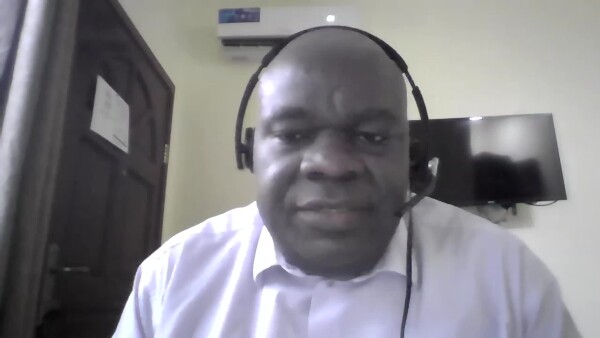
As Somalia is suffering from one of its worst droughts in recent times, UNICEF warned today that 1.4 million children – nearly half of the country’s under five population - are likely to suffer from acute malnutrition out of which 330,000 children will require treatment for severe acute malnutrition. Funding is immediately needed to procure nutrition supplies and avert deaths, said UNICEF's Communication Chief in Somalia when speaking at a news briefing at the United Nations in Geneva.
“The time to act is NOW. And when the international community waits until the famine is declared, as we learned from 2011, that's probably a bit too late”, said Victor Chinyama, UNICEF’s Communication Chief in Somalia. He added that “a lot of the mortality happens before the famine is declared. And, of course, we know that when you begin to see malnutrition go up and then that is compounded by an outbreak such as measles or cholera, mortality very, very quickly escalates.”
UNICEF is appealing for US$48 million and urgently needs US$7 million by the end of March 2022 to procure 104,000 cartons of Ready-to-Use Therapeutics Foods for the treatment of children with severe acute malnutrition.
The Horn of Africa (Somalia, Kenya, Ethiopia) is currently experiencing its worst droughts in recent history after three consecutive seasons of failed rains and with potentially facing a fourth one between March-May 2022.
According to UNICEF’s Victor Chinyama “Somalia is the most affected with about 90% of the country undergoing a severe drought. And data that was released last week shows that about 4.1 million people in Somalia will need urgent humanitarian support and that is a quarter of the entire population of 16 million.”
He added that “1.4 million children are likely to suffer from acute malnutrition and of those about 330,000 require treatment for severe acute malnutrition.”
A critical shortage of water has left 2.6 million people in need of urgent water supply with water prices have gone up by 72 %. A lack of water heightens disease outbreaks, such as measles and cholera.
“We know that the lack of water also gives rise to other risks, particularly of diseases outbreaks. And we have a measles outbreak in Baidoa. But also, measles has been reported among Somali refugees that are living in Ethiopia. So, this year, for example, we're looking at 7,500 reported cases of measles”, said UNICEF’s Communication chief.
The risk of a severely wasted child dying from measles is 11 times higher than for a well-nourished child. So spikes in diseases such as cholera and measles are clear danger signs for children.
In order to survive, families are taking desperate measures. Since November, about 500,000 people have been displaced in search of food, water and pasture, adding to the 2,9 million already internally displaced.
“We know that when people flee their homes from the 2011 and 2017 drought, they're the most vulnerable. Certainly, the highest numbers of deaths were recorded among people that had been displaced and had moved to other areas in search of humanitarian assistance”, reported Victor Chinyama.
As drought exacerbates protection risks for children, UNICEF is worried about sexual exploitation and abuse as well as child marriage. In 2021, 1,200 children (including 45 girls) were recruited and used by armed groups, 1,000 children were abducted.
“That one issue that worries us in terms of the risks that children are exposed to such as sexual violence, exploitation, gender-based violence. And in the context of Somalia, we cannot talk about displacement risks without addressing the specter of children being abducted and recruited by armed groups, for example, such as Al-Shabaab.”
-end-
- Exterior wide shot, United Nations Palace of Nations, Geneva. UN flag alley with flags flying.
- Wide shot, press room UN Geneva.
- SOUNDBITE (English): Victor Chinyama, UNICEF’s Chief of Communication in Somalia: “The time to act is NOW. And when the international community waits until the famine is declared, as we learned from 2011, that's probably a bit too late. A lot of the mortality happens before the famine is declared. And, of course, we know that when you begin to see malnutrition go up and then that is compounded by an outbreak such as measles or cholera, mortality very, very quickly escalates.”
- Medium shot, masked participants listening.
- SOUNDBITE (English): Victor Chinyama, UNICEF’s Chief of Communication in Somalia: “Somalia is the most affected with about 90% of the country undergoing a severe drought. And data that was released last week shows that about 4.1 million people in Somalia will need urgent humanitarian support and that is a quarter of the entire population of 16 million.”
- Close-up shot, fingers typing at the keyboard of laptop
- SOUNDBITE (English): Victor Chinyama, UNICEF’s Chief of Communication in Somalia: “4 million children are likely to suffer from acute malnutrition and of those about 330,000 require treatment for severe acute malnutrition.”
- Medium shot, masked participants listening
- SOUNDBITE (English): Victor Chinyama, UNICEF’s Chief of Communication in Somalia: “We know that the lack of water also gives rise to other risks, particularly of diseases outbreaks. And we have a measles outbreak in Baidoa. But also, measles has been reported among Somali refugees that are living in Ethiopia. So, this year, for example, we're looking at 7,500 reported cases of measles.”
- Medium shot, participants sitting in front of the desk, with camera on the rear.
- SOUNDBITE (English): Victor Chinyama, UNICEF’s Chief of Communication in Somalia: “We know that when people flee their homes from the 2011 and 2017 drought, they're the most vulnerable. Certainly, the highest numbers of deaths were recorded among people that had been displaced and had moved to other areas in search of humanitarian assistance.”
- Medium shot, masked participants listening carefully with TV screen on the rear.
- SOUNDBITE (English): Victor Chinyama, UNICEF’s Chief of Communication in Somalia: “That one issue that worries us in terms of the risks that children are exposed to such as sexual violence, exploitation, gender-based violence. And in the context of Somalia, we cannot talk about displacement risks without addressing the specter of children being abducted and recruited by armed groups, for example, such as Al-Shabaab.”
- Medium shot, camera on the front with TV screen showing the podium speakers on the rear
- Close-up shot, participant taking notes on the notebook.
- Close-up shot, participant pointing at the laptop screen displaying the press briefing.
Similar Stories

2
17
1
2
Edited News , Press Conferences | OCHA , WMO
Two UN agencies teamed up on Wednesday to issue an appeal for immediate assistance to help communities already being impacted by the strongest El Niño on record.

3
16
2
2
B-roll , Conferences , Edited News | UNITED NATIONS , UNOG
Sixth Consultative Meeting on Enhancing Coordination of Peace Initiatives and Efforts for Sudan

1
1
1
Edited News | UNICEF , WHO , UNHCR
Yemen war continues to force families from homes amid hunger and disease
More than 250,000 people have now fled renewed fighting in Yemen, the UN said on Tuesday, citing particular concern for those sheltering in the southwestern city of Taiz and the wider governorate, where access is “essentially blocked”.

1
1
1
Edited News | UNICEF
A little over one year since a ceasefire agreement was announced between Hamas fighters and Israel, more than 340 children have been reported killed and hundreds more injured, the UN Children’s Fund, UNICEF, said on Friday.

1
1
1
Edited News | UNICEF , IFRC
Six weeks after Nepal’s deadly flooding disaster, communities are still struggling to rebuild their lives, but they will need sustained help as global warming increases the risk of another Himalayan catastrophe, the UN Children’s Fund (UNICEF) said on Friday.

1
1
1
Edited News | WHO
In suspected Russia plague death, testing and monitoring underway – WHO
The death of a lab worker in Russia’s Siberia region has sparked concerns about plague being the cause, the UN World Health Organization (WHO) said on Tuesday, adding that it was following the situation closely.

1
1
Edited News | OHCHR , UNOG
UN Human Rights Chief Volker Türk on Friday provided and oral update to the 63rd session of the Human rights Council on Ukraine.

1
1
1
Edited News | OHCHR , UNOG
UN Human Rights Chief Volker Türk on Friday provided and oral update to the 63rd session of the Human rights Council on the human rights situation in Haiti.

1
1
1
Edited News | WHO
Repeated delays in bringing lifesaving medicines, prosthetics and more from Israel into Gaza risk having devastating consequences on Palestinians who urgently need them in the wartorn enclave, the UN World Health Organization (WHO) said on Friday. “A truck full of non-priority supplies or the right supplies arriving too late, doesn't save lives. That's the question that actually matters," said Dr Reinhilde Van De Weerdt, WHO Representative in the OPT.

1
1
1
Edited News | WHO
DRC: Early access to care and oxygen decisive for Ebola patients’ survival – WHO
In the Democratic Republic of the Congo (DRC), health workers fighting the country’s largest-ever Ebola outbreak are struggling to overcome critical challenges to patient care, the UN World Health Organization (WHO) warned on Tuesday.

1
1
1
Edited News | OCHA , UN
Civilians in Iran are continuing to feel the consequences of months of conflict and military escalation, the UN’s top official in the country has said, as loss of life, damage to civilian infrastructure and mounting economic pressures leave many facing continued uncertainty.
1
1
1
Edited News | WHO , UNICEF
Aid agencies in Yemen highlighted the growing hunger emergency sparked by renewed fighting between Houthi opposition forces and Government troops, after mobile health clinics reported that hundreds of children displaced by the violence are suffering from the most deadly form of malnutrition.