

The United Nations Office at Geneva
Multimedia Newsroom
Myanmar's military has carried out a sustained campaign of deliberate attacks on civilians – including airstrikes on homes, schools and camps for displaced people, alongside arbitrary detention, torture and sexual violence – Human Rights Council-appointed investigators said on Tuesday.
Why the Myanmar crisis matters
- Civilians under fire: airstrikes on homes, schools, hospitals.
- Abuses continue: torture, arbitrary detention and sexual violence documented.
- Evidence preserved: information from more than 1,600 sources gathered to support prosecutions.
The findings come in the annual report of the Independent Investigative Mechanism for Myanmar (IIMM), covering July 2025 to June 2026, published Tuesday.
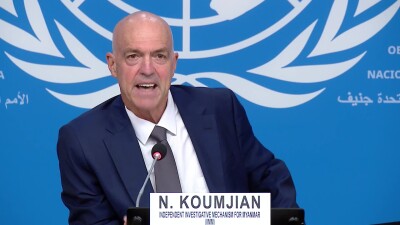
"One of the areas that we're concentrating on is, because of the suffering that's happening in Myanmar, are the airstrikes [against communities] that are occurring...We're looking at the command structure and how the orders would be given for such airstrikes," said Nicholas Koumjian, head of the Mechanism.
"In particular there are many airstrikes targeting, hitting schools. Children are often the victims of these airstrikes and also hospitals. So our team is collecting that evidence of where it has occurred, the kind of munitions that are used."
Myanmar has been engulfed in conflict since the military seized power in February 2021, overthrowing the civilian government and arresting top leaders including President Win Myint and State Counsellor Aung San Suu Kyi.
The coup also triggered nationwide protests and subsequent armed resistance movements which control large swathes of the fractured country.
Relentless attacks
Attacks intensified in the run-up to elections completed in January and have not let up since, the report found.
Investigators traced strikes on homes, schools, medical facilities, religious buildings and displacement camps, and identified some of the military units responsible.
They also found the military's growing use of motorised power gliders and drones has made attacks harder for civilians to see coming, cutting the time people have to flee or find shelter.
Lives devastated
“Behind every piece of evidence we collect are people whose lives have been devastated by these crimes,” said Mr. Koumjian.
“Communities across Myanmar are not only living under the constant threat of violence but are also coping with the profound and lasting impact of what they have endured.”
Investigators also documented widespread torture and sexual violence in military-run detention facilities, including cases tied to a 2025 law that criminalizes criticism of the elections – under which people have been jailed for up to 20 years, or face the death penalty, for acts as minor as posting critical comments online.
While most of the evidence concerns the military and allied militias, the Mechanism said it is also investigating abuses by armed groups opposed to the military.
The findings draw on more than 1,600 sources, including over 750 witness accounts, along with photographs, video, forensic evidence and satellite imagery.
What is the IIMM?
The mechanism was set up by the UN Human Rights Council in 2018 to collect and preserve evidence of the gravest crimes committed in Myanmar since 2011, for use in future prosecutions.
It doesn't prosecute cases itself but shares its evidence with courts and authorities that do.
These include the International Criminal Court and courts in Argentina pursuing cases over crimes against the Rohingya, and the International Court of Justice, which is weighing whether Myanmar breached the Genocide Convention during the 2016–2017 crackdown on ethnic Rohingya communities.
In 2017, then UN human rights chief Zeid Ra'ad Al Hussein condemned the Myanmar military's persecution of the Rohingya who fled in their hundreds of thousands to neighbouring Bangladesh. "The situation seems a textbook example of ethnic cleansing,” Zeid told the UN Human Rights Council in Geneva.
Myanmar crisis: Human Rights Council probe
TRT: 2’44”
SOURCE: UNTV CH
RESTRICTIONS: NONE
LANGUAGE: ENGLISH / NATS
ASPECT RATIO: 16:9
DATELINE: 11 AUGUST 2026 GENEVA, SWITZERLAND
Speaker:
- Nicholas Koumjian, head of the Independent Investigative Mechanism for Myanmar (IIMM)
SHOTLIST
- Exterior wide, UN Geneva flag alley.
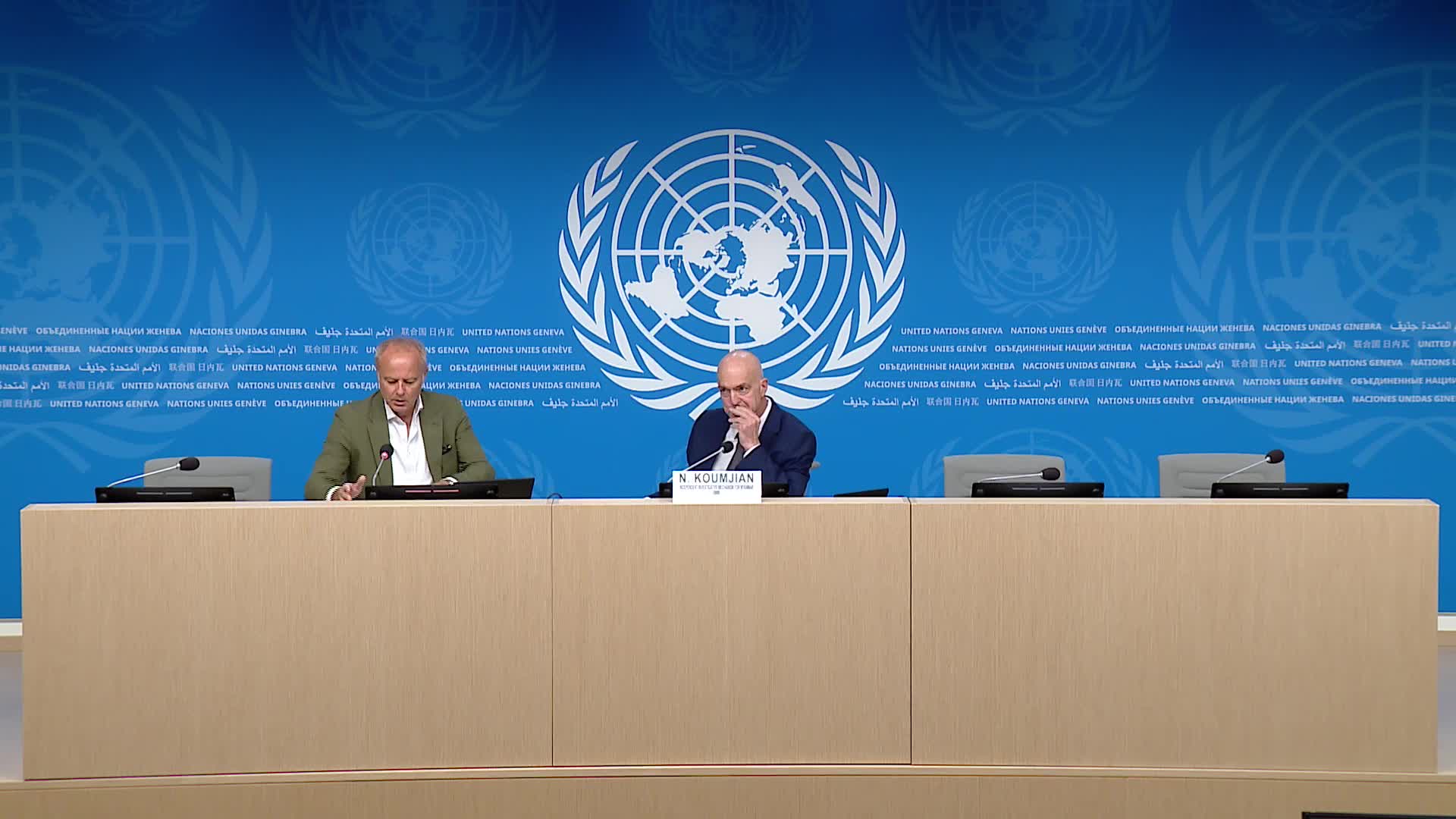
- Wide, UN Geneva Press room, podium speakers.
- SOUNDBITE (English) – Nicholas Koumjian, head of the IIMM: “One of the areas that we're concentrating on is, because of the suffering that's happening in Myanmar, are the airstrikes that are occurring. We note in particular there are many airstrikes targeting, hitting, schools; children are often the victims of these airstrikes and also hospitals.”
- Medium, podium speakers.
- SOUNDBITE (English) – Nicholas Koumjian, head of the IIMM: “We rely very much on brave individuals who are willing to talk to us and share their testimonies. We’ve collected information from over 1,600 sources. We try to make every effort to keep our interactions as safe as possible. But we know that these individuals are taking risks.”
- Wide, podium speakers, journalists, participants in Press Room.
- SOUNDBITE (English) – Nicholas Koumjian, head of the IIMM: “This is a very difficult process to try to collect evidence and hope for criminal prosecutions around the world for crimes in a country that's in the midst of a very serious civil conflict. But we think it's still very important that victims know someone is collecting evidence. Someday, there may be justice for what has happened to them and also that potential perpetrators know, again, someone is watching.”
- Wide, journalists, participants.
- SOUNDBITE (English) – Nicholas Koumjian, head of the IIMM: “The allegation is that the military bombed detention facilities where some of its own soldiers and their families were present and we’re collecting evidence to determine the truth of that.”
- Wide, journalists, participants.
- SOUNDBITE (English) – Nicholas Koumjian, head of the IIMM: “In regards to the airstrikes, of course, if it is an airplane, it's the military; the military is the only force that has airplanes in Myanmar. But you're also correct, of course, that some opposition have used drones.”
- Medium-wide, podium speakers, journalists, participants.
- SOUNDBITE (English) – Nicholas Koumjian, head of the IIMM: “We've also reached out to other armed groups about allegations of crimes that we've seen or videos we've seen posted online that show things like executions of soldiers. We haven't been - they haven't been - as cooperative with us in providing information. And of course, we've reached out multiple times, dozens of times, to the Myanmar military, seeking information from them, and they have never cooperated with us.”
- Wide, Press Room, TV screen showing speaker, control booth.
- Medium, journalists.
- Medium, journalist, participants.
Highlights from the Mechanism’s eighth Annual Report
-
The Mechanism advanced its investigations into aerial attacks by the Myanmar military against civilians, identifying some of the military units responsible and their respective command structures.
-
Its investigations into arbitrary arrests and crimes in military-run detention facilities also progressed, including cases linked to the 2025 law criminalizing criticism of the elections. The Mechanism also investigated allegations of reproductive violence affecting detained women and girls.
-
The conflict in Rakhine State intensified significantly, and the Mechanism advanced its investigations into arbitrary detention, torture, forced displacement and restrictions on humanitarian assistance committed against Rohingya, Rakhine and other communities by all perpetrators, including members of the Arakan Army.
-
The Mechanism made significant contributions to the proceedings in The Gambia v. Myanmar before the International Court of Justice by providing extensive evidence and analysis to the parties, which were widely referenced during the public hearings held in January 2026.
Read the press release for more information.
Below description of the IIMM briefing is from UN Geneva press briefing summary:
Annual Report of the Independent Investigative Mechanism for Myanmar
Nicholas Koumjian, Head of the Independent Investigative Mechanism for Myanmar (IIMM), presented the Mechanism’s eighth annual report.
The Human Rights Council had established the Mechanism in 2018 to collect evidence of the most serious international crimes committed in Myanmar since 2011, in order to facilitate criminal prosecutions in national or international courts. The IIMM now concentrated on the situation of the Rohingya; on the ongoing conflict in Rakhine State; and on the violence related to the post-coup situation and the conflict between various armed forces opposed to the military junta and the military forces.
The Mechanism noted that many airstrikes were targeting schools and hospitals, with children often the victims. The team collected evidence where the airstrikes occurred, including the kind of munitions used, the command structure and how the orders were given. The Mechanism was also very concerned by crimes in detention: tens of thousands had been arrested since the coup, and the IIMM had collected testimonies of individuals about torture and sexual violence in detention. The Mechanism was collecting evidence to share with courts that may have the ability and willingness to exercise jurisdiction over those offenses.
The team relied very much on brave individuals who were willing to share their testimonies; it had thus collected information from over 1600 sources.
The Mechanism was not a court and not police. It depended upon courts and judicial authorities taking interest in its cases and having the willingness to prosecute them. So far, the Mechanism had shared evidence the International Criminal Court, which has an investigation about the Rohingya in 2017 and earlier, violence against the Rohingya - back in November of 2024, the ICC prosecutor announced a request he was requesting an arrest warrant for Myanmar's military leader Min Aung Hlaing; with the Federal prosecutor's office in Argentina, which had responded to a complaint filed by Rohingya victims living in the UK and in Bangladesh. The Mechanism had also shared evidence and analysis with parties at the International Court of Justice, in a civil case where the Gambia had alleged that, as a signatory to the Convention for the Prevention and Punishment of Genocide, Myanmar, another signatory, had violated its obligations.
The Mechanism continued to look for opportunities to share evidence, including determining whether those who were providing, from outside, the means – such as weapons – for the crimes committed in Myanmar could be in violation of national laws or sanctions.
Answering questions from the press, Mr. Koumjian said the investigation in Argentina was looking at whether individuals had contributed to crimes under international law; the International Court of Justice was trying to determine whether the State of Myanmar itself had violated its obligations under the Genocide Convention. These processes were important to keep the matter before the public, reminding potential perpetrators that those who commit such crimes could be held to account.
The Mechanism was not looking at establishing States’ responsibility for supplying weapons. It was looking at whether individuals, including individuals who may be part of a corporation or business, had provided the means for the crimes. It was possible to hold them responsible under “aiding and abetting” under international criminal law, if it could be shown that they knew they had contributed, or were still contributing, to the crimes.
Regarding air strikes, Mr. Koumjian noted that the military was the only force with airplanes in Myanmar. Opposition groups had used drones: the Mechanism was looking into allegations regarding this usage, and the drones’ origin. It was investigating another allegation according to which the military had bombed detention facilities where some of its own soldiers and their families were present.
Similar Stories

1
1
1
Edited News | UNICEF , IFRC
Six weeks after Nepal’s deadly flooding disaster, communities are still struggling to rebuild their lives, but they will need sustained help as global warming increases the risk of another Himalayan catastrophe, the UN Children’s Fund (UNICEF) said on Friday.
1
1
1
Statements , Press Conferences | OHCHR
1
1
1
Press Conferences | UNHCR , UNICEF , IFRC , OHCHR , UN WOMEN , IOM , OCHA , WHO
UNHCR – ExCom Meeting, UNICEF – Nepal Recovery, IFRC – Flash Floods, WHO – Mental Health, IOM – South Sudan Floods, OCHA – DRC Humanitarian aid, UNHCR – Sahel Displacement, UNICEF – Yemen Update, IOM – Gaza Shelter, UN Women – Gaza Women, OHCHR – Arrests and detentions of Syrians by Israeli force
2
1
2
Press Conferences | UNCTAD
Presentation of the Trade and Developement Report 2026
Embargoed until 9 October 2026 at 11 a.m. (Geneva Time)
UNCTAD: UNCTAD’s flagship report finds that governments increasingly use industrial, trade, financial and technology policies to pursue economic and national security objectives. Market access and the ability to move into higher-value activities now depend more heavily on technology, finance and geopolitics.
1
1
1
Press Conferences | UPU
Release of the State of the Postal Sector Report 2026

1
1
1
Edited News | WHO
In suspected Russia plague death, testing and monitoring underway – WHO
The death of a lab worker in Russia’s Siberia region has sparked concerns about plague being the cause, the UN World Health Organization (WHO) said on Tuesday, adding that it was following the situation closely.
1
1
1
Press Conferences | IOM , ITU , UNECE , UNICEF , WHO , WMO
UNICEF: Ebola, DRC - children orphans or separating them from parents and caregivers; IOM: Humanitarian needs in Djibouti amid arrivals from Yemen and increased migrant movements; WHO: Darfur, scale of health needs far exceeds available resources; WMO co-sponsored Global Heat Forum, Bangkok, monthly Global Seasonal Climate Update; UNECE: UN Forum of Mayors; ITU Plenipotentiary Conference 2026; WHO: child and adolescent obesity guidelines and new global roadmap to tackle pregnancy hypertension, a leading cause of maternal mortality

1
1
Edited News | OHCHR , UNOG
UN Human Rights Chief Volker Türk on Friday provided and oral update to the 63rd session of the Human rights Council on Ukraine.

1
1
1
Edited News | OHCHR , UNOG
UN Human Rights Chief Volker Türk on Friday provided and oral update to the 63rd session of the Human rights Council on the human rights situation in Haiti.

1
1
1
Edited News | WHO
Repeated delays in bringing lifesaving medicines, prosthetics and more from Israel into Gaza risk having devastating consequences on Palestinians who urgently need them in the wartorn enclave, the UN World Health Organization (WHO) said on Friday. “A truck full of non-priority supplies or the right supplies arriving too late, doesn't save lives. That's the question that actually matters," said Dr Reinhilde Van De Weerdt, WHO Representative in the OPT.
1
1
1
Press Conferences | OCHA , UN WOMEN , UNHCR , WFP , WHO , WTO , UNEP
OCHA – $160M CERF allocation to 12 underfunded crises; UNHCR – 5.8M refugee children remain out of school amid funding cuts; UN Women – Middle East escalation and food security among women/girls; WHO – Gaza supplies and overall situation; WFP – Yemen food insecurity and impact on global hunger ; UNEP - First International Conference of the Global Framework on Chemicals in Geneva | 16-20 November 2026

1
1
1
Edited News | WHO
DRC: Early access to care and oxygen decisive for Ebola patients’ survival – WHO
In the Democratic Republic of the Congo (DRC), health workers fighting the country’s largest-ever Ebola outbreak are struggling to overcome critical challenges to patient care, the UN World Health Organization (WHO) warned on Tuesday.